Dining Room Decor Ideas: Modern Styling Tips and Practical Layout Advice
You can make your dining room feel fresh and functional without a full remodel by picking a clear style, the right table and chairs, and a few thoughtful accents. Choose a focal point like lighting or a statement wall, pair it with comfy seating, and balance color and texture to create a space that works for meals and gatherings.
This article gives practical decor ideas you can use right away, from choosing furniture and colors to simple lighting and accessory updates that lift the whole room. Expect easy tips that save time and money while making your dining area more inviting and stylish.
Key Takeaways
- Pick furniture that matches your space and how you use it.
- Use color, art, and textiles to set the room’s mood.
- Add layered lighting and small accents to finish the look.
Dining Room Furniture Selection
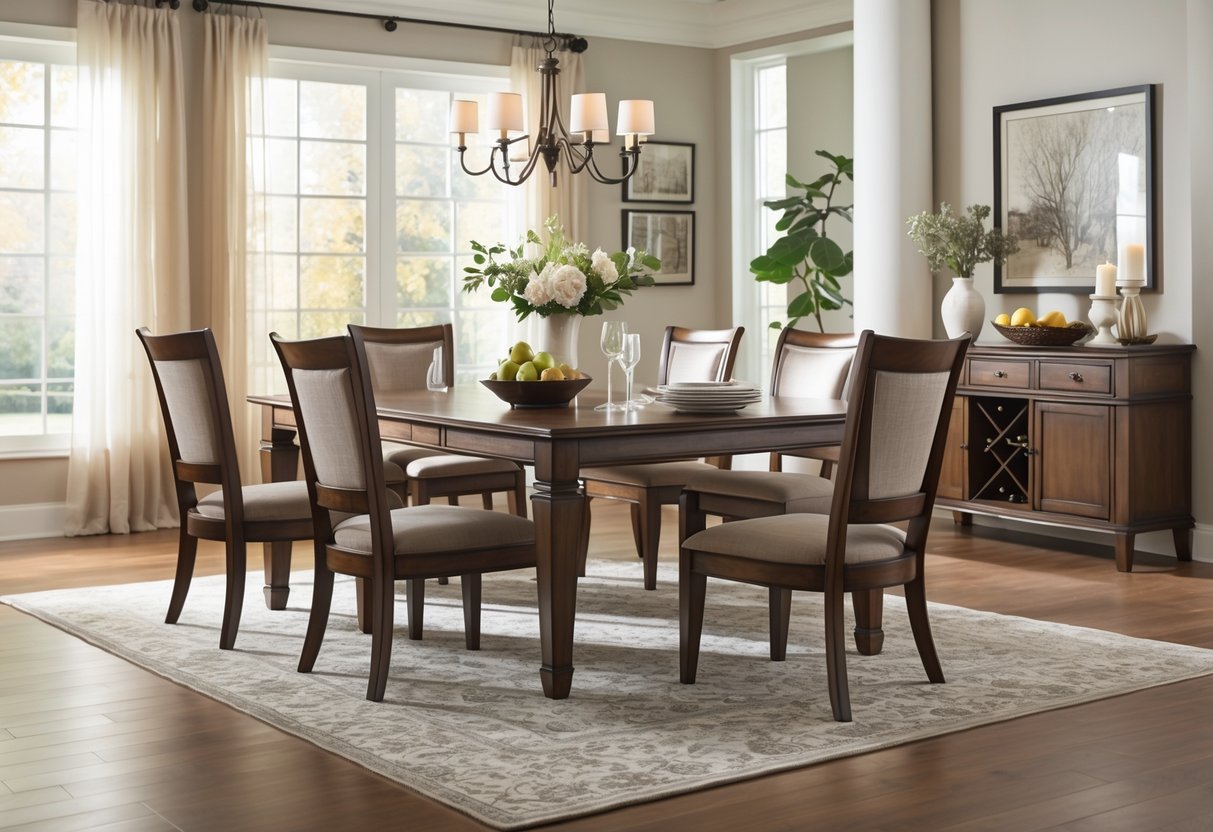
Pick pieces that fit your room size, match your style, and meet how you use the space most. Prioritize table size, chair comfort, and storage that keeps serving items accessible.
Choosing the Perfect Dining Table
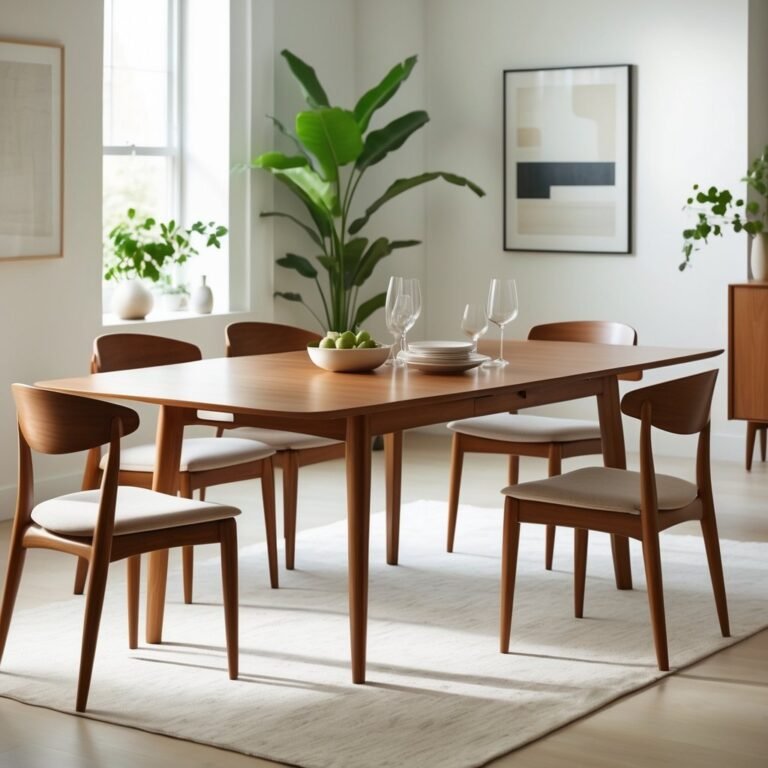
Measure the room first. Leave at least 36 inches (90 cm) from the table edge to walls or furniture so chairs can pull out easily. For rectangular rooms, a long rectangular table suits the shape; for square rooms, a round or square table improves flow.
Decide material by wear and care. Solid wood resists dings and can be refinished. Glass tops make the room feel larger but show fingerprints. Metal or laminate suits heavy use and easy cleaning.
Consider extensions: a 6-foot table with leaves serves daily family meals and expands for guests. Check leg placement so chairs fit—trestle or pedestal bases allow more seating than four corner legs.
Seating Options and Arrangements
Match seat height: standard dining chairs pair with 28–30 inch table tops; allow 10–12 inches of knee clearance. Test a chair before buying for back support and cushion firmness.
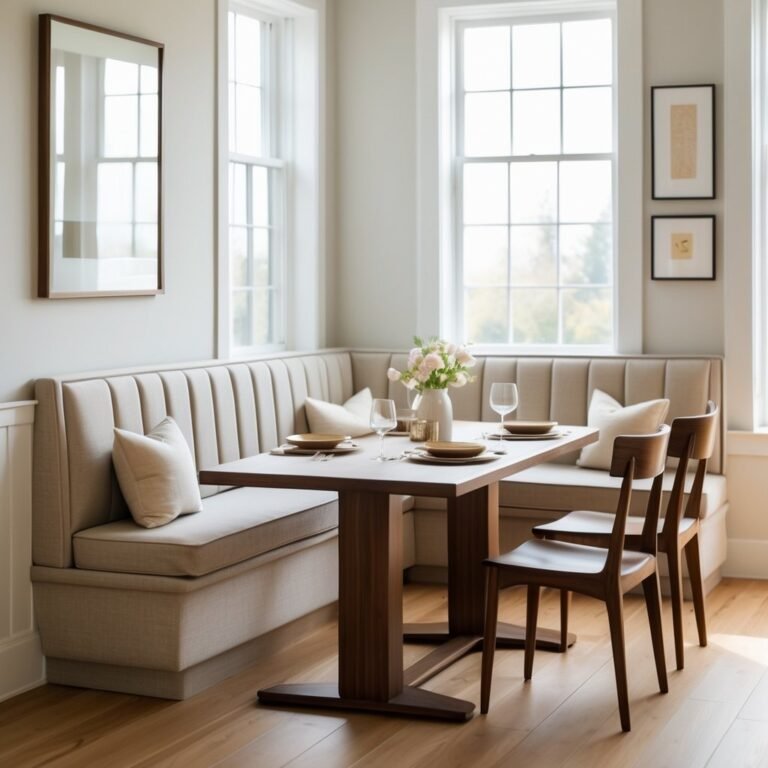
Mix seating for style and function. Use benches on one side to save space and tuck them under the table when not in use. Use upholstered chairs at the ends for comfort.
Plan seating layout: for a 6-foot table, plan for 6 people—two at each side, one at each end. For tight spaces, swap two chairs for a bench to free walkway room. Keep materials consistent to unify the look.
Sideboards and Storage Solutions
Choose storage that holds what you use most: dishes, serving platters, table linens, and barware. A 36–48 inch sideboard with drawers and cabinets covers most needs for a family of four to six.
Match height to serve easily—34–36 inches lets you use the top as a serving surface. Look for adjustable shelves and a mix of drawers and doors for flexible storage.
If space is limited, consider a slim console (12–16 inches deep) or a tall cabinet to use vertical space. Use baskets or labeled bins inside to keep items organized and easy to find.
Color Schemes and Wall Decor
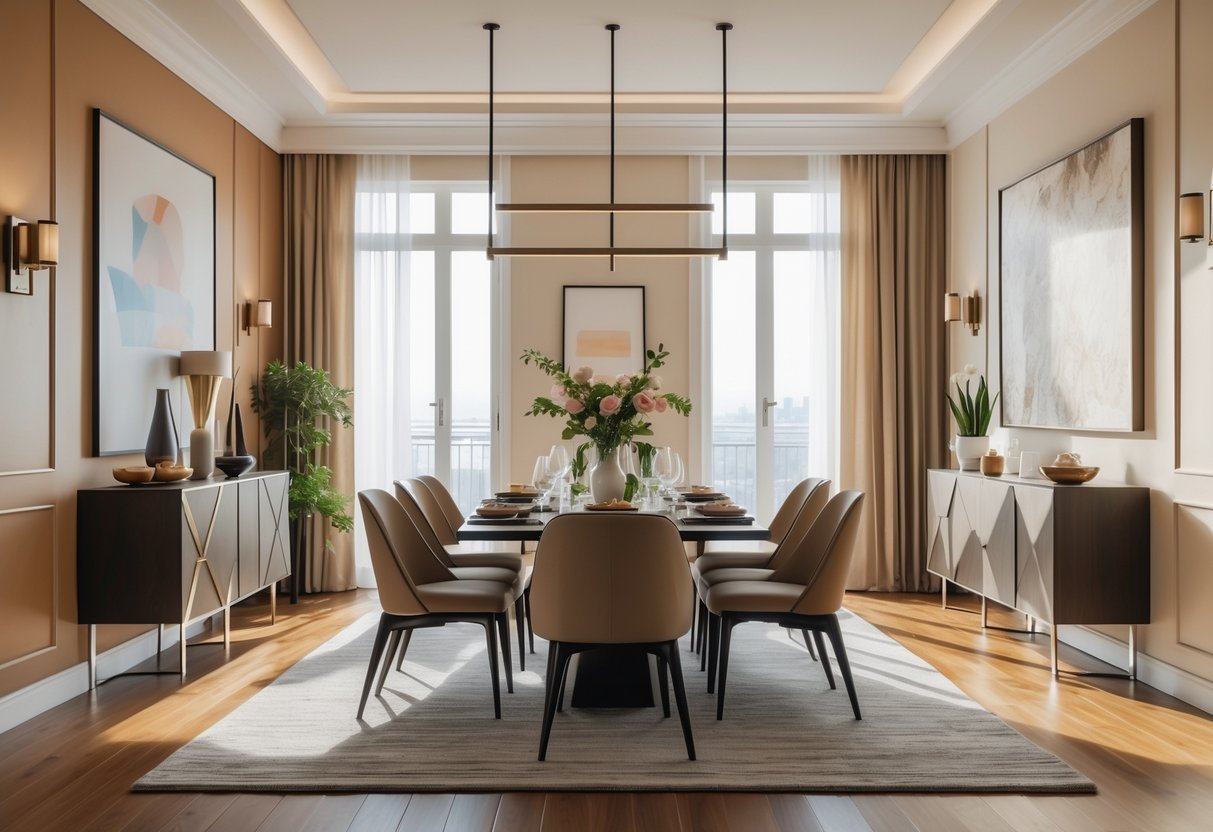
Choose paint that sets the mood and pick wall pieces that add focal points. Think about light, furniture colors, and how often you want to change the look.
Popular Dining Room Paint Colors
Pick a base color that ties into your furniture and flooring. Warm neutrals like taupe, greige, and soft white work with wood tones and let you change accents easily.
If you want mood and drama, try deep blue, forest green, or charcoal on all walls. These colors make wood and brass finishes pop and hide scuffs better than very light shades.
For a bright, airy feel, go with pastels such as pale blue, soft sage, or blush. These reflect light and help small rooms feel larger.
When choosing paint finish, use eggshell or satin on walls for cleanability and low sheen. Reserve semi-gloss for trim and doors to highlight architectural details.
Accent Walls and Wallpaper Ideas
Use an accent wall to anchor the table or buffet. Paint the wall behind the head of the table a darker tone than the rest of the room to create depth. You can also paint just the wall niche or built-in shelving for a targeted boost.
Wallpaper works well on one wall or inside a wainscoted area. Choose a pattern with scale that fits the room: small prints suit compact spaces, large motifs suit wide walls.
Textured or grasscloth wallpaper adds warmth and hides minor imperfections. For easy change, consider removable peel-and-stick options in bold geometric or botanical patterns.
Artwork and Decorative Mirrors
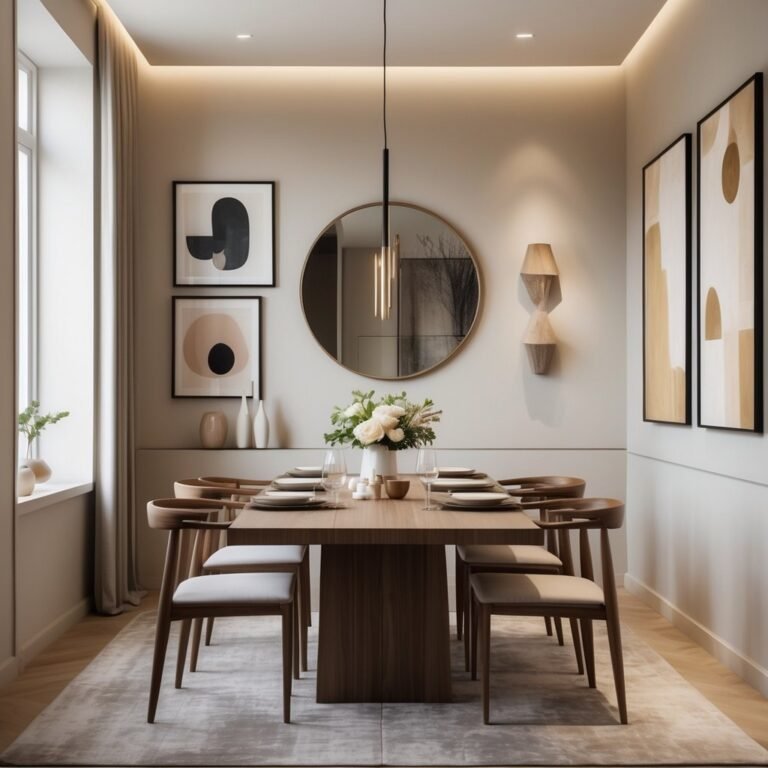
Place a large mirror opposite a window to boost natural light and make the room feel bigger. Choose a mirror frame that matches other metal finishes in the room, like black iron or warm brass.
Hang artwork at eye level—center pieces about 57–60 inches from the floor. Use a single large piece over a buffet for a clean look, or create a grid or salon wall if you have several smaller works.
Mix materials for interest: framed prints, woven wall hangings, and metal sculptures give varied texture. Keep a unified color palette in the art to avoid visual clutter.
Lighting and Ambiance Enhancements
Good lighting changes how your dining room feels and works. Focus on a central fixture that defines the room and add layers that let you control brightness for meals, tasks, and mood.
Statement Chandeliers and Pendant Lights
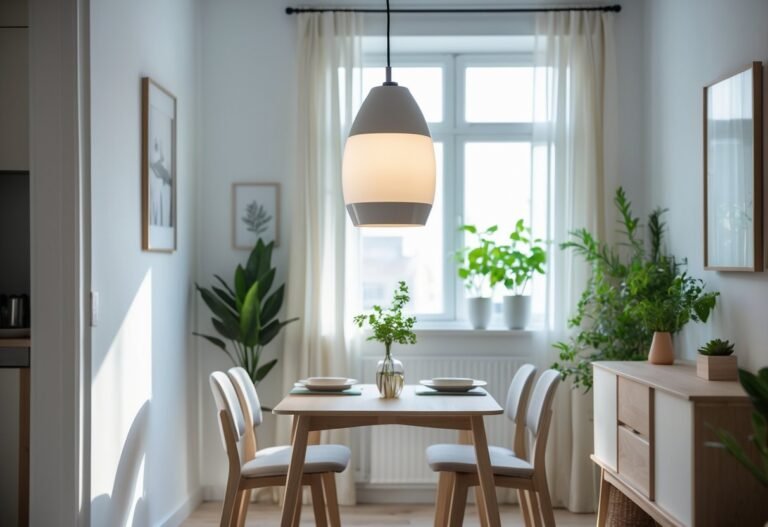
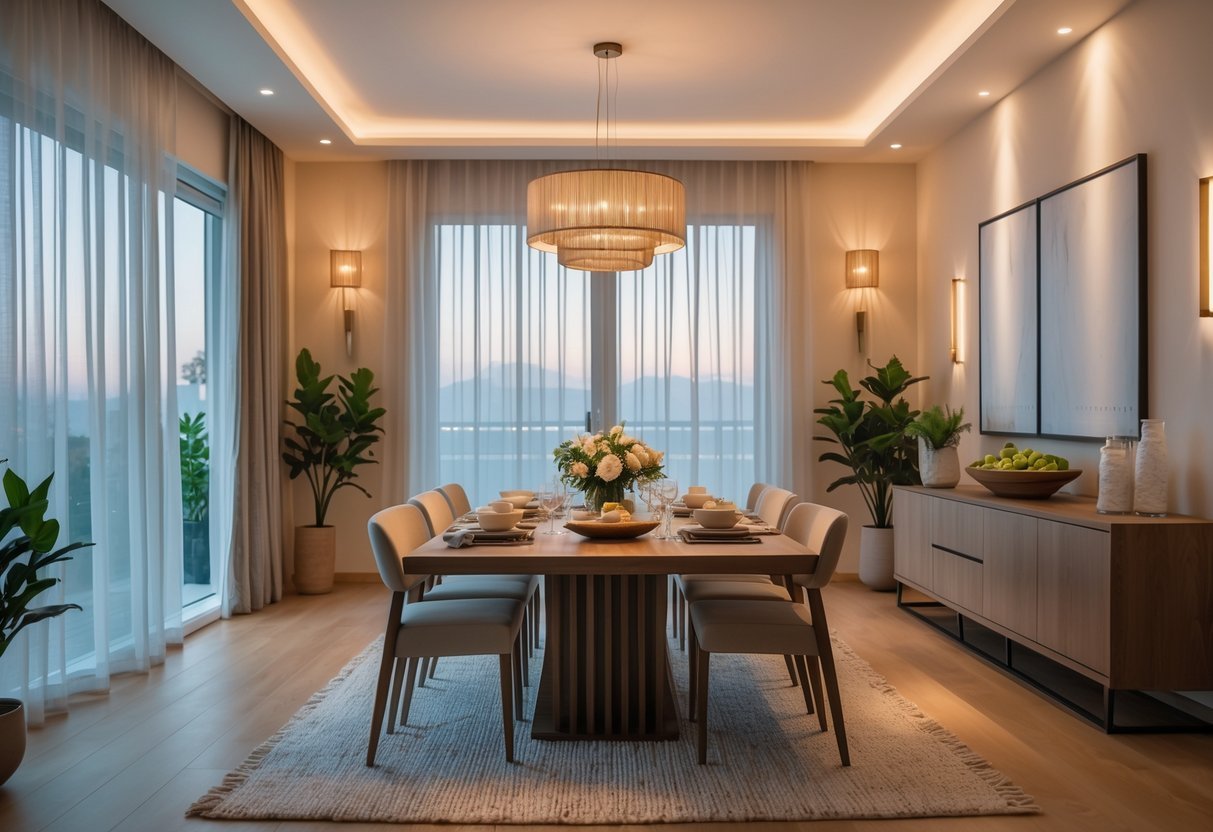
Choose a chandelier or pendant that matches your table size and ceiling height. For an 8-foot ceiling, pick a fixture with a 30–36 inch diameter or a linear pendant that spans two-thirds the length of the table. Hang the bottom of the fixture about 30–36 inches above the table surface so it lights food without blocking sight lines.
Match style and finish to your room: brass or matte black for traditional or modern looks, glass or fabric shades for softer light, and open metal frames for an industrial feel. If you host often, install a dimmer so the fixture can switch from bright for dinner prep to low for intimate meals. Consider multiple pendants over long tables to balance light and create rhythm.
Layered Lighting Techniques
Layer three types of lighting: ambient, task, and accent. Ambient light fills the room—use recessed cans or a ceiling fixture on a dimmer. Task lighting targets the table and buffet areas—pendants, a chandelier, or wall sconces work well here. Accent lighting highlights art or architectural features—picture lights, adjustable spotlights, or LED strips do the job.
Use warm color temperatures (2700K–3000K) for a cozy feel, and keep fixtures on separate circuits or smart zones so you can mix levels. Place dimmers and smart controls near the entry or on a phone app for quick changes. This setup gives you bright light for cleaning and softer layers for dinner or parties.
Textiles and Decorative Accessories
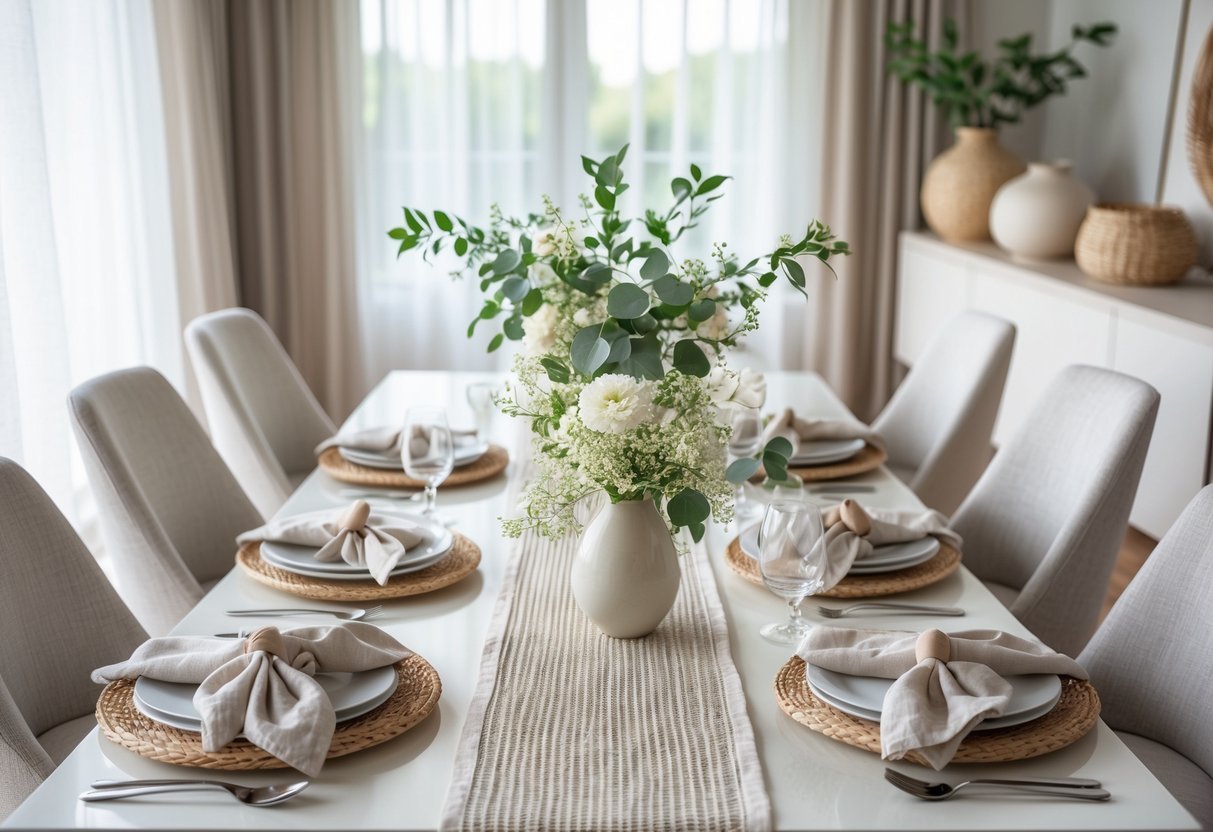
Choose textiles and accessories that add color, texture, and function. Focus on durable fabrics, scaled patterns, and layered pieces you can change with seasons or occasions.
Table Linens and Runners
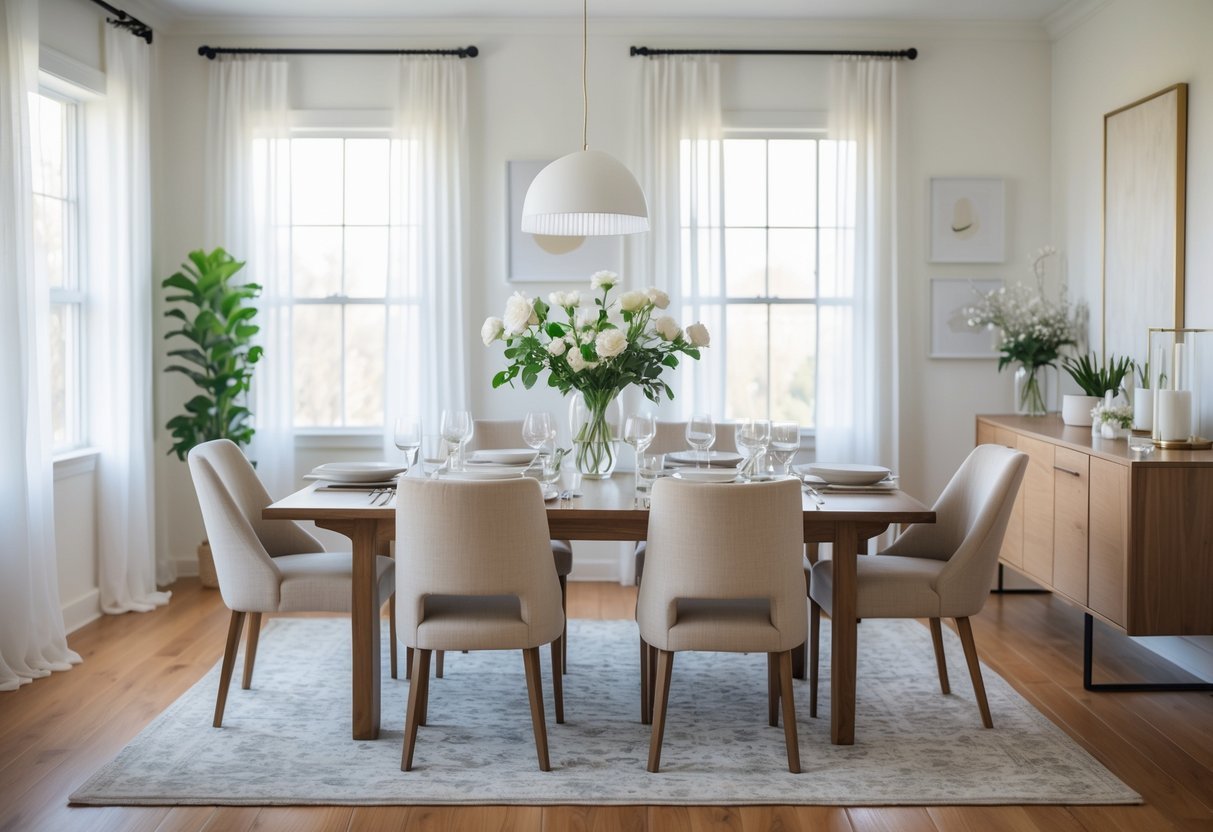
Table linens shape how meals feel and protect your table. Use a washable cotton or linen blend for everyday placemats; they resist stains and dry quickly. For special dinners, layer a neutral tablecloth with a patterned runner down the center to add contrast without overwhelming the table.
Match napkin fabric to placemats or pick a complementary color to tie the room together. Use napkin rings or simple folded shapes for a finished look. Keep sizes in mind: runners should stop 6–12 inches from each table end, and placemats should leave about 6 inches from the table edge for plates and elbows.
Window Treatments
Window treatments control light, privacy, and mood. Choose light-filtering curtains in natural fibers like cotton or linen for daytime warmth and texture. If you need blackout for evening dinners or a multifunctional room, install lined drapes or a separate blackout shade behind sheer panels.
Hang curtains 4–6 inches above the window frame or up to the ceiling to make the room feel taller. Use hardware that complements other metals in the room—brass with warm woods, matte black with modern pieces. For a clean look, consider roller shades paired with decorative side panels.
Rugs and Flooring
Rugs anchor the dining area and protect floors from chairs and spills. Select a rug that extends at least 24 inches beyond the table on all sides so chairs remain on the rug when pulled out. Low-pile wool or indoor-outdoor synthetic rugs handle heavy traffic and clean more easily than shag styles.
Match rug pattern scale to room size: small patterns for small rooms, larger motifs for open spaces. If you have hardwood or tile, use a non-slip pad under the rug to prevent sliding and reduce wear. For glued-down flooring, choose stain-resistant finishes and place chair pads where repeated movement occurs.
Frequently Asked Questions
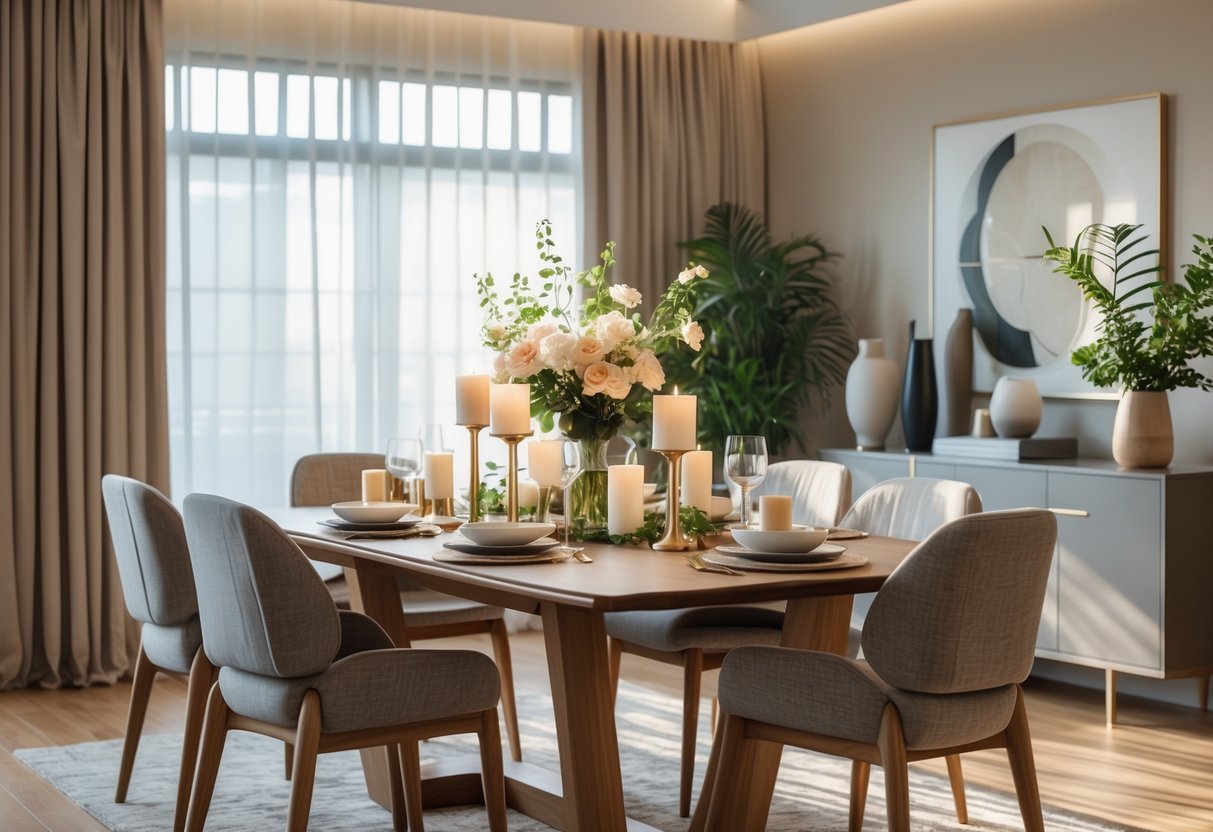
You’ll find practical ways to refresh walls, stretch a small space, save money, and shape a formal dining room. The tips below list simple actions, key items, and current looks you can use right away.
How can I enhance my dining room walls to make the space more inviting?
Add a focal wall with paint or wallpaper in a warm but not overpowering color, like deep blue, muted green, or soft gray. Use textured wallpaper or a satin paint finish to reflect light and add depth.
Hang art at eye level and group pieces in odd numbers for balance. A mirror opposite a window doubles daylight and makes the room feel larger.
Install picture or wall molding to add classic detail without much cost. Consider a chair rail to protect walls and create two-tone interest.
What are some budget-friendly dining room decorating tips?
Shop for a secondhand table, chairs, or a buffet and refinish them for a fresh look. Paint and new hardware transform furniture for less than buying new.
Use a statement light fixture to lift the whole room; swap a basic shade for a pendant or chandelier. Layer inexpensive textiles — a runner, placemats, and seat cushions — to add color and comfort.
Buy art prints or make a gallery wall with framed photos and prints. Plants and simple greenery add life at low cost.
How can I decorate a small dining room to maximize space and style?
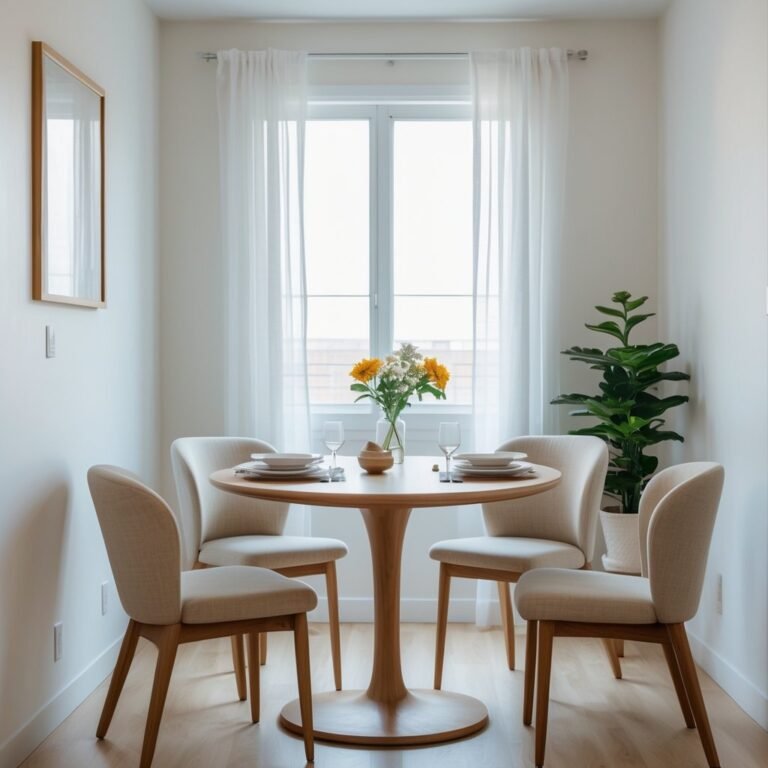
Choose a round or drop-leaf table to free up walking space and allow more seats when needed. Keep chairs slim and armless to reduce visual clutter.
Use wall-mounted storage like a slim shelf or floating cabinet to keep essentials off the floor. Place a mirror on one wall to boost light and create depth.
Stick to a limited color palette to make the room feel cohesive. One or two accents keep the style interesting without overwhelming the space.
What elements are essential for a formal dining room makeover?
A quality table and comfortable upholstered chairs anchor a formal look. Aim for symmetry in layout and lighting placement to create a refined setting.
Add a chandelier centered over the table and use dimmable lighting for layered mood control. A rug sized so chairs stay on it when pulled out keeps the area grounded.
Include storage for tableware — a sideboard or china cabinet — and display a curated set of dishes or glassware for an elegant touch.
Can you suggest simple yet impactful dining room decor strategies?
Swap a plain light fixture for one with shape or material contrast, like brass or woven rattan. Change switch plates and cabinet hardware for small, high-impact updates.
Introduce texture through a woven rug, linen curtains, or a wood centerpiece. Keep the table simple: a runner, a low centerpiece, and matching place settings create a tidy, intentional look.
Rotate seasonal accents — candles, greenery, or ceramics — to keep the room feeling fresh without big changes.
What are some modern trends in dining room design for a contemporary home?
Mixed materials rank high: pair metal light fixtures with warm wood tables or stone accents. Curved furniture and rounded table edges soften modern lines.
Earthy, muted color palettes with accent tones like terracotta or navy remain popular. Open-plan dining that blends with the kitchen calls for cohesive finishes and intentional zoning with rugs or lighting.
Sustainable choices — reclaimed wood, low-VOC paints, and timeless pieces — focus on durability and long-term style.