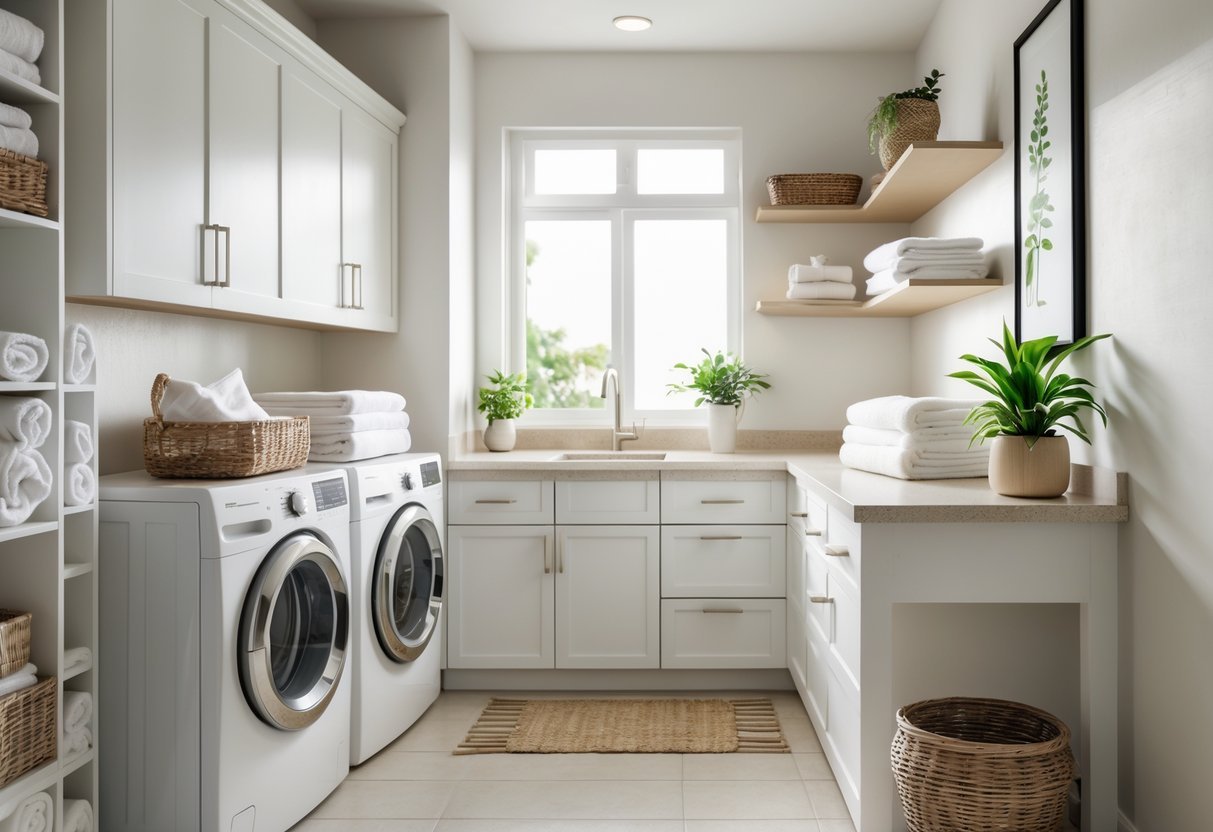
Small Laundry Room Design Ideas to Maximize Space and Style
You can make a small laundry room feel organized and useful without major renovations. Use vertical storage, stackable appliances, and a compact work surface to free floor space and keep laundry tasks quick and tidy.
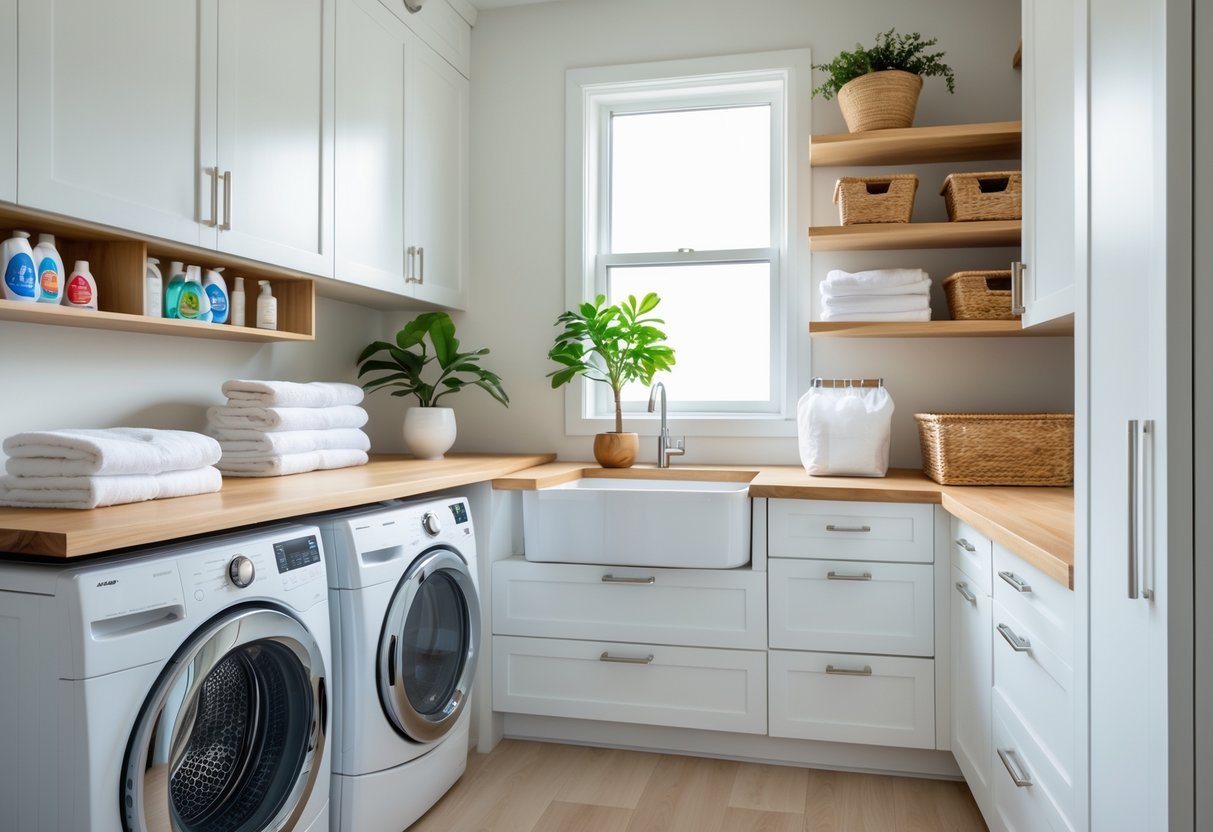
Think about how you use the room and plan for zones: washing, drying, folding, and storage. Add hooks, slide-out baskets, and a slim sink or fold-down table so every inch works harder for you.
Key Takeaways
- Plan zones and layouts that fit your workflow.
- Choose smart storage to maximize vertical and hidden space.
- Add multi-use surfaces and simple decor to boost function and style.
Space-Saving Layouts
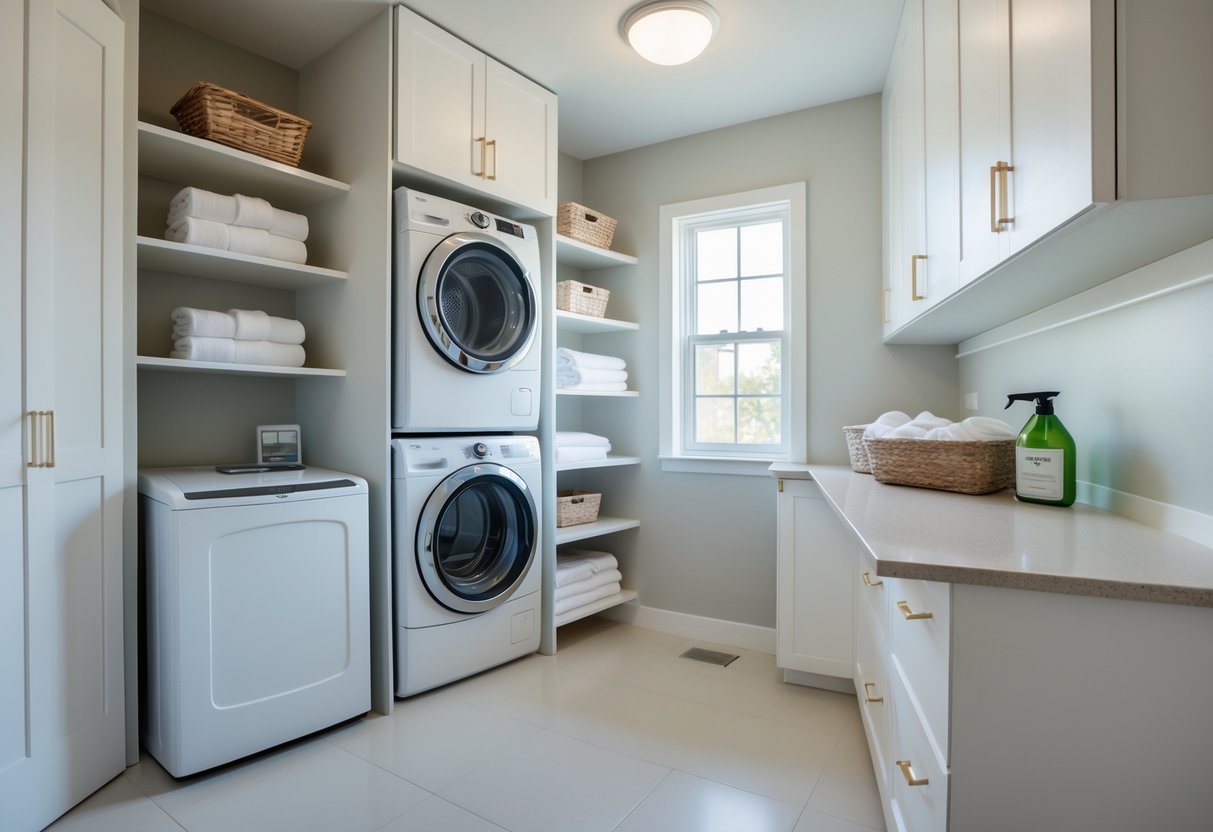
Maximize floor space, keep work surfaces at a comfortable height, and store detergents within reach. Use vertical storage, slim appliances, and clear traffic paths to make your laundry tasks faster and safer.
Stacked Washer and Dryer Solutions
Stack a front-load washer and dryer to free up floor space for shelving or a folding station. Choose a kit that locks the dryer to the washer and place anti-vibration pads under the washer to reduce noise and movement.
Plan for service access: leave at least 2–3 inches behind machines for hoses and vents. Put a narrow pull-out shelf or wire basket beside the stack for detergents and stain removers. If ceiling height allows, install a shallow cabinet above the dryer for rarely used items.
Consider a wall-mounted folding shelf at waist height. It gives you a flat work surface without taking floor area. Add hook strips on the exposed side for delicates and reusable bags.
Galley-Style Laundry Room Concepts
Run machines and storage along one or both walls in a narrow corridor layout. Place washer and dryer side-by-side under a continuous countertop for sorting and folding. Keep the counter depth at 24–27 inches for comfortable work space without crowding the walkway.
Use upper cabinets or open shelving above the counter for bulk supplies and baskets. Install sliding doors or a pocket door to keep the corridor open; swinging doors reduce usable space. Add task lighting under cabinets to brighten the work surface.
If the room is long, create zones: washing at one end, drying and folding in the middle, and storage at the far end. Use matching baskets and labels to keep everything visible and easy to grab.
Corner Layout Strategies
Fit machines into an L-shaped arrangement to open up the center of the room. Place the washer on one wall and the dryer on the adjacent wall, with a corner countertop bridging them for folding and sorting.
Use corner cabinets with lazy Susans or pull-out trays to make the most of awkward spaces. A tall, shallow pantry in the corner can hold brooms, mops, and tall detergent containers without blocking access to machines.
Keep plumbing and electrical routing in mind: run supply lines along the shorter wall to reduce hose lengths. Add a hook rail above the corner counter for hang-drying small items or holding frequently used tools.
Smart Storage Solutions
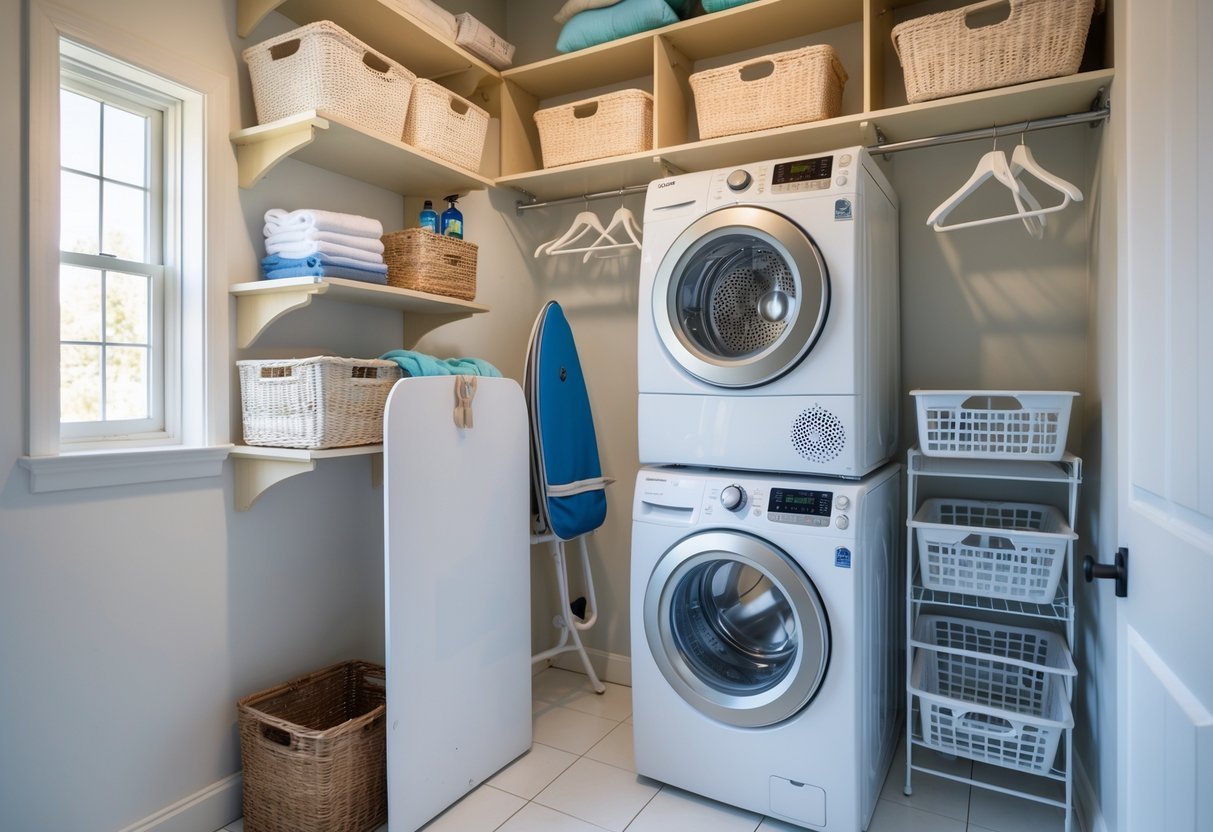
You can fit more gear into a small laundry room by using vertical space, tailored cabinetry, and hidden containers. Focus on easy access, clear sight lines, and storage that matches your daily routine.
Custom Cabinet Design
Custom cabinets let you use every inch of awkward space. Choose cabinets that reach the ceiling to store seasonal items on top shelves and daily supplies lower down. Include a mix of deep pull-out drawers for detergent and small appliances, plus narrow vertical compartments for brooms, ironing boards, and mops.
Select durable, water-resistant materials such as plywood with a laminate finish. Add soft-close hinges and full-extension drawer slides so you can reach the back without contorting. Consider built-in countertop over the washer for folding and a slim cabinet above the machines for frequently used items.
Open Shelving Ideas
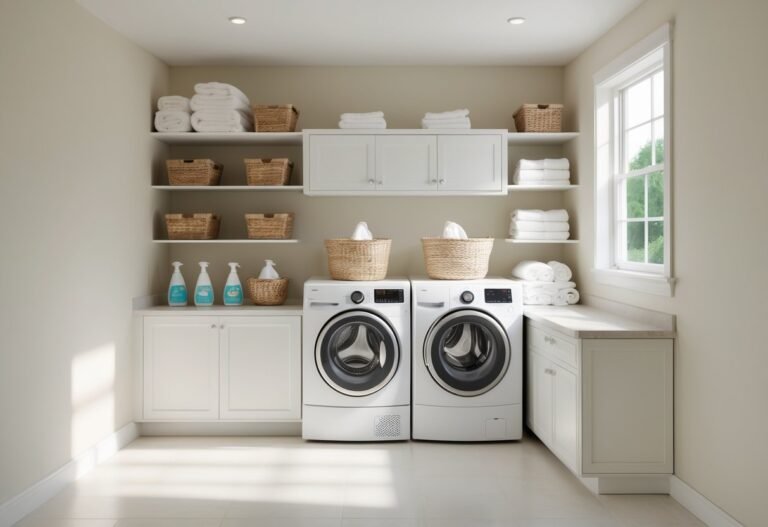
Open shelves keep essentials visible and cut the bulk of closed cabinetry. Install floating shelves above the washer and dryer in staggered heights: the lowest shelf at eye level for detergents, middle for baskets, and top for less-used items. Use uniform containers and labels to reduce visual clutter.
Combine metal brackets with reclaimed wood for durability and style. Include baskets sized to fit shelf depths and a row of hooks underneath for spray bottles or delicates. Leave at least 2–3 inches of clearance above the top of your machines to avoid blocking vents.
Hidden Laundry Hampers
Hidden hampers make dirty clothes disappear without taking floor space. Fit pull-out hampers into a cabinet beside the washer or under a countertop. Use two compartments to sort lights and darks, or add a third for delicates.
Choose hampers with removable, washable bags and handles for easy transport to other rooms. Soft-close runners prevent slamming, and vented fronts reduce odors. If space is tight, consider a wall-mounted flip-down hamper that folds flat when empty.
Overhead Storage Options
Overhead storage frees floor space and stores bulky items out of the way. Install ceiling-mounted racks or high cabinets above the machines for infrequently used items like extra bedding, spare detergent, or a sewing kit. Use pulley systems or sliding rails to lower heavy bins safely.
Keep frequently used items reachable by placing a step stool nearby or mounting a drop-down ladder. Secure all overhead units to studs and use labeled, stackable bins so you can find things fast without unpacking every box.
Multi-Functional Features
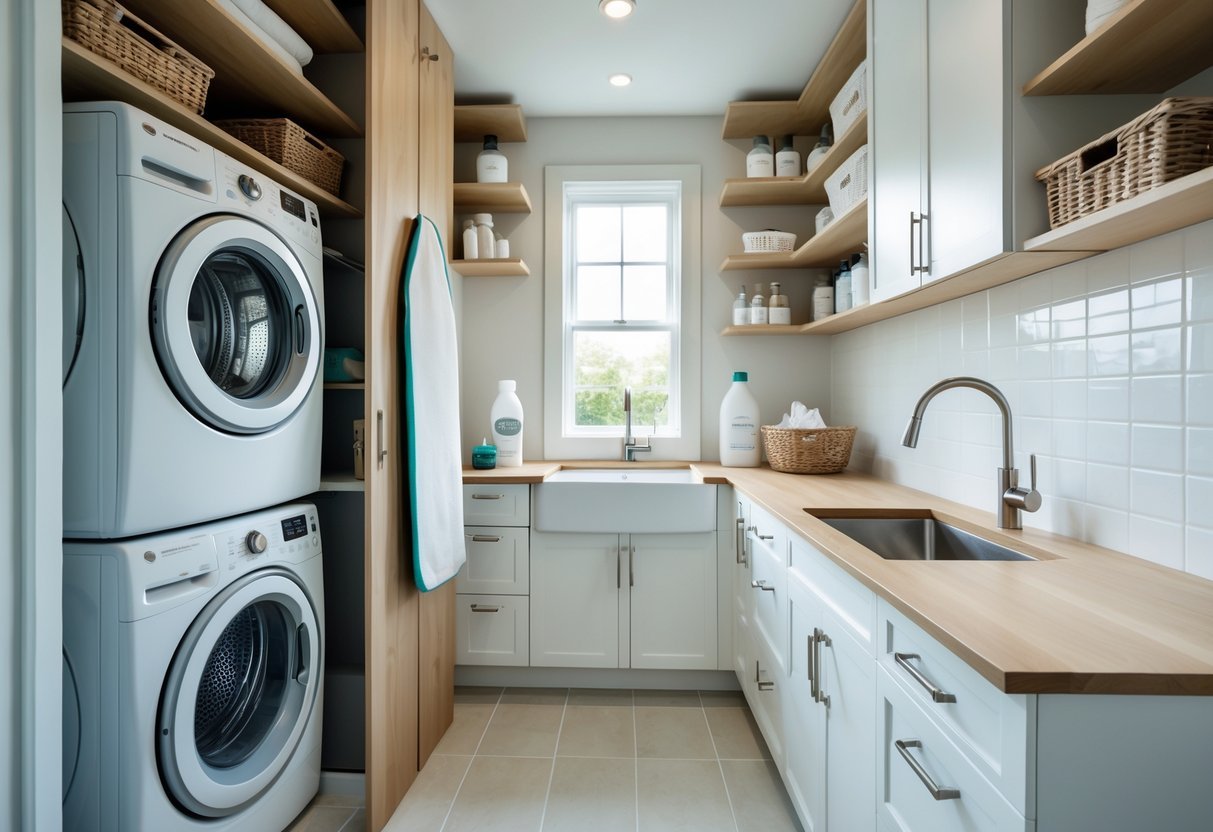
Create work surfaces and add plumbing or storage that save time and cut clutter. Focus on durable materials, smart placement, and combo solutions that give you more function from the same square footage.
Folding Stations and Countertops
Install a 24–30 inch deep countertop over your washer and dryer to give you a proper folding surface. Use materials like plywood with a laminate top, butcher block, or quartz for durability and easy cleaning. If machines are stacked, mount a pull-down or wall-hinged folding shelf at elbow height to keep reach and posture comfortable.
Add divided baskets or shallow drawers under the counter for sorting socks, delicates, and supplies. Consider a pull-out ironing board stored beneath the counter or a slim wall-mounted board to save space. Use task lighting—an LED strip under upper cabinets—to reduce eye strain when you fold or treat stains.
Integrated Utility Sinks
Choose a sink size and depth based on tasks: a 16–20 inch deep laundry sink works for spot-treating and hand-washing without splashing. Opt for a stainless steel or composite sink for stain resistance and easy cleaning. Fit a high-arc, pull-down faucet to rinse large items and reach into buckets.
Position the sink between appliances and storage for an efficient workflow: washer → sink → drying area. Add a shallow ledge or wall rack for brushes, stain removers, and a small drying rack. Install water-proof cabinet bases or raised legs to avoid damage from occasional spills.
Combination Laundry and Mudroom
Combine a bench, hooks, and cubbies with your washer/dryer zone to handle outerwear and footwear. A 36–48 inch bench with storage underneath holds laundry baskets and shoes. Place heavy-duty hooks 48–60 inches from the floor for coats and backpacks.
Use washable, wipeable surfaces—vinyl flooring and tile backsplash—near the entry to control dirt. Include a ventilated cubby or pull-out drawer for wet boots to prevent odors. If space allows, a narrow folding wall table can double as a shoe-cleaning station or pet-care spot.
Finishing Touches and Decor
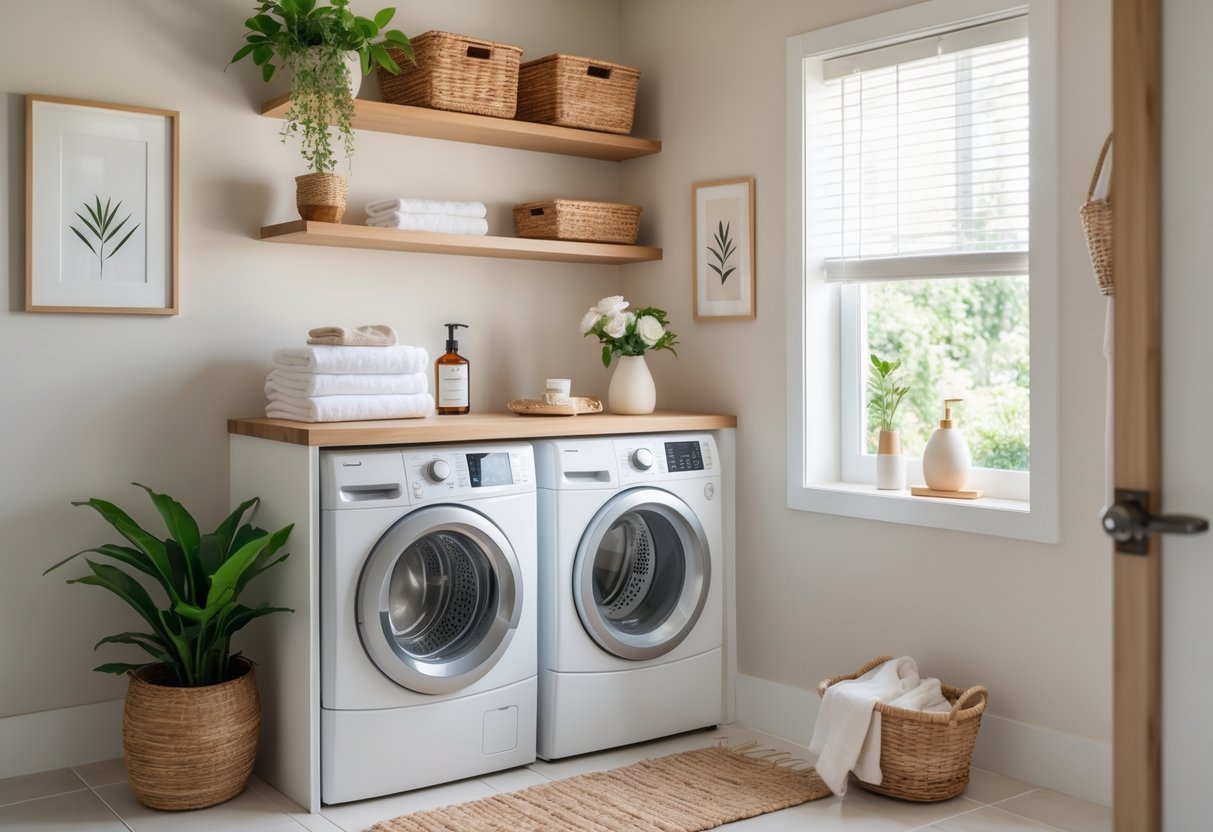
Choose a simple color palette, bright lighting, and a few well-placed accessories to make the room feel larger and work better for daily use. Focus on washable materials, compact storage, and items that pull double duty.
Color Schemes for Small Spaces
Pick 2–3 colors only. Use a light neutral (soft white, pale gray, or warm beige) on walls to reflect light and make the room feel bigger. Add one mid-tone for cabinetry or a feature wall, like navy or sage, to give depth without closing the space.
Use an accent color sparingly — towels, a rug, or storage bins work well. Choose water- and stain-resistant fabrics for accents so they stay clean. If you have open shelves, paint the shelf backs a contrasting color to create visual interest without clutter.
Consider color continuity with nearby rooms. If your laundry opens to a hallway, match trim or a single accent hue so the flow feels intentional.
Lighting Tips for Laundry Rooms
Aim for layered lighting: bright overhead light, task lighting over the washer/dryer or folding area, and a small accent light if space allows. Use LED fixtures for bright, even light and low energy use.
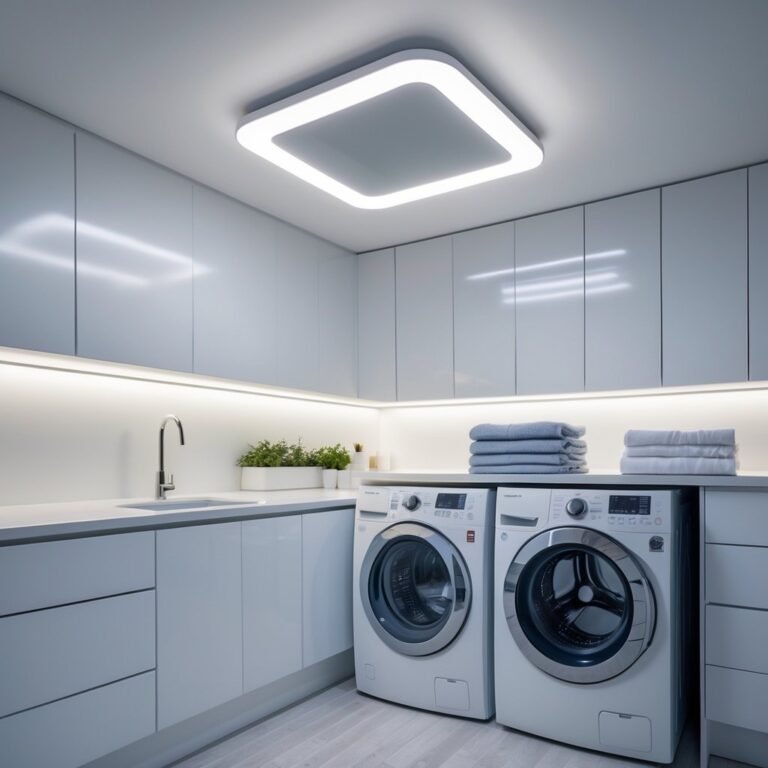
Install a flush-mount ceiling light or a slim LED panel for general light. Add under-cabinet LED strips above a countertop or a puck light over the folding zone to reduce shadows while you work. If you have a closet-style laundry, add a motion-sensor light so it turns on automatically.
Choose bulbs with 3000–4000K color temperature for natural-looking light. Make sure switches and outlets are easy to reach; consider adding a dimmer if your layout allows for softer light when you’re not working.
Decorative Accessories
Keep accessories functional. Use labeled baskets for sorting, a slim rolling cart for supplies, and hook strips for hanging delicates or frequently used tools. Choose closed bins to hide clutter and fabric bins for items you want softer textures.
Add a washable rug runner to protect floors and add a pop of pattern. Hang one or two small framed prints or a magnetic board for notes and schedules. Use matching containers and labels to create a tidy, designed look without extra cost.
Select durable finishes—waterproof mats, coated wire baskets, and wipeable paint—so decor stays fresh under heavy use.
Frequently Asked Questions
This section gives clear, practical answers you can use right away. It covers space-saving layouts, smart storage, fitting a top-load washer, simple organization steps, modern design touches, and helpful IKEA picks.
How can I maximize space in a small laundry room?
Use vertical space first. Add wall shelves, tall cabinets, or open racks above the washer and dryer to store detergent, baskets, and cleaning tools.
Choose stackable or compact machines when possible. Place a slim rolling cart between appliances or beside them for extra storage without blocking doors.
Fold-down or pull-out counters create work surfaces only when you need them. A wall-mounted drying rack that folds flat keeps clothes air-drying without taking floor space.
What are the best storage solutions for small laundry areas?
Use clear bins and labeled baskets to keep supplies visible and easy to grab. Group items by task: stain removers together, dryer sheets together, and sewing or repair kits in one small container.
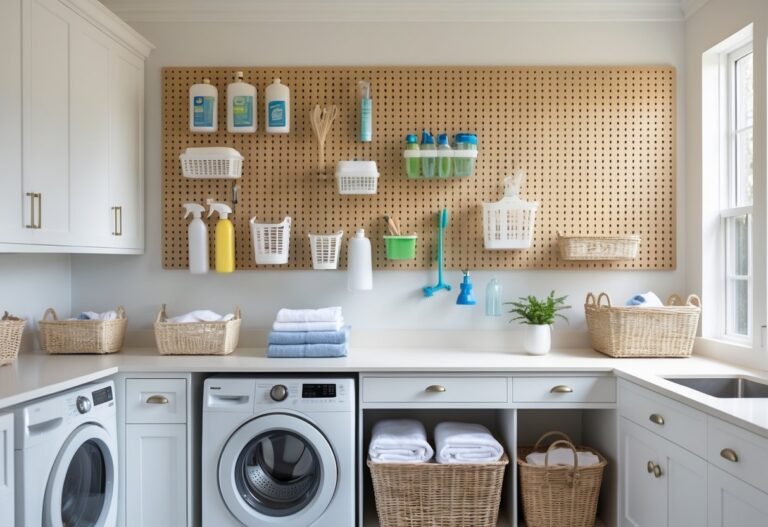
Install shallow cabinets or floating shelves for lightweight items. Magnetic or pegboard strips on walls work well for small tools, lint rollers, and brushes.
Place a slim rolling cart or narrow cabinet next to machines for stacked detergent jugs and small baskets. Over-the-door organizers add pockets for extra odds and ends.
How can I incorporate a top load washer into a small laundry room design?
Allow clearance for the lid to open fully. Measure height and lid swing before placing shelving or cabinets above the machine.
Use a raised platform or adjustable legs to make bending easier while keeping space for storage underneath. Consider a countertop installed around the washer to create a continuous surface for folding.
If stacking is not possible, place the dryer on an adjacent shelf or use a wall-mounted dryer if space allows. Keep commonly used items within easy reach to avoid awkward lifting.
Can you suggest effective laundry room organization tips for limited spaces?
Keep daily-use items at eye level and heavier items lower. That reduces bending and keeps the workflow smooth.
Use lightweight, stackable baskets for sorting. Label each basket for lights, darks, delicates, and towels to speed up sorting and folding.
Create stations: a washing station, a folding surface, and a drying area. Even tiny rooms benefit from a clear flow that matches how you do laundry.
What are some modern design ideas for a compact laundry room?
Choose light-reflective paint and large-format tiles to make the room feel bigger. Simple, neutral colors with one bold accent tile or wall create a fresh look without clutter.
Swap bulky cabinets for slim, handleless cabinetry or open shelving. A single thin countertop over machines gives a clean, modern folding area.
Add a small sink with a sleek faucet if plumbing allows. Use matte finishes and integrated hardware to keep the space looking streamlined.
Are there any IKEA products suited for streamlining small laundry room spaces?
IKEA’s ALGOT or ELVARLI systems fit narrow walls and let you mix shelves, rods, and baskets. They work well for sorted storage and hanging space.
The BRANÄS or SOCKER baskets help contain supplies on shelves while looking tidy. The VÅGSJÖN or NORDEN wall-mounted fold-down tables create temporary work surfaces.
Look for slim utility cabinets like the IVAR or HEMNES series and add labeled containers for a neat, budget-friendly setup.