7 Bedroom Decor Ideas to Maximize Space, Style, and Comfort
You want a bedroom that feels like your space and works for how you live. This article shows seven smart decor ideas that help you shape light, texture, color, and furniture so your room looks pulled together and feels comfortable.
You’ll get practical, usable ideas that combine style with everyday comfort so you can update your bedroom without guesswork.
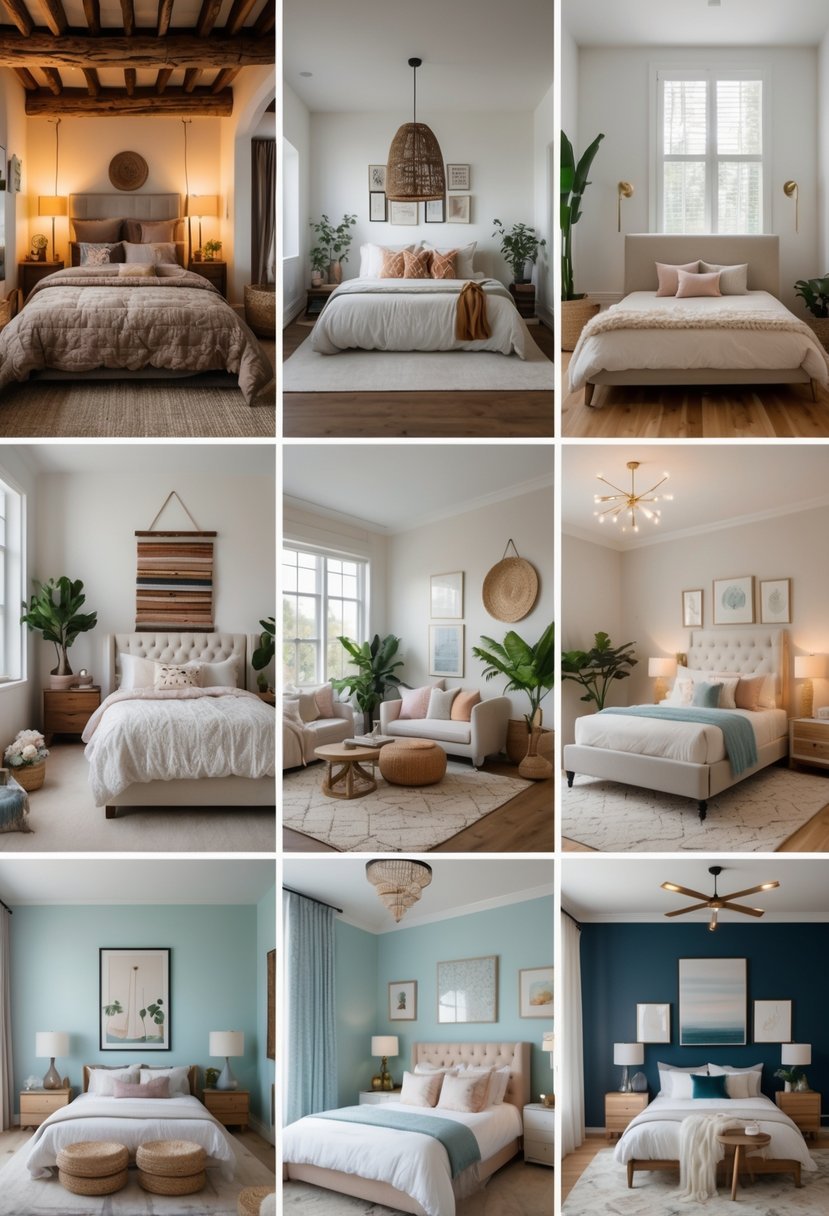
Expect tips on lighting, headboards, wood accents, rugs, shelving, throws, and how to personalize larger rooms, plus simple design principles to guide your choices. Use these ideas to create a room that fits your taste and routines.
1) Layered Lighting with Pendant and Table Lamps
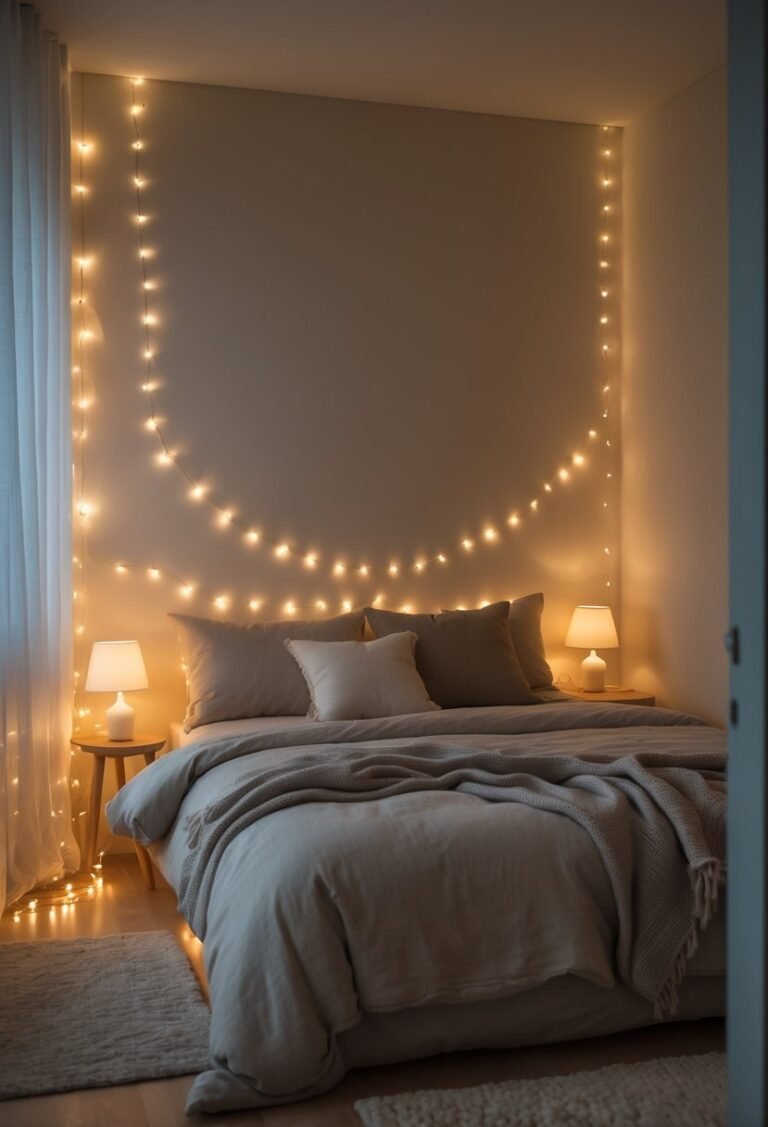
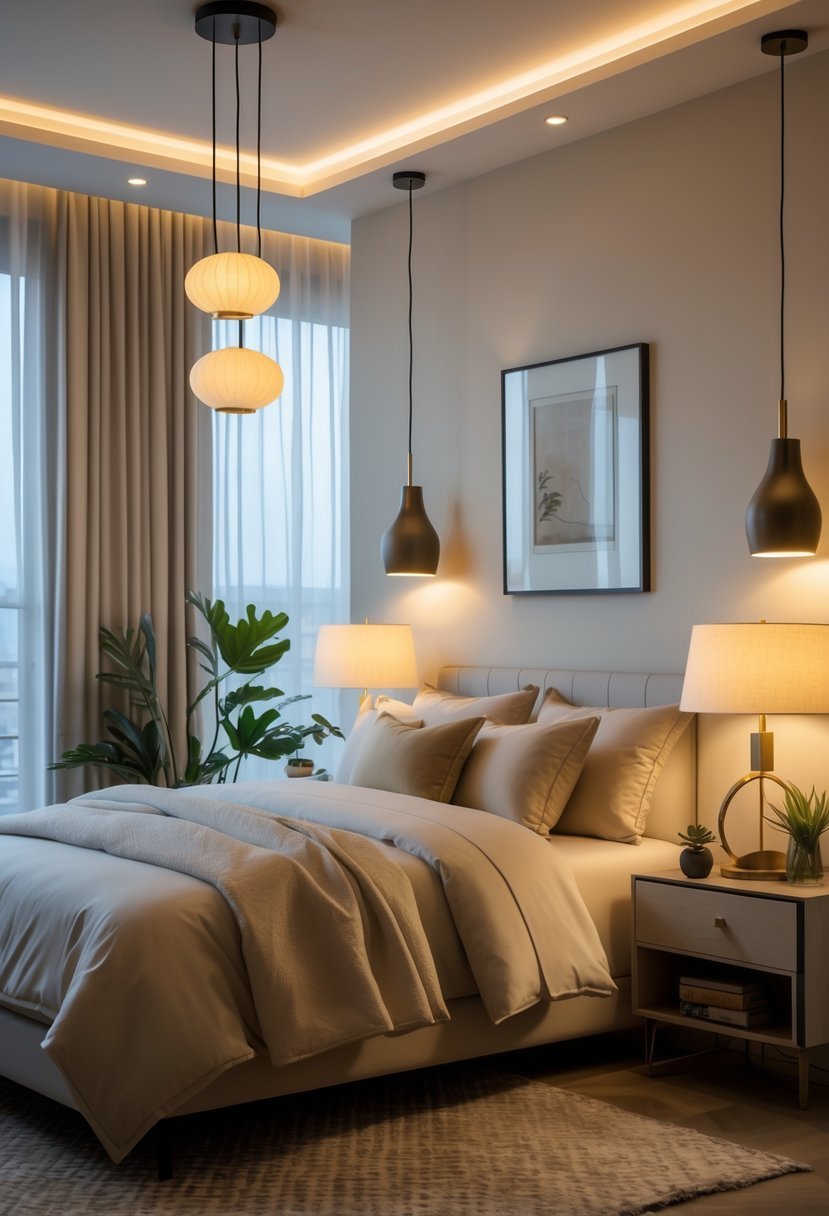
Use pendant lights as your main glow and add table lamps for reading and task light. This mix gives you control over brightness and mood.
Hang pendants low for a cozy feel or higher for general light. Match lamp styles to keep the room balanced.
Place table lamps on nightstands or a dresser to add focused light and visual depth. Layering helps small rooms feel larger and more inviting.
2) Statement Upholstered Headboard in Velvet
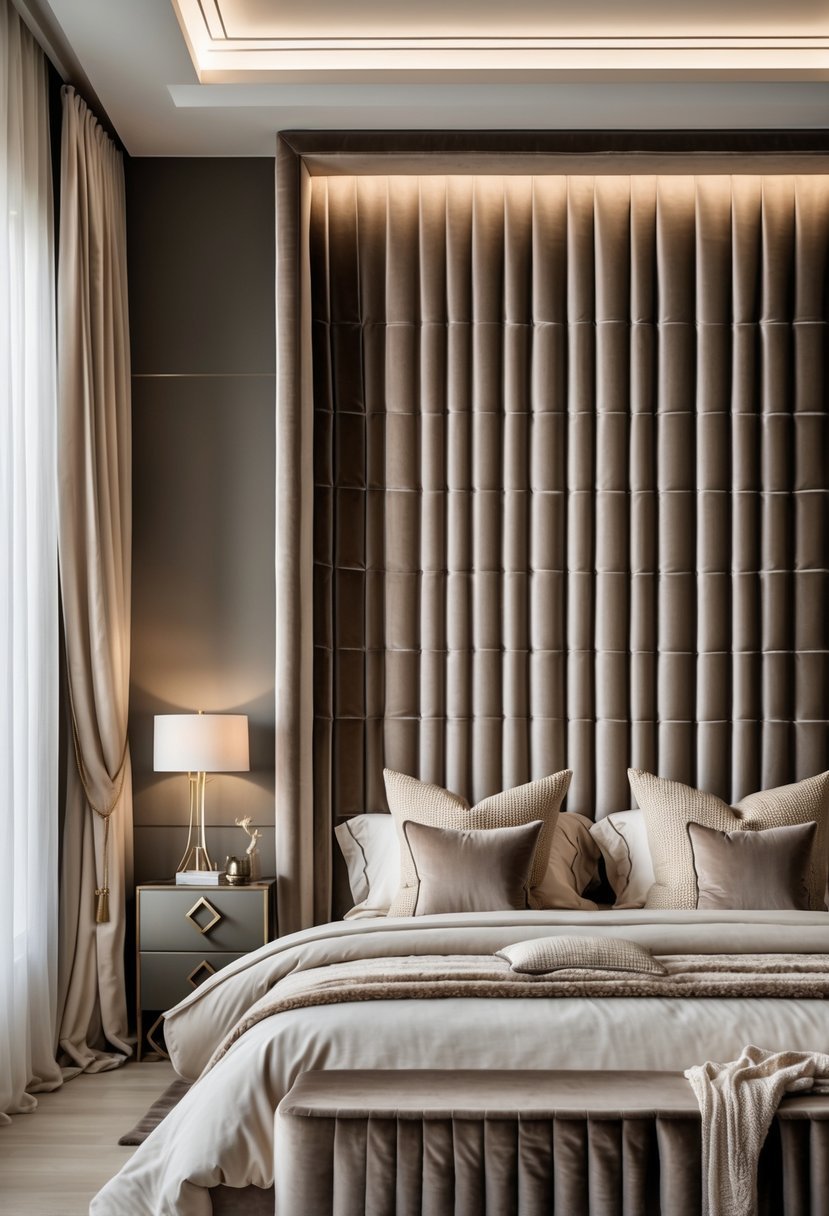
Choose a velvet headboard to add softness and color to your bedroom. The fabric feels warm and looks refined without being flashy.
Pick a tufted or channel design for a classic look, or go oversized for a modern focal point. Match the headboard color to pillows or a throw to tie the room together.
Velvet hides light wear and tones down noise, so it suits both cozy and elegant styles. Keep other decor simple so the headboard remains the centerpiece.
3) Natural Wood Accent Furniture Pieces
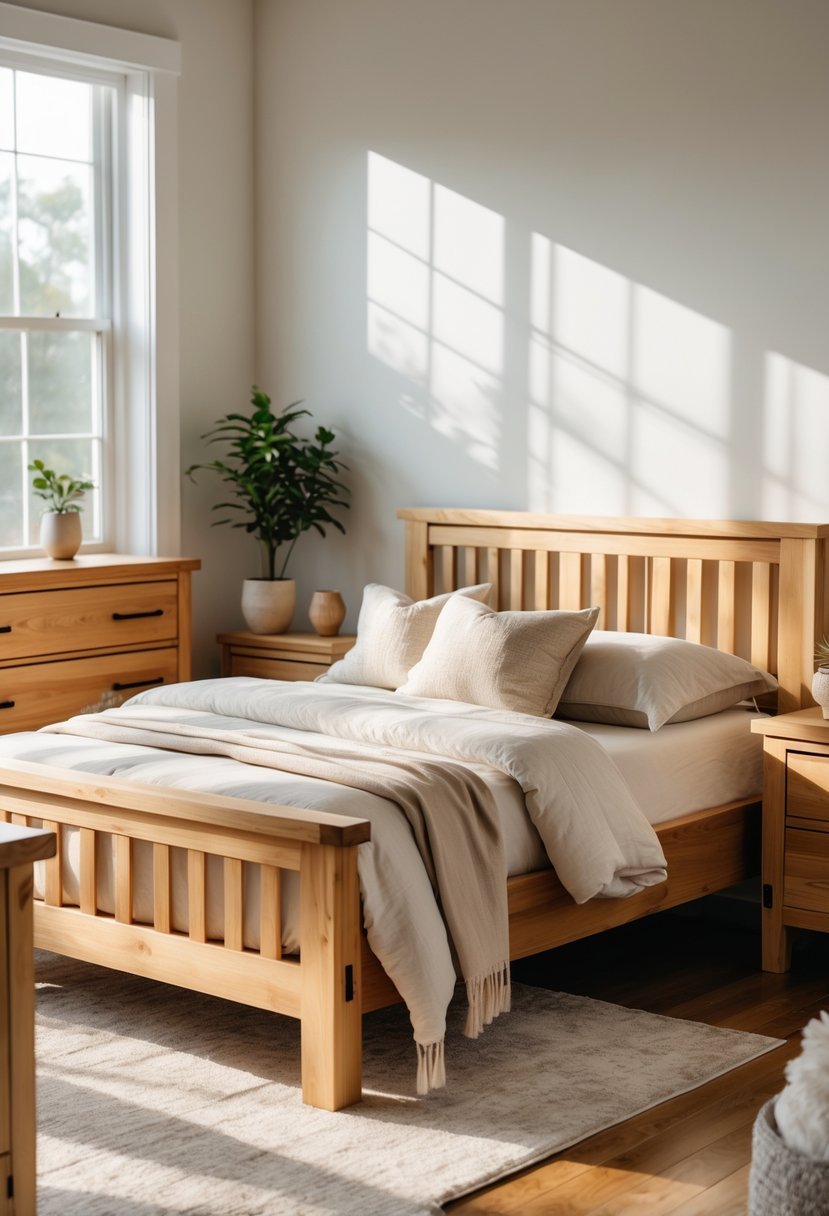
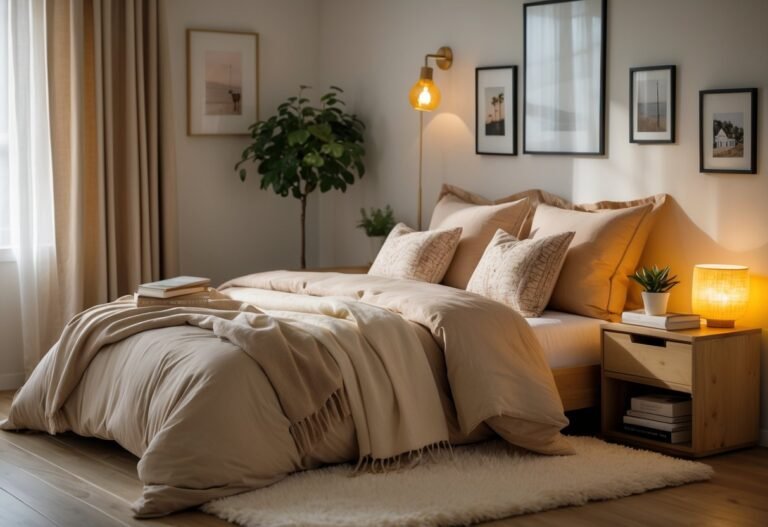
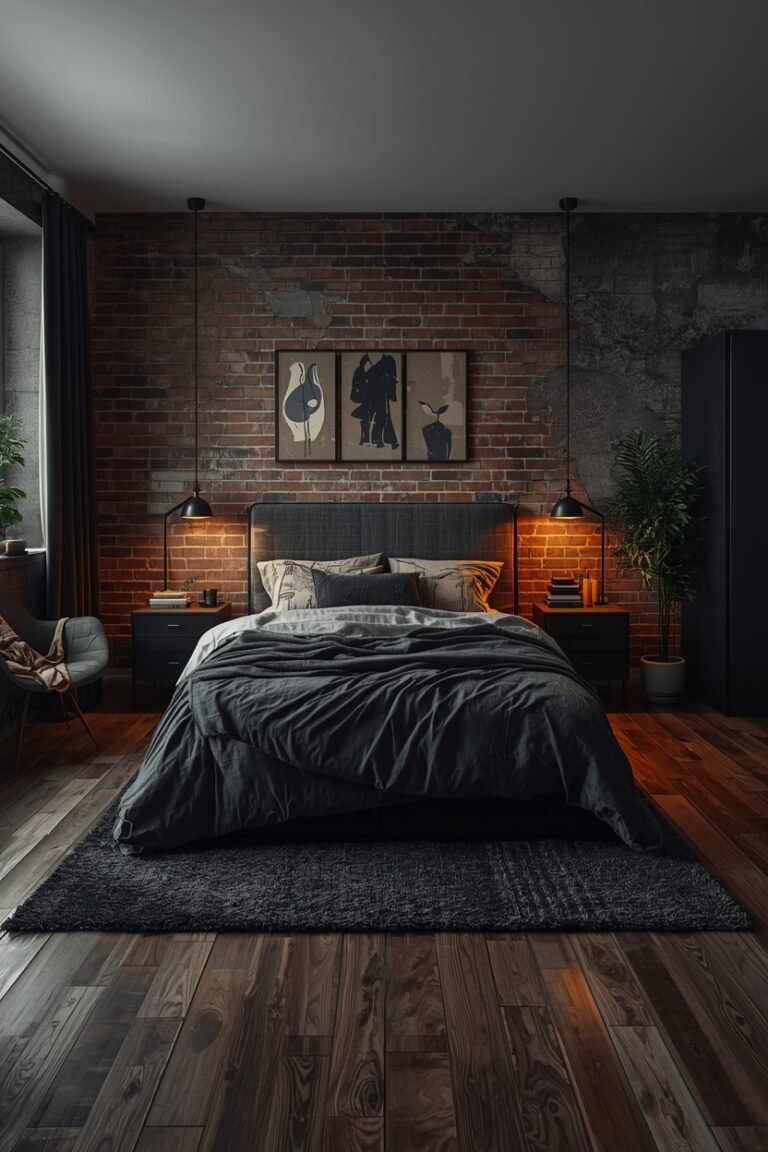
Choose a wood nightstand or bench to add warmth without crowding the room. You can pick reclaimed or smooth-finished pieces depending on the look you want.
Place one statement item, like a live-edge headboard or dresser, to anchor the space. Pair wood with soft textiles and metal or ceramic accents for balance.
Keep finishes consistent in tone to avoid visual clutter. Small wooden accessories, such as frames or trays, tie the design together.
4) Neutral Tones with Bold Color Pops
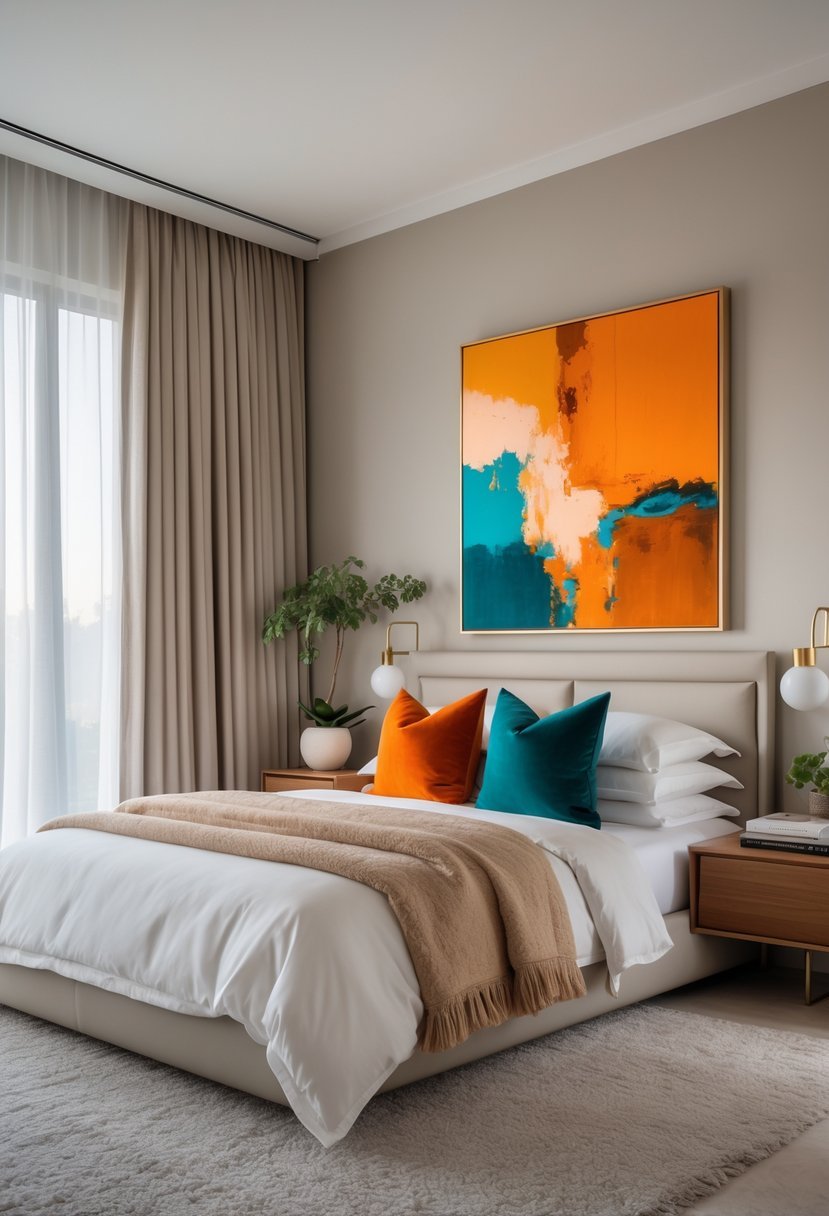
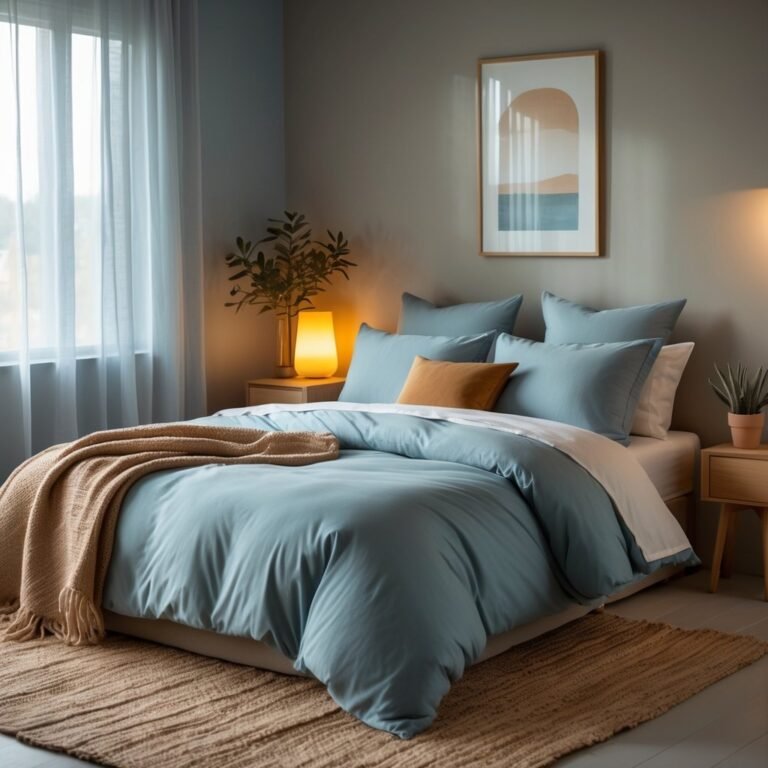
You build a calm base with creams, grays, or soft beiges to keep the room restful. Neutral walls and bedding let texture and shape stand out.
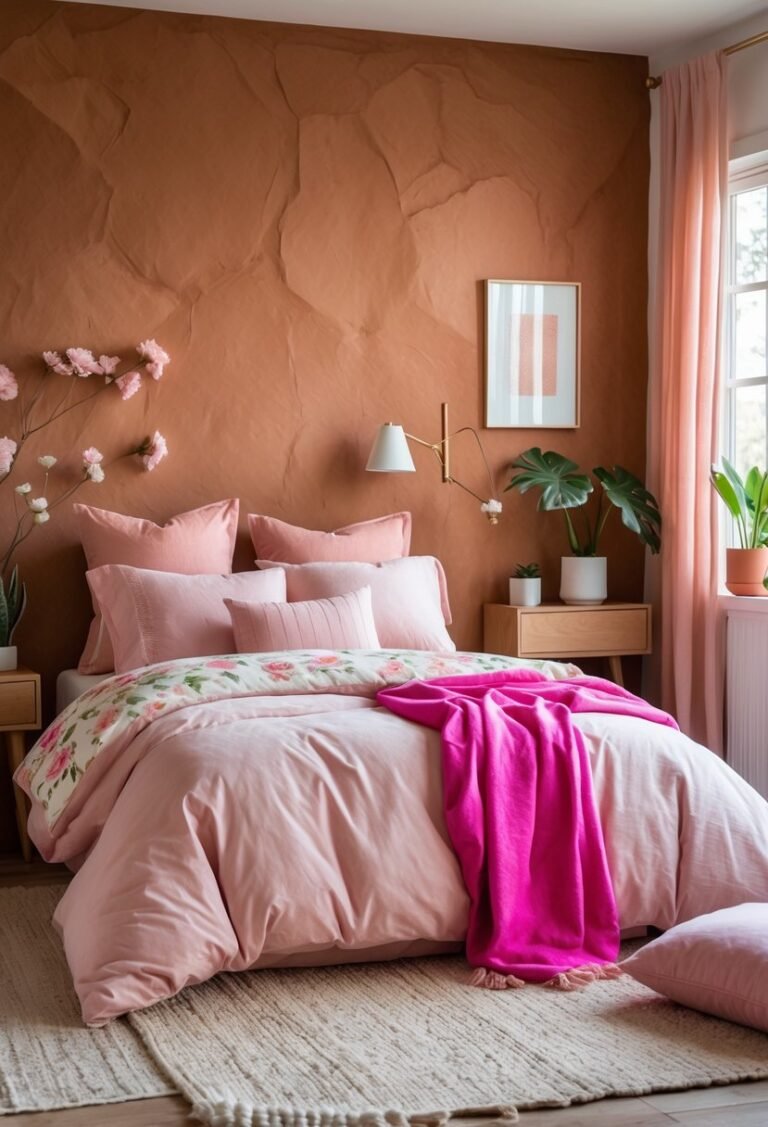
Add a few bright accents—throw pillows, a rug, or a single chair—to give the room personality. Keep the pops limited so they feel intentional, not chaotic.
Vary materials like linen, wood, and metal to add depth without more color. This balance keeps the space warm and modern while letting your chosen accents shine.
5) Textured Rugs for Warmth and Comfort
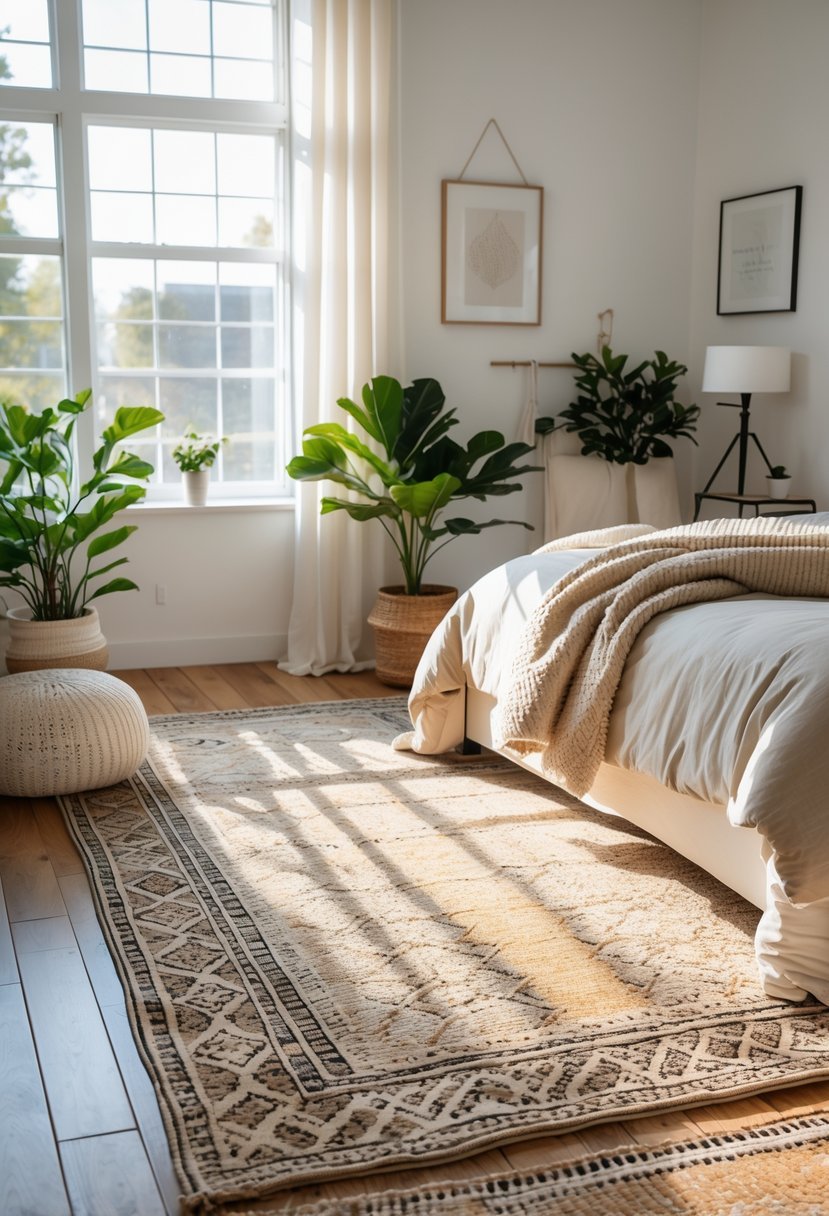
Choose a textured rug to add warmth and quiet to your bedroom. Soft fibers like wool or high-pile blends feel good underfoot and reduce noise.
Pick a size that anchors your bed and leaves space to walk around. Layer a smaller patterned rug over a larger neutral one for depth and easy style updates.
Keep cleaning needs in mind; low-pile or washable options work well if you have pets or allergies.
6) Minimalist Floating Shelves for Display
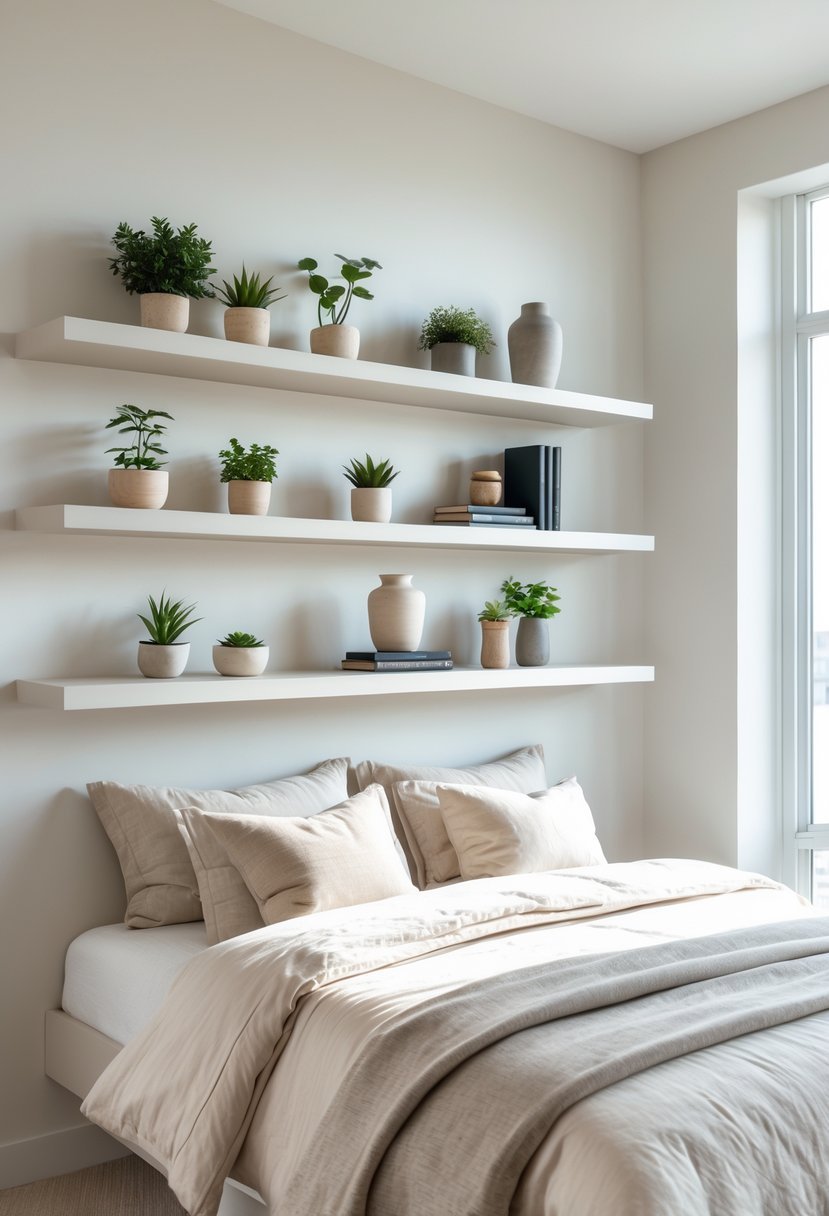
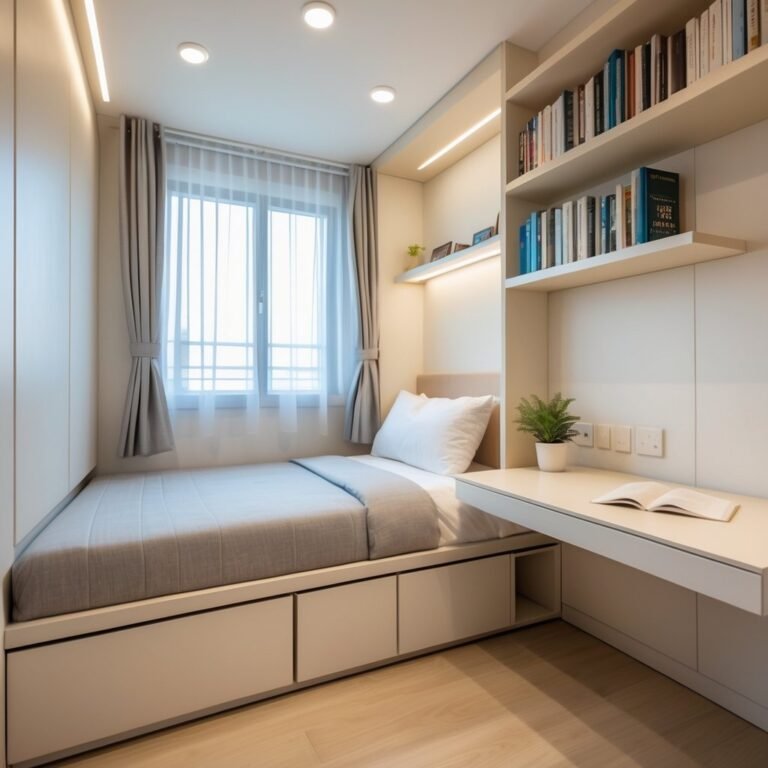
Choose slim floating shelves to keep your walls light and uncluttered. You can display a few books, a small plant, or one framed photo on each shelf.
Space shelves 12–18 inches apart to fit items without crowding. Mount them near your bed or over a dresser for easy access and a clean focal point.
7) Cozy Throw Blankets in Soft Fabrics
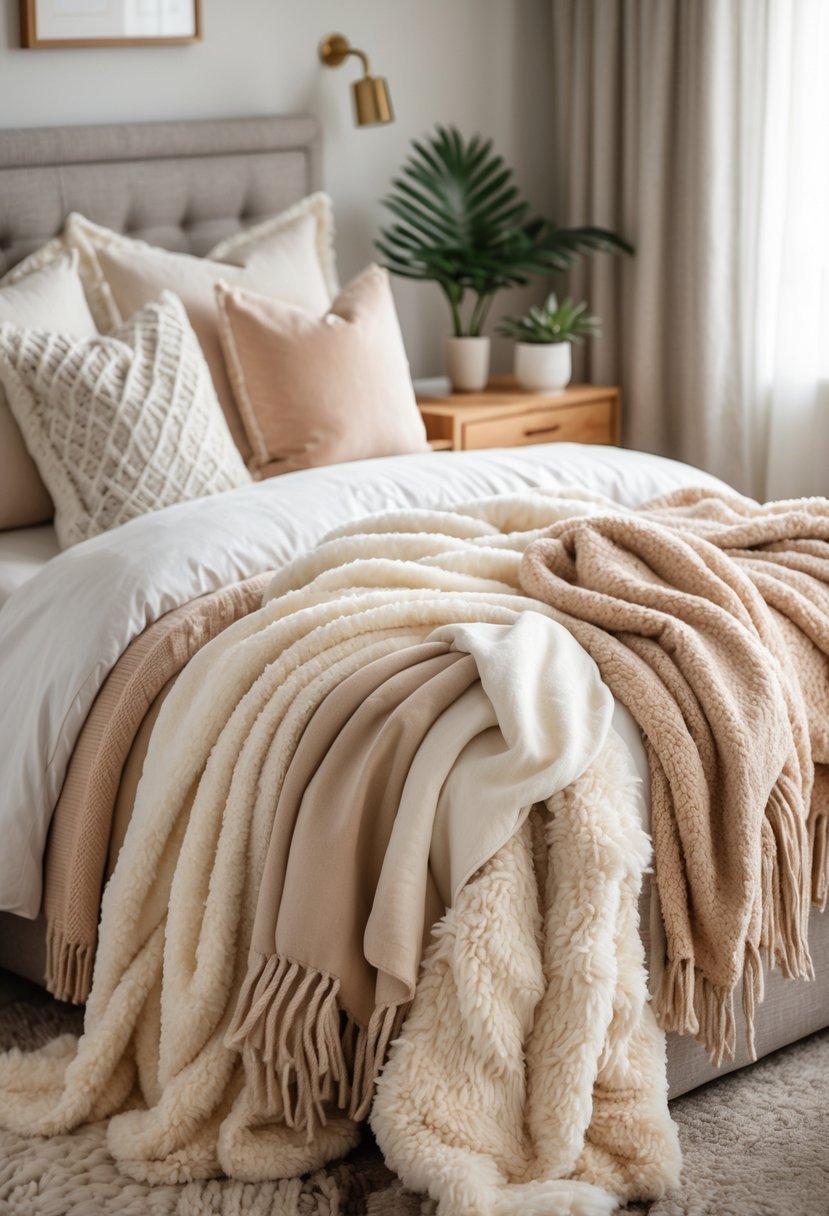
Choose throw blankets in soft fabrics like cotton, fleece, or faux fur to add warmth and texture to your bedroom. Drape one over the foot of the bed or a chair for an inviting, lived-in look.
Pick colors and patterns that match your bedding to keep the room calm, or use a contrasting throw to create a small focal point. Fold or casually toss the blanket so it looks natural and easy to reach when you want extra warmth.
Foundational Design Principles
Focus on how each choice supports daily use and the room’s look. Prioritize comfort, storage, lighting, and a clear color plan so the bedroom feels restful and works for your needs.
Balancing Luxury and Functionality
Decide which luxury features matter most and plan practical support around them. For example, if you want a plush upholstered headboard, choose a bed frame with built-in storage or a nearby dresser to keep the room tidy. Pair high-end fabrics like velvet or silk with durable mattress protectors and washable pillow covers to protect your investment.
Layer lighting for both mood and tasks. Install dimmable overhead lights for ambience, a reading lamp at each bedside, and under-dresser or closet lighting for visibility. Keep pathways clear: leave at least 24–30 inches of walking space around the bed so cleaning and daily movement stay easy.
Create zones. Put a small desk or vanity near a power outlet for work or getting ready. Add a comfortable chair with a side table to form a reading nook. These zones make the room feel luxurious without sacrificing usability.
Cohesive Color Schemes for Multiple Bedrooms
Choose a unifying color family to tie different bedrooms together while giving each room its own personality. Use one consistent neutral—like warm beige, soft gray, or pale taupe—as the base for walls and large furniture. Then assign each bedroom one accent color, such as muted teal, dusty rose, or warm mustard, for pillows, art, and small decor.
Keep finishes consistent across rooms. Match metal tones (brass, matte black, or chrome) on lamps, drawer pulls, and light fixtures to create visual harmony through the house. Use a simple table to plan the scheme:
- Base (walls, large furniture): neutral
- Accent (pillows, throws, small decor): one per room
- Finish (metals, wood tone): same throughout
Test paint chips and textile swatches in each room at different times of day. Light changes color perception, so check how accents read in morning and evening light before committing.
Personalization Strategies for Large Bedrooms
Large rooms give you space to set clear zones and show your style through color, furnishings, and meaningful items. Focus on a few strong choices—like a theme, a seating area, or family-friendly storage—to make the room feel intentional and lived-in.
Creating Distinctive Themes
Pick one clear theme and use three to five repeat elements to tie the room together. For example, a coastal theme could use a navy accent wall, white linen bedding, driftwood picture frames, woven baskets, and brass lamps. Place the strongest element—like a statement headboard or large rug—where the eye lands first.
Layer textures and scale to fill the space without clutter. Use a mix of tall furniture (wardrobe, floor lamp) and low pieces (bench, chaise) so the room feels balanced. Keep a consistent color palette: pick one dominant color, one secondary, and one accent. Add small, personal touches such as travel photos or a favorite artwork to make the theme yours.
Incorporating Family Needs into Design
List the activities that happen in the bedroom and design zones for each. If you need a workspace, put a compact desk near a window with task lighting. If kids share the room, create clear storage zones with labeled bins and open shelves at child height.
Choose durable materials for high-use areas: stain-resistant upholstery, washable rugs, and solid wood bed frames. Think about privacy and sound: a room divider or curtain can separate a workspace or play corner. Finally, add flexible elements like a trundle bed or modular shelving so the room adapts as family needs change.
Frequently Asked Questions
These answers focus on practical steps: save floor space, use layered lighting, pick neutral bases with bold accents, and repeat a few key pieces like wood furniture and textured rugs to keep a cohesive look across rooms.
How can I effectively decorate a small seven-bedroom home to maximize space?
Use built-in storage and multiuse furniture to free floor area. Choose beds with drawers or loft styles and add shelves above doors.
Keep the palette light to make rooms feel larger. Neutral walls with one bold accent wall or accessory works well and ties rooms together.
Place layered lighting—a pendant for general light plus a table lamp for tasks—in each room. It brightens corners and reduces the need for bulky floor lamps.
What are some budget-friendly tips for styling a seven-bedroom house?
Shop for durable basics like neutral bedding and textured rugs you can reuse in several rooms. Buy one statement upholstered headboard and repeat its color or fabric in smaller, cheaper accents.
Refinish or mix natural wood accent pieces instead of replacing everything. Paint and new hardware give furniture a fresh look for less money.
Buy lamps and pendants in bulk or matched sets to cut costs. Simple bulbs and shades change the feel without a big spend.
What elements are key to achieving a modern look in a seven-bedroom home?
Stick to clean lines and uncluttered layouts. Choose simple nightstands, streamlined wood furniture, and low-profile beds.
Use neutral tones with bold color pops in pillows or art. A velvet headboard can serve as a modern focal point when paired with crisp linens.
Keep lighting layered and intentional. Combine pendant lighting for a modern feel with warm table lamps for comfort.
Can you suggest some versatile decor ideas suitable for multiple small bedrooms in a single home?
Pick a shared base: neutral paint, textured rugs, and natural wood accents. Then add different bold color pops per room with pillows, throws, or art.
Use the same layered lighting plan in each room to keep function consistent. Swap small accessories seasonally to refresh looks without big changes.
Choose modular shelving and narrow desks that fit varied layouts. These give each room flexibility for guests, kids, or office use.
What are creative ways to allocate and decorate bedrooms for both adults and children in a large home?
Assign rooms by function: quieter rooms for adults, brighter rooms near play areas for kids. Use darker, calming colors and velvet headboards for adult suites.
For kids, choose durable rugs, storage beds, and washable textiles. Add removable wall decals or framed prints so you can update themes easily.
Create shared design cues, like matching wood accents or the same rug texture, to make the home feel connected while letting each room reflect its occupant.
What resources or platforms offer inspirational decor ideas for a home with many bedrooms?
Browse Houzz and The Spruce for room layouts and product lists tailored to multiple-bedroom homes. They offer wide photo galleries and practical tips.
Check design Q&A pages and blogs for specific questions on color, furniture placement, and lighting. Use social platforms like Pinterest to pin cohesive palettes and repeatable furniture choices.