Stylish Dining Room Banquette Ideas for Cozy Spaces: Beautiful, Space-Saving Designs and Practical Tips
You can make a small dining space feel warm, stylish, and more useful with the right banquette. A well-chosen banquette gives you cozy seating, better use of corner or window space, and often extra storage—so your area works harder and looks better.
This article walks you through practical banquette options and design ideas that fit tight layouts and varied styles. Expect clear tips on layouts, comfort, materials, and space-saving tricks to help you plan a banquette that suits your room and daily life.
1) Built-in corner banquette with tufted upholstery
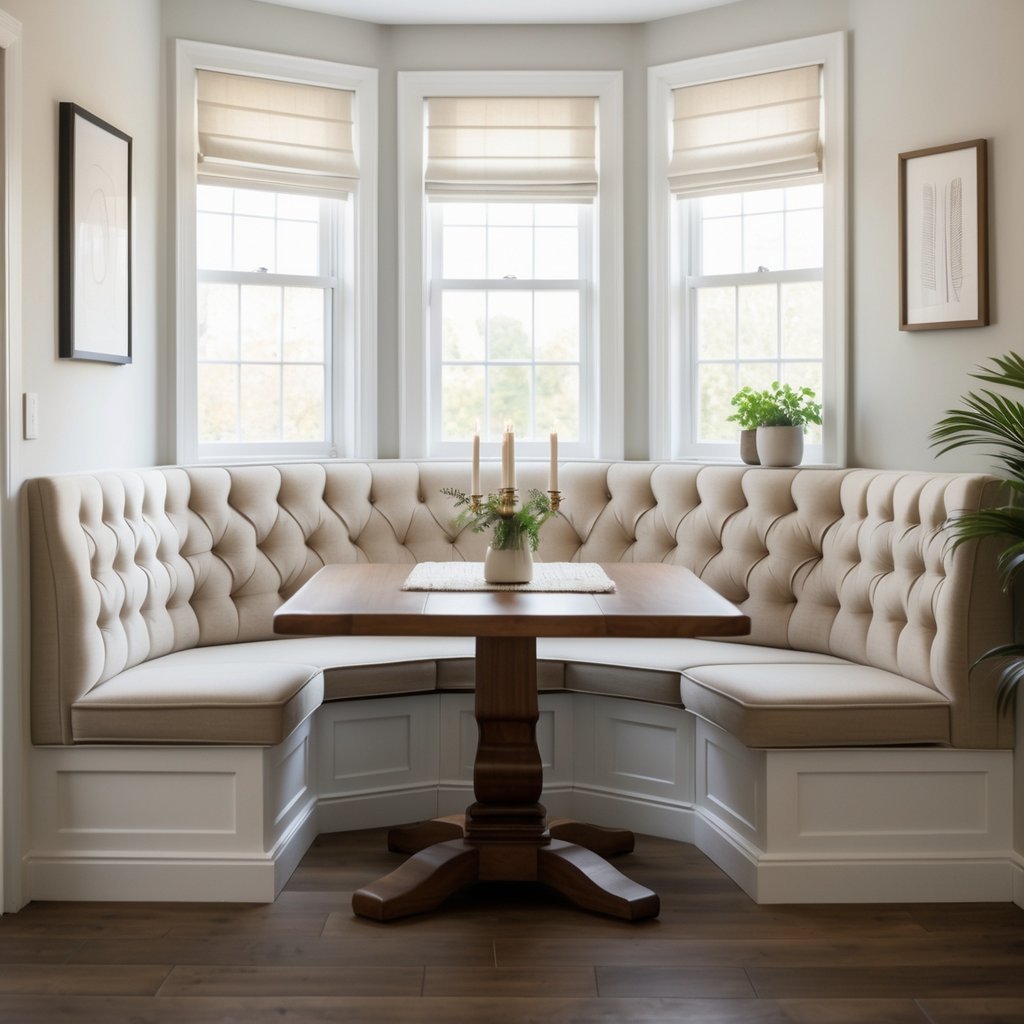
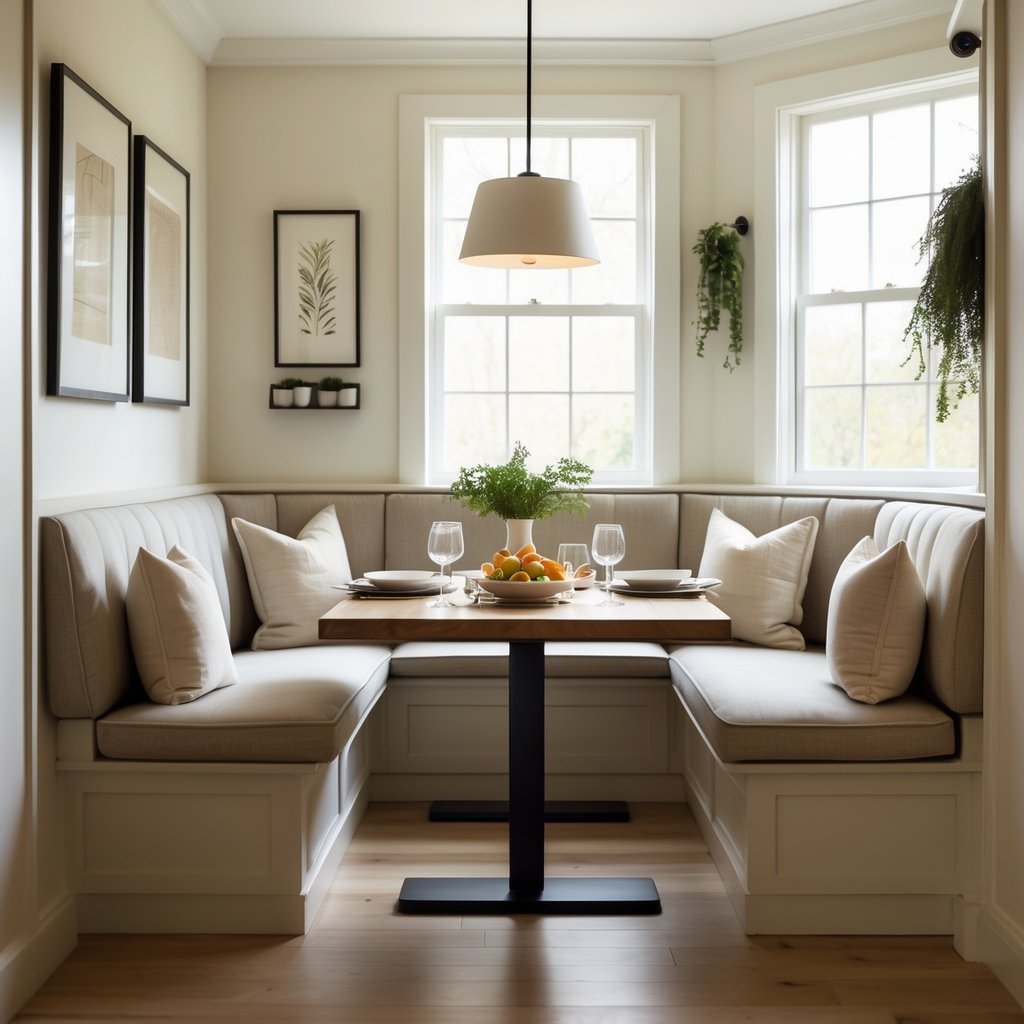
Choose a built-in corner banquette to save space and add shape to your dining area. Tufted upholstery adds texture and a tailored look that works with both modern and traditional rooms.
You can pair it with a small round or rectangular table to fit your layout. Add throw pillows for comfort and to change the look without reupholstering.
2) L-shaped banquette with integrated storage drawers
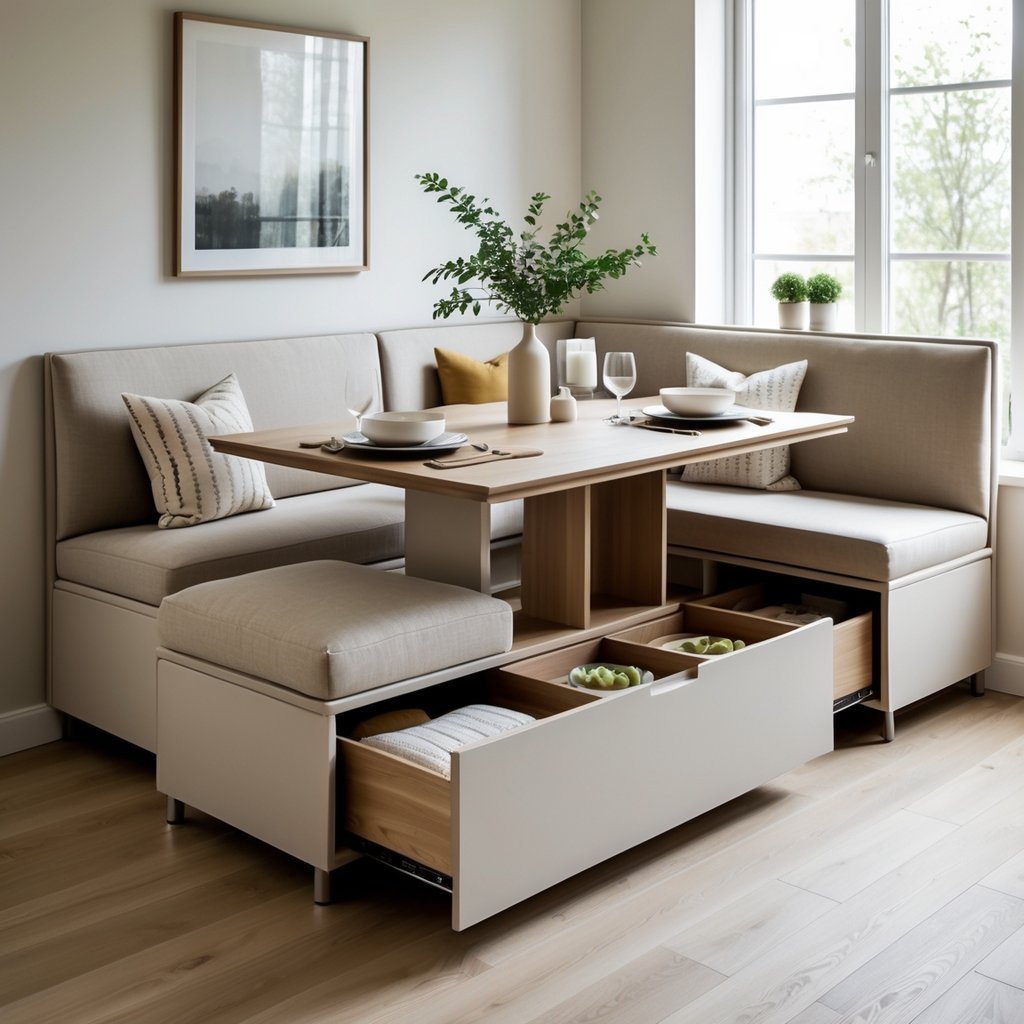
An L-shaped banquette fits neatly in a corner and gives you extra seating without crowding the room. You can tuck drawers under the bench to hide linens, board games, or extra cushions.
Choose full-depth drawers if you need maximum storage, or shallow drawers for easy access to small items. Pick durable upholstery and simple drawer pulls to keep the look clean and practical.
3) Upholstered banquette with colorful patterned cushions
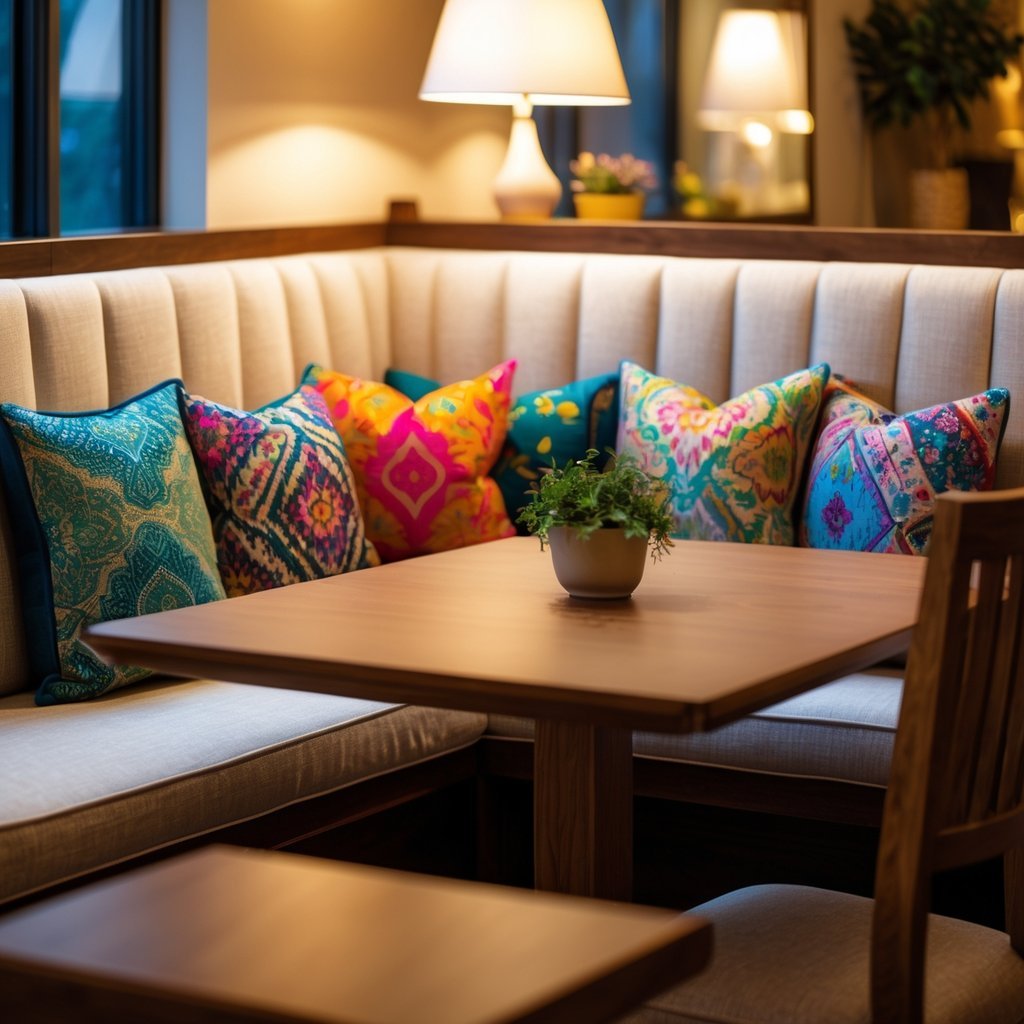
Choose an upholstered banquette to add comfort and a soft look to your dining nook. You can pick durable performance fabric for easy cleaning and long wear.
Layer colorful patterned cushions to bring personality and tie in room colors. Mix scales and textures—small geometrics with large florals—for a balanced, lively feel.
Keep the base neutral if you want flexibility. Swapping cushion covers gives you a quick, low-cost style update when tastes or seasons change.
4) Rustic farmhouse-style wooden banquette
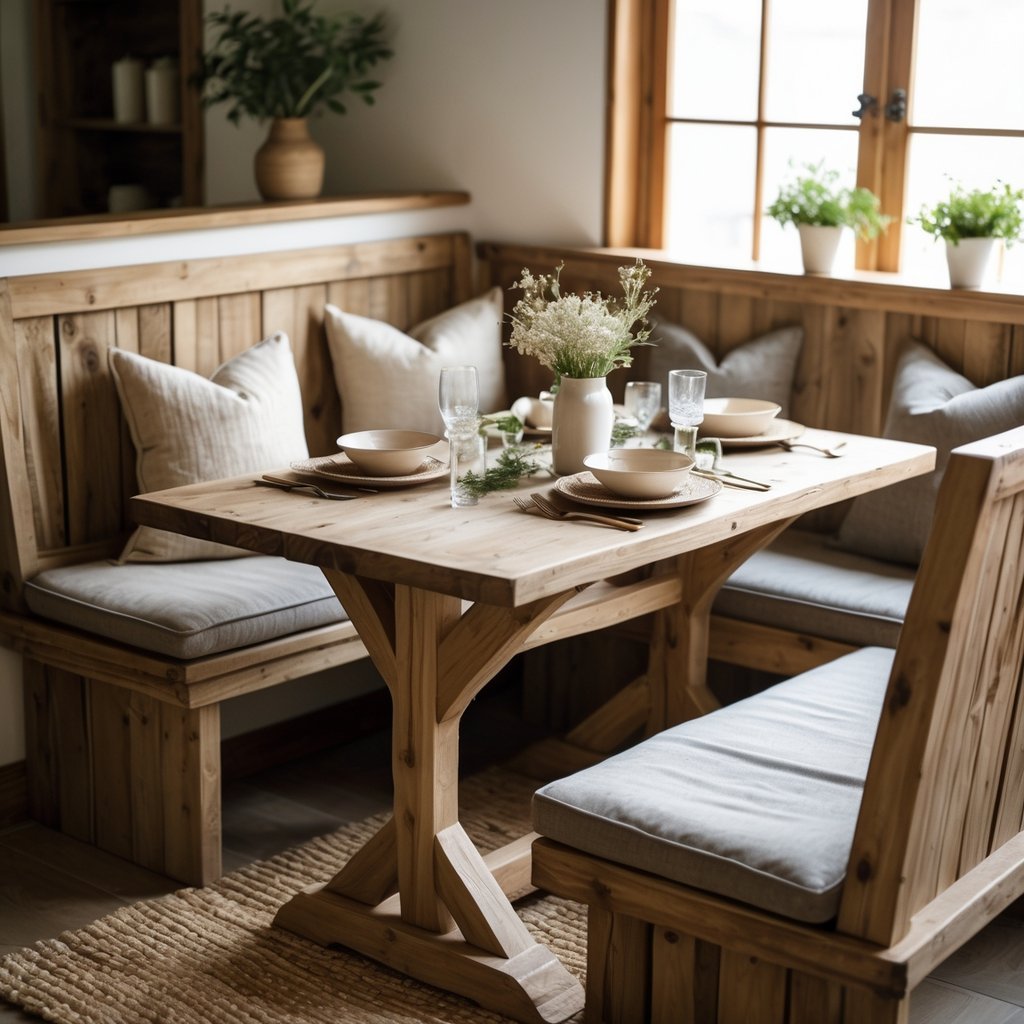
Choose reclaimed or weathered wood to give your banquette a warm, lived-in look. The natural grain and knots add character without extra fuss.
Pair the wood with neutral, soft cushions to keep seating comfortable and calm. You can add hidden storage under the seat to save space and hide clutter.
Use simple trim and muted finishes to match farmhouse decor. Soft lighting and vintage accessories will complete the cozy feel.
5) Banquette seating built into a bay window
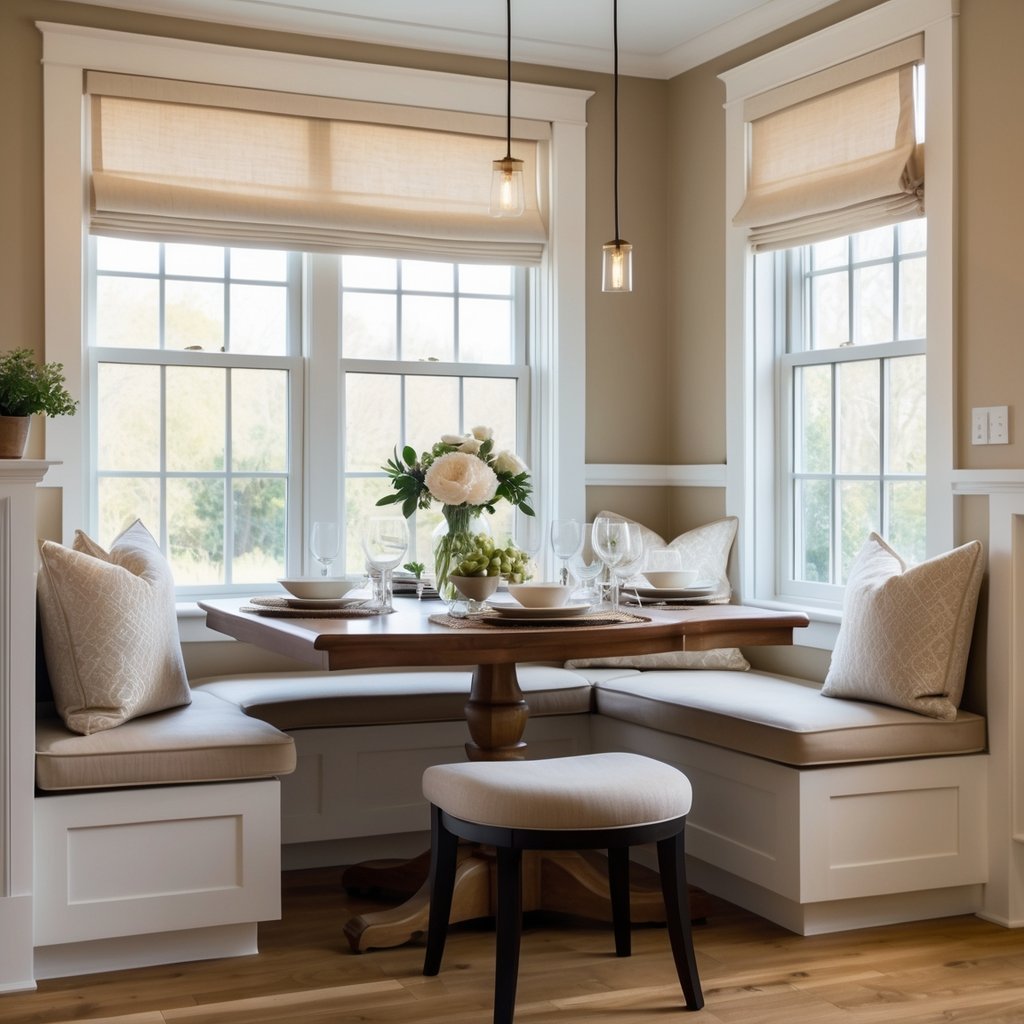
A bay window banquette makes the most of light and views while adding cozy seating to your dining area. You can build a curved or straight bench to match the window shape and tuck storage underneath.
Choose durable upholstery and cushions that resist spills if you use the space for meals. Add layered lighting and a small table to create a snug, functional dining nook.
6) Compact banquette with pull-out table extension
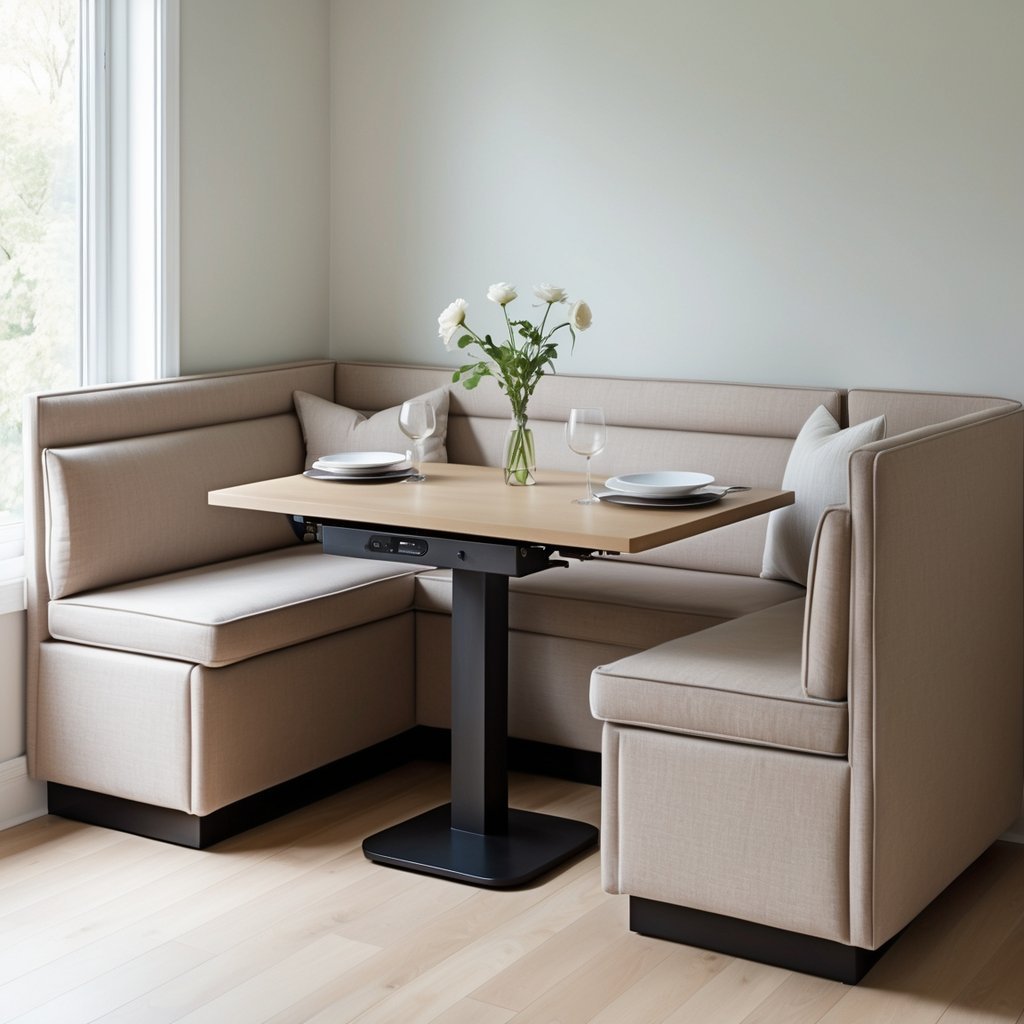
You can fit a full dining setup into a tight spot with a banquette that hides a pull-out table. The table slides out when you need extra surface and tucks away to save room.
Choose a slim extension that locks in place for stability. Add cushions and storage under the bench to keep the area tidy and comfortable.
7) Mid-century modern banquette with slim legs
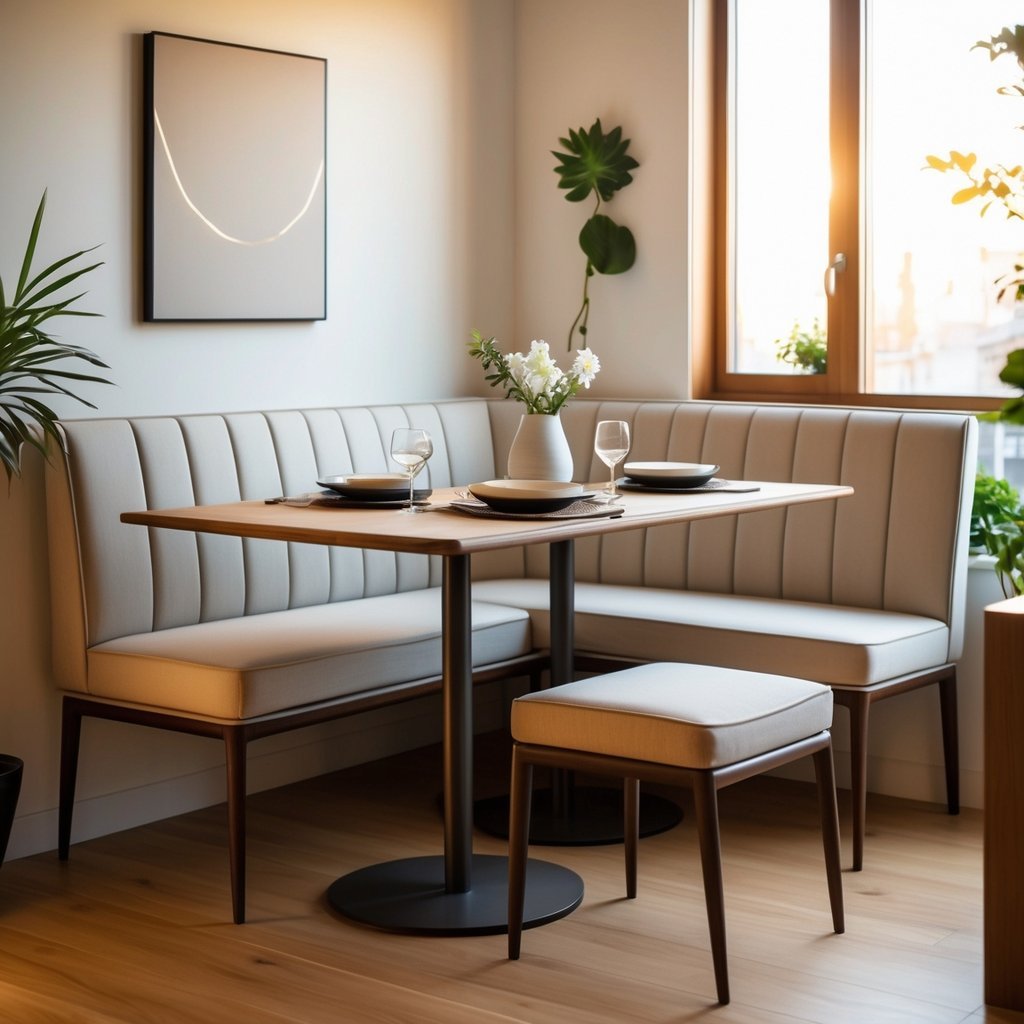
Choose a banquette with tapered, slim legs to bring a mid-century feel without crowding your space. The raised base keeps the area airy and makes cleaning under the seat easier.
Pick warm wood tones or walnut finishes to match classic mid-century style. Add simple button tufting or smooth upholstery for a clean, timeless look that still feels cozy.
8) Banquette with high backrest for added comfort
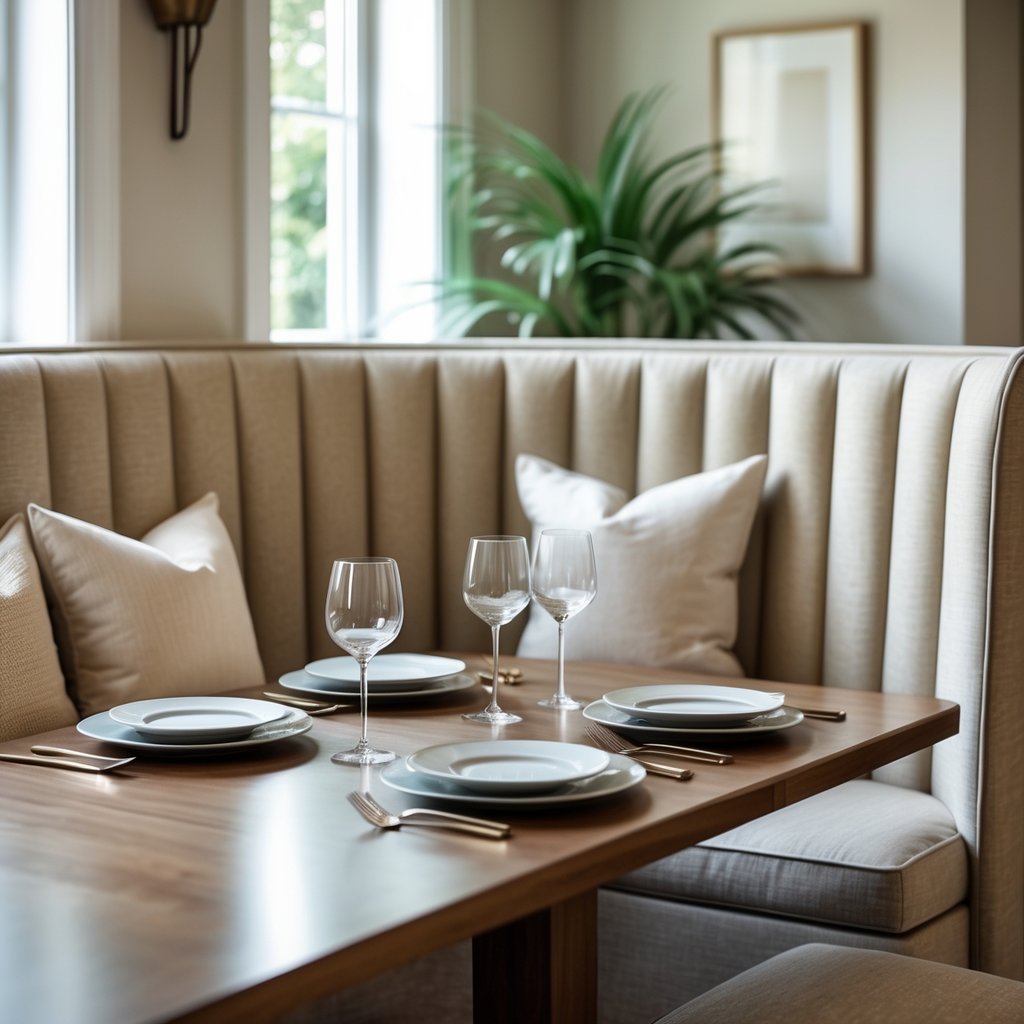
A high-back banquette gives your dining nook extra support for long meals and casual work sessions. You can sit upright or lean back comfortably, which helps when you host friends or do homework at the table.
Choose firm padding and durable fabric to keep the backrest comfortable and easy to clean. A tall back also adds visual height, making a small room feel more finished without crowding the space.
9) Banquette featuring a mix of bench and chair seating
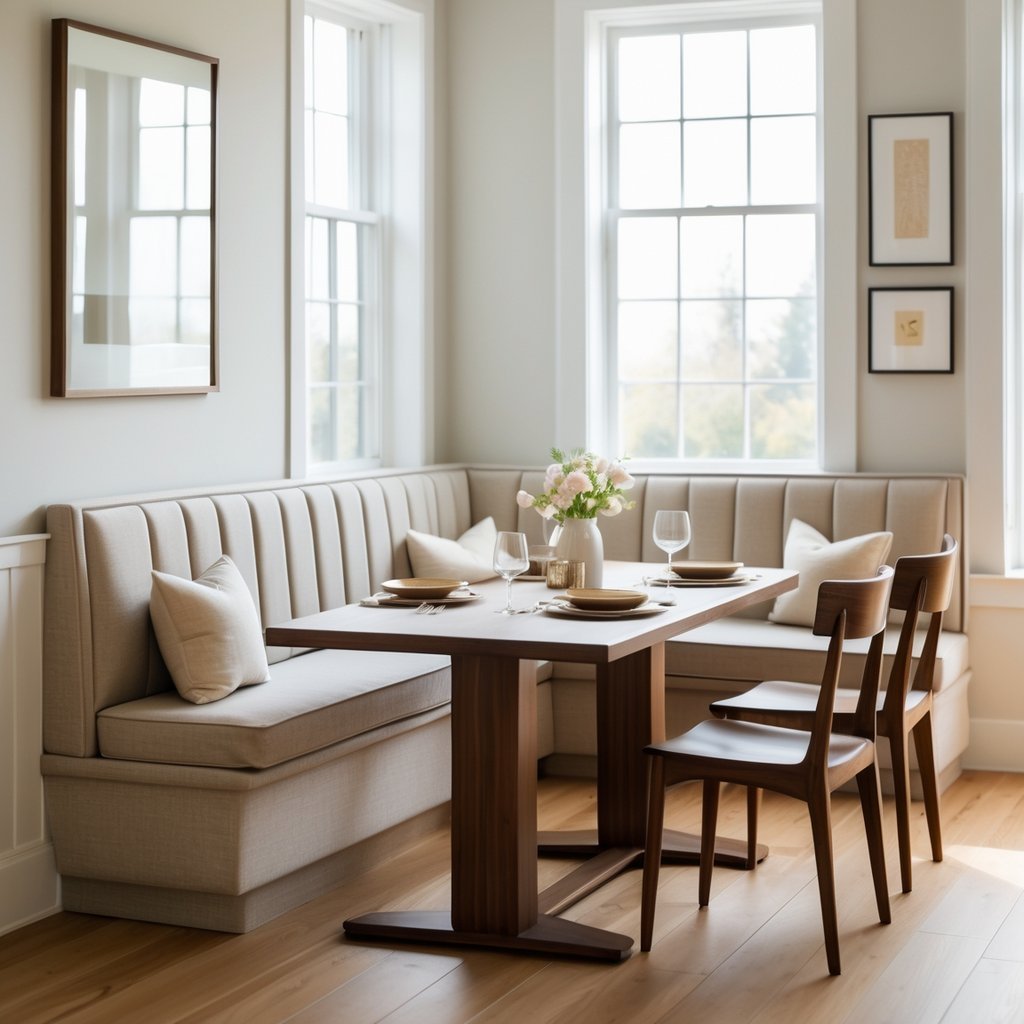
Pair a built-in bench on one side with chairs on the other to save space and keep flexibility. You get cozy fixed seating plus easy-to-move chairs for extra guests.
Choose chairs that match the bench height and style for a unified look. Use cushions on the bench to add comfort and tie colors together.
This layout works well in narrow rooms and around round or rectangular tables. It also makes cleaning and rearranging simpler for everyday use.
10) Minimalist banquette with neutral-toned upholstery
Choose a slim, streamlined banquette to keep your space feeling open and calm. Neutral fabrics like cream, taupe, or soft gray make the seating blend with walls and floors.
Add a few textured pillows for comfort without clutter. Keep legs and trim simple—wood or metal in light tones keeps the look crisp.
Use a low-profile table to match scale and maintain flow. This setup suits small nooks and modern open-plan dining areas.
Key Design Principles for Banquettes
Focus on comfort, size, and material so the banquette fits your space, supports daily use, and matches your style. Measure carefully and pick fabrics and finishes that stand up to spills and wear.
Optimizing Comfort and Functionality
Aim for seat height of 17–19 inches and seat depth of 16–18 inches for everyday comfort. Add a 3–4 inch seat cushion if the bench is built-in for firmer support. Back cushions should be 12–16 inches high and slightly angled for relaxed posture.
Plan circulation: leave 36 inches between the table edge and any opposing counter or walkway. If you need more room, use a narrower table or a removable leaf. Consider storage under the seat — lift-up tops or drawers add function without taking extra floor space.
Mix fixed and loose cushions. Fixed bases keep things tidy; loose cushions let you wash covers. Add washable slipcovers or stain-resistant fabric if you eat at the banquette daily.
Selecting Durable and Stylish Materials
Choose hardwoods like oak or maple for frames; they resist warping and handle repeated use. For visible bench surfaces, pick performance upholstery such as polyester blends, acrylic, or treated cotton that resists stains and fading.
Use high-density foam (1.8–2.5 lb density) for seat cushions so they hold shape. For back cushions, lower-density foam with a fiber wrap gives a softer feel. If you want a luxe look, pair performance velvet or leather alternative with a removable cover for easy cleaning.
Protect finishes near food with wipeable paints or a clear topcoat on exposed wood. For coastal or high-humidity areas, opt for kiln-dried wood and mildew-resistant textiles.
Space-Saving Tips for Cozy Dining Areas
Use the room’s layout, seating, and storage to keep traffic clear and make every inch work for meals and moments. Choose seating that doubles as storage and place furniture to keep walkways open.
Maximizing Floor Plan Efficiency
Place a banquette along a wall or in a corner to free up central floor space and keep walk paths at least 30 inches wide. Choose a narrow rectangular or drop-leaf table if you host often; fold it down against the banquette when not in use.
Arrange chairs so they tuck under the table or stack when extra seats aren’t needed. If your room connects to the kitchen, align the banquette parallel to the counter to create a clear service flow. Use a small, low-profile rug that fits only under the table to visually anchor the dining zone without shrinking the room.
Measure before you buy: leave 12–18 inches from the banquette back to a wall-mounted element like a radiator or cabinet to avoid crowding. Mount lighting above the table rather than using floor lamps to save space and keep sightlines open.
Incorporating Smart Storage Solutions
Build storage into the banquette with lift-up seats or drawers under the bench to hide placemats, board games, or extra linens. Use deep drawers for bulky items and shallow compartments for cutlery, napkins, and placemats. Label or use clear bins so you find things fast.
Add narrow wall cabinets or floating shelves above the banquette for plates and decorative items; keep the lower shelf at eye level so you access items without standing on a chair. Consider a bench with a hinged seat and internal dividers to prevent items from shifting.
Use multiuse pieces: an ottoman that stores throw pillows, a sideboard with a drop-leaf extension, or stools that nest under the table. These choices reduce clutter and keep the dining area ready for daily use.
Frequently Asked Questions
These answers focus on practical choices you can make for small dining banquettes: layout options that save space, materials that last, seating and cushion tips, lighting ideas, and storage types that fit built-ins like corner, L-shaped, tufted, and bay window banquettes.
What are the top design trends for dining room banquettes in small spaces?
Built-in corner banquettes remain popular because they use unused corners and create a cozy nook. L-shaped banquettes that hug walls give flexible seating and pair well with round or rectangular tables.
Tufted upholstery adds a tailored, classic look you can use in modern or traditional rooms. Bay-window banquettes make a view part of the dining experience while doubling as a relaxing window seat.
How can you maximize seating with a banquette in a dining area?
Choose an L-shape or U-shape when you need more seats without adding individual chairs. Fit the banquette to wall lines so you avoid wasted gaps and keep pathways clear.
Use a narrow table or a round table to allow easier movement. Mix bench seating with a couple of slim chairs on the open sides for flexible capacity.
What are the best materials to use for durable and stylish dining room banquettes?
Solid hardwood frames resist wear and hold up to heavy use. Plywood with hardwood veneer gives strength at a lower cost for built-in bases.
For upholstery, choose tightly woven performance fabrics or leather alternatives that resist stains and clean easily. For a rustic look, reclaimed or distressed wood works well and hides dings.
How can lighting be used to enhance the ambiance of a dining room with a banquette?
Install a pendant light centered over the table to create a focal point and even light for meals. Use adjustable fixtures so you can lower light for intimate dinners or raise it for bright tasks.
Add wall sconces or LED strips under the banquette lip to give soft, indirect light. If you have a bay-window banquette, place lamps or accent lighting in the window seat for evening use.
What types of storage solutions can be incorporated into dining room banquettes?
Build drawers into the front or under the seat for linens, placemats, and tableware. Lift-up seat boxes work well for larger items you don’t need often.
Open cubbies at the ends or beneath the bench can hold baskets or cookbooks. Integrate hidden compartments in an L-shaped or U-shaped layout to keep the dining area tidy.
How do you choose the right cushions and upholstery for comfort and aesthetic in a dining room banquette?
Pick high-density foam with a softer top layer for seats that stay supportive over years. Choose 3–4 inch seat thickness for comfort without taking too much vertical space.
Match fabric color and pattern to the room: solid, neutral fabrics suit a tufted look; colorful patterned cushions can brighten a rustic or simple wooden banquette. Use removable cushion covers for easy cleaning and seasonal swaps.