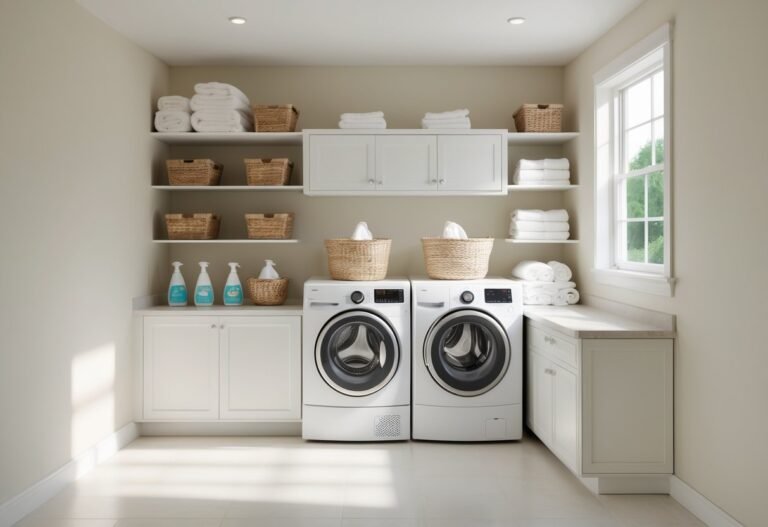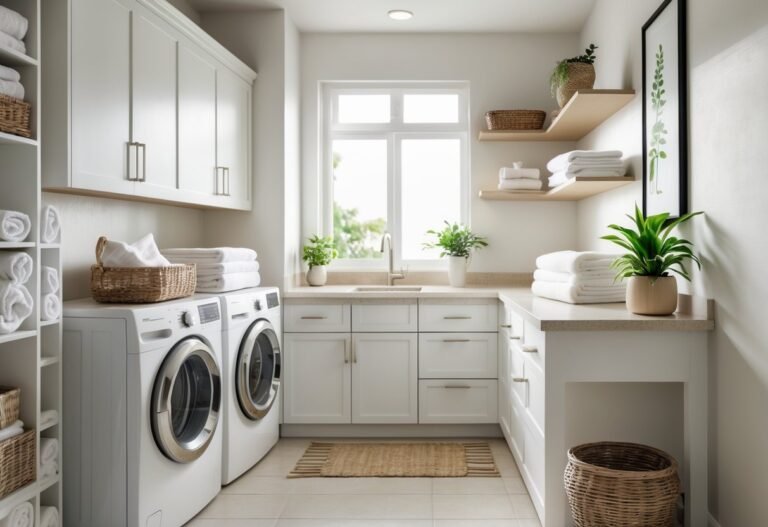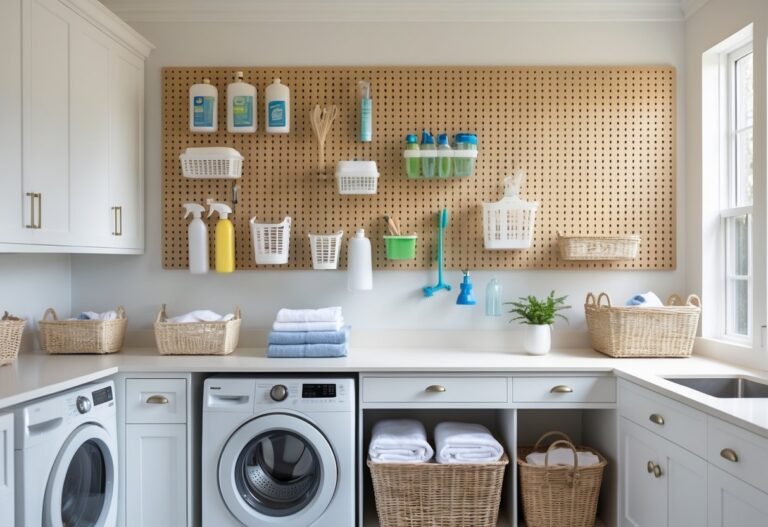
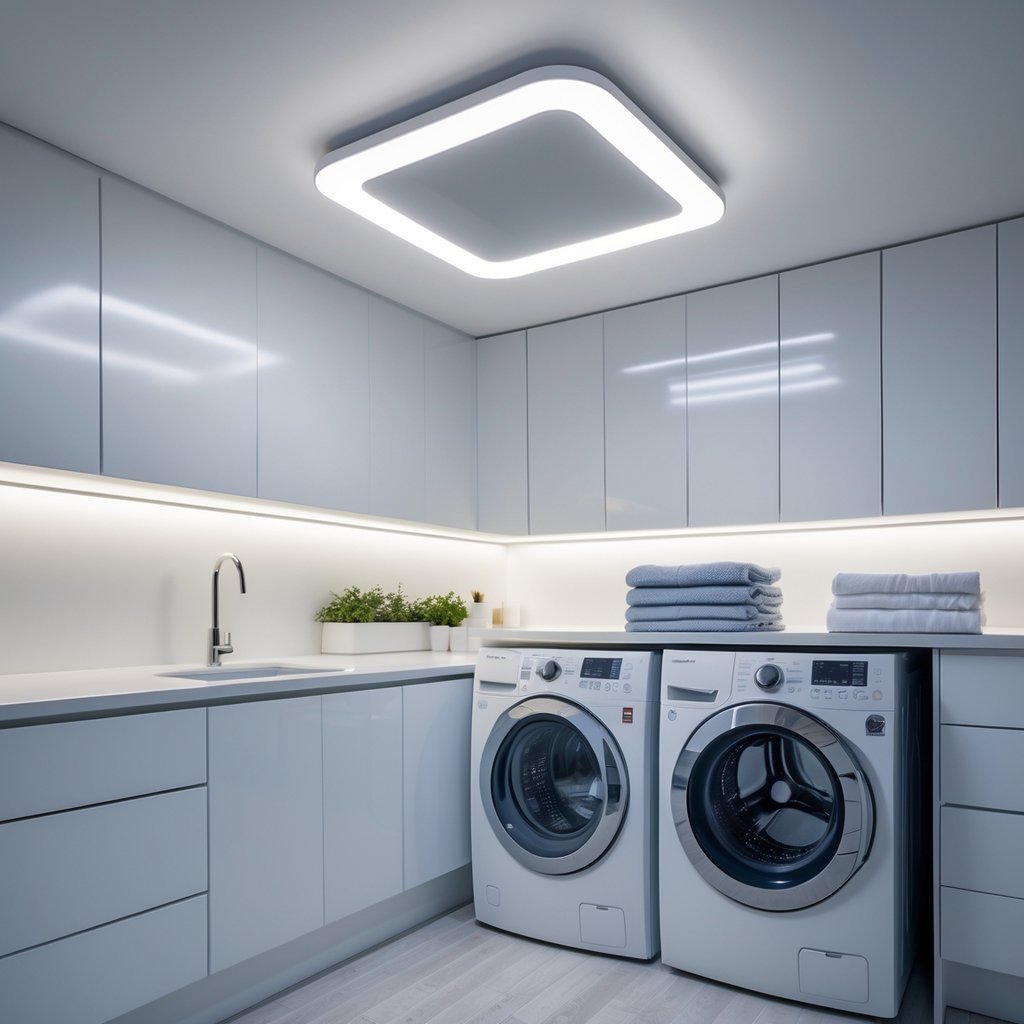
Choose the Perfect Light Fixture for Laundry Rooms:
You use your laundry room every week, so its lighting should make tasks easier and safer while matching your space. This article helps you pick the right fixture so your room feels brighter, reduces eye strain, and works with your ceiling height and style.
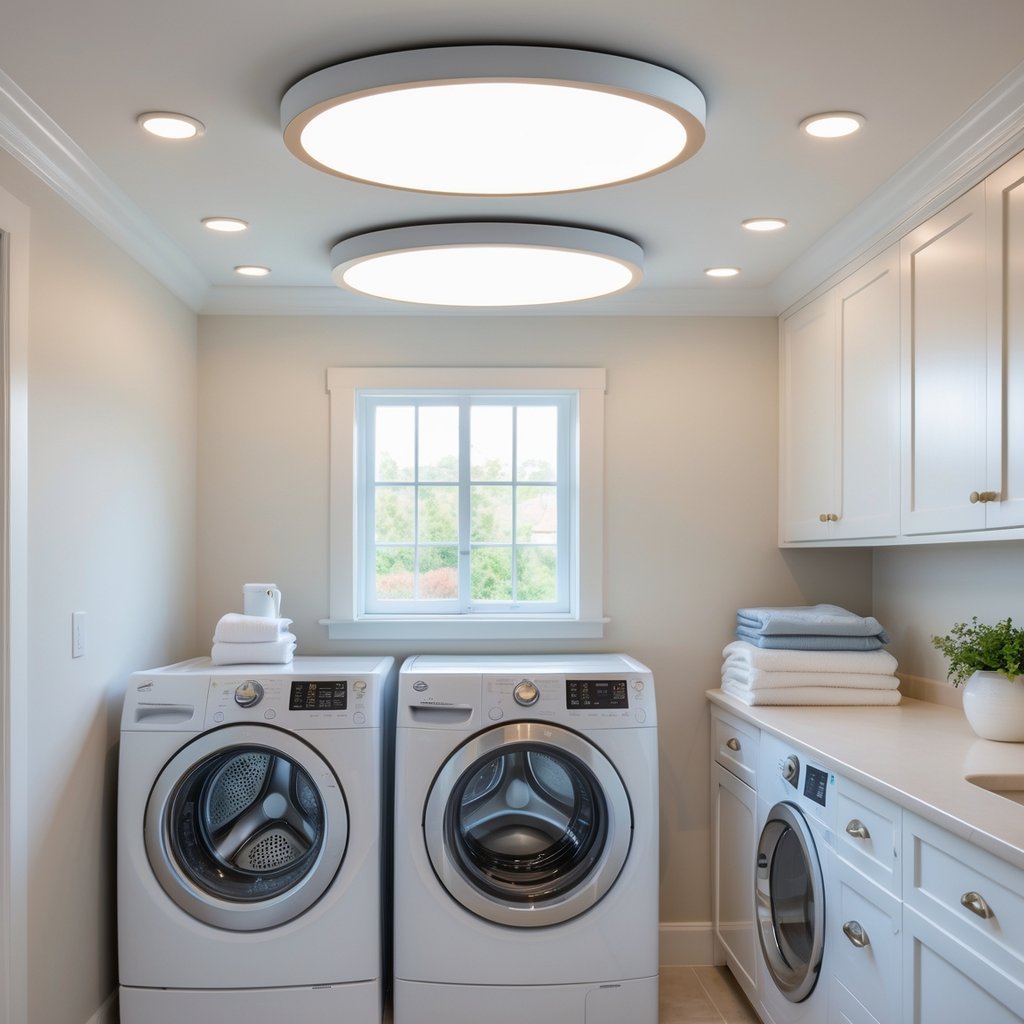
Explore simple options from flush-mounts for low ceilings to pendants for high ones, plus energy-saving LED choices and ways to layer ambient, task, and accent light. You will also find tips on fixture color, adjustable brightness, natural light, and basic maintenance to keep your space functional and welcoming.
1) Flush-mount ceiling lights for low ceilings
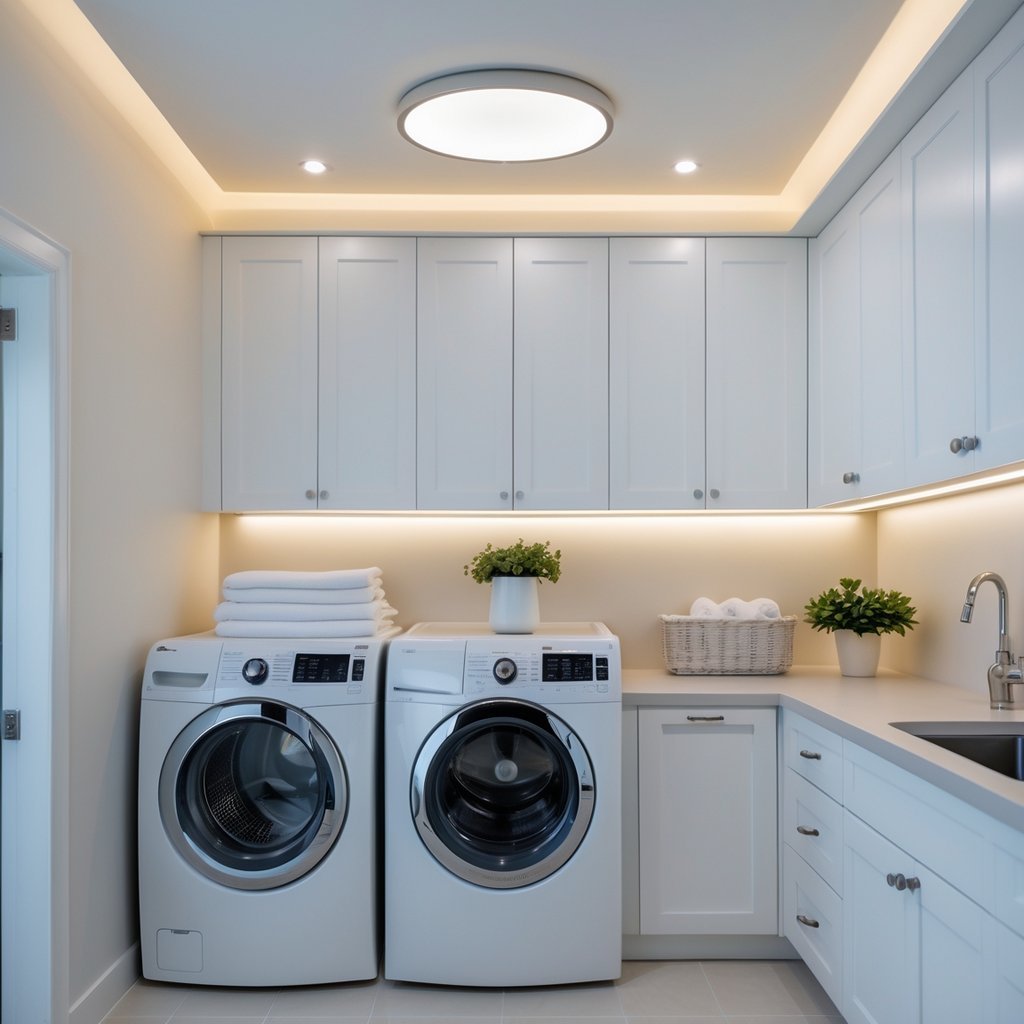
Choose flush-mount lights when your laundry room has limited headroom. They sit close to the ceiling so you keep full clearance and a clean look.
Pick LED flush mounts for bright, even light and lower energy use. Look for diffusers that reduce glare so colors and stains are easier to see.
Match fixture size to room dimensions; larger rooms need wider fixtures or multiple lights. Aim for cool white light (about 4000K) to improve visibility while washing and folding.
2) Semi-flush mount fixtures for balanced lighting
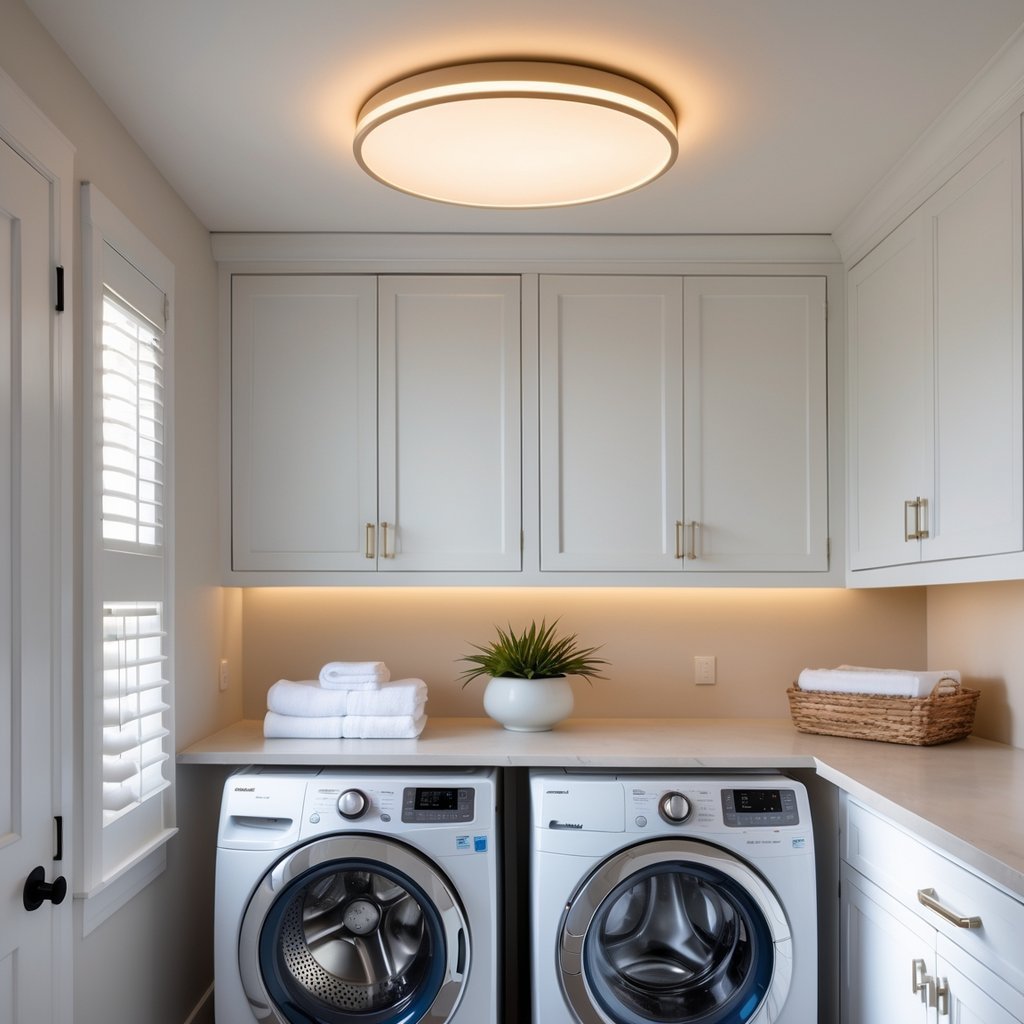
Semi-flush mounts hang slightly below the ceiling, giving you more light spread than flush fixtures without taking up much space. They work well in laundry rooms with standard or slightly higher ceilings.
You get better general illumination for sorting and spotting stains. Pick fixtures with diffusers to cut glare and keep light even across your work surfaces.
3) Pendant lights for high ceilings and focused task lighting
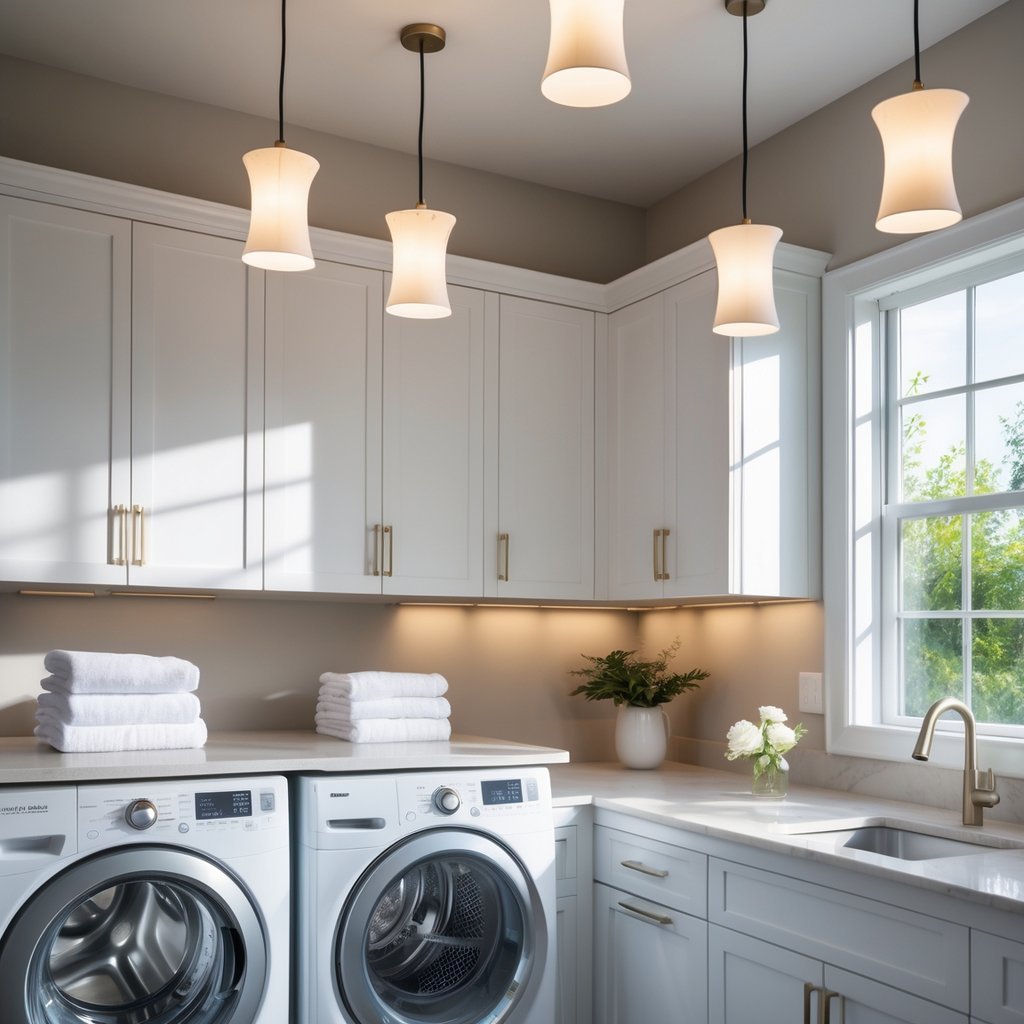
If your laundry room has high ceilings, pendant lights help bring light closer to work surfaces. You can lower a pendant over the folding table or sink to create bright task light without rewiring.
Choose fixtures with adjustable cords or rods so you can set the height for different chores. Pick a shade that directs light down to reduce glare and improve visibility.
4) LED fixtures for energy efficiency and brightness
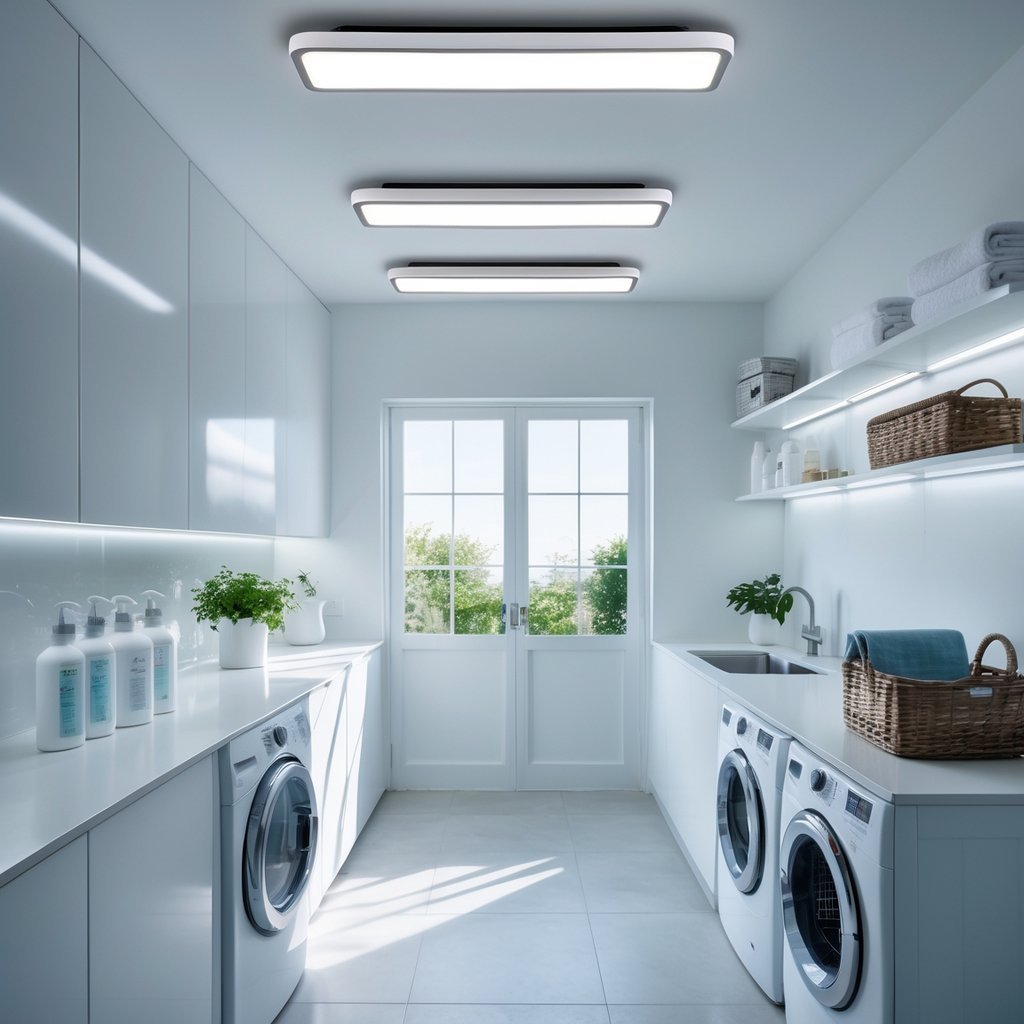
Choose LED fixtures to cut energy use and lower bills without losing light quality. LEDs give high lumens per watt, so you get bright, even light for tasks like sorting and folding.
Pick fixtures with at least 2000 lumens for good overall illumination in a typical laundry room. Look for neutral white (3500K–4100K) to keep colors accurate and the space feeling clean.
Check for dimming and glare control so you can adjust brightness and avoid harsh reflections on wet surfaces.
5) Drum shade ceiling lights in neutral colors
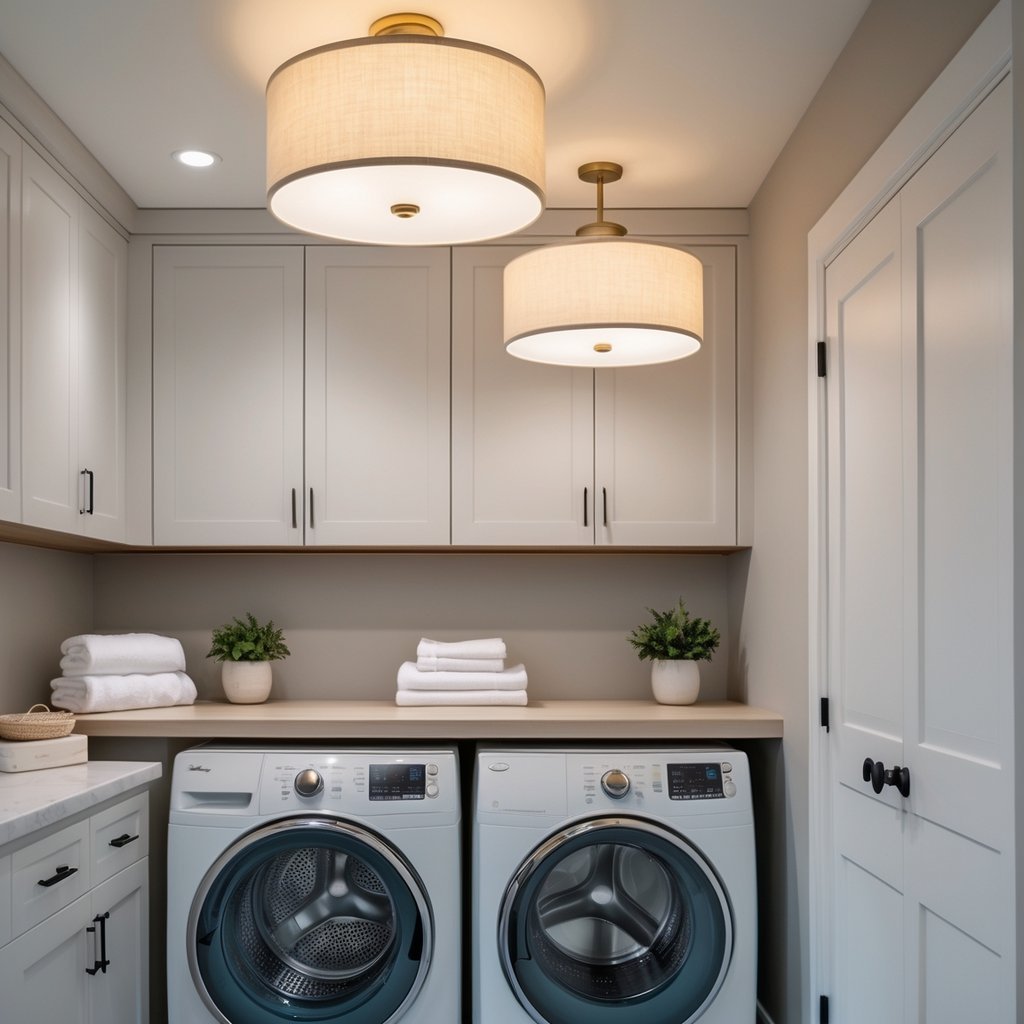
Choose a drum shade in white, beige, or light gray for clean, even light that won’t clash with laundry room colors. These shades soften glare and spread light across counters and machines.
Pick a flush or semi-flush mount to save headroom. Look for fabric or linen textures that hide dust and resist yellowing over time.
6) Layering ambient, task, and accent lighting
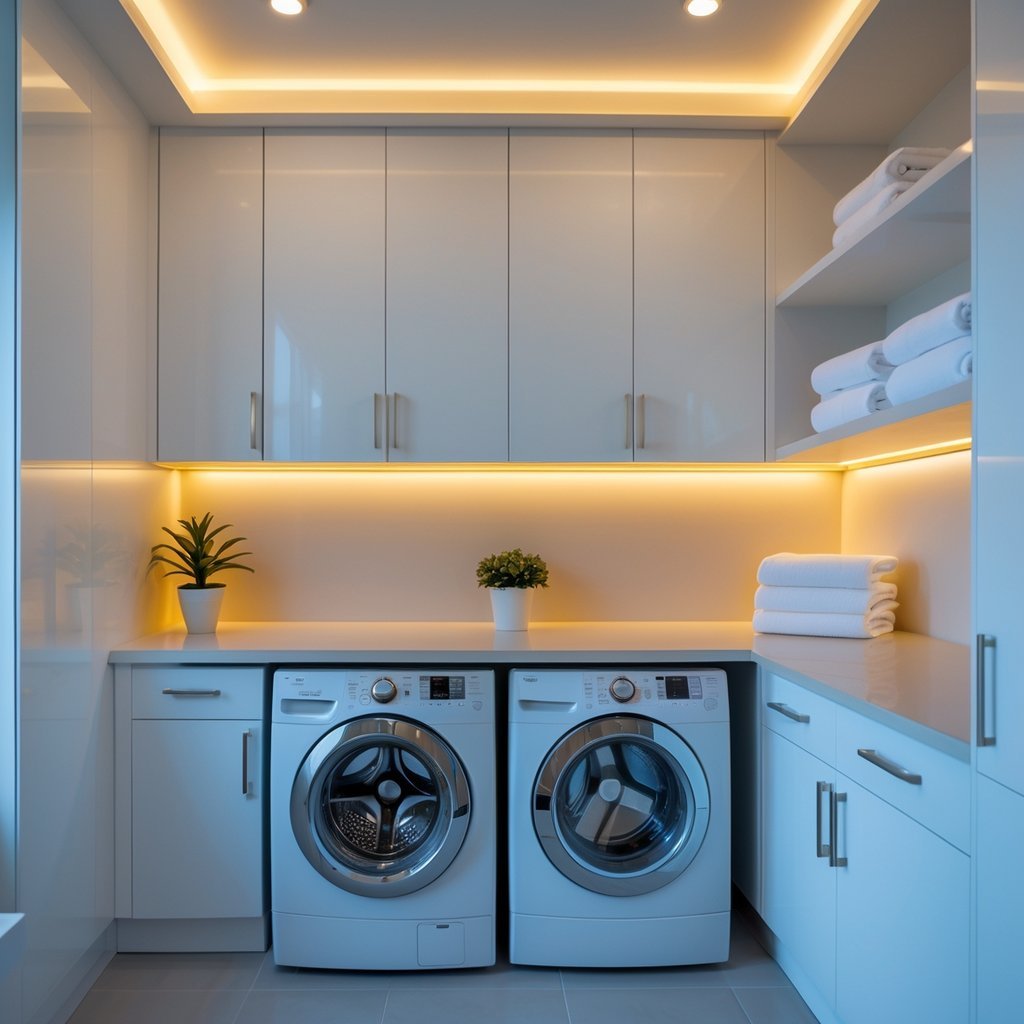
You should start with ambient light for even, overall brightness so the room feels safe and usable. A ceiling fixture or recessed LEDs work well for this.
Add task lighting over the washer, dryer, and folding areas to reduce shadows and make chores easier. Use adjustable or directed fixtures for clear, focused light.
Include a small accent light to highlight storage or decor and help with visual depth. Dimmer controls give you flexible brightness for different tasks.
7) Bright, even overhead lighting to reduce eye strain
You need bright, even light across the whole room so you can sort, stain-treat, and read labels without squinting. Choose fixtures that diffuse light to avoid hot spots and harsh shadows.
Use LED panels or a flush-mount fixture with a high CRI and adjustable brightness. That gives clear color rendering and lets you lower glare when you don’t need full brightness.
Place lights so they cover work surfaces and the washer/dryer area evenly. This reduces eye fatigue and makes tasks faster and safer.
8) Fixtures with adjustable brightness settings
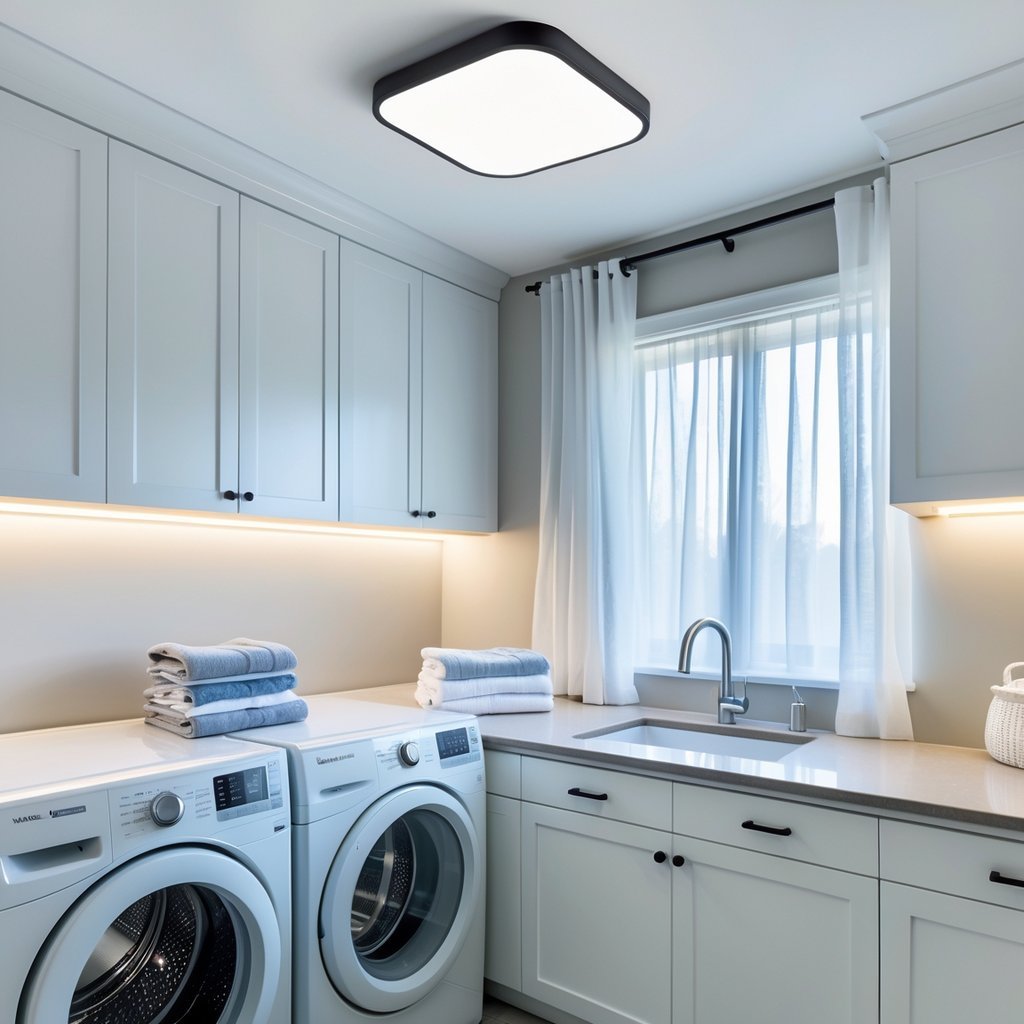
Choose fixtures that let you change brightness so you match light to the task. Dimmable LEDs and fixtures with multiple levels help when you sort, wash, or fold.
Adjustable color temperature can reduce eye strain and show true fabric colors. Look for simple controls like a dial, remote, or smart app for easy use.
You save energy by lowering brightness when full light isn’t needed. Pick reliable brands and check compatibility with replacement bulbs.
9) Natural light enhancement through window placement
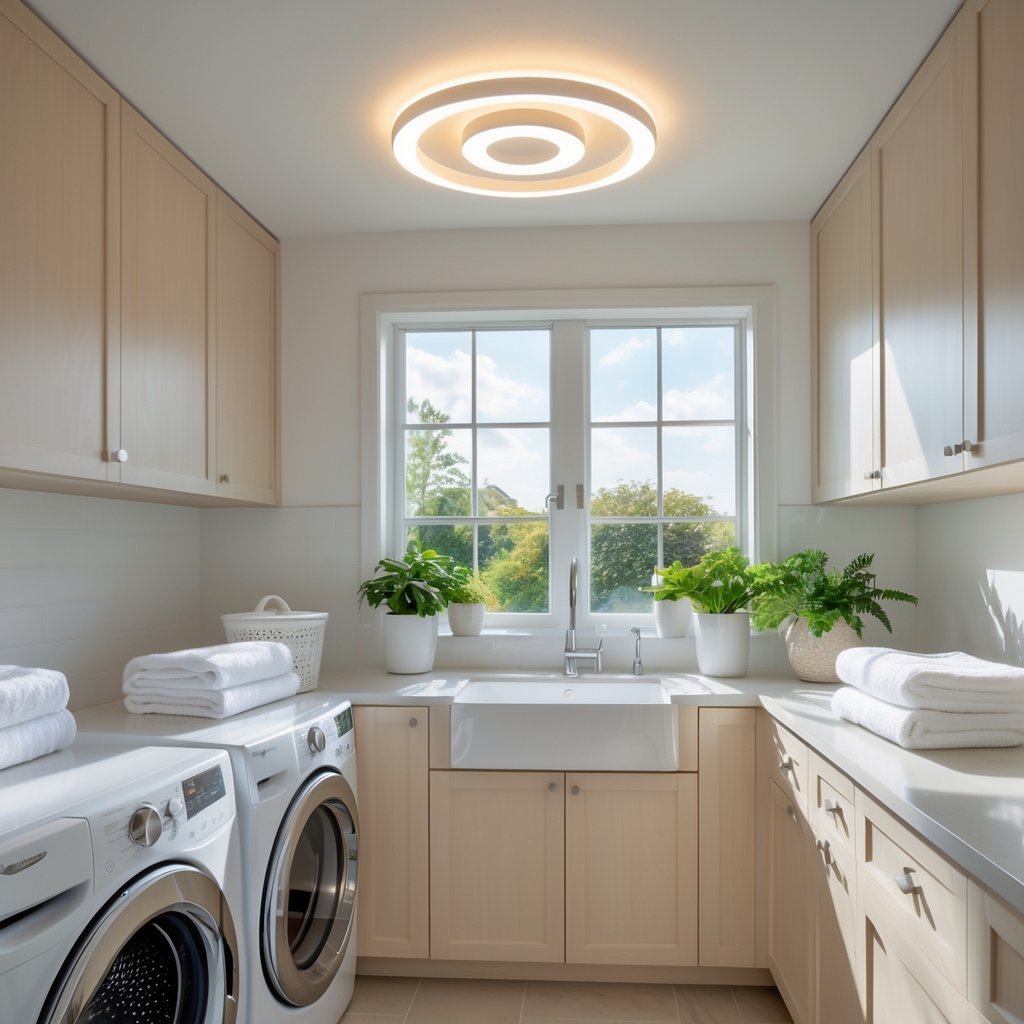
Place windows where they clear obstructions and bring daylight into work areas. You’ll see colors and stains better with even, direct light.
Use higher windows or clerestories to keep wall space for storage while still adding light. Light-colored walls near windows help reflect daylight deeper into the room.
Consider privacy and glare when sizing windows; frosted glass or adjustable shades can help. Position windows to supply steady, usable light during your typical laundry hours.
10) Classic white or cream-colored fixtures for versatility
Choose white or cream fixtures to keep your laundry room bright and simple. They reflect light well, which helps you see stains and sort clothes more easily.
These colors match most wall shades and appliances, so you can change decor without replacing lighting. They also hide dust and wear better than darker finishes.
Factors to Consider When Choosing Laundry Room Lighting
Think about how much space you need lit, where you do tasks, and how much you want to spend on power and bulbs. The right choices make folding, stain treating, and sorting faster and safer.
Room Size and Layout
Measure the room length and width first. For small rooms (under 60 sq ft), a single bright flush-mount ceiling fixture can give even light. For medium rooms (60–120 sq ft), use a central fixture plus one or two task lights over counters or the washer and dryer. For long or narrow rooms, place fixtures along the centerline or mount linear LED strips above work zones.
Note the ceiling height. Low ceilings work best with flush or semi-flush mounts. High ceilings (9 ft+) let you use pendants or suspended fixtures, but add focused task lighting where you work. Also map doors, shelves, and the machine layout so fixtures avoid casting shadows where you load machines or sort clothes.
Lighting Types and Brightness
Mix ambient, task, and accent lighting. Ambient gives general illumination; task lights give focused light where you fold or treat stains; accent lights highlight shelving or décor. Aim for 50–75 lumens per square foot for general laundry tasks. For detailed work like stain removal, provide 400–800 lux (about 37–75 foot-candles) at the work surface with LED task lights.
Choose cool white color temperature (about 4000–5000K) to help you see colors and stains accurately. Pick CRI (color rendering index) of 80 or higher for better color fidelity. Use diffusers or frosted lenses to reduce glare on glossy surfaces.
Energy Efficiency Options
Use LED fixtures to cut energy use and maintenance. LEDs use about 60–80% less energy than incandescent bulbs and last 15,000–50,000 hours depending on quality. Look for ENERGY STAR-rated fixtures and bulbs to ensure efficiency and longer life.
Add controls like dimmers, timers, or occupancy sensors to save power. Motion sensors help in small or rarely used laundry rooms. Choose fixtures with a good driver and heat management to avoid premature LED failure. Check lumen-per-watt (lm/W); higher numbers mean better efficiency.
Maintenance and Safety Tips for Laundry Room Light Fixtures
Keep bulbs working, lenses clear, and fixtures dry. Regular checks and simple cleaning prevent burns, shocks, and reduced light that can hide stains and hazards.
Cleaning Light Fixtures
Turn off power at the switch and, if possible, the breaker before you touch a fixture. Let bulbs cool for 10–15 minutes. Remove dust with a microfiber cloth or soft brush; avoid spraying cleaners directly onto the fixture.
For glass shades, wash in warm soapy water and dry completely before reinstalling. For plastic diffusers, wipe with a damp cloth and mild detergent. Check for sticky laundry detergent residue or lint buildup around vents and seams and remove it gently.
Replace burned-out bulbs promptly with the same wattage and type. Tighten loose sockets and mounting screws. Keep a small maintenance kit nearby: spare bulbs, a screwdriver, and a ladder rated for your ceiling height.
Addressing Moisture and Humidity
Use fixtures rated for damp or wet locations in basements, near washers, or in rooms without strong ventilation. Look for an IP rating or “damp location” label when you buy replacements.
Keep exhaust fans on during and after laundry cycles to lower humidity. Wipe down ceilings and fixture bases if you see condensation. If you find rust, flaking paint, or persistent moisture, replace the fixture and check the ceiling for leaks.
Never change bulbs or clean fixtures with wet hands or while standing on a wet floor. Use a GFCI-protected circuit in laundry areas to reduce shock risk, and call a licensed electrician if wiring looks corroded or if connections feel warm.
Frequently Asked Questions
This section gives concrete, usable answers about fixture types, LED choices, ceiling ideas, small-room strategies, remote features, and how to get enough light. Expect clear steps and specific values you can use when shopping or installing.
What are the best types of light fixtures for a laundry room?
For low ceilings, choose flush-mount ceiling lights. They sit close to the ceiling and spread light evenly without taking up headroom.
Semi-flush mount fixtures work well when you have a bit more clearance. They balance general and task lighting.
For high ceilings or when you want focused task light, use pendant lights. Pendants give directed light over folding areas or sinks.
Drum shade ceiling lights in neutral colors provide soft, even light and fit many decor styles. LED fixtures are a strong choice across all types for efficiency and brightness.
How do you choose an LED light fixture that’s ideal for a laundry room’s needs?
Pick LEDs with a color temperature of 4000–5000 K for cool white light that helps you see stains and colors correctly. Look for a color rendering index (CRI) of 80 or higher; 90+ is better if color matching matters.
Match lumen output to room size: aim for about 2,000–4,000 lumens total for a typical laundry room. Choose dimmable LED fixtures if you want adjustable brightness.
Check for ENERGY STAR or similar efficiency ratings. Ensure the fixture is rated for damp locations if the room gets humidity.
What are some unique ceiling light ideas for enhancing a laundry room?
Use a cluster of small pendants over a folding counter to create focused task zones. That adds style and direct light where you need it.
Try a large drum shade in a neutral tone to soften harsh light and match common laundry-room color schemes. It works well with LED bulbs.
Install recessed LEDs in a grid for an even, modern look. Combine them with a semi-flush or pendant to layer light for tasks and general use.
What lighting considerations should be taken into account for small laundry rooms?
Choose low-profile fixtures like flush-mounts or recessed lights to save visual space. These give broad light without crowding the room.
Keep color temperature in the 4000–5000 K range so clothes and stains show clearly. Use a single bright overhead plus a task light over sorting or folding spots.
Avoid fixtures that hang too low. They can make the room feel smaller and block movement.
What features should be looked for in a laundry room light fixture with a remote control?
Ensure the remote supports dimming and color-temperature changes if you want flexibility. Simple on/off remotes are fine, but dimming lets you lower glare during long loads.
Look for reliable wireless tech (RF or Bluetooth) rather than line-of-sight infrared. Check battery life and replacement ease.
Confirm the fixture is compatible with the remote before buying. Also check that the remote can pair with multiple fixtures if you plan layered lighting.
How can one ensure that the lighting in a laundry room is sufficiently bright?
Calculate needed lumens: aim for roughly 2,000–4,000 lumens total for a medium laundry room. Increase lumens if you do detailed tasks like stain removal.
Use layered lighting: a bright overhead fixture plus task lights over counters, sinks, and machines. Combine LED overheads with under-cabinet or directional fixtures for the best visibility.
Choose bulbs with 4000–5000 K color temperature and a CRI of 80+ to keep colors accurate. Regularly clean fixtures and replace bulbs when output drops.