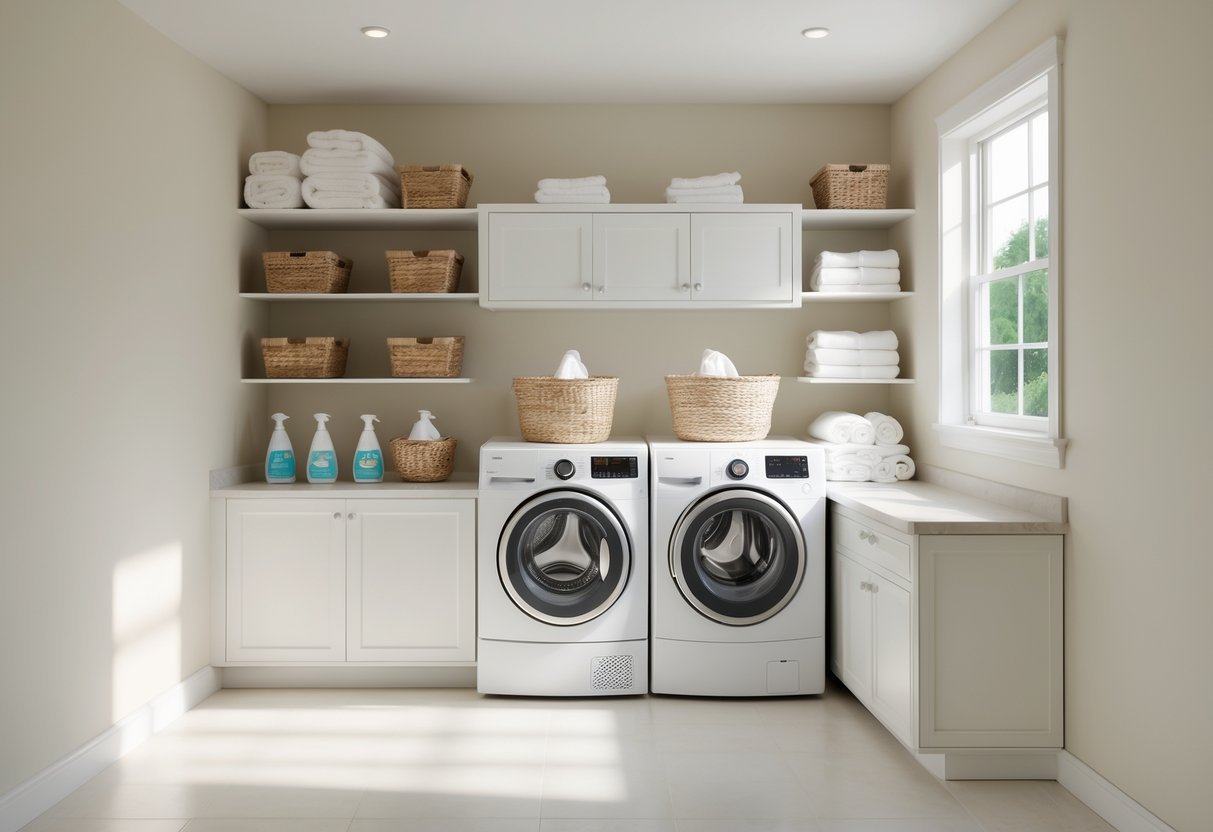
Laundry Room Ideas Stacked Washer Dryer: Compact Layouts, Storage Solutions, and Styling Tips
You want a laundry space that works hard and looks smart, even when square footage runs low. Stacked washer and dryer setups free up room for storage, folding stations, or nicer finishes so your laundry routine becomes quicker and less cluttered.
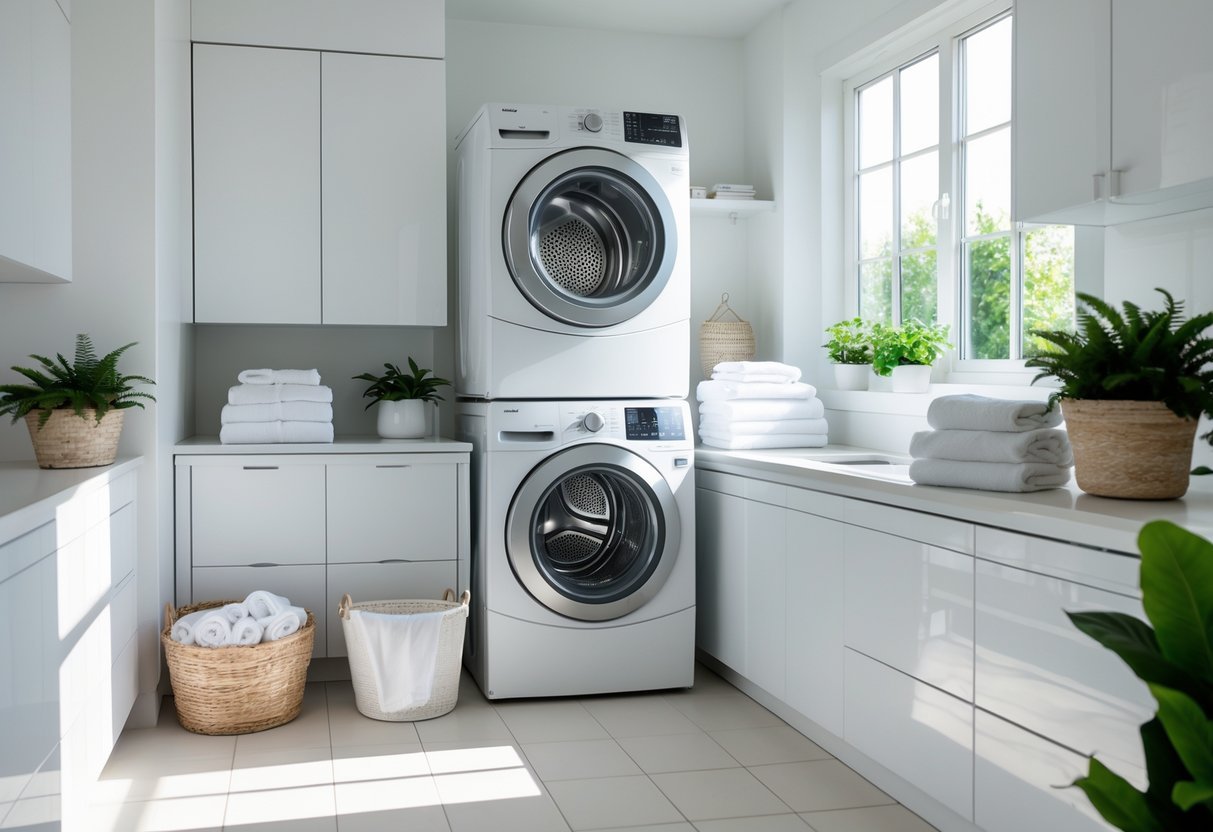
This article shows 10 practical, stylish ways to make a stacked washer and dryer fit your space and needs. You’ll find ideas for hiding appliances, adding storage and lighting, improving floors and surfaces, and arranging a layout that feels both efficient and welcoming.
1) Use louvered doors to conceal stacked washer and dryer for a sleek look
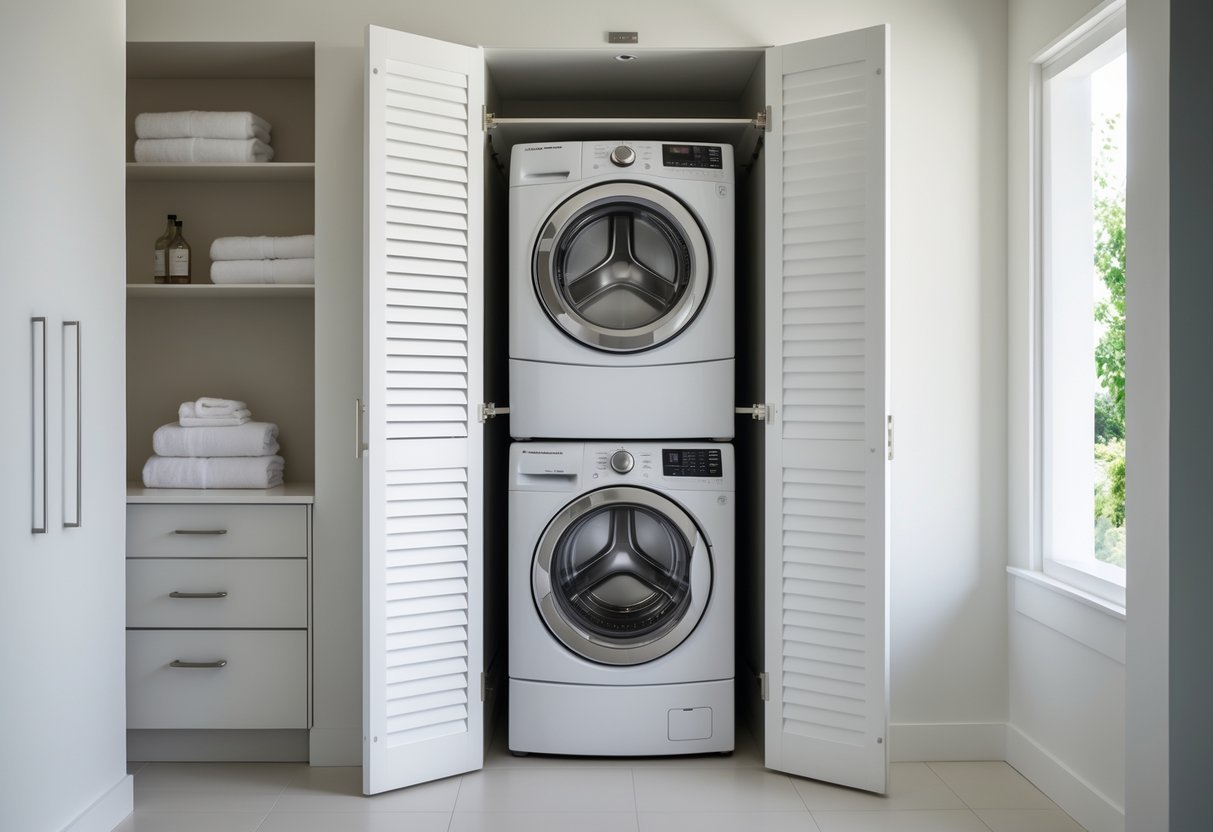
You can hide a stacked washer and dryer behind louvered doors to keep your space tidy. Louvers allow airflow, which helps reduce moisture and odor without leaving the machines exposed.
Choose painted or natural wood doors to match your decor for a seamless look. Add narrow shelves beside the stack if space allows for detergent and linens.
2) Install dark textured laminate cabinets topped with gray quartz above appliances
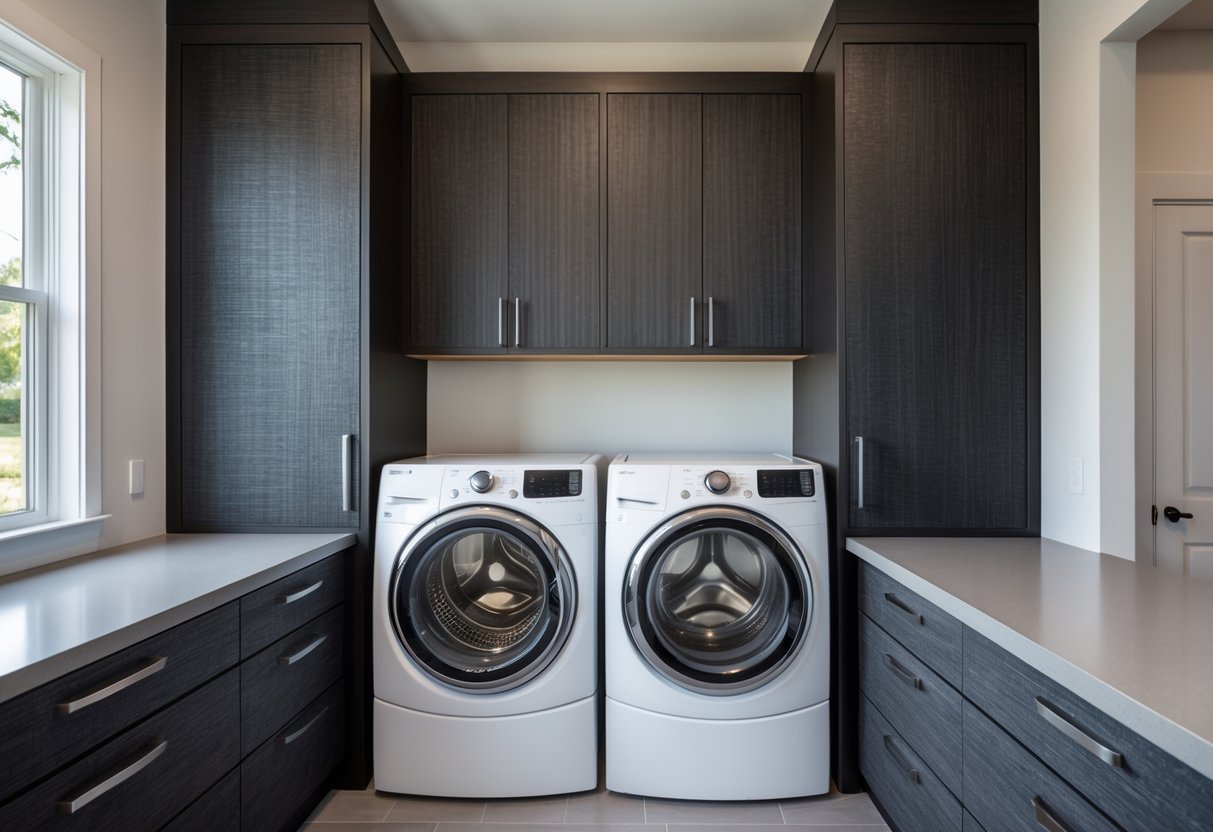
Place dark textured laminate cabinets above your stacked washer and dryer for a sleek, durable look. The texture hides scratches and fingerprints, so they stay neat between cleanings.
Top the cabinets with gray quartz for a low-maintenance surface that resists stains and water. The cool gray pairs well with many cabinet tones and adds subtle contrast without overpowering the room.
Keep cabinet heights shallow to avoid crowding the ceiling and to keep items within reach. Add simple pulls and soft-close hinges for a cleaner, quieter space.
3) Add charcoal-and-white hex tiles for a visually interesting laundry floor
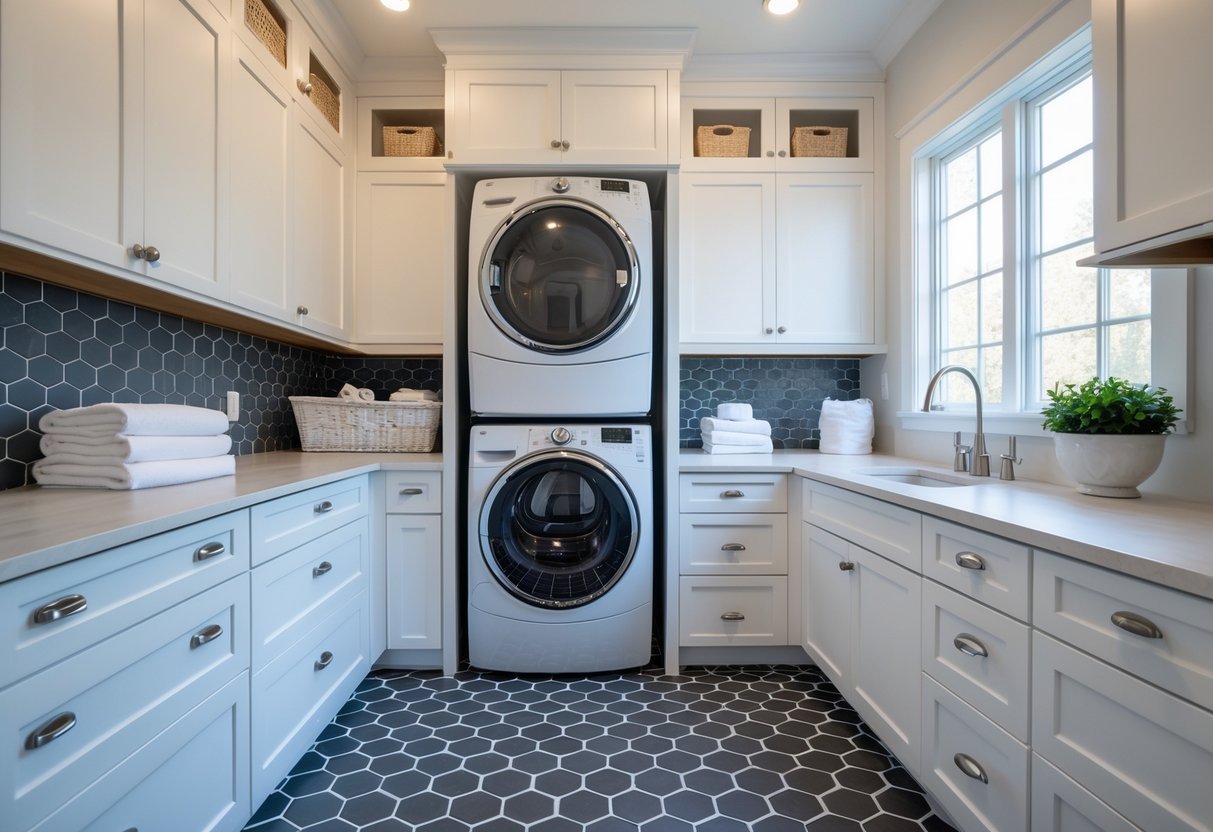
Choose charcoal-and-white hex tiles to give your laundry floor pattern and depth without loud colors. The contrast brightens the space and hides dirt better than all-white floors.
Hex tiles work well with stacked washer-dryers because they draw the eye across the room and make small areas feel designed. Pick matte or textured tiles for safer footing in a humid room.
4) Paint walls soft eggshell to keep the space bright and inviting
Choose a soft eggshell finish to reflect just enough light without showing every flaw. It gives your laundry room a clean, warm look while hiding small surface imperfections.
Eggshell is easier to wipe down than flat paint, so spills and detergent splashes clean up quickly. Pick a light, neutral color to make the space feel larger and more welcoming.
5) Incorporate built-in shelving next to stacked units for laundry supplies
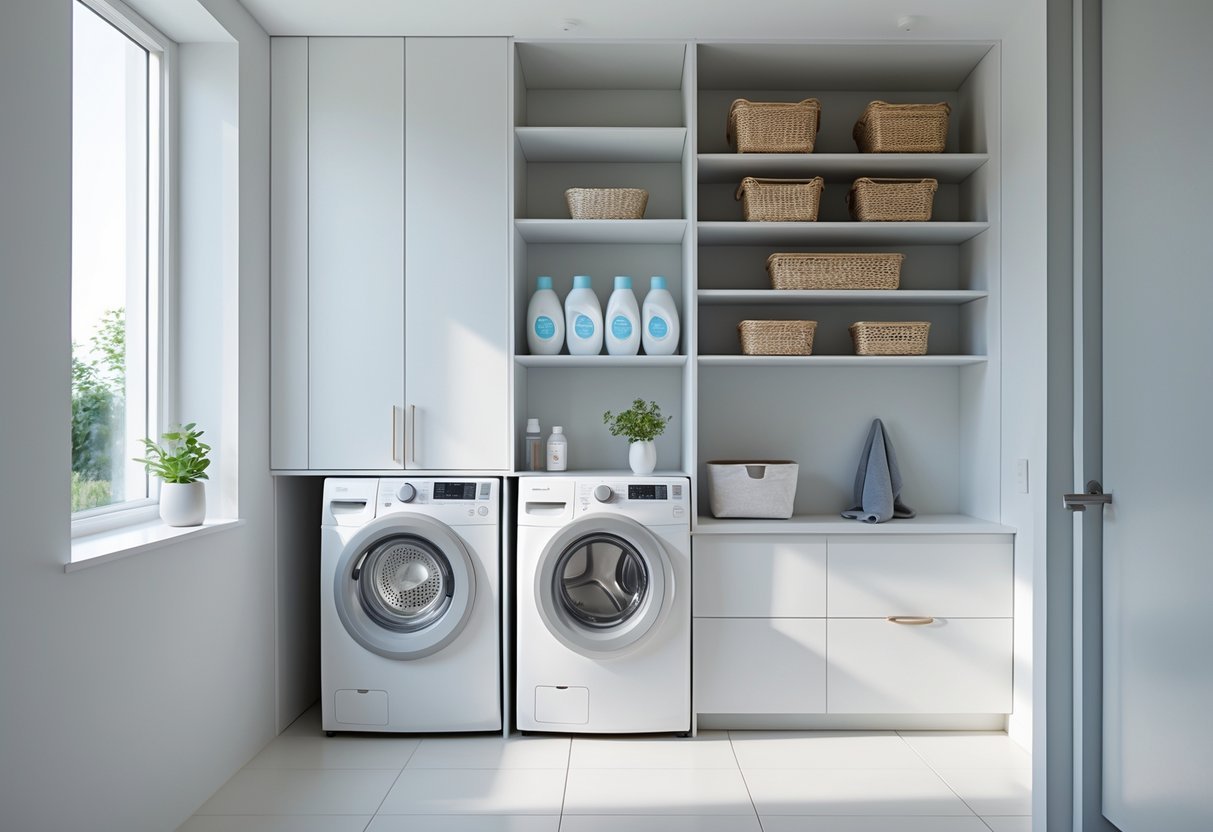
Place slim built-in shelves beside your stacked washer and dryer to keep detergent, softener, and tools within reach. This saves floor space and keeps the area tidy.
Choose adjustable shelves so you can fit tall bottles and baskets. Open shelving makes items easy to grab, while a few closed bins hide clutter.
If space is tight, use shallow pull-out shelves or a narrow slide-out tower. They give full access without blocking the machines.
6) Create a dedicated folding area adjacent to stacked appliances
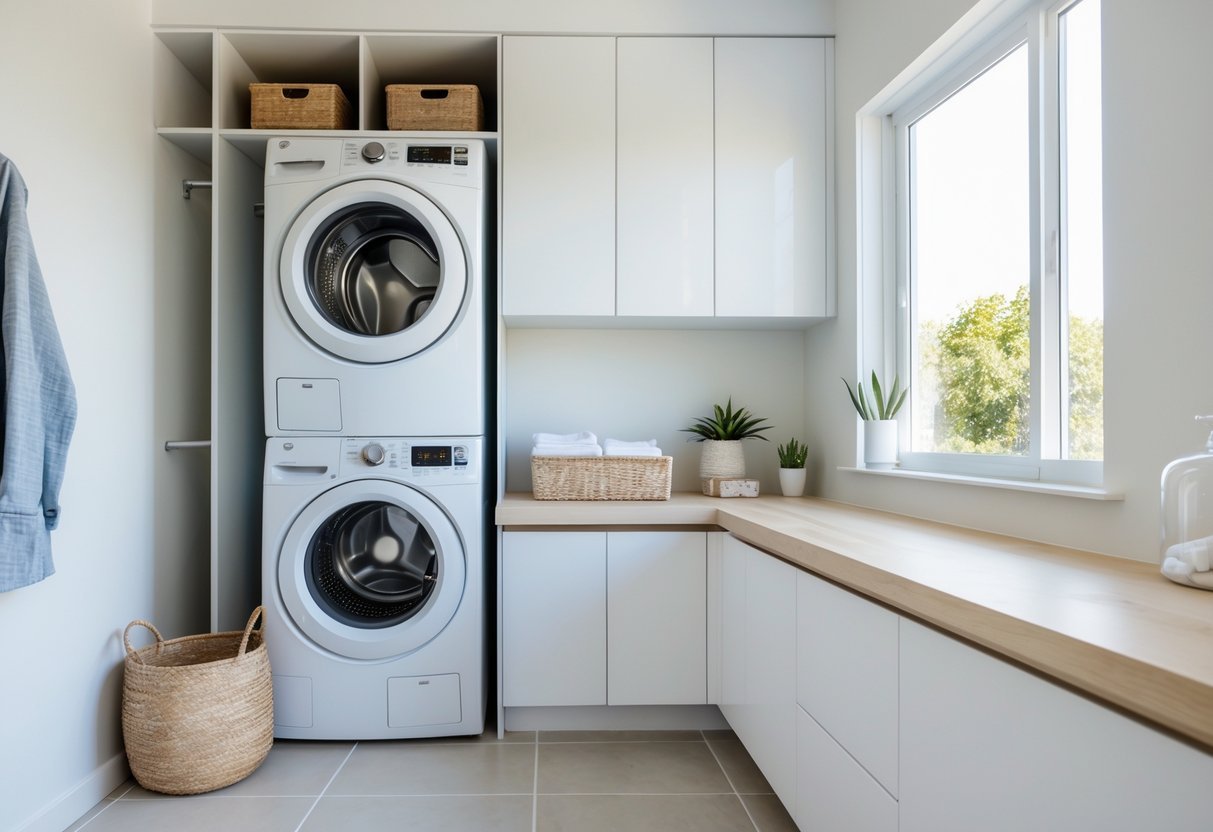
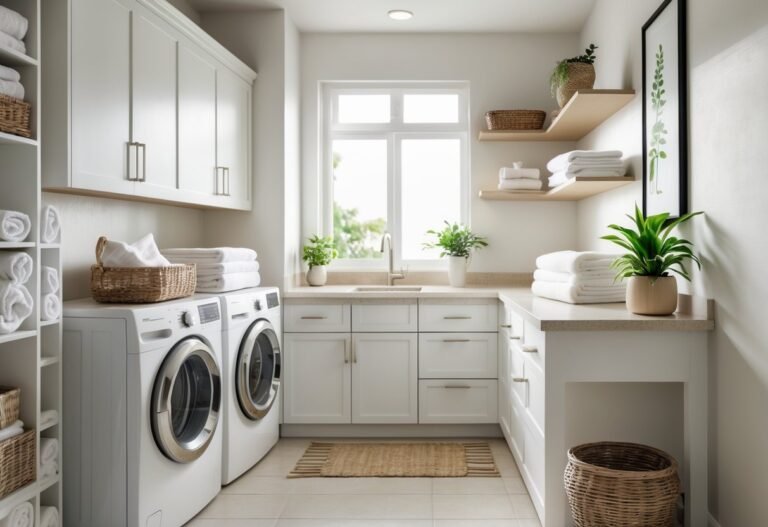
Place a countertop next to your stacked washer and dryer so you have a flat surface to fold clothes right away. Keep the counter height about 34–36 inches for comfort while standing.
Add shallow drawers or baskets below for socks, hangers, and supplies. Good lighting and a small hook or rod make sorting and hanging faster.
7) Use vertical storage cabinets to maximize narrow laundry closets
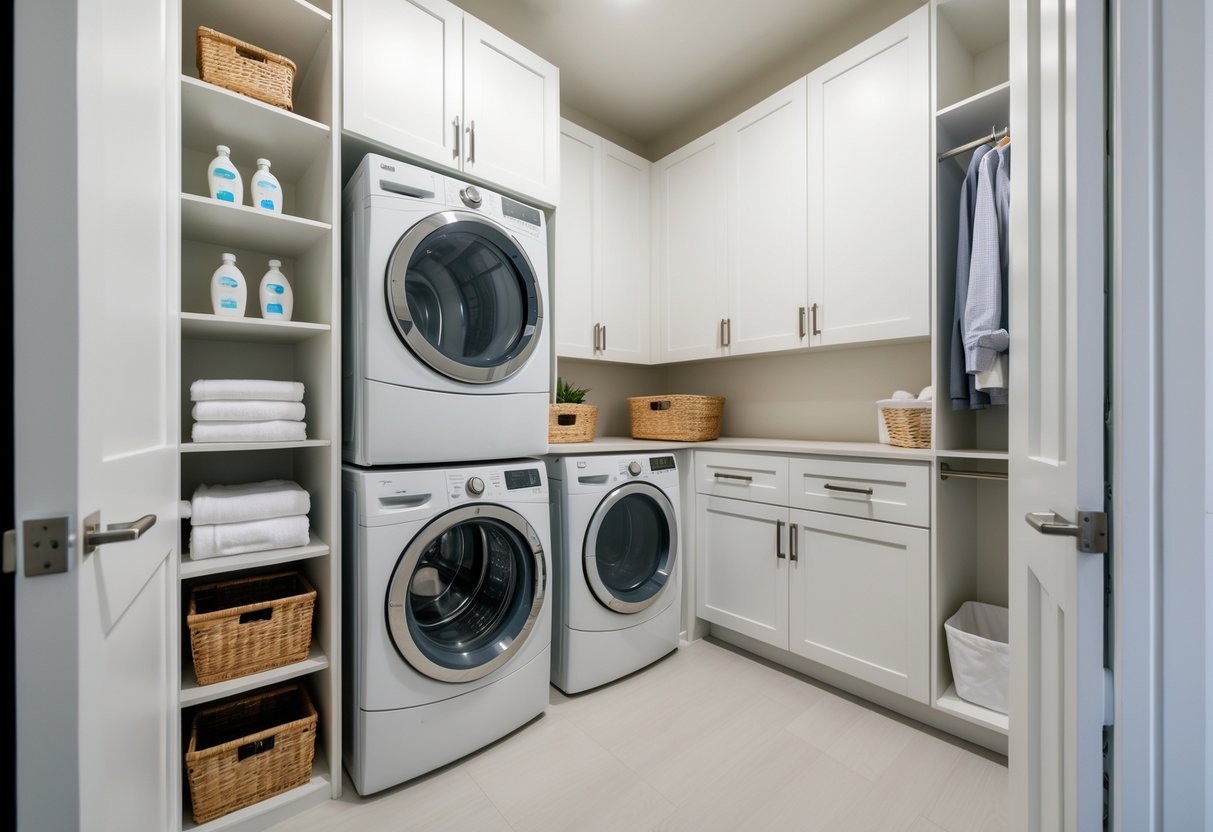
Place tall, narrow cabinets beside or above your stacked washer and dryer to use wasted vertical space. You can store detergents, cleaning tools, and extra linens without losing floor room.
Choose adjustable shelves and slim pull-out drawers so you can fit baskets and tall bottles. Finish with doors or baskets to keep the space tidy and reduce visual clutter.
8) Install pull-out hampers below the washer and dryer stack
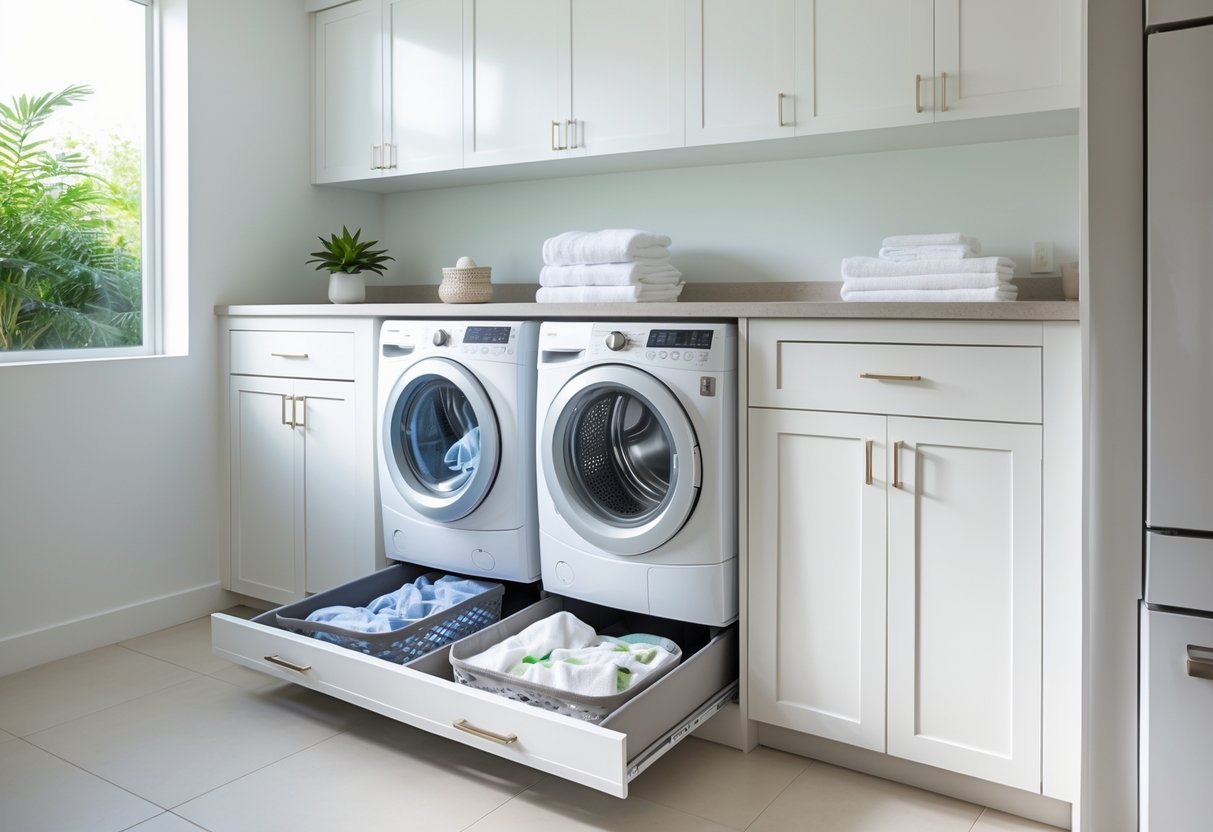
You can add pull-out hampers under a raised washer-dryer stack to save floor space and hide dirty clothes.
Choose hampers on smooth glides so you can slide loads out easily without bending too far.
Label or use color-coded bins to sort lights, darks, and delicates right where you wash.
Keep clearance and ventilation in mind when designing the pedestal so the appliances stay safe and serviceable.
9) Add under-cabinet lighting above stacked units for better visibility
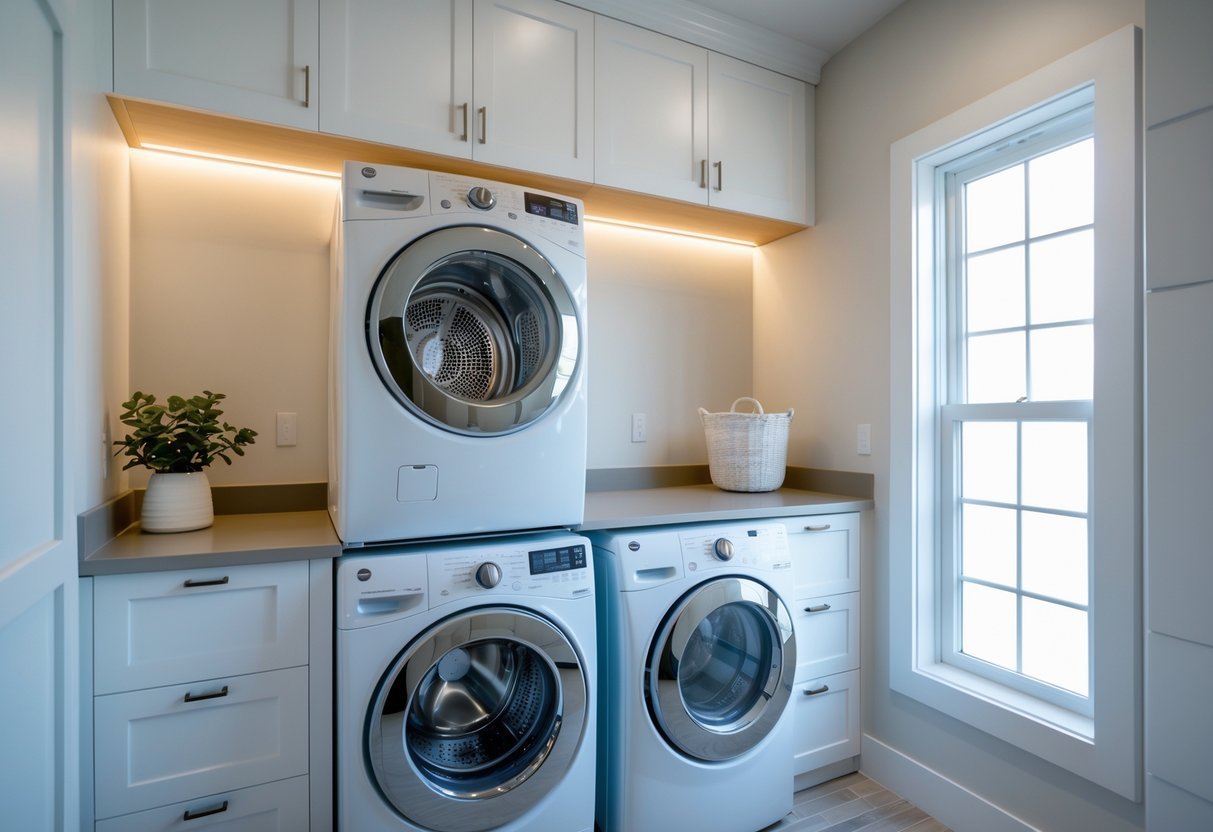
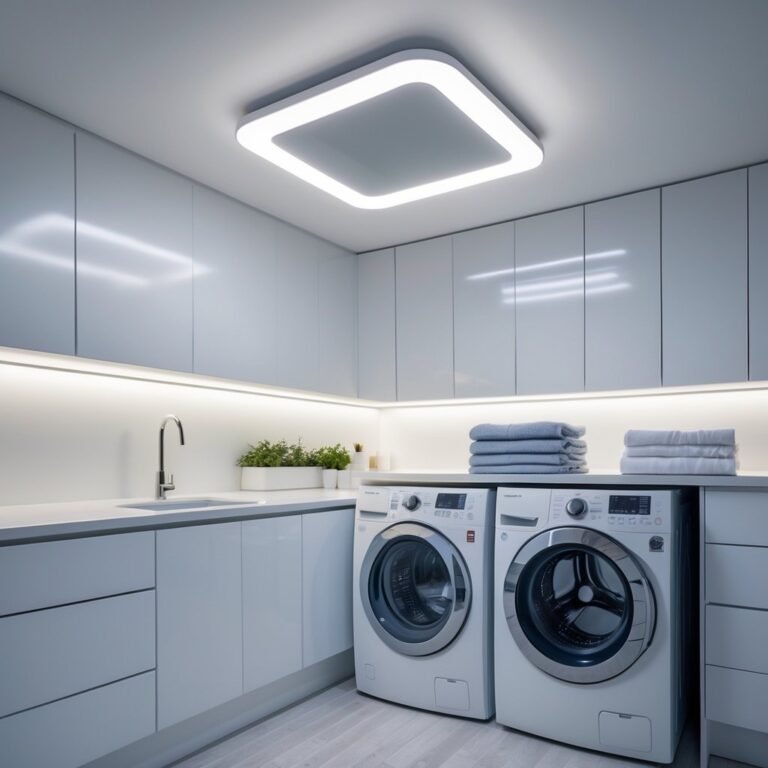
Install under-cabinet lights above your stacked washer and dryer to brighten the workspace. Good lighting helps you read detergent labels and spot stains quickly.
Choose LED light strips or puck lights for low heat and low energy use. Many options plug in or use adhesive mounts, so you often won’t need an electrician.
Place lights under cabinets or shelving at face level to reduce shadows. Aim for even, cool-toned light to keep colors accurate and tasks easier.
10) Choose front-loading stackable washer and dryer models for efficiency
Pick front-loading stackable machines to save floor space and use less water per load. They clean well and spin faster, so clothes come out drier and drying takes less time.
Look for Energy Star ratings and high spin speeds to cut energy and time. Also check drum size and cycle options so the pair fits your laundry needs and space.
Key Considerations For Stacked Washer Dryer Spaces
You need to plan for footprint, storage, service access, and safe venting. Measure carefully, know local codes, and pick layouts that let you reach controls and maintain the machines.
Space-Saving Techniques
Measure the width, depth, and ceiling height before you buy. Standard stackable units need about 27–30 inches depth and 75–80 inches height; allow extra for hoses and venting.
Use a dedicated closet or recessed niche to free room. Add floor-to-ceiling cabinets or open shelving above or beside the stack for detergent, baskets, and cleaning supplies. Slim pull-out shelves and a wall-mounted folding station save floor space and keep work at a comfortable height.
Consider a combination of storage types:
- Closed cabinets to hide clutter and reduce noise.
- Open cubbies for frequently used items.
- Hooks or a narrow drying rack for delicates.
If space is very tight, choose a front-load washer and dryer combo with a stacking kit and place the stack in a bathroom or hallway closet where plumbing and power already exist.
Ventilation and Safety Requirements
Check the dryer vent type: gas dryers need metal ducting to the outside and proper clearances; electric dryers also require outside venting unless you use a ventless model. Avoid flexible foil ducts; use rigid or semi-rigid metal ducts to reduce lint build-up and fire risk.
Leave at least 1–2 inches of clearance behind the units for hoses, cords, and vent connections. Ensure the stack sits level and use a manufacturer-approved stacking kit or bracket to prevent tipping.
Install a lint trap in the vent line where local code allows, and clean vents every 6–12 months. For gas hookups, include a shutoff valve nearby and install carbon monoxide detectors in adjacent spaces. Finally, verify local building codes for clearances, vent types, and electrical requirements before you install.
Optimizing Functionality And Style
Focus on saving floor space, adding useful storage, and making laundry tasks easier to reach. Small design choices—like pull-out hampers, a folding surface, and proper lighting—make the space both usable and attractive.
Custom Storage Solutions
Give each type of laundry item its own spot. Install tall cabinets beside the stacked units for detergent, stain removers, and extra towels. Use clear bins or labeled baskets on open shelves so you can grab supplies at a glance.
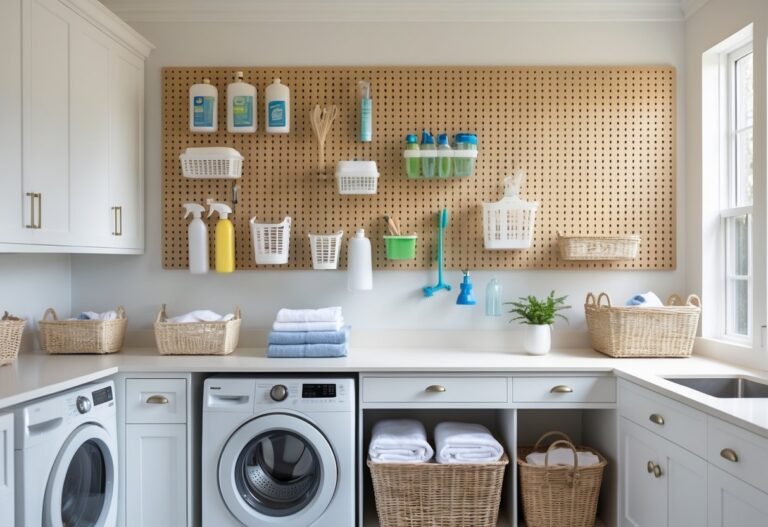
Add a narrow pull-out drawer next to the washer for small items like dryer sheets and delicates. Overhead shelves above the dryer hold bulk items; keep a steady step stool nearby if shelves sit higher than 6 feet. For tight closets, use wall-mounted racks or pegboards to store brushes, lint rollers, and spray bottles vertically.
Consider a built-in hamper system with separate bins for whites, colors, and delicates. Slide-out hampers under a folding counter save space and hide mess. Choose moisture-resistant materials like laminate or metal to prevent mildew and simplify cleaning.
Ergonomic Design Tips
Place the stacked dryer on top of the washer only if you can reach dryer controls comfortably. If you struggle to reach, add a platform for the washer so dryer controls sit at eye level. Aim for the washer door to be at knee-to-waist height to reduce bending.
Keep your main folding surface within 2–3 feet of the machines to cut steps between tasks. Install a counter at 36 inches high for most adults; lower the counter to 30–32 inches if children will help. Use a shallow pull-out shelf at waist height for sorting or treating stains without needing to move.
Position good task lighting directly over the machines and the folding area. Use an LED strip or puck lights under cabinets to reduce shadows. Also, leave a 1–2 inch gap at the back of stacked units for ventilation and easy hose access.
Frequently Asked Questions
These answers focus on clear, practical fixes you can use right away: space-saving layouts, specific storage ideas above stacked units, design moves that boost function, ways to hide machines behind cabinetry, simple DIY decor, and useful IKEA items.
How can I maximize space in a small laundry room with a stacked washer and dryer?
Place the washer and dryer in a vertical stack to free floor space for storage or a folding surface. Allow 24 inches of front clearance and 4–6 inches behind the units for ventilation and hookups.
Use narrow, tall storage beside or above the stack for detergents and tools. Built-in shelving next to the stack keeps supplies reachable without taking up floor area.
Choose slim sliding doors or louvered doors to save swing space while keeping the machines hidden. Folding or pocket doors work well if you want a full closet-style enclosure.
What are some creative ways to incorporate storage above a stacked washer and dryer?
Install dark textured laminate cabinets topped with gray quartz for a durable shelf and a finished look. The quartz creates a flat surface for folding small items or holding baskets.
Add open cubbies for frequently used items and closed cabinets for bulk supplies. Use shallow shelves for detergents and deep cabinets for laundry baskets.
Mount a retractable drying rod or wall hooks under the cabinets for delicates and lightweight items. Label baskets and use clear bins to keep things organized and easy to grab.
What design strategies can make a laundry room with a stacked washer and dryer more functional?
Use a mix of open shelving and closed cabinets to balance access and visual tidiness. Place built-in shelving at waist height next to the stack so you don’t have to reach above the dryer for daily items.
Pick durable materials for surfaces near the machines, like quartz counters and washable paint. Charcoal-and-white hex tiles on the floor add grip and hide scuffs while soft eggshell paint keeps the room bright.
Add task lighting under cabinets and over the folding area to reduce strain. A small countertop next to the machines gives you a place to fold or sort without bending.
How can I hide my stacked washer and dryer behind cabinetry without sacrificing accessibility?
Use louvered doors to let air circulate while concealing the stack. Louvered doors balance ventilation with a sleek, uncluttered look.
Build cabinets with removable or hinged panels that allow easy access to hookups and vents. Leave 1–3 inches of side clearance for airflow and to open doors without rubbing the appliances.
Install a shallow pull-out shelf or a slide-out workboard inside the cabinet for quick folding. Keep the most-used supplies at chest height so you don’t need a step stool to reach them.
What are some DIY ideas for decorating a laundry room with a stacked washer and dryer?
Apply peel-and-stick hex tiles in charcoal and white for a bold, low-effort floor update. They are easier to install than full tile and make cleanup simple.
Paint the walls soft eggshell for a bright, clean look that hides wear. Add a framed print or small shelf with plants to make the space feel less utilitarian.
Use matching baskets and labels on open shelves to create a tidy, uniform appearance. Swap cabinet hardware for a consistent metal finish to elevate the overall style.
Are there specific IKEA solutions recommended for organizing a laundry room with stacked appliances?
Choose tall, narrow IKEA cabinets to fit beside a stacked unit and store detergents vertically. The SEKTION system can be configured with custom heights to match your space.
Use IKEA wall-mounted shelves and hooks for easy, affordable storage. The IVAR or BOSJÖN shelves work well above the machine if you need open storage.
Pair IKEA baskets and boxes with labeled fronts to keep small items organized and visible. Add a simple countertop from IKEA to create a low-cost folding area above lower cabinets.