10 Grunge Bedroom Ideas to Create a Dark Aesthetic Room
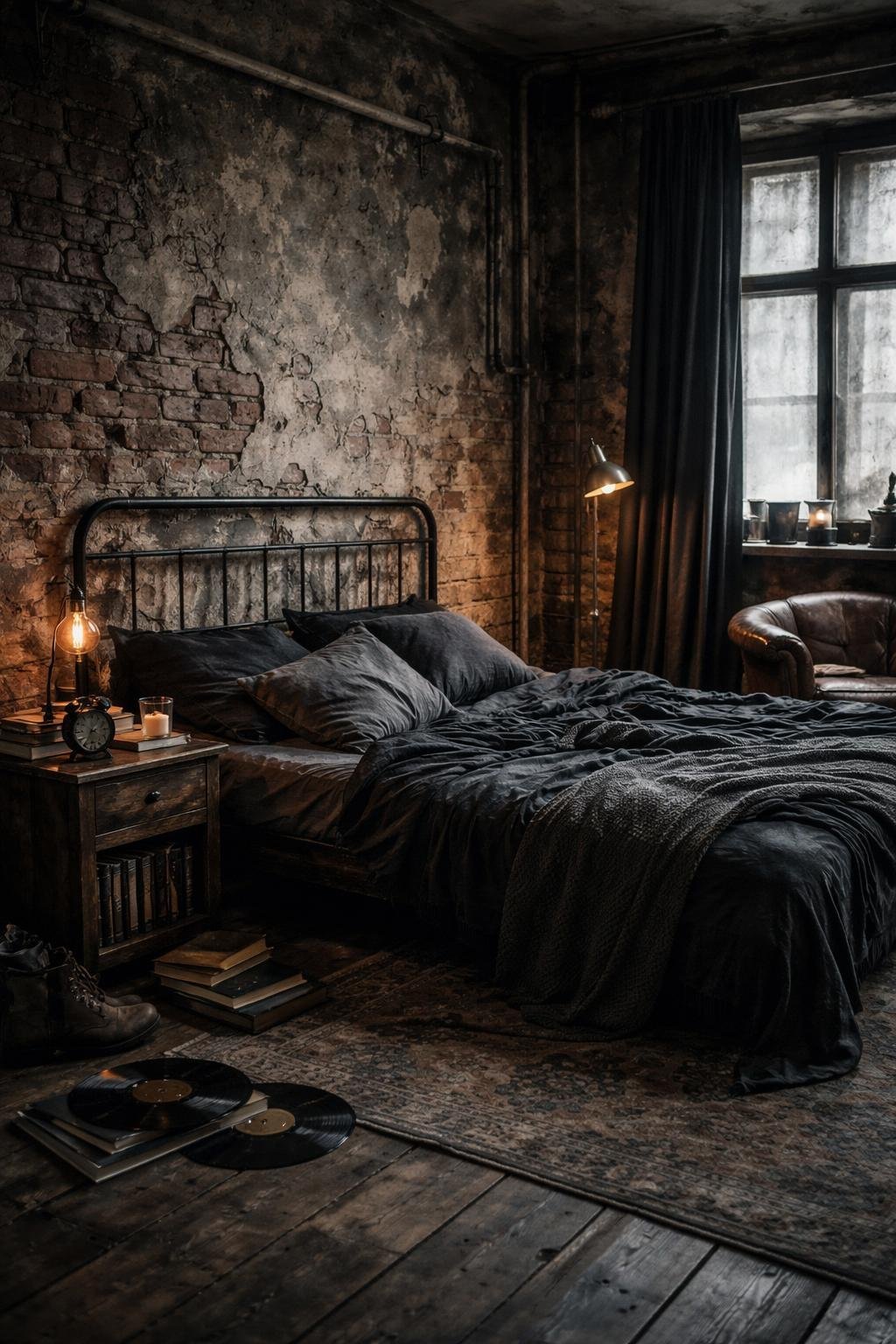
You’ll find ideas that mix dark palettes, worn fabrics, DIY art, and reclaimed materials to create an edgy but cozy vibe. Expect tips on lighting, display, storage, and layout that help you shape a grunge bedroom that reflects your style.
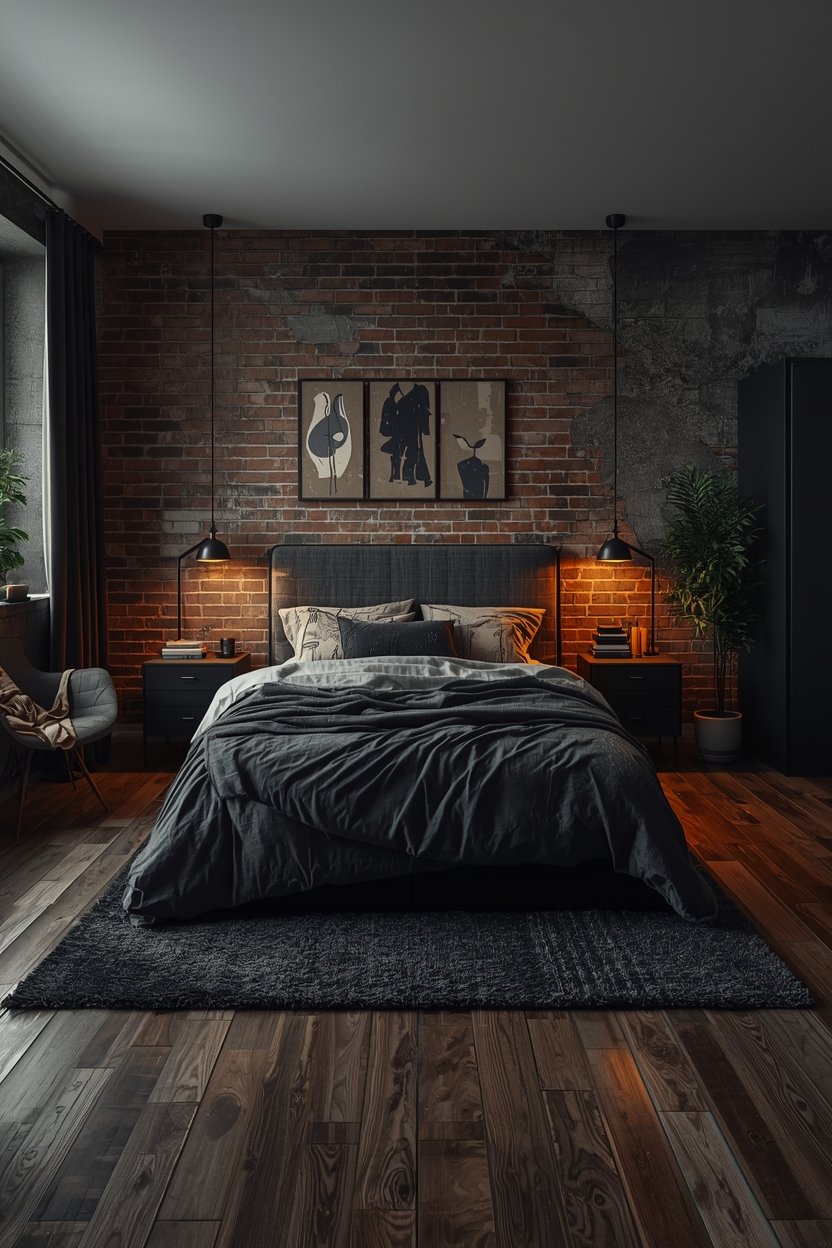
1) Use dark, moody color palettes like charcoal, deep green, and burgundy
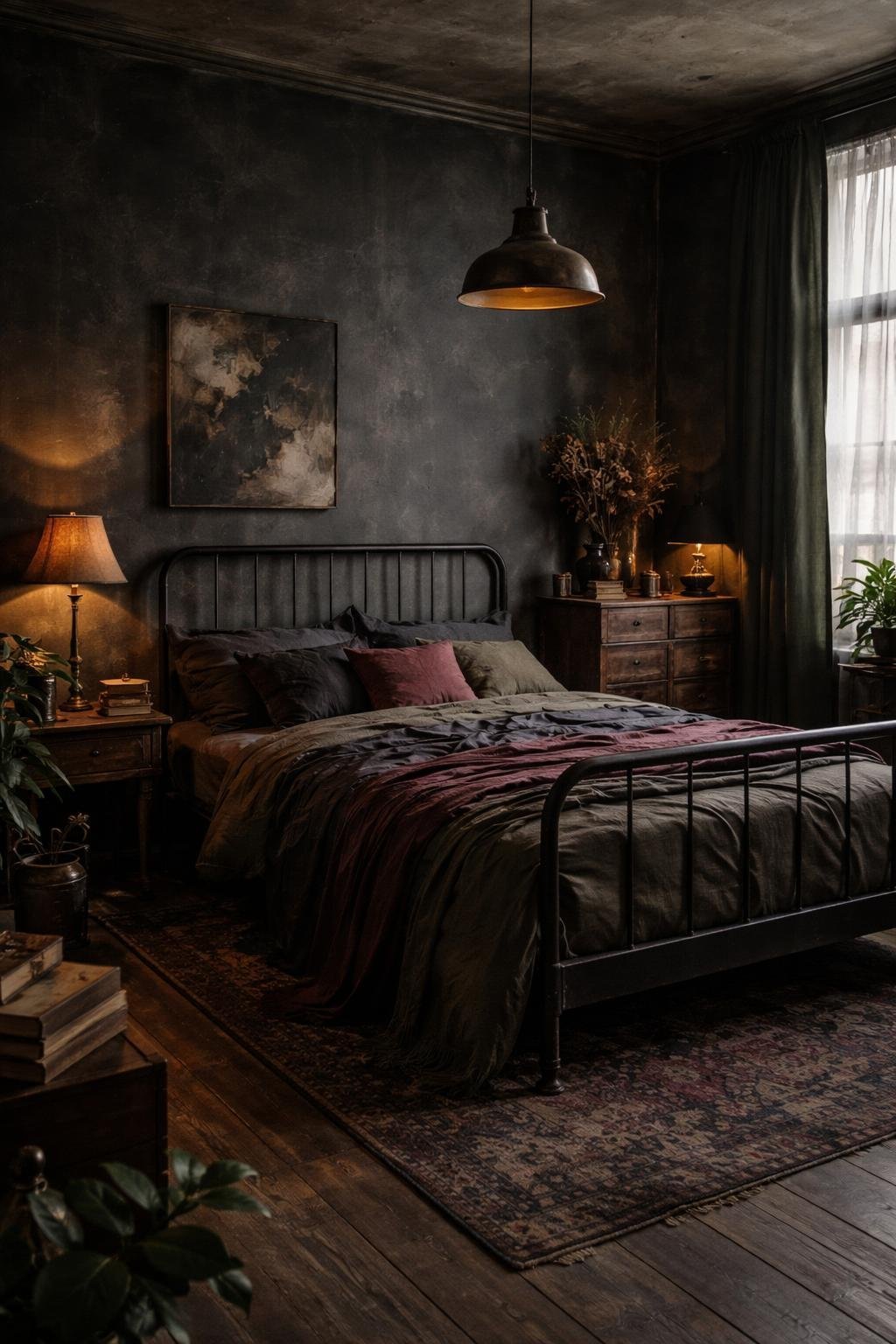
Choose deep, muted colors to set a grunge tone without feeling messy. Charcoal, forest green, and burgundy add depth and a lived-in vibe.
Paint walls or add an accent wall to anchor the room. Pair with warm lighting and layered textures to keep the space cozy and balanced.
2) Incorporate vintage and distressed furniture pieces
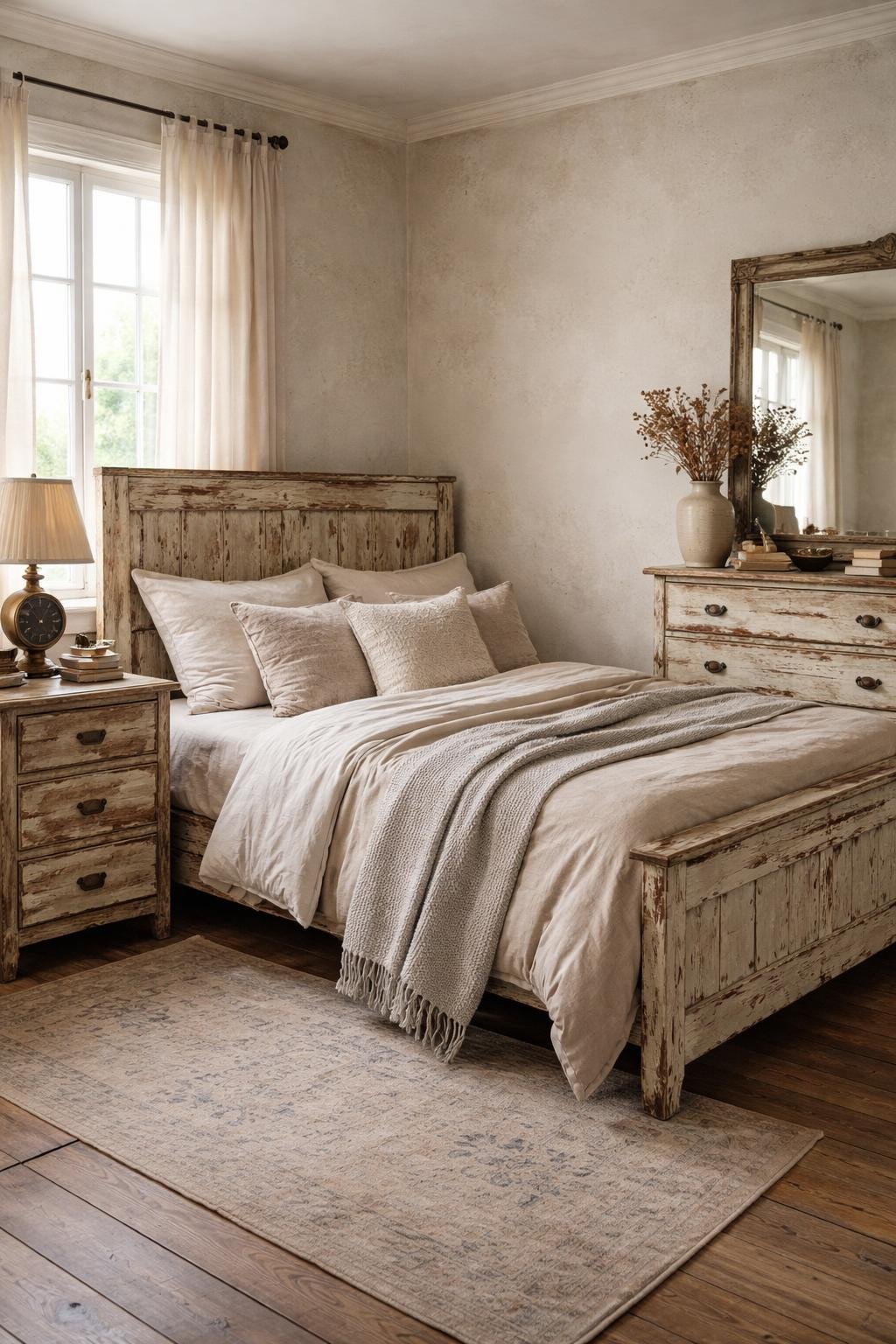
Choose worn or weathered items to give your room authentic grunge character. Look for scratched dressers, chipped nightstands, or a leather chair with patina.
Mix thrifted finds with a few modern pieces to keep the space balanced. You can sand, paint, or distress items yourself to match your vibe.
Place heavier, solid pieces near the bed to anchor the room. Small repairs are fine; the goal is lived-in texture, not unsafe furniture.
3) Add layered string lights and neon signs for atmospheric lighting
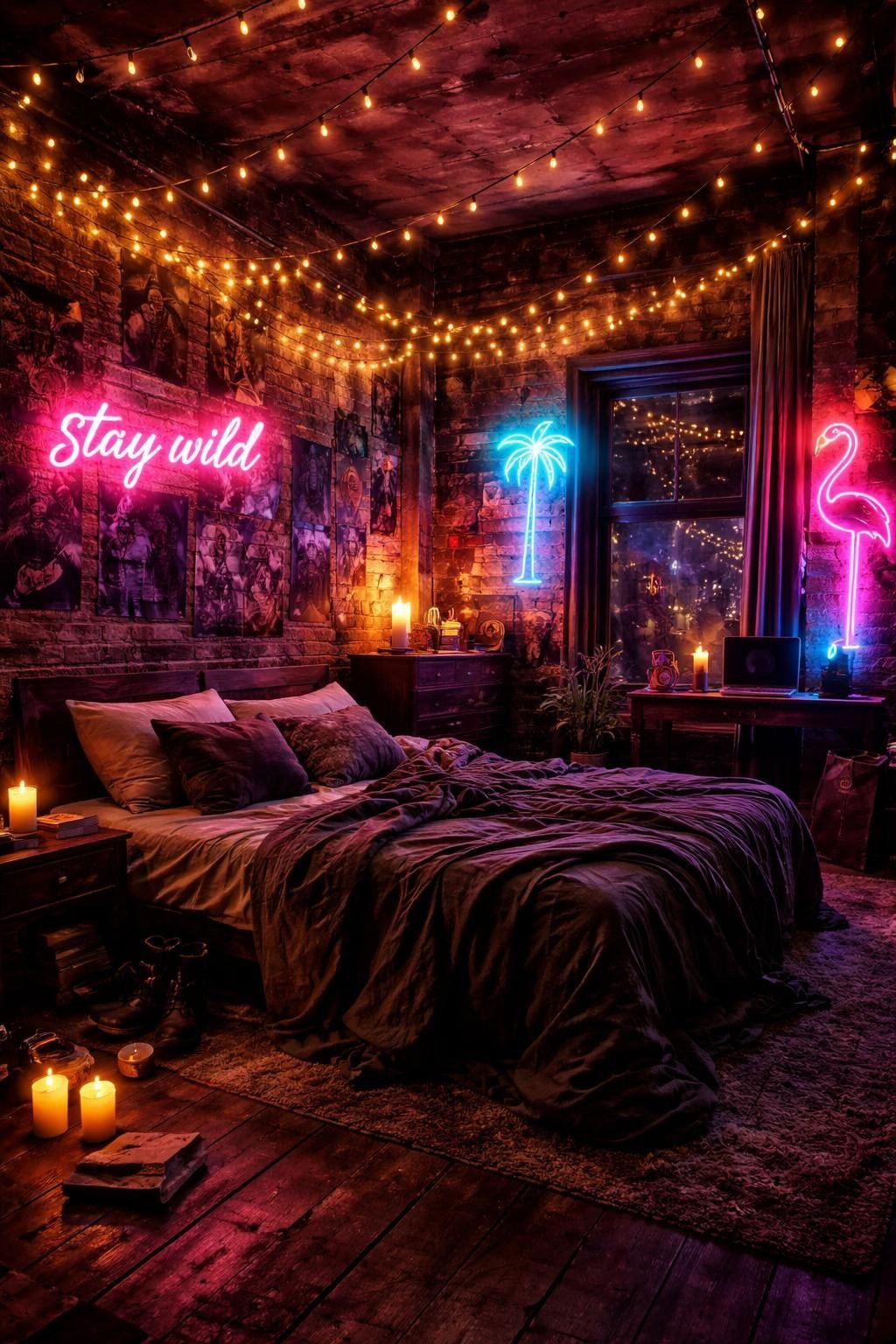
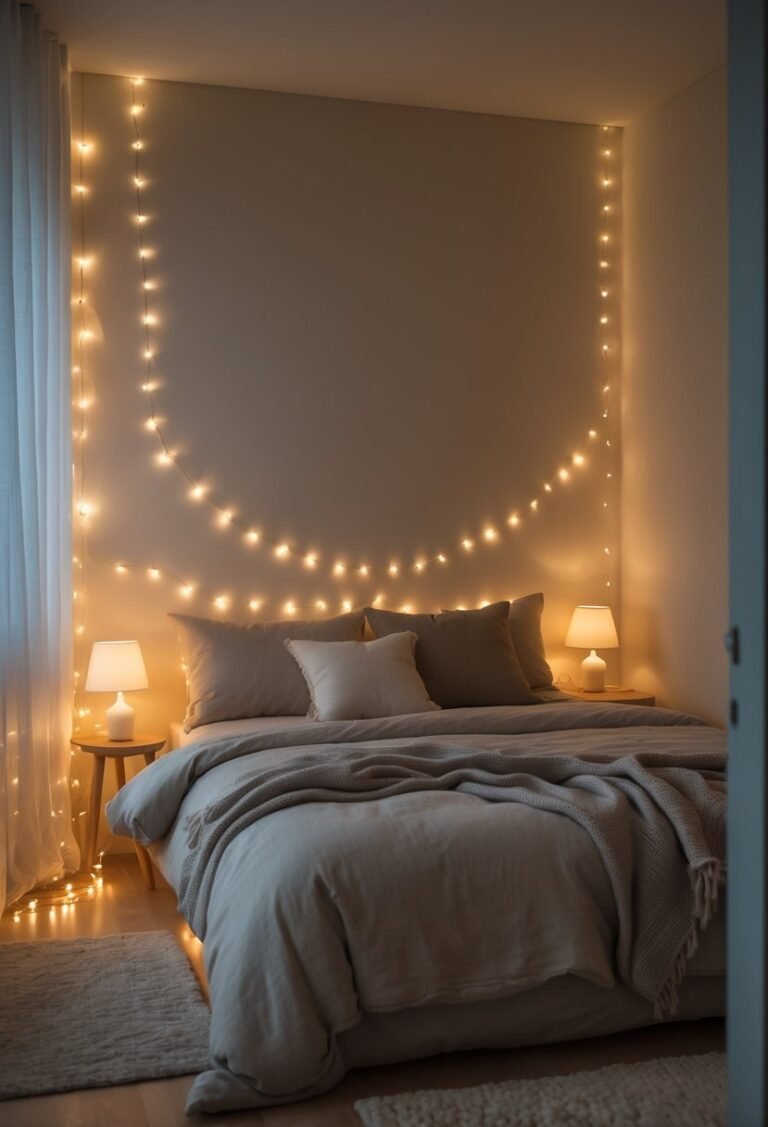
Use string lights to create a soft base glow across your room. Drape them over shelves or along the ceiling to add warmth and texture.
Add a neon sign for a bolder focal point. Pick a simple phrase or shape that fits your grunge vibe and place it above the bed or a reading nook.
Mix warm string lights with a cool-toned neon for contrast. Layering lights gives depth and lets you control the mood with dimmers or plugs.
4) Display vinyl records and vintage posters to highlight music influences
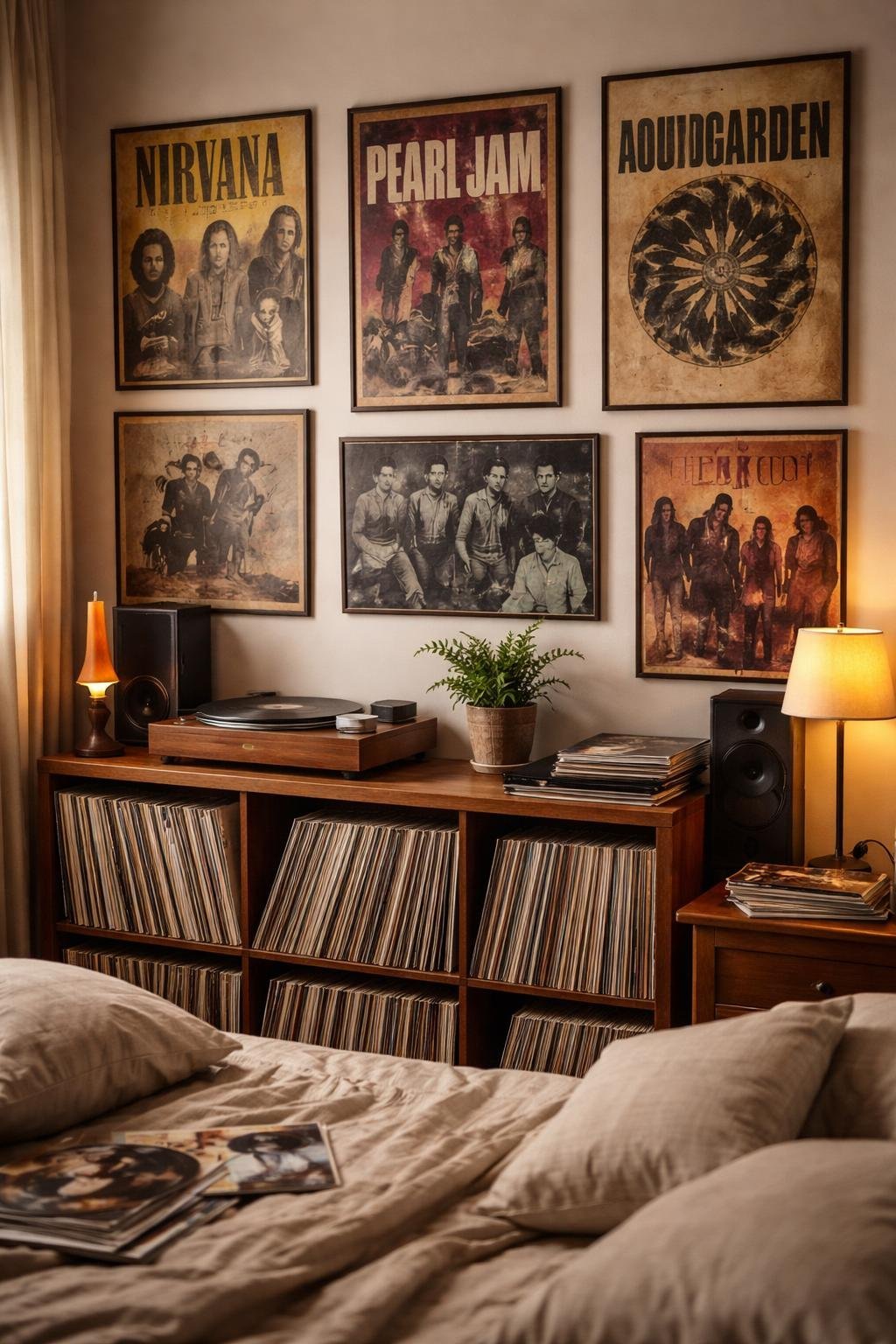
Showcase vinyl records and vintage posters on your walls to give the room a music-driven vibe. Mix album covers with concert posters to tell a visual story of your tastes.
Use simple frames or washi tape for a casual look. You can also mount scratched or blank records as art if you don’t plan to play them.
Group items by color, band, or era to keep the display tidy. This keeps the room interesting without feeling chaotic.
5) Use raw, textured textiles like worn leather and frayed flannel
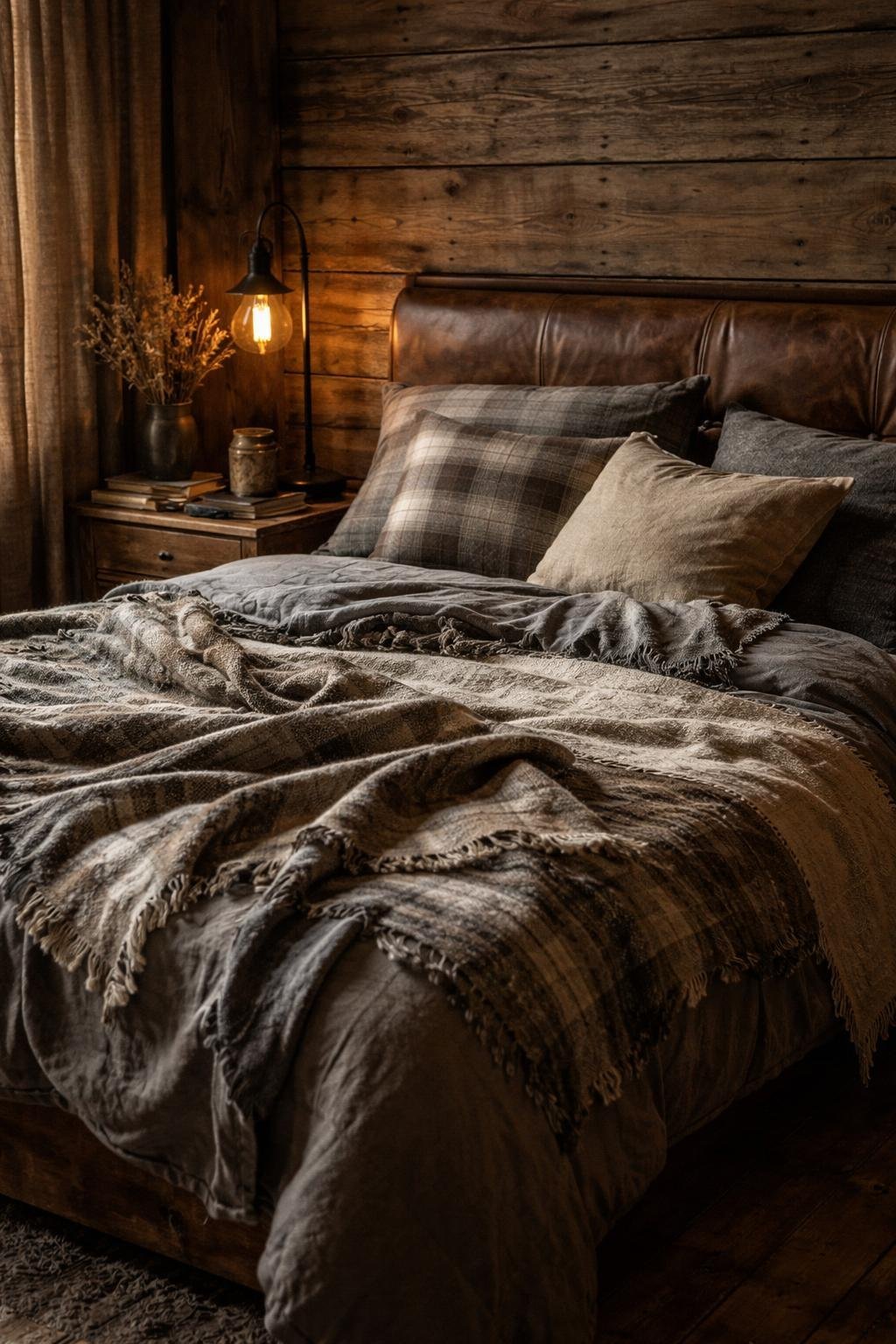
Choose worn leather pillows or a distressed chair to add grit and warmth to your room. The rough surface contrasts well with softer bedding.
Drape a frayed flannel or patchwork denim throw over the foot of your bed for a lived-in look. Small rips and frays make the space feel authentic, not staged.
Mix textures—velvet, knit, and leather—to create depth. Keep colors muted: blacks, deep greens, burgundy, and faded reds work best.
6) Include DIY art pieces and graffiti-inspired wall decor
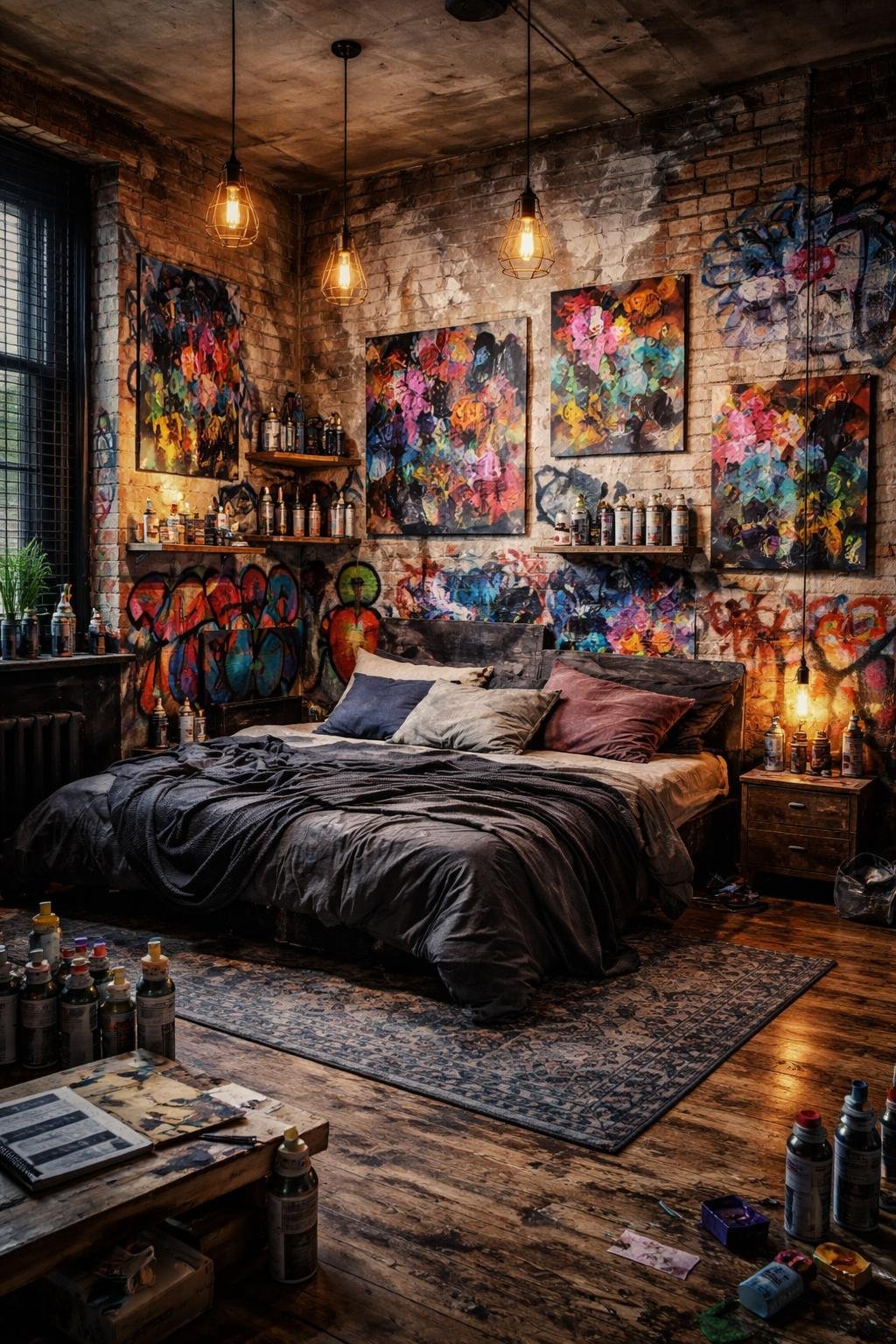
Add DIY art to make your space personal and gritty. Paint canvases, stencil quotes, or use ripped posters for layered texture.
Try a small graffiti mural with spray paint or acrylics on a plywood panel you can move later. Mix framed prints from local artists with your own pieces to keep the room balanced.
Use simple tools like sandpaper to distress frames or fabrics. Keep colors and motifs consistent so the look feels planned, not messy.
7) Opt for open, industrial-style shelving for storage and display
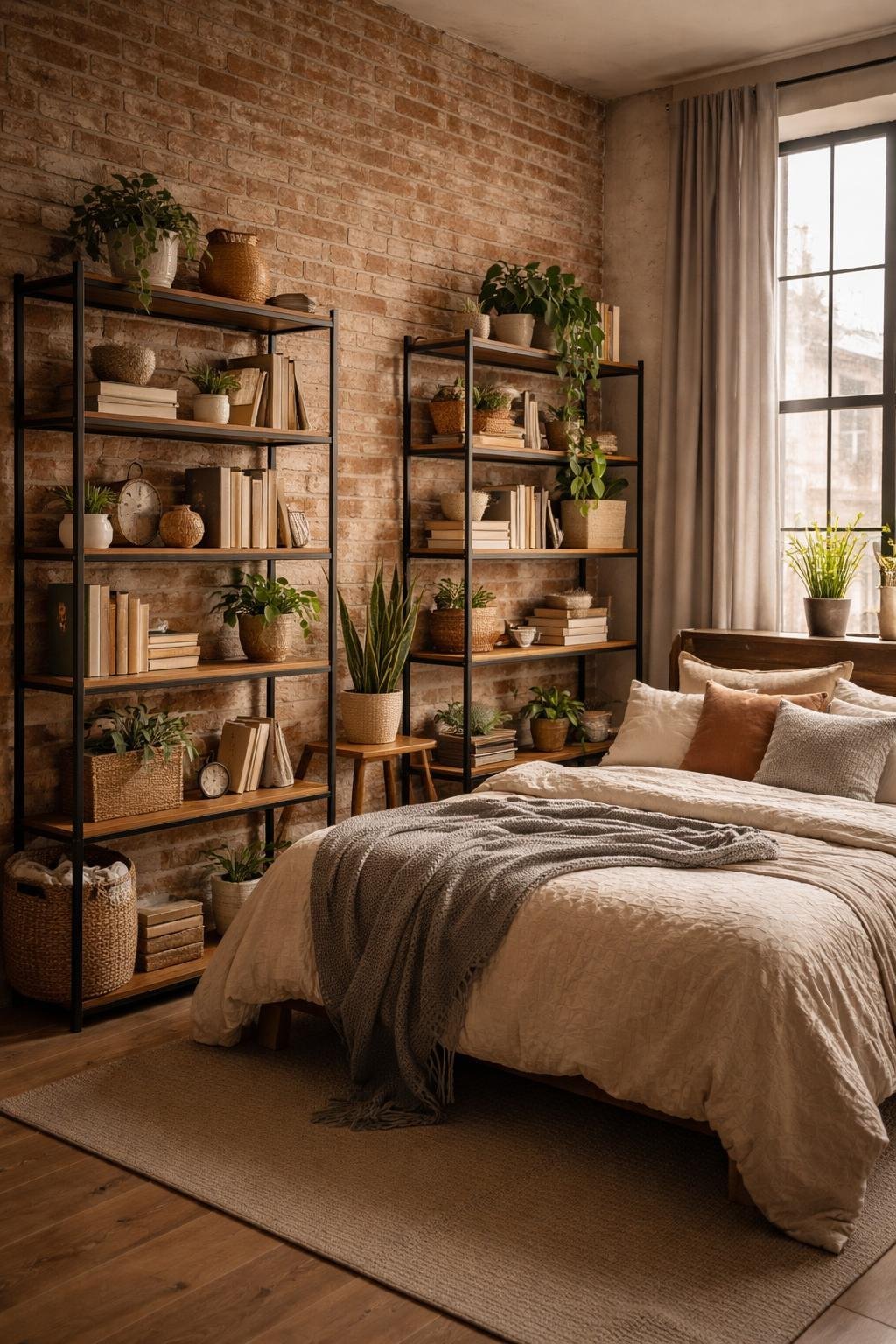
Choose metal-and-wood open shelves to match grunge textures and darker tones. They give your room an edgy, lived-in look while keeping things visible.
Use shelves for books, band merch, plants, and layered art. Leave some gaps so displays don’t feel cluttered.
Mount tall, freestanding, or ladder-style units depending on space. Pick adjustable shelves to fit records, speakers, or bulky items.
8) Scatter cozy blankets and mismatched pillows for comfort
You can soften grunge edges by draping soft blankets over the bed and chair. Mix textures like knit, fleece, and worn linen to add warmth without matching everything.
Throw down mismatched pillows in different sizes and patterns for a lived-in look. Keep colors muted—charcoal, olive, rust—to fit the grunge palette while staying cozy.
9) Blend in reclaimed wood elements for an urban, rugged feel
Add reclaimed wood for texture and history; it brings a worn, urban edge without feeling cold. Use a wood accent wall, headboard, or floating shelves to ground the room visually.
Mix wood with metal fixtures and exposed brick to keep the look rugged and balanced. Choose unfinished or lightly sealed pieces so the wood’s character shows through.
10) Create cluttered but intentional layouts to enhance authenticity
You can layer objects to make the room feel lived-in without looking messy. Pick a few collections—books, records, art—and group them on shelves or a nightstand.
Mix textures and heights to keep the eye moving. Leave small gaps so the space still breathes and doesn’t overwhelm.
Rotate items often to keep the look fresh and personal. Intentional clutter shows personality while staying controlled and stylish.
Core Elements of a Grunge Bedroom
You’ll focus on deep, muted colors and rough textures that feel lived-in. Art and decor should look collected, not curated, with band posters, vintage prints, and layered lighting that sets a moody tone.
Color Palette and Textures
Choose a base of charcoal, olive, or faded black for walls or large furniture. Add accent colors like rust, mustard, or forest green in pillows and throws to prevent the room from feeling flat.
Use worn materials: distressed wood for bed frames, scuffed metal shelving, and exposed brick or concrete finishes if possible. These surfaces create the raw, imperfect look grunge needs.
Layer textiles to add warmth and depth. Mix heavy flannel sheets, a thrifted wool blanket, and a tattered rug with a low pile. Keep patterns muted—faded plaids or washed-out florals work best.
Aim for contrast between soft textiles and hard surfaces so the room feels both rough and comfortable.
Signature Art and Decoration
Pick a small gallery wall of mixed pieces rather than matching frames. Include at least one vintage band poster, a black-and-white photo, and a handmade print or flyer. Let edges overlap and frames be imperfect for authenticity.
Add functional decor that doubles as art: old guitars on stands, stacked cassette or vinyl crates, and a lamp with exposed bulbs. These items show personality and avoid a staged look.
Use lighting to highlight decor. Combine string lights, a neon sign, and a focused floor lamp to create pockets of shadow and glow. Keep surfaces slightly cluttered—zines, notebooks, and a few plants in worn pots make the space feel used and personal.
Maintaining the Authentic Grunge Aesthetic
Keep textures raw, colors moody, and personal touches obvious. Focus on thrifted finds, layered fabrics, and lighting that creates shadows and warmth.
DIY Tips for a Personalized Look
Make a statement with items you alter yourself. Distress an old denim jacket to hang as wall art, or sand down a thrifted nightstand and repaint it with matte black or deep green. Patchwork pillows made from worn tees or flannel scraps add pattern and history without costing much.
Use simple hardware swaps to change mood: replace plain drawer pulls with mismatched metal knobs or leather pulls. Create a gallery wall of band posters, Polaroids, and photocopied zines using clothespins on a string for an imperfect, lived-in vibe. Label storage boxes with stenciled letters to keep things organized and visually on-theme.
Balancing Comfort with Edgy Style
Choose layers that feel cozy but keep the color palette dark. Start with a soft mattress topper and add heavy linen or cotton duvet covers in charcoal, olive, or burgundy. Throw on a chunky knit blanket and a couple of faux-shearling pillows to soften the look without losing grit.
Lighting matters: combine warm string lights, a low-wattage bedside lamp with an Edison bulb, and a neon sign or LED strip for accents. Keep floor space usable by using open metal shelving that shows off folded clothes, boots, and stacked records. This preserves the raw aesthetic while making your room functional and comfortable.
Frequently Asked Questions
This section answers practical questions about styling, colors, furniture, patterns, and making the room both grunge and livable. Expect clear steps for using dark palettes, vintage pieces, textured textiles, music displays, and moody lighting.
What essential elements define a grunge-style bedroom?
A grunge bedroom uses dark, moody colors like charcoal, deep green, and burgundy.
It includes raw textures such as worn leather, frayed flannel, and distressed wood.
You should add vintage or secondhand furniture and visible signs of wear.
Music items—vinyl records, posters, band art—help show the room’s attitude.
How can I incorporate grunge aesthetics into my bedroom on a budget?
Shop thrift stores and flea markets for distressed furniture and decor.
Refinish or paint old pieces instead of buying new ones to keep costs low.
Use inexpensive textiles like flannel sheets, ripped tees turned into wall hangings, and thrifted rugs.
String lights and a small neon-style sign provide mood lighting without a large expense.
What color schemes are typically used in grunge bedroom decor?
Stick to dark and muted shades: black, charcoal, deep green, burgundy, and faded brown.
Use a neutral base like gray or black and add deep accent colors in bedding or curtains.
Keep painted walls matte or slightly textured to avoid a glossy, polished look.
Small pops of pale or rusty tones can add contrast without breaking the moody feel.
Are there any iconic patterns or prints associated with grunge bedroom designs?
Plaid and flannel patterns, especially in dark or muted colors, are classic grunge choices.
Dark floral prints that look worn or faded also fit the aesthetic.
Band logos, vintage concert posters, and DIY graphic prints add personality.
Avoid overly bright or pristine patterns that clash with the lived-in look.
What types of furniture pieces best complement a grunge bedroom theme?
Choose vintage, distressed, or industrial-style furniture—think metal bed frames, worn dressers, and reclaimed wood shelves.
Low-profile or platform beds with simple lines work well.
Add functional pieces like a record player stand, a rugged side table, or a mismatched chair.
Keep items practical and slightly imperfect to preserve the grunge vibe.
How can I balance grunge elements with a comfortable and functional bedroom space?
Layer soft textiles—throws, worn quilts, and flannel sheets—to make the room cozy.
Use rugs and cushions to soften hard surfaces and add warmth.
Keep storage solutions like crates or open shelving so the room stays usable.
Control lighting with layered fixtures: string lights, bedside lamps, and one focused overhead source for tasks.