Cozy Bedroom Design Ideas: Practical Tips for Warm, Relaxing Retreats
You can make your bedroom feel warm and calm without a big budget by choosing soft lighting, layered bedding, and a simple layout that removes clutter. These small changes help your space feel inviting the moment you step inside.
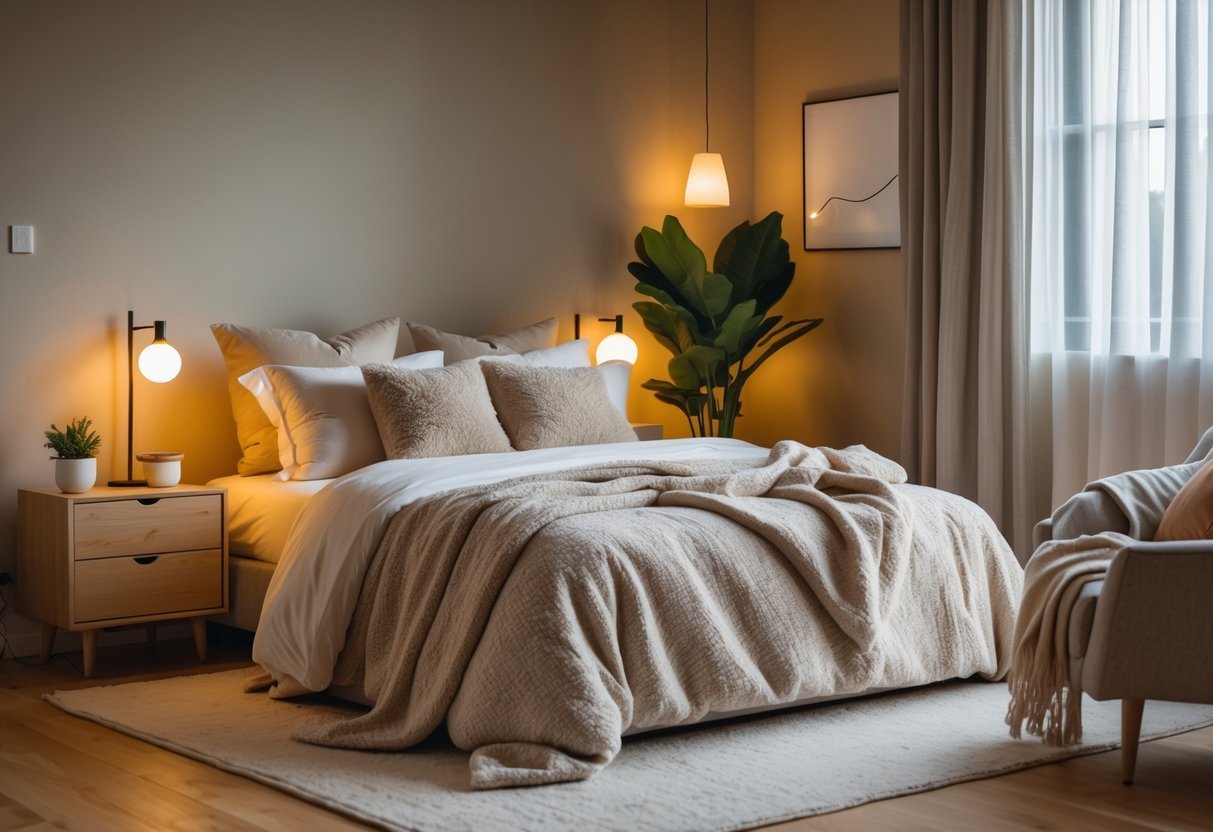
Pick cozy textiles, arrange furniture for easy flow, and add a few personal touches like art or a favorite throw to make the room feel yours. Focus on comfort, soft light, and tidy layout to create a cozy bedroom that helps you relax and sleep better.
Key Takeaways
- Build a calm base with textures and lighting that support rest.
- Arrange furniture to improve flow and remove visual clutter.
- Add personal accents that bring comfort and a sense of home.
Foundations of Cozy Bedroom Design
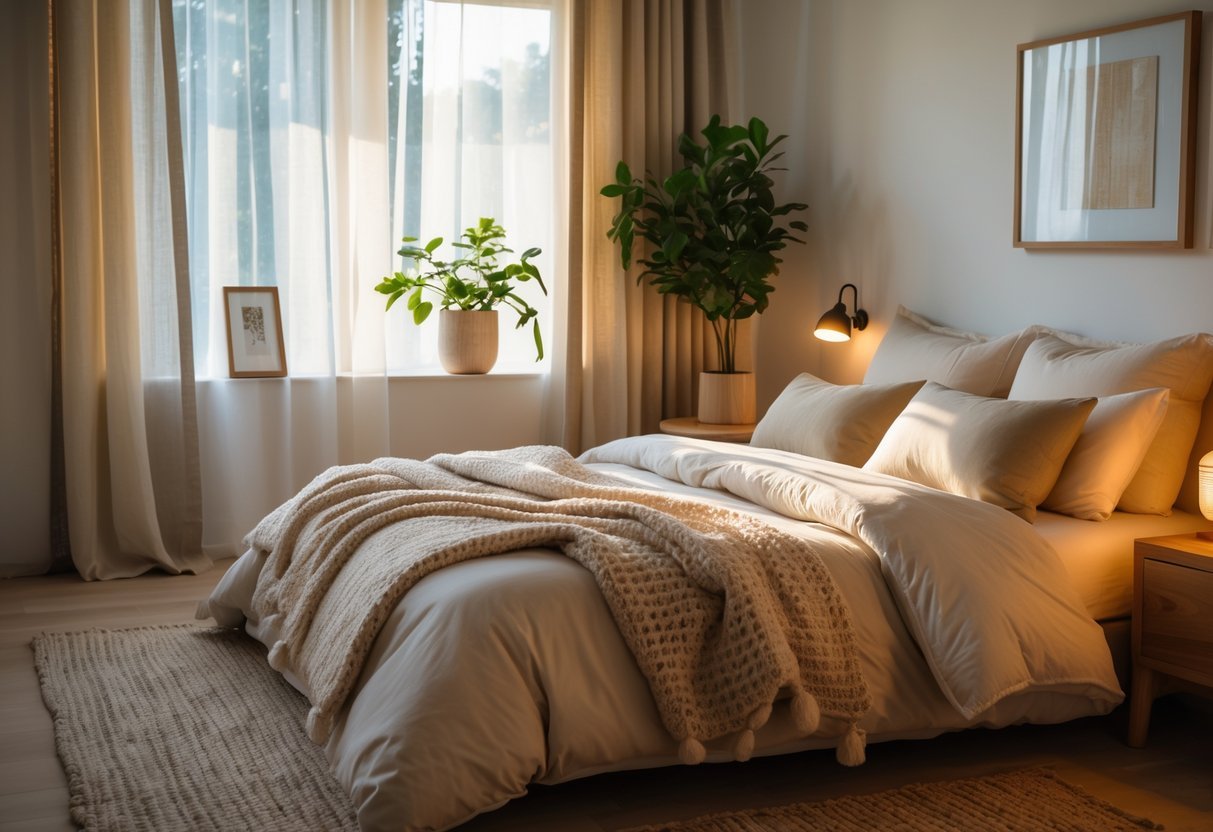
Choose soft colors, warm textiles, and layered light to make your room feel calm and inviting. Focus on paint and fabric tones, bedding that matches your sleep needs, and lamps placed for tasks and mood.
Choosing a Calming Color Palette
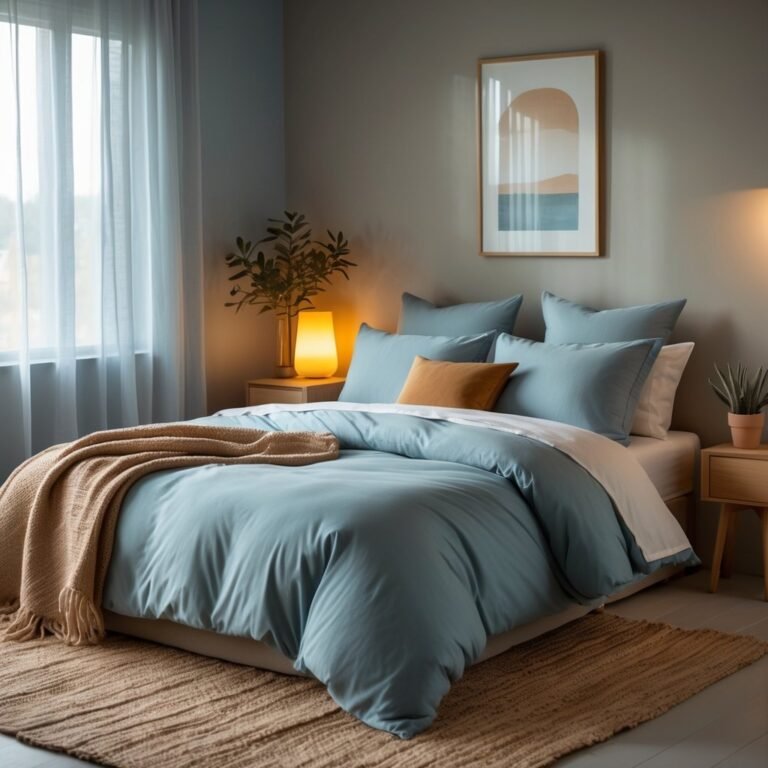
Pick two main paint colors and one accent color to keep the room cohesive. Use a neutral base like warm beige, soft gray, or muted taupe on walls. Add a secondary tone in the same family—think dusty blue with gray-beige or sage green with warm cream—to keep contrast low and restful.
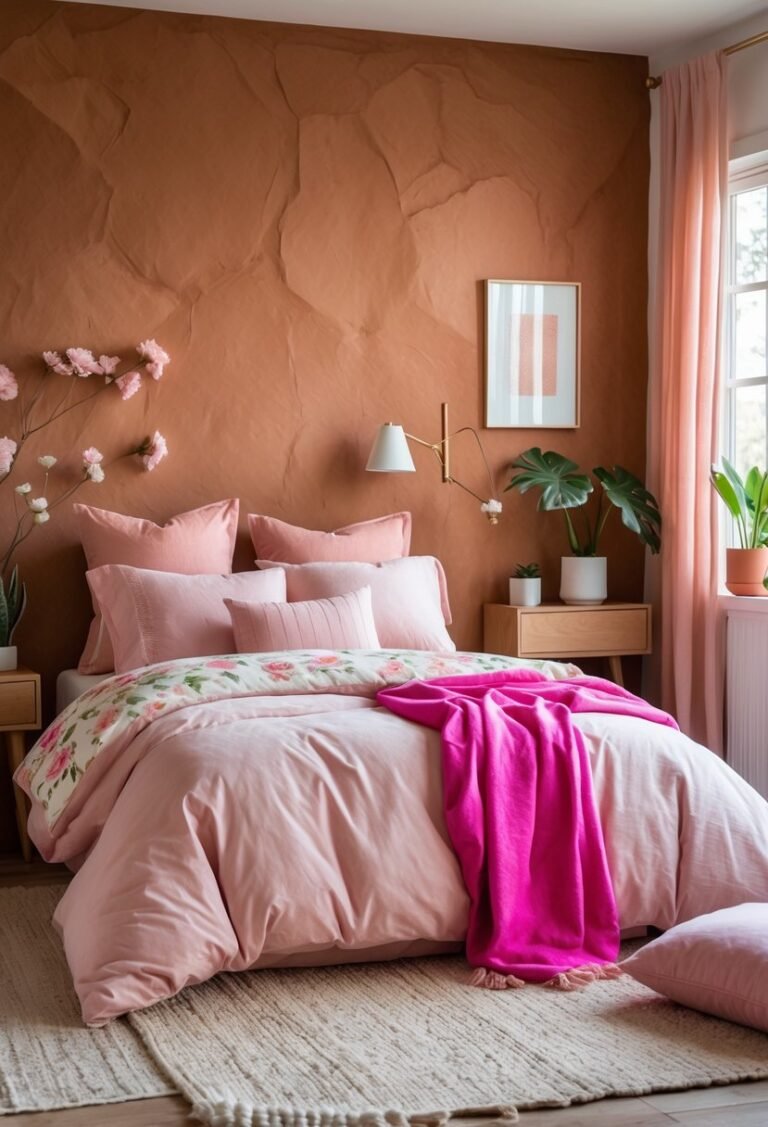
Use the accent color sparingly on pillows, a throw, or one piece of furniture. For a cozier feel, choose colors with warm undertones rather than stark, cool hues. Test paint swatches near your bed and view them at night to see how they read with lamp light.
Selecting Comfortable Bedding
Start with a supportive mattress that matches your sleep position: firmer for back sleepers, softer for side sleepers. Top it with a breathable mattress protector to extend life and keep the surface clean. Layer bedding in this order: fitted sheet, lightweight breathable top sheet (optional), duvet or comforter, and a washable cover.
Choose natural fabrics—cotton, linen, or wool blends—for sheets and blankets to manage temperature and feel soft. Aim for a duvet tog or weight that suits your climate: lighter for warm rooms, heavier for cool rooms. Add two pillow types: one for sleep firmness and one softer decorative pillow you can remove before bed.
Effective Use of Lighting
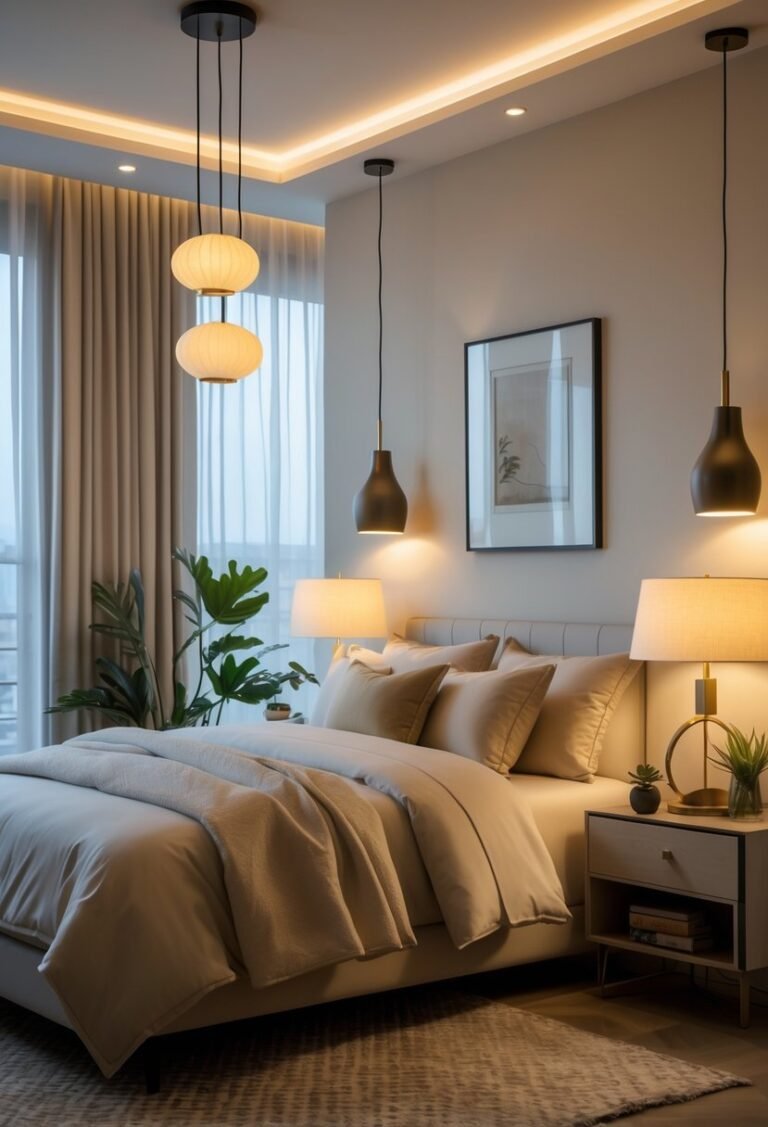
Place three types of light: ambient, task, and accent. Ambient light comes from a ceiling fixture or wall-mounted sconce with a dimmer. Use a warm color temperature (2700K–3000K) for all general lighting to make skin tones and fabrics look cozy.
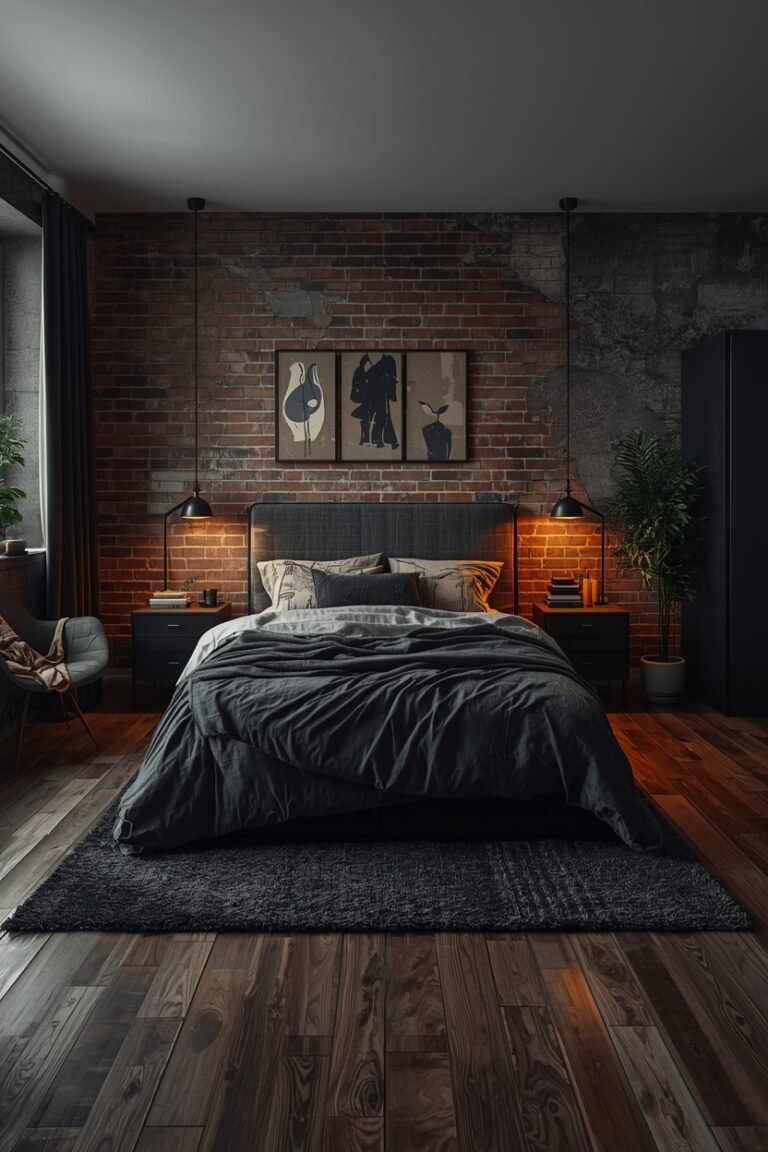
Add task lighting at bedside—adjustable sconces or table lamps with directional heads for reading. Keep switches or plug-in dimmers within arm’s reach. Use accent lights like low-wattage floor lamps or LED strips behind a headboard to create depth and soft shadows without bright glare.
Furniture and Layout for Warmth
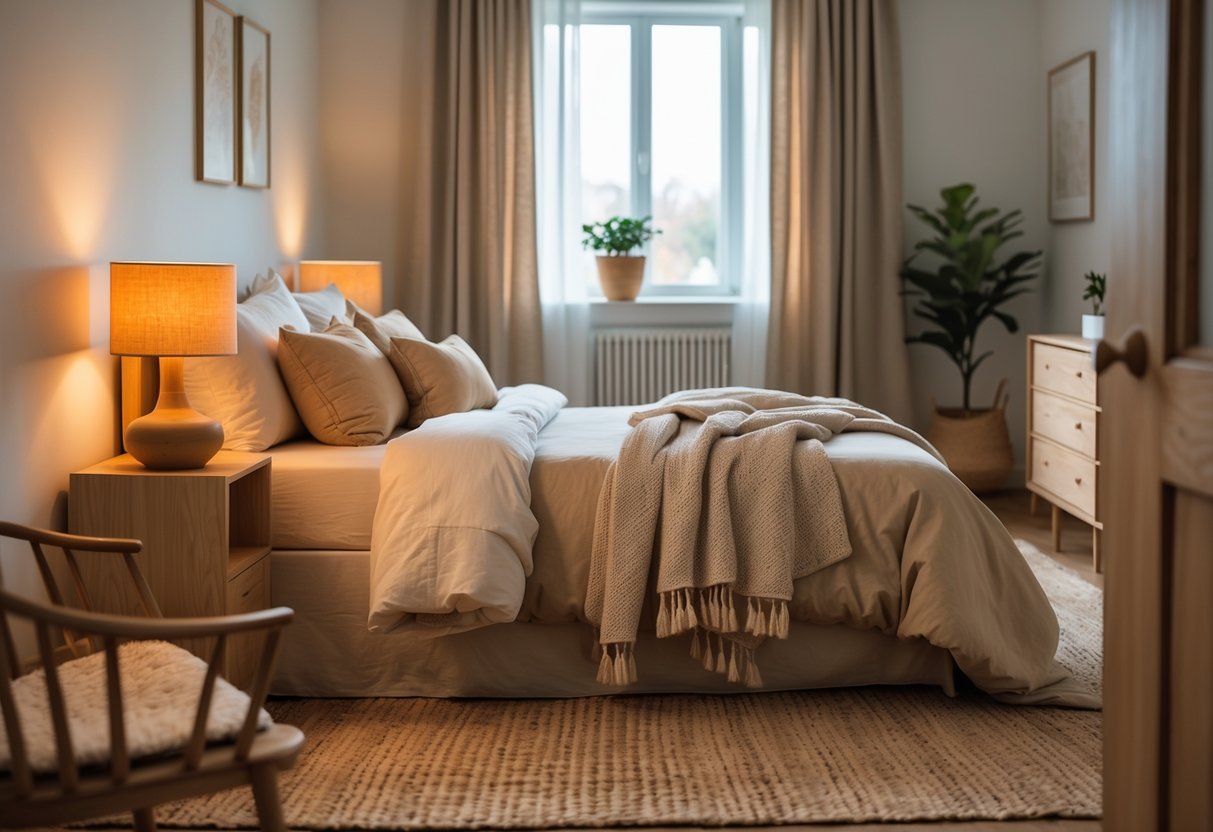
Choose a few key pieces that give comfort, keep sight lines open, and add soft, tactile surfaces. Arrange furniture to make movement easy and create a clear focal area for rest.
Essential Furniture Selection
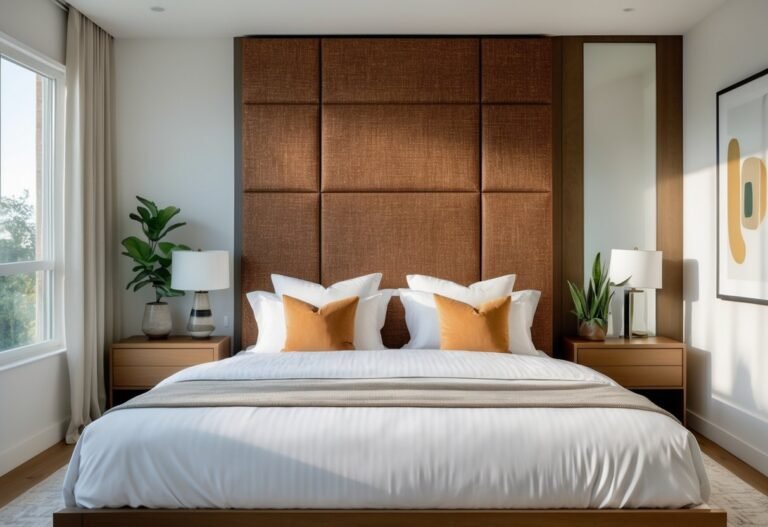
Pick a bed with a solid frame and a cushioned headboard to anchor the room and add immediate softness. A queen or full bed fits most standard bedrooms; choose a headboard upholstered in linen, velvet, or faux suede for warmth. Use a medium-height mattress and add a mattress topper for extra comfort without changing the room’s proportions.
Include two bedside tables for balance and easy access to a lamp, book, and glass of water. Pick warm-toned wood or painted finishes that match your palette. Add a small armchair or bench at the foot of the bed for reading and dressing—opt for rounded edges and plush upholstery to keep shapes soft.
Optimizing Room Layout
Place the bed on the longest wall or centered under a window to make it the focal point. Leave at least 24 inches of walking space on each side for easy movement and cleaning. Arrange bedside tables and lamps within arm’s reach so you don’t have to get up to switch lights.
Position seating near a natural light source for daytime reading; if space is tight, choose a narrow chaise or stool instead of a full armchair. Keep the pathway from the door to the bed clear; avoid placing large dressers in that line. Use a rug that extends at least 18 inches beyond the sides and foot of the bed to warm the floor and tie furniture together.
Incorporating Textures and Materials
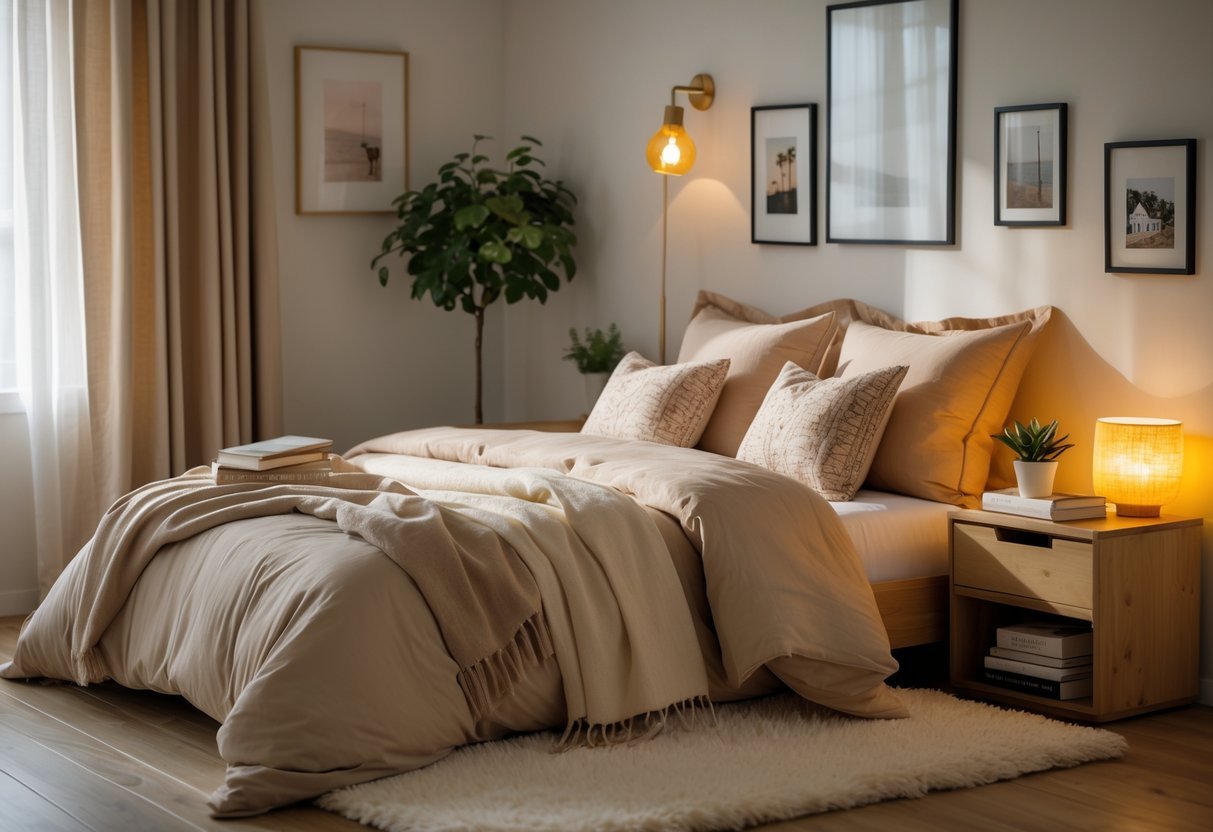
Layer textiles to create physical and visual warmth. Combine a wool or chunky knit throw, cotton sheets, and a plush duvet or down alternative. Use pillow variety—mix two sleeping pillows, two decorative euro shams, and one lumbar pillow to create depth without clutter.
Choose furniture materials with a warm feel: oak, walnut, or painted wood with matte finishes work well. Add leather or boucle accents for contrast. Metal can still appear cozy if you pick brass or aged finishes and pair them with soft fabrics. Finally, bring in natural fibers—jute rugs, linen curtains, and woven baskets—to add texture while staying breathable and low-maintenance.
Personal Touches and Decorative Elements
Focus on fabrics, small displays, and plants that match your routine and style. Choose pieces that bring comfort, memory, and a calm look without clutter.
Adding Soft Furnishings
Choose bedding that feels good to touch and matches your color plan. Pick a duvet with a thread count you like and layer with a lightweight blanket for extra warmth. Add two to four pillows: one for sleeping, one for reading support, and one or two decorative pillows for color and pattern.
Use a textured throw at the foot of the bed to invite you to sit. Place a small area rug beside the bed to keep your feet warm in the morning. Swap covers seasonally — flannel in winter, linen in summer — to keep comfort consistent.
Think about window treatments. Blackout curtains help you sleep; light-filtering curtains soften daylight. Match curtain color to one element in the room for a pulled-together look.
Showcasing Personal Collections
Pick a single wall or shelf for items that mean something to you. Arrange framed photos, small souvenirs, and a few books so the display feels curated, not crowded. Use odd numbers — three or five pieces per group — to make arrangements look natural.
Use matching frames or a consistent color palette to keep the display calm. Mix heights with a small stack of books, a low tray, and a tall vase to add interest. Rotate items seasonally or when you bring home new keepsakes.
If you have many small items, use shadow boxes or a glass-front cabinet to protect them from dust. Label or photograph items if you want quick memory prompts without pulling everything out.
Using Greenery and Natural Elements
Add one or two low-maintenance plants to improve air and mood. Choose a snake plant or pothos if you want easy care. Put a small plant on your nightstand and a taller one in a corner to balance the room visually.
Introduce natural materials like a wooden bedside table, a woven basket, or a rattan light shade. Use stone coasters or a small tray with driftwood for texture. Keep all natural pieces in the same undertone — warm wood or cool gray — so they read as a set.
Avoid overwatering plants and place them where light fits their needs. Use a simple saucer under pots to protect surfaces from moisture.
Frequently Asked Questions
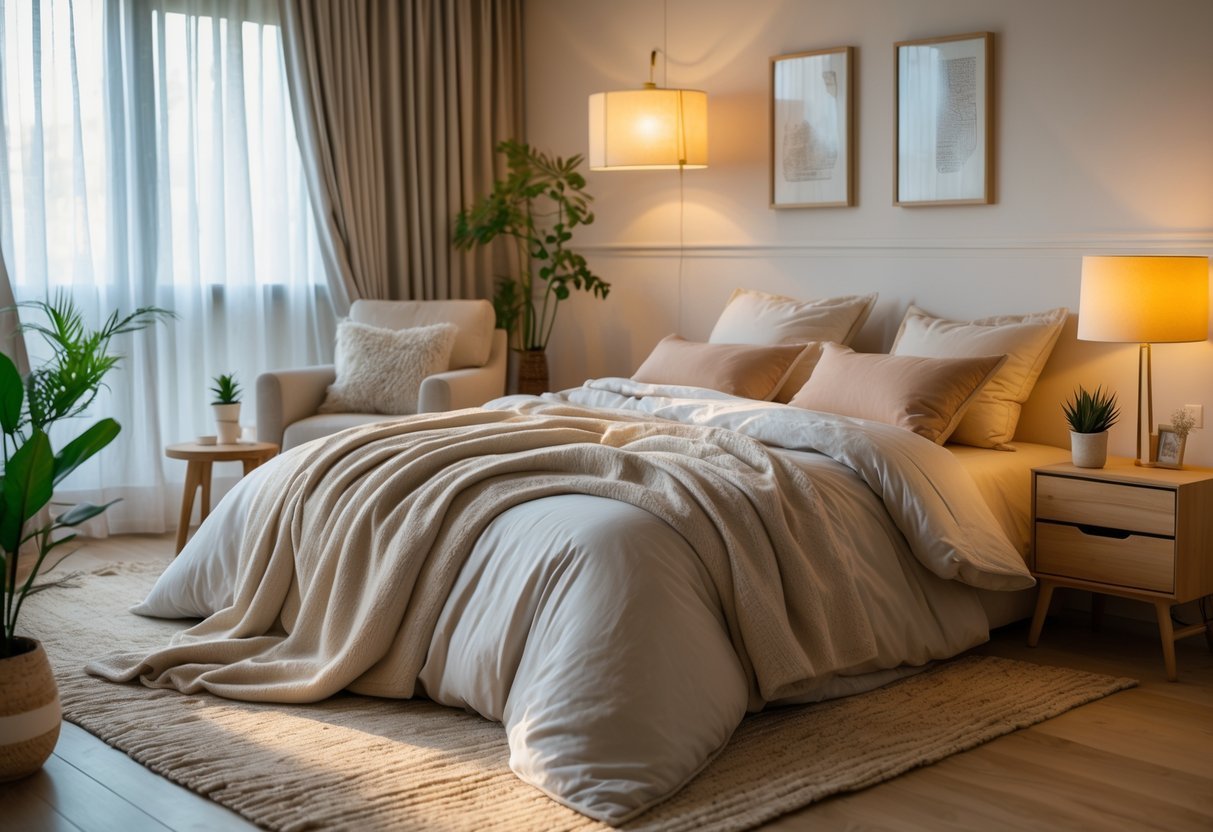
You can make small rooms feel snug without crowding them. Use layers, warm light, and a clear plan for storage and furniture placement to keep the space calm and usable.
How can I decorate a small bedroom to make it feel cozy?
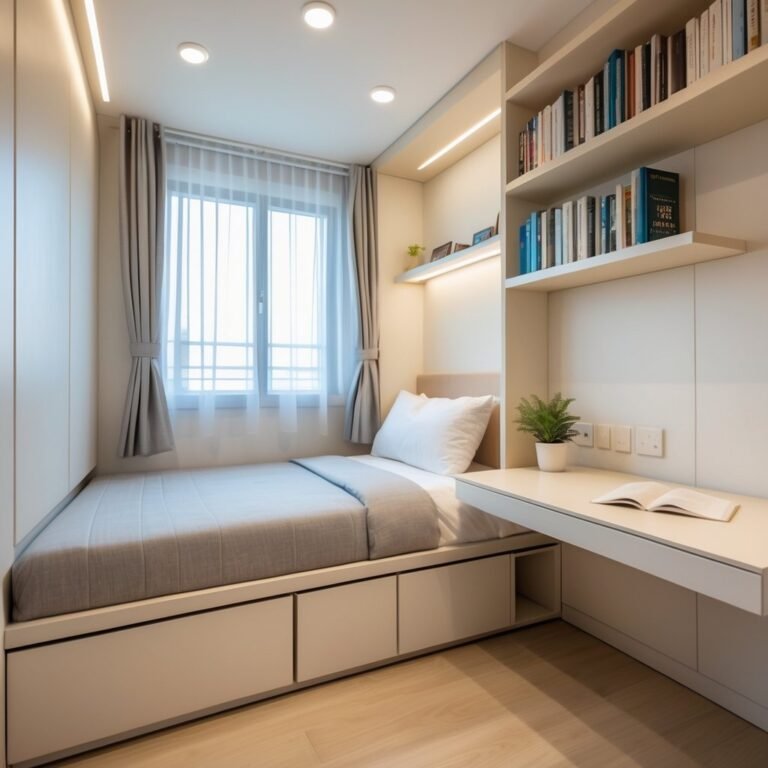
Choose a few scaled-down furniture pieces like a narrow nightstand and a low-profile bed to keep sightlines open. Place a soft rug under the bed to define the sleeping area and add texture.
Use vertical storage such as wall shelves and hooks to free floor space. Keep colors light with one warm accent wall or textiles in rust, mustard, or deep green to add depth without overwhelming the room.
What are some budget-friendly tips for creating a warm and cozy bedroom atmosphere?
Layer thrifted or affordable textiles: a chunky throw, two decorative pillows, and a soft area rug go a long way. Swap harsh overhead bulbs for a small lamp or string lights with warm (2700K–3000K) bulbs.
Repurpose furniture with a fresh coat of paint and add inexpensive blackout curtains for better sleep and a snug feel. Small plants and framed photos offer comfort without high cost.
Which color schemes work best for a relaxing and cozy bedroom vibe?
Neutral bases like warm beige, soft gray, or creamy white create calm and make the room feel larger. Add richer accents—terracotta, deep olive, navy, or warm mustard—to bring warmth and visual interest.
Stick to two to three main colors to keep the room cohesive. Use darker tones in textiles or one accent wall rather than painting the whole room a deep shade.
What are the essential elements to include in a cozy bedroom for couples?
Choose a supportive mattress both partners find comfortable and layer it with breathable sheets and a plush duvet. Add two bedside lamps for individual control and matching nightstands to create balance.
Include shared storage like a dresser or under-bed bins and keep clutter low to preserve calm. Soften the room with a rug large enough for both to step onto and a few coordinating pillows.
How can I use lighting to enhance the coziness of my bedroom space?
Use multiple light sources: bedside lamps, a floor lamp, and dimmable overhead lighting if possible. Pick warm white bulbs (2700K–3000K) to create a soft, inviting glow.
Add task lighting for reading and low-level accent lights like fairy lights or wall sconces for atmosphere. Use dimmers or smart bulbs to lower light levels at night.
What types of textiles and fabrics contribute to a cozy and inviting bedroom?
Choose breathable sheets in cotton or linen for comfort and temperature control. Add a heavier duvet or down-alternative comforter and a chunky knit or fleece throw for extra warmth.
Layer different textures—velvet or corduroy pillows, a plush rug, and woven baskets—to make the space feel lived-in and comfortable.