Create a Dreamy Victorian Kids Room on a Budget — Practical Tips for Style and Savings
You can give your child a charming Victorian room without spending a lot by focusing on a few key pieces, clever DIY touches, and smart shopping for vintage-look items. Start with a simple color palette and one focal piece, then add small details like floral fabrics, brass accents, and storybook prints to build that old‑world feel.
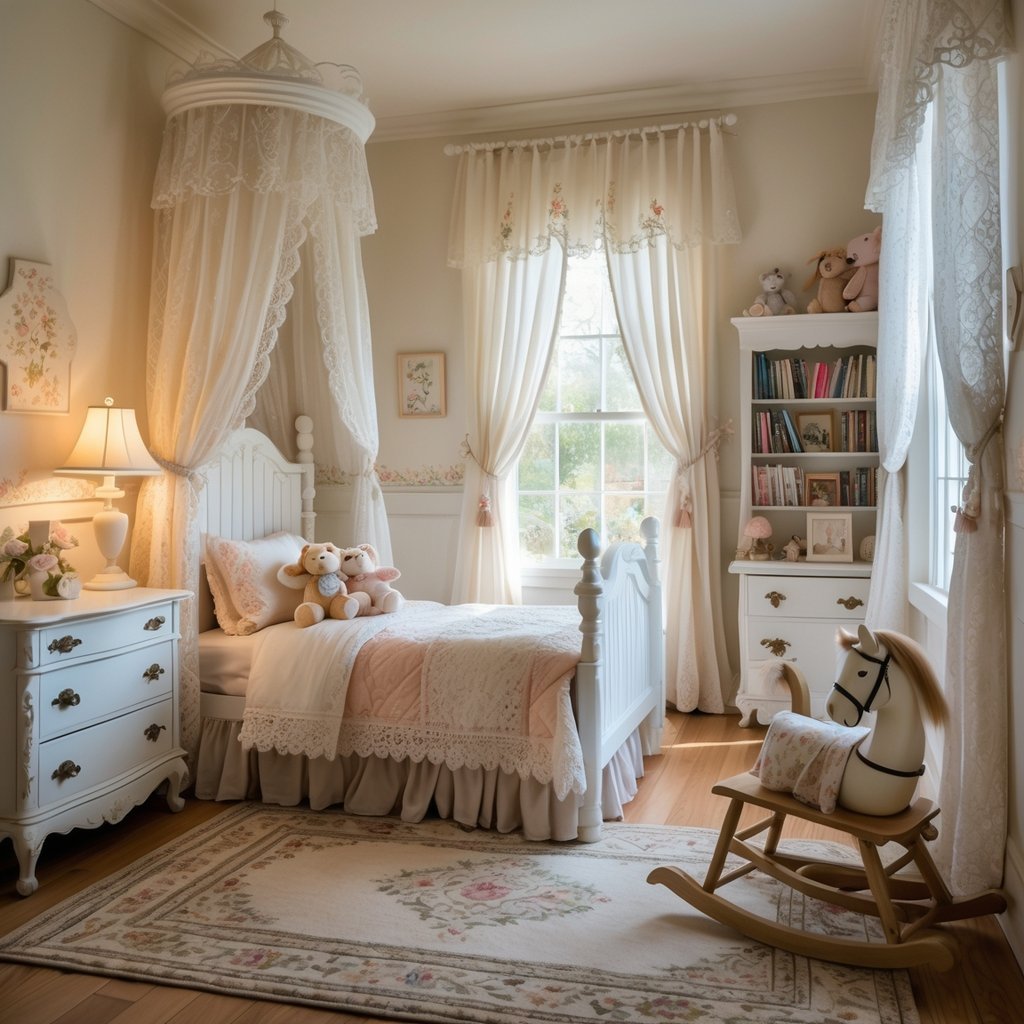
Mix thrifted finds, budget-friendly replicas, and a couple of creative crafts to get a rich, layered look that still stays affordable. You will create a dreamy Victorian kids room on a budget by choosing a strong focal item, layering inexpensive textures, and using DIY or secondhand decor for the details.
Key Takeaways
- Pick one stand-out piece and a limited color palette to set the Victorian mood.
- Use thrift stores, replicas, and DIY projects to save money on furniture and decor.
- Add small ornate details and soft fabrics to make the room feel magical.
Planning an Affordable Victorian-Inspired Kids Room
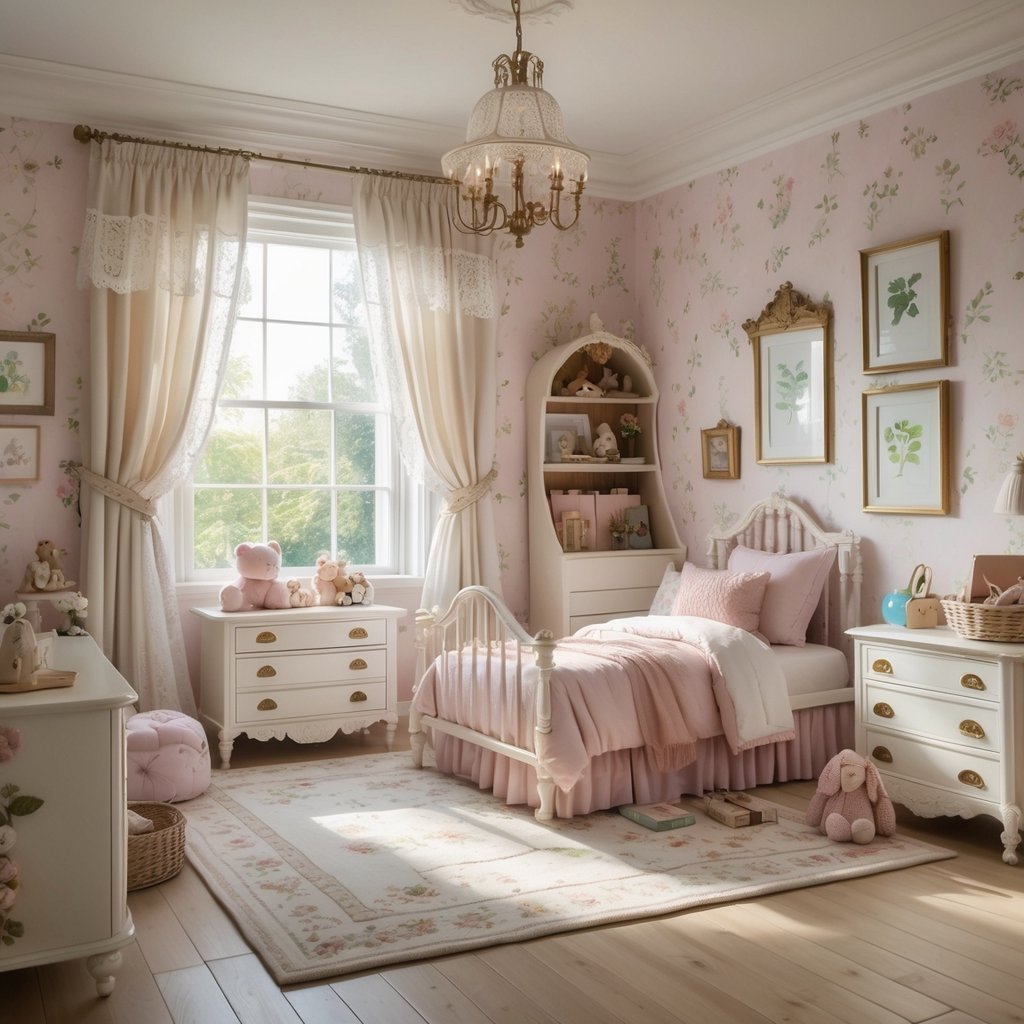
You will set a clear budget, pick a small palette of Victorian colors, and plan a layout that balances play, sleep, and storage. Focus on one focal antique or replica piece, mix thrift finds with new basics, and keep circulation and safety in mind.
Setting a Budget
Decide a total spend and break it into categories: furniture, paint/wall treatment, textiles, lighting, and décor. Use a simple table to track targets and actuals.
| Category | Target ($) | Notes |
|---|---|---|
| Bed/large furniture | 150–400 | Look for secondhand beds or repaint an old frame |
| Paint/wall decor | 30–120 | Sample pots and stencils save money |
| Textiles (curtains, bedding, rugs) | 50–150 | Thrift stores and sales for floral fabrics |
| Lighting & hardware | 30–80 | Swap shades or spray-paint fixtures |
| Small décor & toys | 20–80 | Mix thrifted vintage with new accents |
Prioritize spending on the bed and a good light fixture for safety and style. Save by upcycling dressers, sewing simple curtains, and using peel-and-stick wallpaper or stencils instead of full wallpaper. Track receipts and adjust category targets as you find deals.
Choosing a Victorian Color Palette
Choose three main colors: a neutral base, a deep accent, and a soft trim. For example: warm cream (base), dusty teal or plum (accent), and sage or blush (trim). Stick to matte or eggshell finishes for walls to mimic period paint.
Add color via textiles and one focal wall or painted wainscoting. Use vintage floral patterns sparingly—on curtains, a throw pillow, or a lampshade—to avoid a busy look. Test paint samples on different walls and check them at day and night light. Keep child-friendly finishes and low-VOC paints for safety.
Designing a Room Layout
Place the bed against the longest wall or under a window to free floor space for play. Create three zones: sleep, play/learning, and storage. Use rugs or curtains to define each zone visually.
Choose storage that doubles as seating or display—an ottoman with storage, open shelves with baskets, or a low dresser. Keep pathways at least 2–3 feet wide for easy movement and safe play. Anchor furniture to walls, use cordless window treatments, and choose rounded-edge pieces where possible to meet safety needs.
Selecting Vintage-Look Furniture and Decor
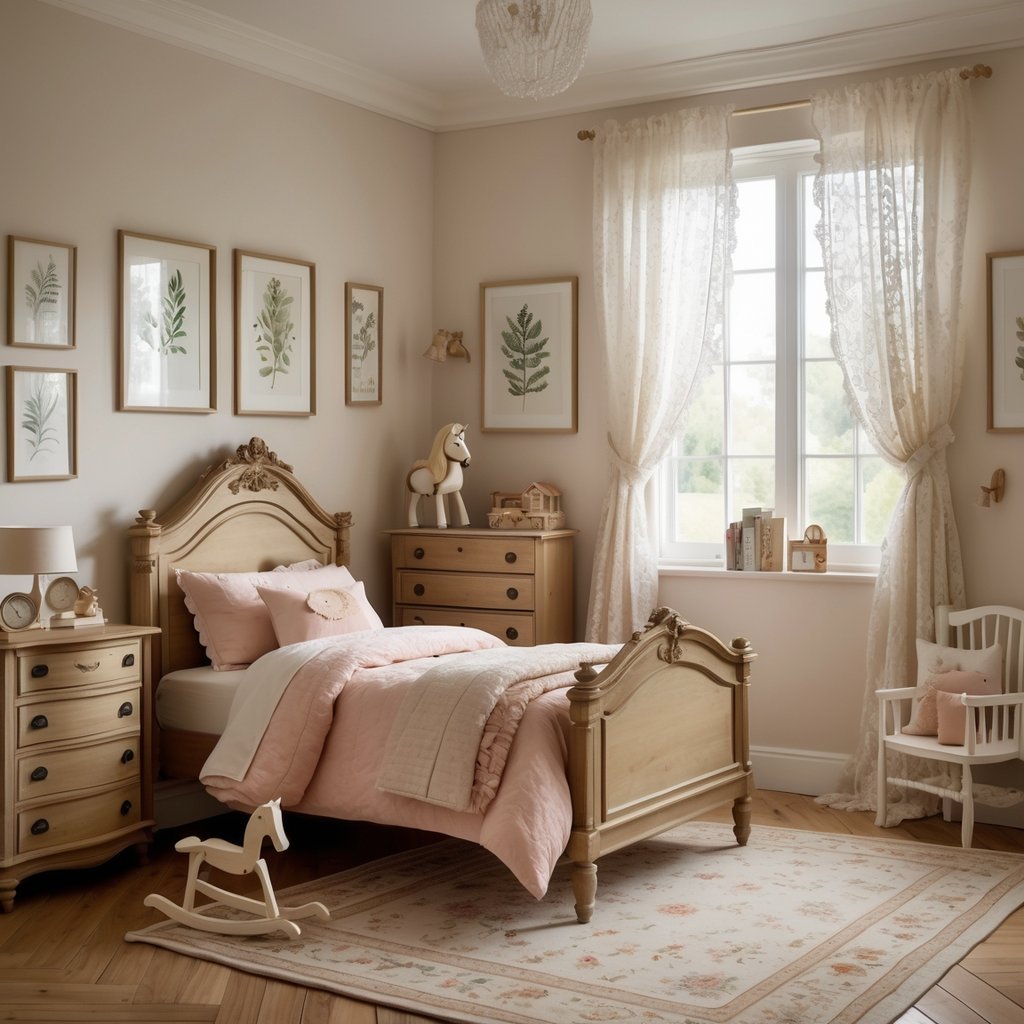
You can build a Victorian feel without high cost by choosing a few key pieces, updating thrift finds, and adding small period-style accessories. Focus on silhouette, finish, and practical storage when picking each item.
Finding Budget-Friendly Furniture
Look for classic Victorian shapes: curved headboards, turned legs, and claw or bun feet. Search thrift stores, estate sales, and online marketplaces for solid wood pieces that have the right shape even if the finish is worn.
Check these features before you buy:
- Frame stability and intact joints.
- Solid wood or plywood cores (avoid particleboard).
- Salvageable hardware like brass knobs or decorative keyholes.
Set a short list of priorities: a bed, a dresser, and a small chair. Skip matching sets; mix pieces to reduce cost. When ordering new, choose reproduction items with simple carved details rather than full ornate carvings to save money.
DIY Furniture Updates
A few simple updates make older pieces look intentional and fresh. Strip or sand flaking paint, then apply a chalk or milk paint in muted tones—sage, dusty rose, or cream—to match Victorian palettes.
Use these quick upgrades:
- Replace or clean hardware; choose aged brass or porcelain knobs.
- Add stenciled motifs or simple moulding with wood trim for detail.
- Distress edges lightly with sandpaper for an antique look.
Seal painted surfaces with a clear wax or matte polyurethane to protect from children’s wear. For larger pieces, swap out plain drawer interiors for printed paper or fabric liners to add charm without a big cost.
Victorian-Inspired Accessories
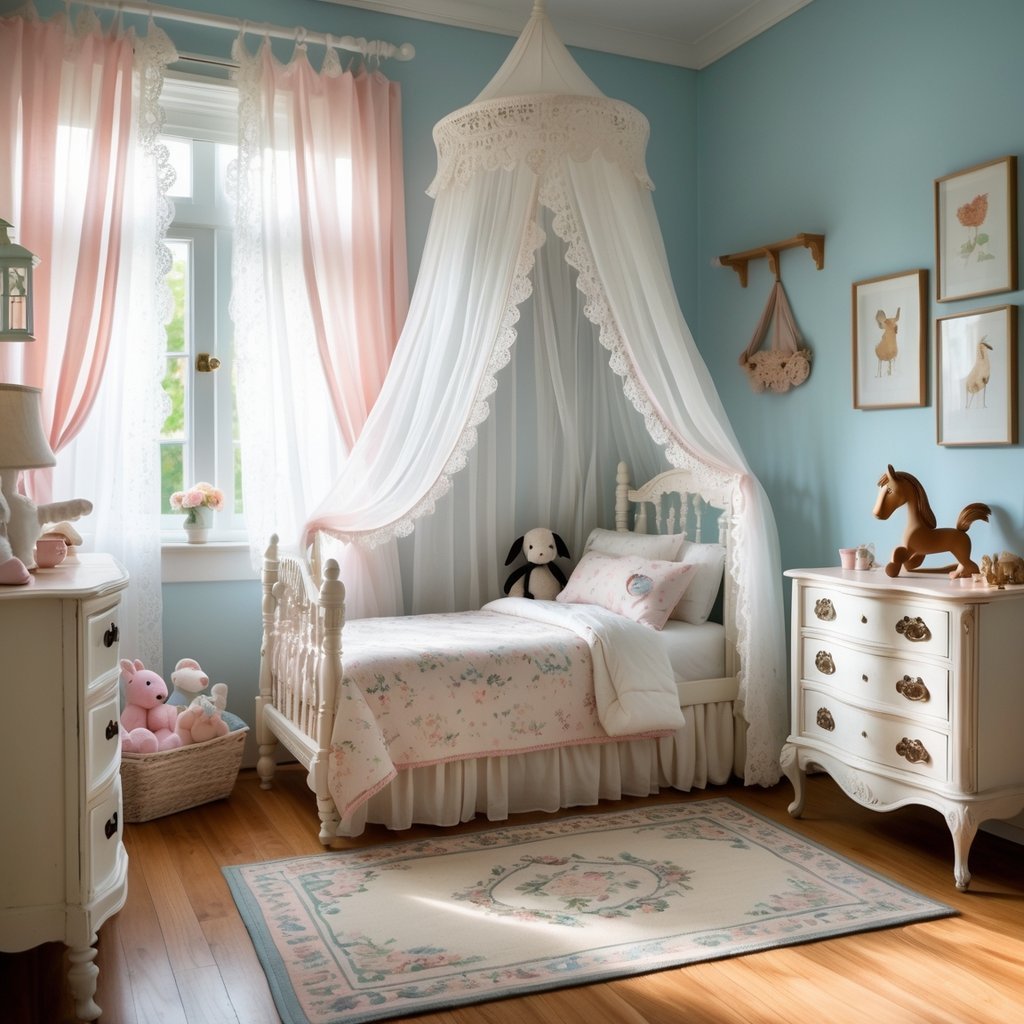
Accessories create the period mood and are inexpensive to swap or replace. Look for lace curtains, a small tufted armchair, and a canopy or draped fabric over the bed for a fairytale effect.
Useful accessory tips:
- Mirrors with gilt-look frames or small gilded picture frames for wall groupings.
- Vintage-style table lamps with fabric shades for warm, soft lighting.
- An antique-style rug in jewel tones, plus woven baskets for toy storage.
Add educational decor like an antique globe or framed botanical prints to blend charm with learning. Use soft textiles—velvet pillows or crochet throws—to introduce texture while keeping pieces washable and kid-friendly.
Creating Whimsical Victorian Details
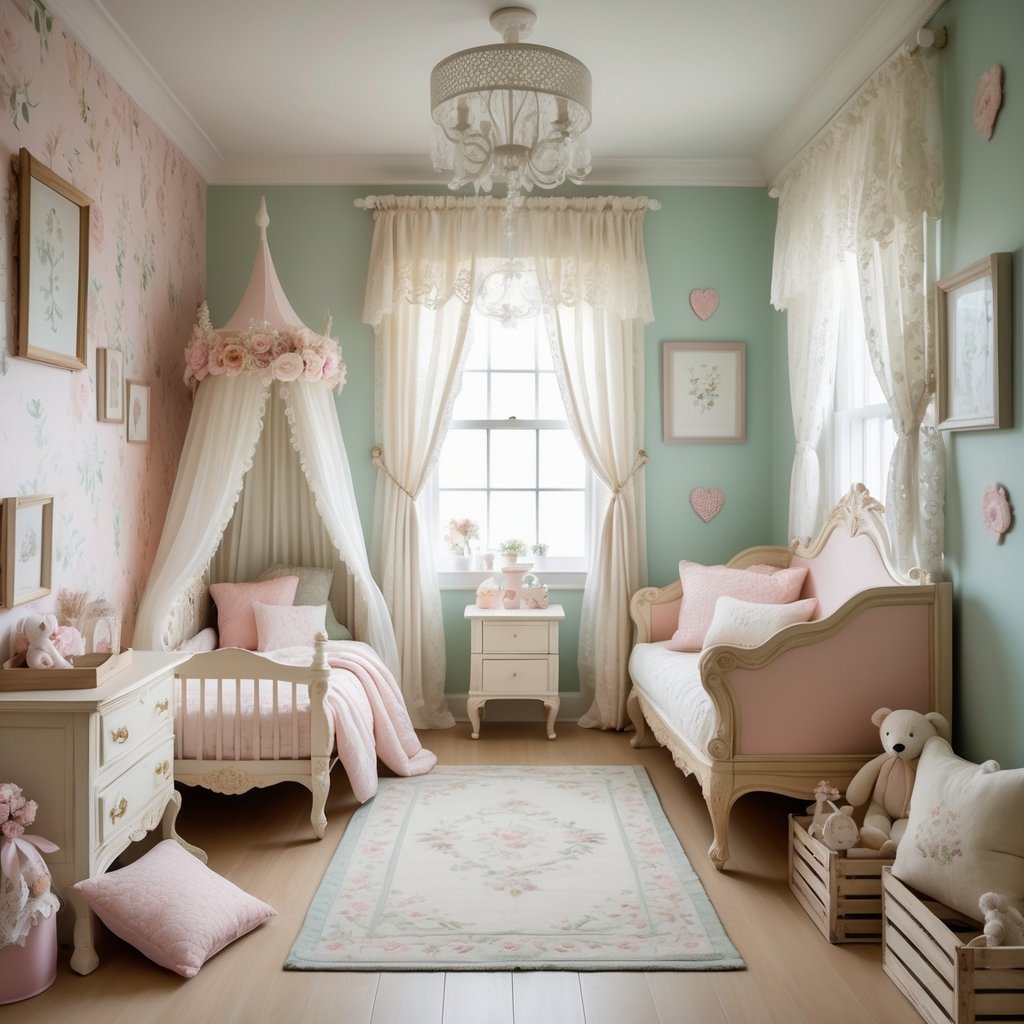
Focus on small, low-cost changes that add pattern, vintage charm, and soft lighting. Choose a few strong pieces—textiles with print, framed antique-style art, and layered lamps—to make the room feel Victorian without high expense.
Incorporating Patterned Textiles
Choose one dominant pattern and one supporting pattern to avoid visual clutter. Use a floral chintz or small toile for a bedspread or curtains, then add a complementary stripe or solid for cushions and a throw. Look for remnant fabric, thrifted curtains, or printed cottons to keep cost down.
Mix textures: cotton chintz, linen pillow covers, and a faux-suede floor cushion add depth. Use a neutral base color like cream or soft sage, then bring in jewel-toned accents—teal, burgundy, or mustard—for a Victorian touch.
Sew simple details yourself: add pom-pom trim, ruffled edges, or bias tape to store-bought pillows. You can also re-cover a thrift-store footstool or small chair with patterned fabric for a focal point.
Adding Antique-Style Wall Art
Pick a small gallery wall rather than many large frames to save money and keep scale child-friendly. Use thrifted frames or spray-paint simple thrift frames in gold or antique bronze. Mix small landscape prints, botanical illustrations, and a framed family photo in vintage-style mats.
Print free public-domain art (Victorian botanicals or children’s book plates) on quality paper and mount them on inexpensive backing. For texture, add one small decorative mirror with a faux-gilded frame to catch light.
Hang art at your child’s eye level and anchor the arrangement above a bed or reading nook. Use removable picture hangers to avoid wall damage and to swap pieces as tastes change.
Layering Decorative Lighting
Start with three types of light: overhead, task, and ambient. Replace a plain ceiling fixture with a small chandelier or pendant in a brassy finish for instant Victorian flair. Choose LED bulbs with warm (2700K) color for a cozy glow.
Add task lighting like a small desk lamp with a fabric shade for reading, and place a floor lamp with a dimmer near a play area. Use string lights or a table lamp with a fringed shade to create soft, layered light around a bed or chair.
Opt for plug-in wall sconces if hardwiring is too costly; these mimic built-in fixtures without electrical work. Always secure cords safely and use bulb covers or lower-wattage bulbs for child-safe, gentle lighting.
Finishing Touches for a Magical Atmosphere
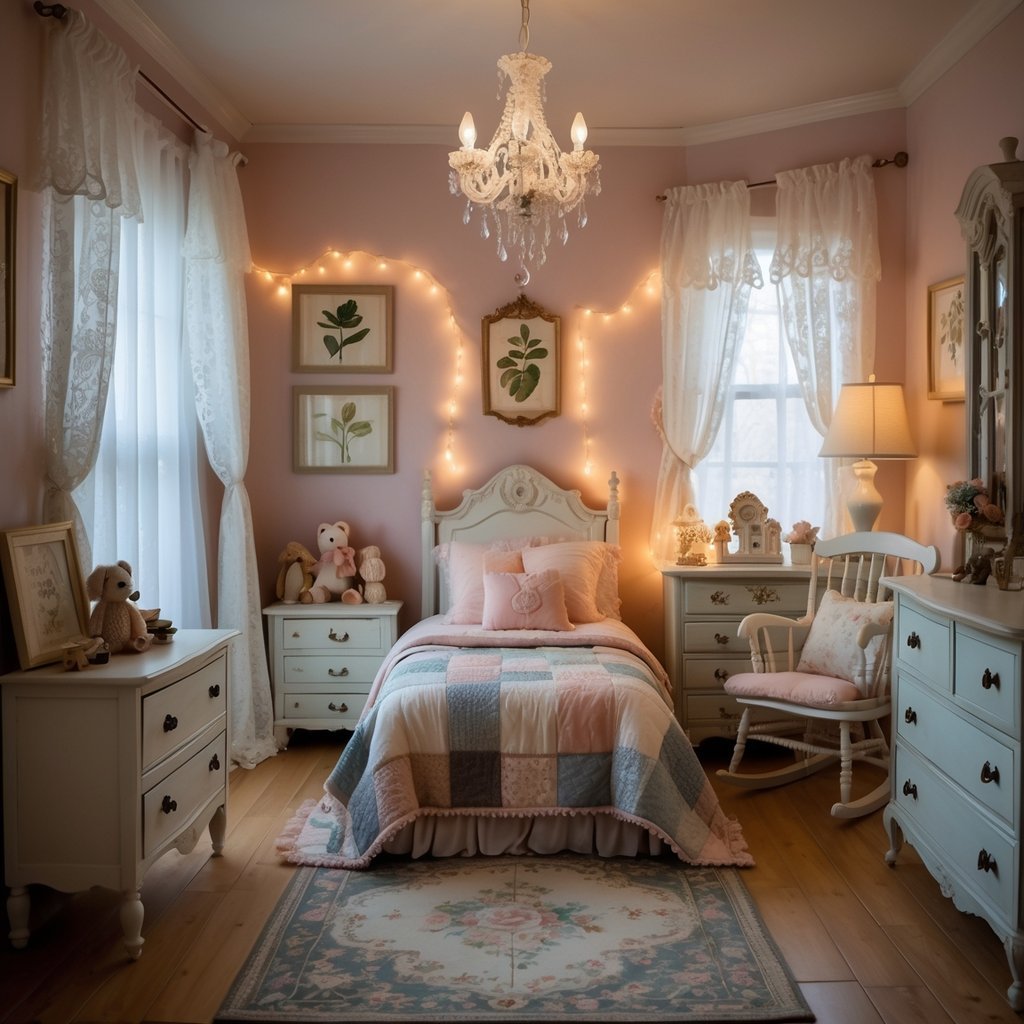
Small details add warmth and whimsy. Pick a few standout pieces, use soft lighting, and keep things child-safe and budget-friendly.
Handcrafted Decor Ideas
Make a fabric bunting from leftover floral or velvet scraps. Cut triangles, sew or hot-glue them onto ribbon, and hang over a bed or window.
Create a framed vintage-print gallery wall. Use thrifted frames painted in muted tones and mat simple botanical or storybook prints. Arrange them in a loose grid for charm.
Sew simple pillow covers from thrifted curtains or use iron-on patches to refresh plain cushions. Add a tasseled throw made from cheap yarn for texture.
Try paper or felt garlands shaped like moons, stars, or flowers. Use a hand-piercing tool and strong thread, then hang them from shelves or a canopy. Ensure pieces are out of reach for very young children.
Maximizing Space in Small Rooms
Choose a loft or elevated bed to free floor space for play. Under-bed storage bins or cube organizers store toys and books neatly.
Use wall-mounted shelves and pegboards to keep surfaces clear. Mount a shallow bookshelf at kid height so your child can reach favorites without cluttering the floor.
Pick multifunctional furniture like a bench that doubles as a toy chest or a small desk that folds up. Round corners and anchor tall furniture to the wall for safety.
Keep color and pattern limited to two or three tones to make the room feel larger. Mirrors placed opposite a window increase light and depth without extra cost.
Frequently Asked Questions
You can add Victorian charm without high cost by focusing on a few key pieces, paint, textiles, and simple DIY touches. Lighting, vintage-style accessories, and thrifted furniture let you get the look while staying practical for a child.
What are cost-effective ways to add Victorian elegance to a child’s bedroom?
Paint one wall a deep, muted color like dusty rose, sage, or navy to give an instant Victorian feel. Add patterned wallpaper to a headboard wall or inside a bookshelf rather than the whole room to save money.
Swap plain curtains for lace or scalloped-edge drapes and layer with a heavier curtain for privacy. Use a small area rug with a floral or medallion pattern to anchor the bed and add warmth.
Choose one or two ornate-looking pieces — a carved mirror, an upholstered chair, or a decorative headboard — and keep the rest simple. Accent with brass or antique-look knobs on dressers and a few framed prints in vintage-style frames.
How can I incorporate vintage elements into a kid’s room design?
Shop thrift stores, flea markets, and online marketplaces for worn wooden dressers, small tables, and picture frames. Look for pieces that only need light sanding or a fresh coat of paint.
Use vintage fabrics such as floral chintz or toile for cushions, curtains, or a canopy. Reupholster a small chair or sew a cushion cover to match the room’s palette.
Display a few safe antique toys or family heirlooms on a shelf, and keep fragile items out of reach. Mix vintage items with modern storage solutions to keep the room functional.
What are some budget-friendly Victorian color schemes for a child’s room?
Try dusty rose with cream trim and muted gold accents for a soft, traditional look. Pair sage green with warm ivory and dark wood tones for a calmer, classic palette.
Use navy blue and pale gray with brass touches for a more gender-neutral Victorian vibe. Keep most surfaces light and use darker colors on one focal wall or in fabrics to reduce painting costs.
How can I create a cozy Victorian ambiance in a child’s room using lighting?
Start with a soft, warm overhead bulb (2700–3000K) to give a gentle glow. Add a small table lamp with a pleated or lace shade near the bed for reading and a vintage feel.
Use battery-operated fairy lights or a string of warm LEDs around a canopy, bookshelf, or window to add soft accent light. Choose dimmable fixtures or plug-in lamps so you can lower brightness at night.
Where can I find affordable antique-looking decor appropriate for children?
Check local thrift shops, charity stores, estate sales, and online marketplaces like Facebook Marketplace or Etsy for budget finds. Discount home stores often carry “vintage-style” frames, sconces, or mirrors at low prices.
Look for replica brass knobs, small picture frames, and ceramic vases in clearance aisles. Prioritize sturdy, child-safe items and keep small or fragile pieces on high shelves.
What DIY projects can help achieve a Victorian aesthetic in a kid’s bedroom?
Refinish an old wooden nightstand with chalk paint and new hardware to create a period look without high cost. Make a simple canopy from inexpensive sheer fabric and curtain rings to frame the bed.
Create vintage-style wall art by printing botanical prints, aging the paper with tea staining, and framing them in thrifted frames. Craft a decorative headboard by upholstering plywood with foam and floral fabric for a polished focal point.