Curtains Living Room Design Ideas: Expert Tips for Style, Light, and Function
Curtains can change how your living room looks, feels, and functions, so pick styles and fabrics that match your light, layout, and daily needs. Choose curtains that control light, add texture, and fit your space to lift the whole room instantly.
Try different lengths, hanging heights, and fabrics to make ceilings look taller, soften harsh light, or add a cozy vibe. Small tweaks like rod placement and lining can make big visual and practical differences.
Key Takeaways
- Pick curtain styles and fabrics that match your light and use.
- Adjust placement and length to change room scale and mood.
- Maintain and update curtains to keep the room fresh.
Choosing the Right Curtains for Your Living Room
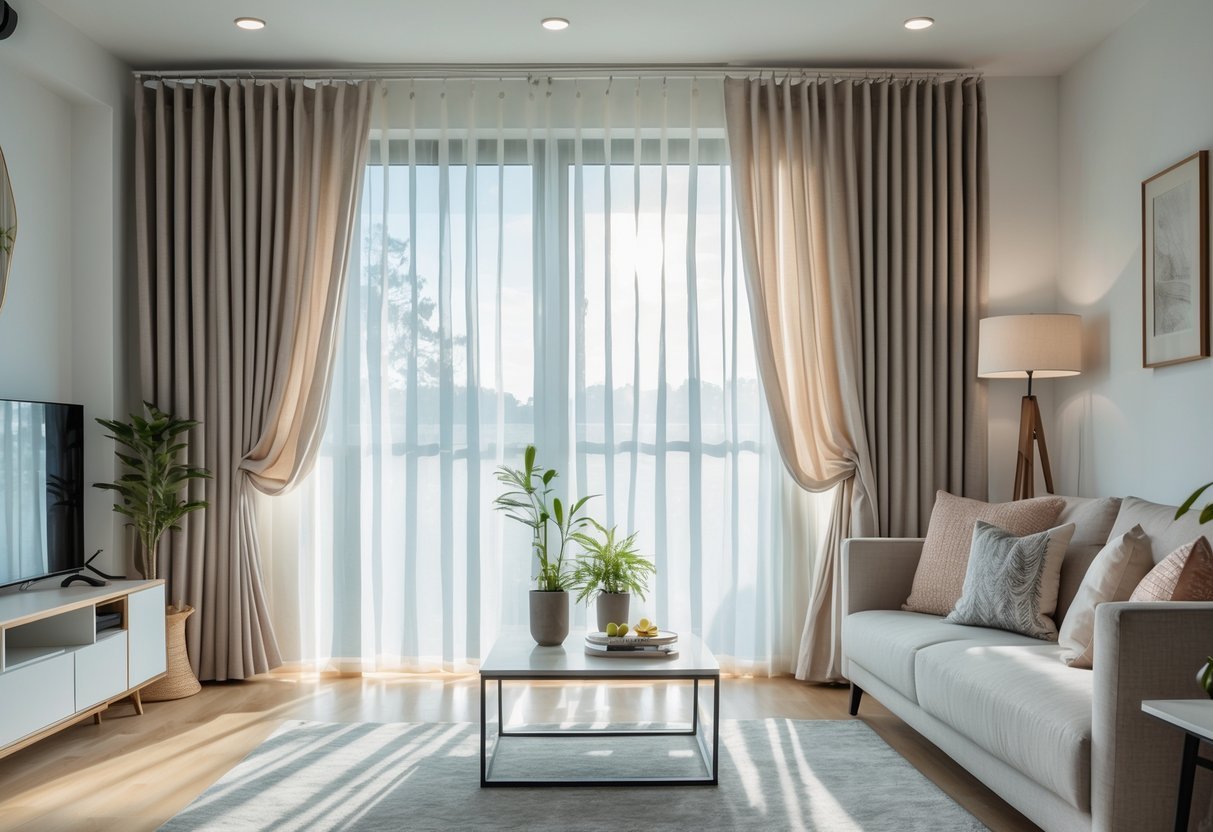
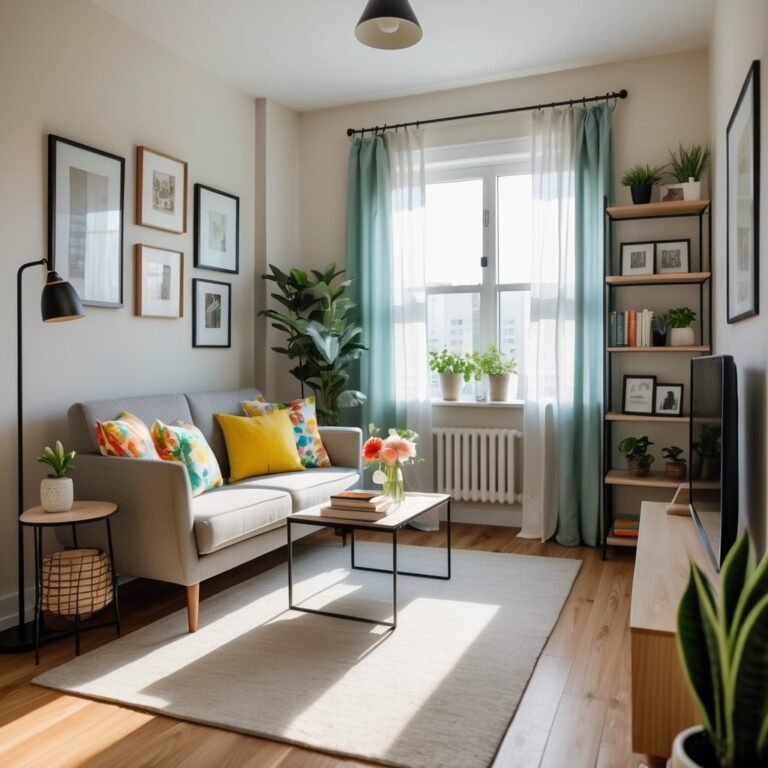
Pick curtain styles that control light and shape the room, choose fabrics that match function and maintenance needs, and select colors or patterns that tie into your décor and scale of the space.
Curtain Styles and Their Impact
Different styles change how light enters and how the room feels. Grommet and rod-pocket panels slide easily and give a clean look. Use grommets for modern rooms and rod-pockets for casual, soft edges.
Pleated curtains (pinch or tailored pleats) add formality and work well with traditional furniture. They hang straighter and give a tailored finish.
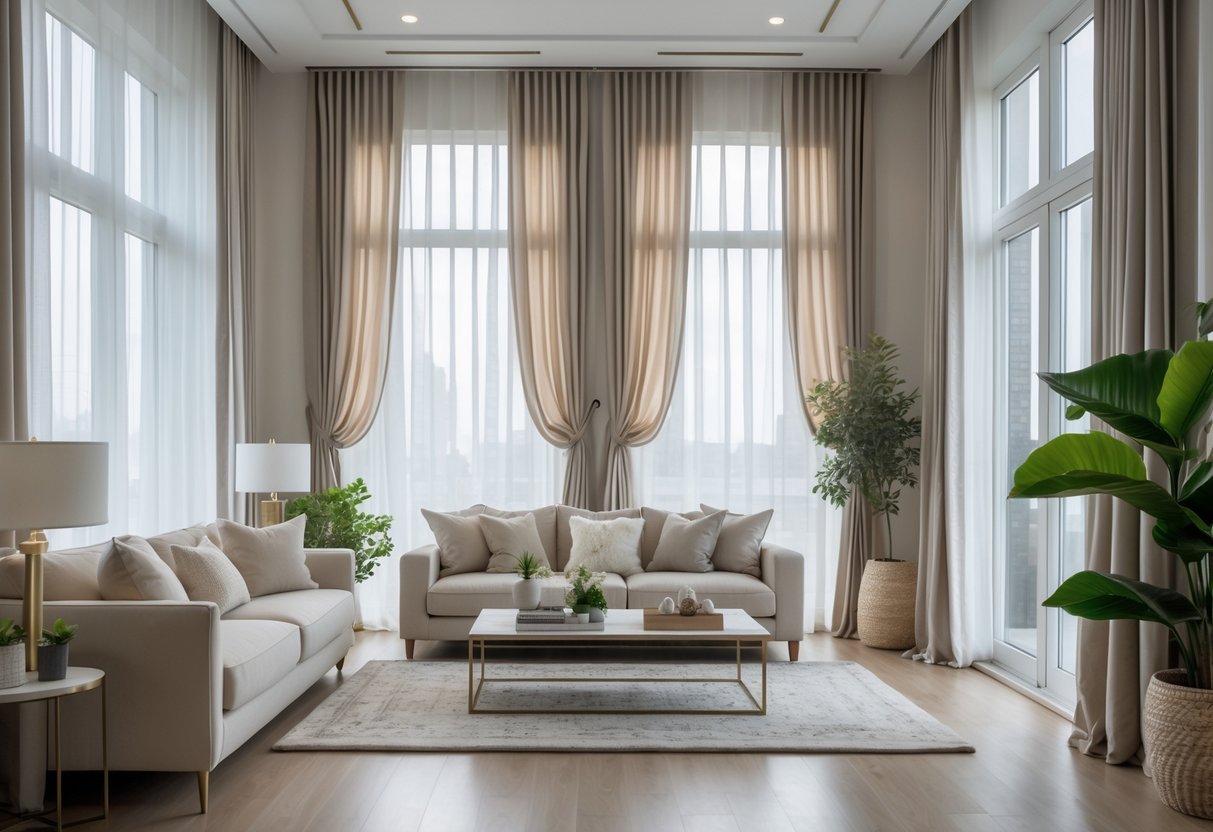
For soft filtering, layer sheers behind heavier panels to keep daytime light while adding privacy. Blackout curtains block light for TV walls or bedrooms that open to the living area.
Consider hardware: wider rods and holdbacks let panels stack open neatly and make windows look larger.
Selecting the Best Fabrics
Match fabric to function. Choose linen or cotton blends for breathability and a relaxed look. They drape well and clean easily for everyday use.
Pick velvet or heavy weaves for insulation, sound dampening, and a luxe feel. These suit formal rooms and cold climates but may need dry cleaning.
For rooms with direct sun, choose UV-resistant fabrics to prevent fading. If you need privacy plus light, use layered fabric: a sheer inner layer and a heavier outer layer.
Think maintenance: washable fabrics save time. Dry-clean-only materials last but cost more to care for.
Choosing Colors and Patterns
Base color choices on wall tones, furniture, and light levels. Use neutral curtains (beige, gray, cream) to blend and expand a small room visually.
Choose darker or patterned curtains for a focal wall or to hide stains in high-traffic areas.
Match scale: pick large patterns for tall windows or high ceilings and small prints for compact rooms. Coordinate with at least two items in the room—pillows, rugs, or art—for a tied-together look.
If you want a bold touch, limit the curtain pattern to one window wall and keep other elements simple.
Curtain Placement and Installation Techniques
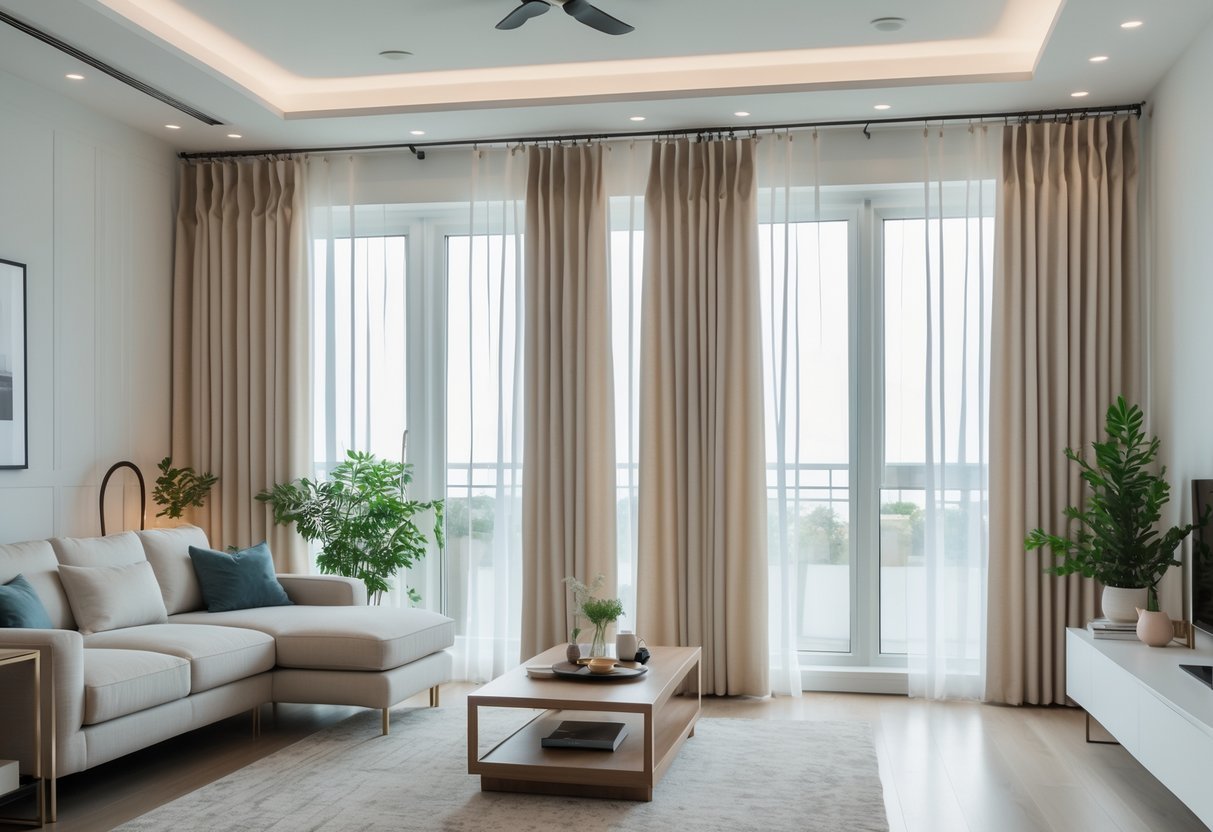
You’ll learn where to place rods, how to get the most daylight, and how to layer fabrics for style and function. Follow clear steps for choosing mounts, positioning hardware, and arranging panels to suit your windows and needs.
Mounting Options and Hardware
Pick the right rod and brackets for the curtain weight and window frame. Use a steel or double curtain rod for heavy drapes; a simple tension rod works for lightweight sheers. Measure twice: place the rod 4–6 inches above the window frame to create height, or up to the ceiling for a taller look.
Anchor brackets into studs when possible. If you can’t hit a stud, use heavy-duty wall anchors rated for the rod’s load. For wide windows, use a center support bracket every 4 feet to prevent sagging.
Choose finishes that match other hardware in the room. Use longer screws for masonry or brick. For easy operation, mount the rod so your hand can reach the rings or grommets without stretching.
Maximizing Natural Light
Mount rods higher and wider than the window to increase perceived size and let more light in. Extend the rod 3–6 inches beyond each side so curtains stack off the glass when open.
Use sheers or translucent fabrics closest to the window to filter light while keeping privacy. Combine these with heavier outer panels that you can close for darkness. For south-facing rooms, install a blackout liner behind decorative panels to cut heat and glare.
Adjust panel length so hems hover ½–1 inch above the floor or puddle slightly if you want a formal look. Keep the rod level; uneven hanging blocks light and looks sloppy. For tricky windows, consider motorized rods to open and close curtains at set times for consistent daylight.
Layering Curtains for Depth
Start with a sheer or light-filtering layer next to the glass to control light without blocking views. Add a mid-weight curtain for color and pattern, then a blackout or thermal layer if you need insulation or total privacy.
Match rod types to layers: use a double rod or a single rod with clip rings for flexible layering. Space layers so each can move independently; this prevents fabric bunching and keeps the look neat.
Balance textures and colors. Place heavier textures behind lighter ones when you want depth. Keep the header styles compatible—grommets with grommets, rod pockets with rod pockets—to ensure smooth stacking and easy operation.
Creative Living Room Curtain Design Ideas
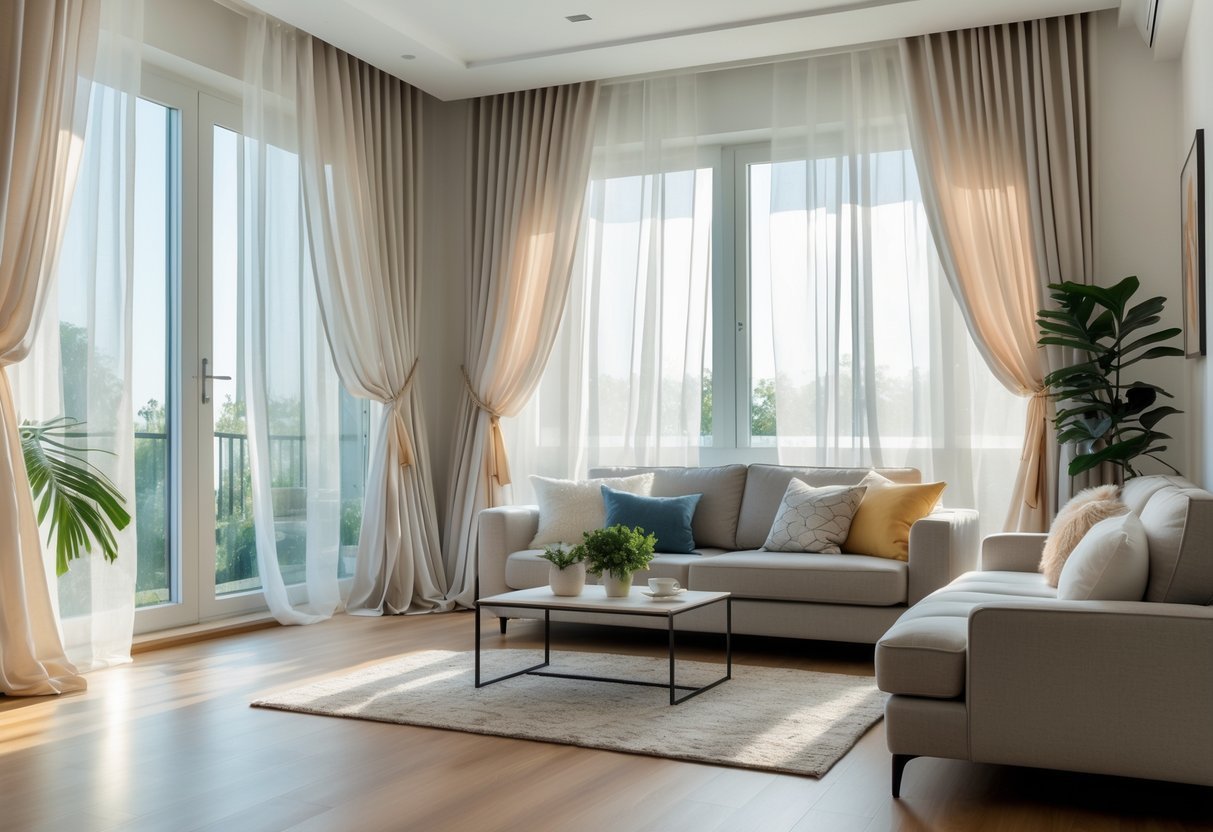
Choose materials, colors, and hardware that match your room’s scale, light needs, and furniture. Think about function first—privacy, light control, and insulation—then layer pattern and texture to add personality.
Modern Minimalist Curtain Concepts
Aim for clean lines and simple fabrics. Pick solid colors like soft gray, navy, or off-white in linen blends or cotton for a matte, tailored look. Mount the rod close to the ceiling and extend it past the window by 8–12 inches to make the room feel taller.
Use floor-length panels that just touch or slightly puddle on the floor for a refined edge. Choose grommet or hidden-pocket headings for smooth movement. If you need light control, add a slim blackout liner that stays invisible when panels are open.
For small windows, use sheer roller shades behind minimalist panels to keep view and light. Keep hardware slim—brushed nickel or black metal works well—and limit decorative elements to one accent piece, such as a textured tieback.
Classic and Traditional Looks
Select heavier fabrics like velvet, damask, or lined brocade for a formal, timeless feel. Rich colors—deep greens, burgundy, or warm golds—pair well with wood trim and classic furniture. Use weighted hems so drapes hang straight and look polished.
Incorporate layered treatments: a patterned or embroidered valance, full curtains, and a blackout liner for warmth and privacy. Choose pleated headings—French pleat, pinch pleat, or box pleat—for a structured top that complements formal rods and ornate finials.
Match drapery length to furniture placement: hang to the floor behind a sofa, or break slightly above the floor in high-traffic areas. Use tiebacks or holdbacks to frame windows during the day and show off the window moldings.
Eclectic and Bold Statements
Mix patterns, colors, and textures to create a lively focal point. Try wide stripes, oversized florals, or geometric prints in bold hues like teal, mustard, or coral. Balance strong curtains with neutral walls and simple furniture so the window treatment stands out.
Combine materials—velvet panels with sheer undercurtains, or embroidered panels over roman shades—for depth. Use mismatched rods or colorful finials for a playful touch. Consider printed panels on one wall and solid panels on the opposite window to tie the room together.
For an artistic vibe, hang curtains asymmetrically: one full panel on one side and two narrow panels on the other. Add unexpected accents like tassel trims, hand-stitched hems, or patterned tiebacks to reinforce the eclectic look.
Caring for and Updating Your Curtains
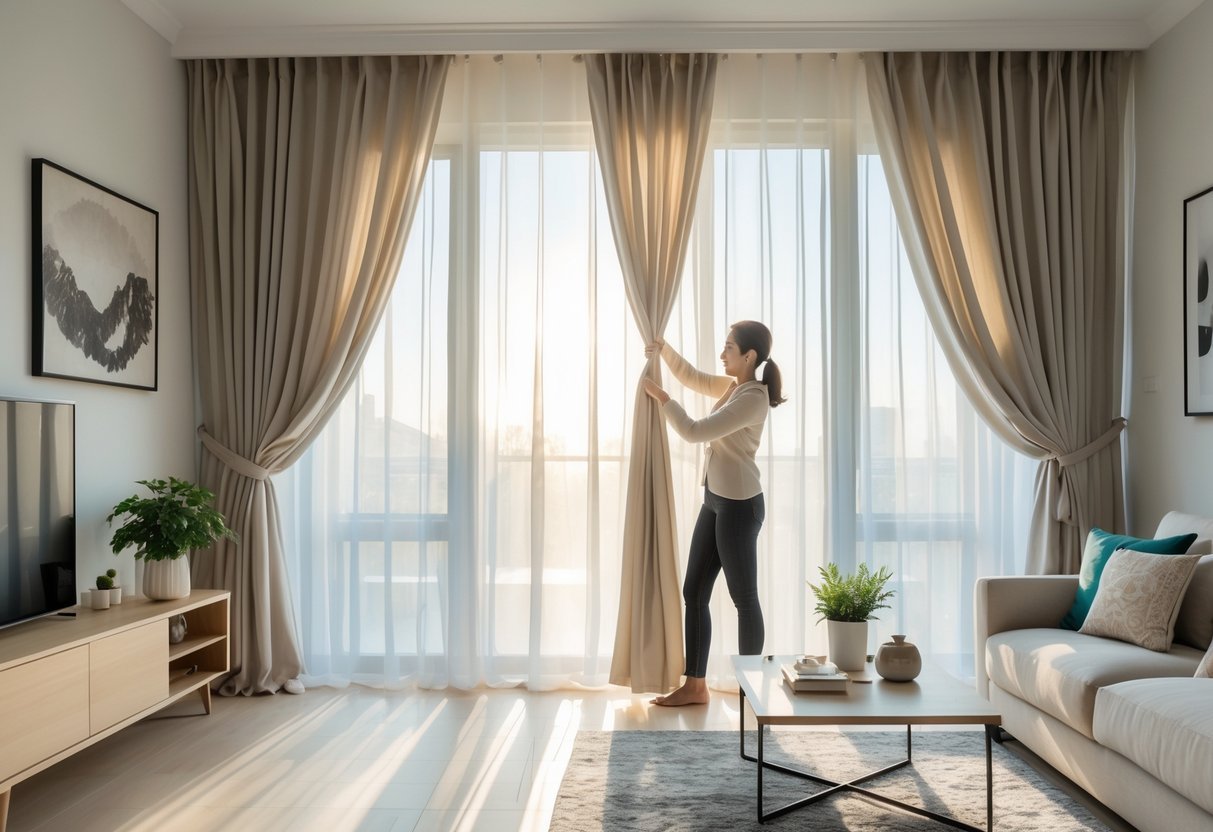
Keep your curtains fresh by cleaning them on a regular schedule. Vacuum or shake dust every 1–2 weeks. Machine wash or dry clean according to the care label to avoid shrinkage or damage.
Spot-treat stains right away with a mild detergent and cold water. Test cleaner on a hidden area first. For delicate fabrics, use a soft brush or blot gently with a cloth.
Rotate curtains and liners to even out sun fading. Move panels side to side every few months. This helps fabric wear evenly and keeps colors looking balanced.
Update hardware and trims for a low-cost style lift. Swap rods, finials, or tiebacks to change the room’s feel without replacing fabric. Choose finishes that match your room’s metal accents.
Consider liner and blackout upgrades for function. Liners add insulation and protect fabric from sunlight. Blackout liners improve sleep quality and reduce glare for TV areas.
Use a simple checklist for seasonal care:
- Weekly: dust or vacuum
- Monthly: inspect seams and hooks
- Every 6–12 months: deep clean or professional service
- When fading or wear shows: repair or replace panels
When you replace curtains, keep measurements and header style the same for an easy swap. Small updates—new pattern, color, or hem length—can refresh the room without a full redo.
Frequently Asked Questions
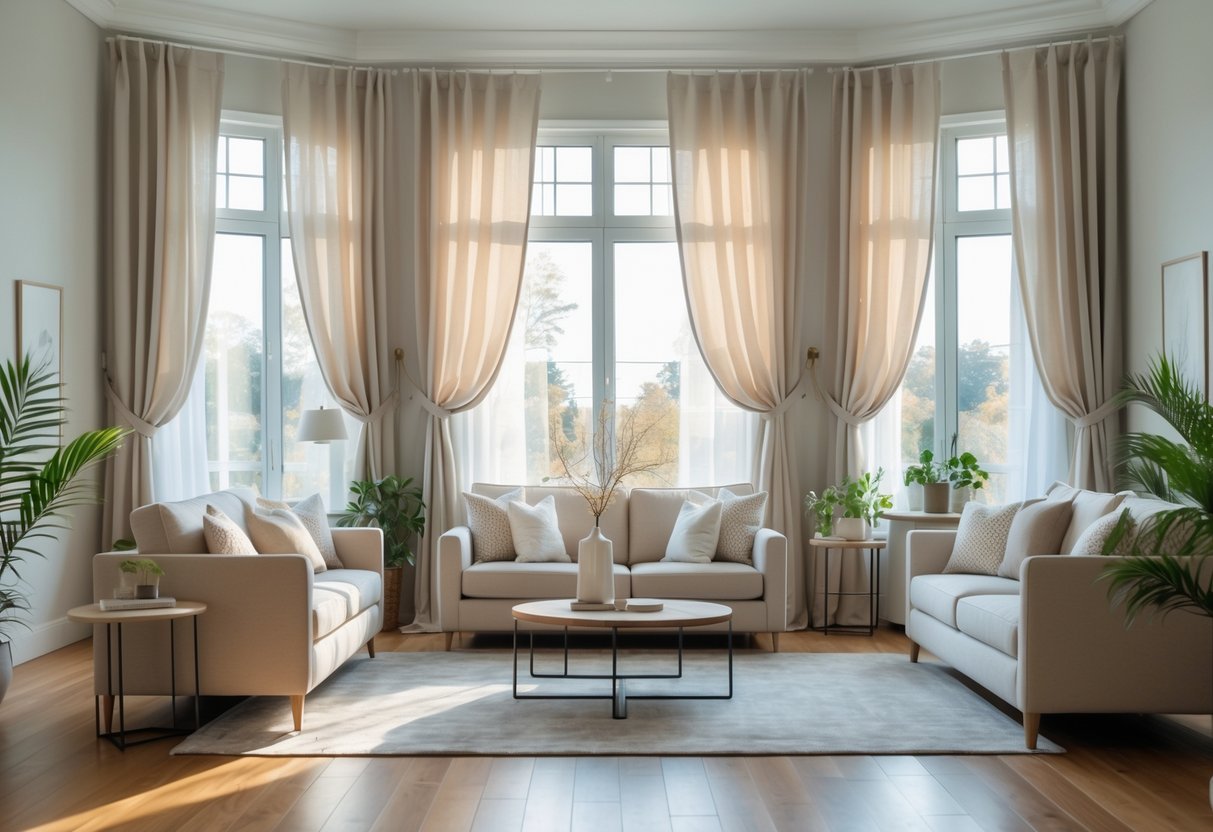
You will find specific, practical answers about styles, fabrics, and functions for living room curtains. Expect clear tips on matching curtains to furniture, choosing fabrics, and balancing light, privacy, and luxury.
What are the latest trends in modern luxury curtain designs for living rooms?
Luxury curtains now use heavy, textured fabrics like velvet and silk blends for depth and drape. Floor-to-ceiling panels and hidden-top tracks create a seamless, high-end look.
Metallic threads, subtle jacquard patterns, and oversized pleats add sophistication without busy prints. Neutral tones—deep greys, rich navy, and warm taupe—pair well with brass or matte-black hardware.
Layering is common: combine blackout liners with a decorative outer panel to mix function and style. Motorized tracks and smart controls give a modern, convenient finish.
How can I choose curtains that will complement the overall design of my living room?
Match curtain color to one or two main colors in your room, not every accent. Choose a tone that ties the sofa or rug to the window area.
Consider scale: large patterns suit big windows and high ceilings; small prints work for compact rooms. Use length to influence height—hang rods 4–6 inches above the frame to make ceilings look taller.
Pick a fabric weight that fits the room’s light needs and formality. Casual spaces favor linens and cotton; formal rooms suit heavier weaves like velvet.
What are some simple yet elegant curtain ideas suitable for living room spaces?
Use floor-length linen panels in soft white or sand for a calm, refined look. They filter light softly and pair with both modern and traditional furniture.
Try single-color velvet panels for a bold yet simple statement. Keep hardware minimal to let the fabric stand out.
Combine lightweight sheers with solid panels on the same rod for a layered but clean feel. Pull the solids to the sides during the day and close them at night.
Which types of window curtains enhance both privacy and style in a living room?
Blackout-lined drapes provide full privacy and a polished appearance. Choose lined cotton or velvet for a neat, structured fold.
Top-mounted blinds or shades with a decorative curtain layer offer adjustable privacy and visual depth. Roman shades under a decorative valance give a tailored, elegant look.
Double rods with sheer inner panels and heavier outer panels let you control privacy and maintain style throughout the day.
How do blackout curtains change the functionality and aesthetics of a living room design?
Blackout curtains block light and reduce outside noise, improving TV viewing and sleep-friendly conditions in multiuse spaces. They also protect furniture from sun fading.
Aesthetically, blackout curtains often look fuller and more formal because of the added lining and weight. Choose a color and texture that fits the room to keep them from feeling heavy.
You can avoid a cave-like effect by pairing blackout panels with light-colored walls or adding sheer layers to soften the room during daylight.
Which sheer curtain materials are best for achieving a light and airy living room atmosphere?
Linen and linen blends give a crisp, natural look and let in soft, diffused light. They drape well and resist heavy creasing.
Voile and polyester sheers are lightweight, budget-friendly, and hold color well. They offer consistent translucency and easy care.
Choose a weave that filters sunlight without blocking the view. Pale colors maintain brightness and help the room feel open.