Creative Ways to Decorate a Living Room Side Table:
You can turn a blank side table into a small, smart stage that lifts the whole living room. This article shows simple, creative ways to style that surface so it looks thoughtful and works for your daily life.
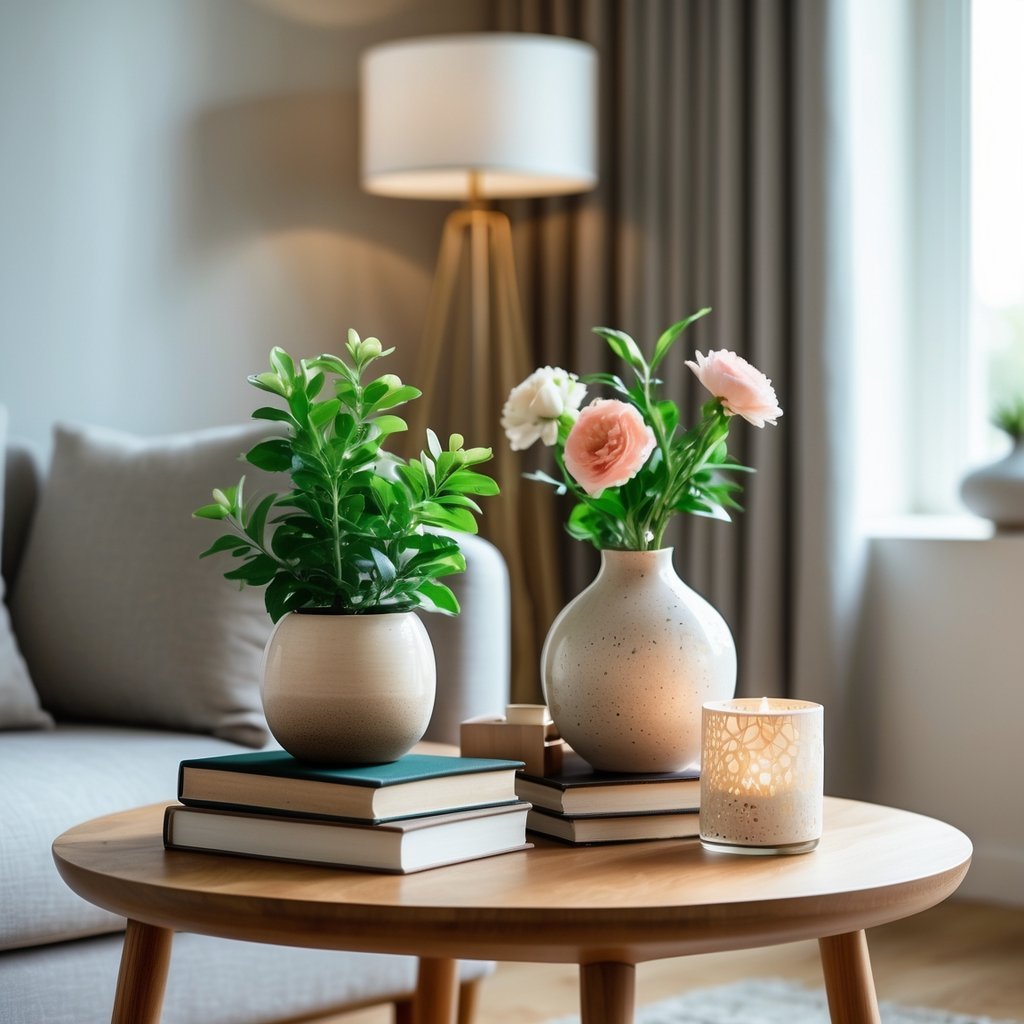
Bold the most important sentence that provides value: You will learn easy styling moves that balance looks and function so your side table feels both beautiful and useful. Keep exploring to find ideas for lamps, books, trays, plants, art, and small accents that fit your taste and space.
1) Place a stylish table lamp with a textured shade
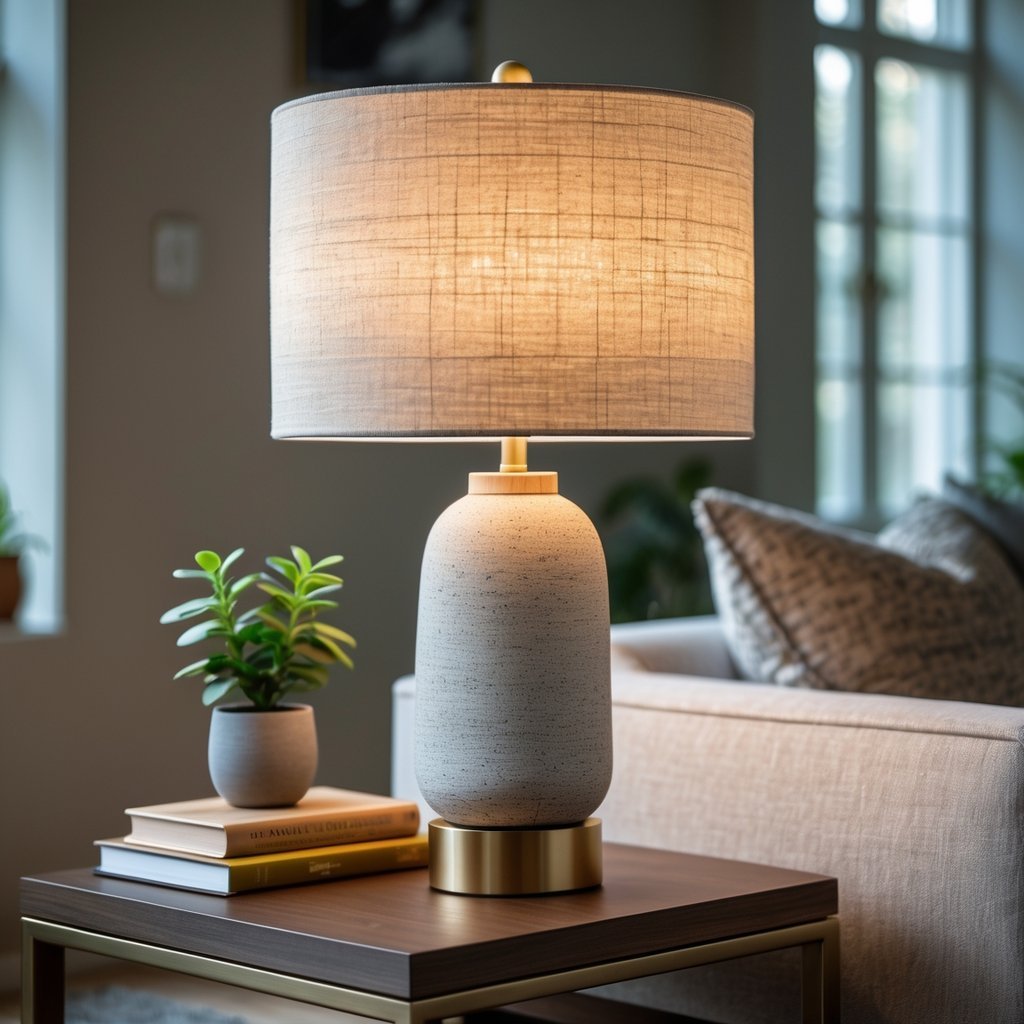
Choose a lamp that fits your room’s scale and style. A textured shade—like woven rattan, linen, or pleated fabric—adds visual interest without loud colors.
Position the lamp so it lights reading spots and highlights nearby decor. The soft, warm glow will make the side table feel inviting and balanced.
Mix materials by pairing a textured shade with a ceramic or metal base. This keeps the look layered and grounded without clutter.
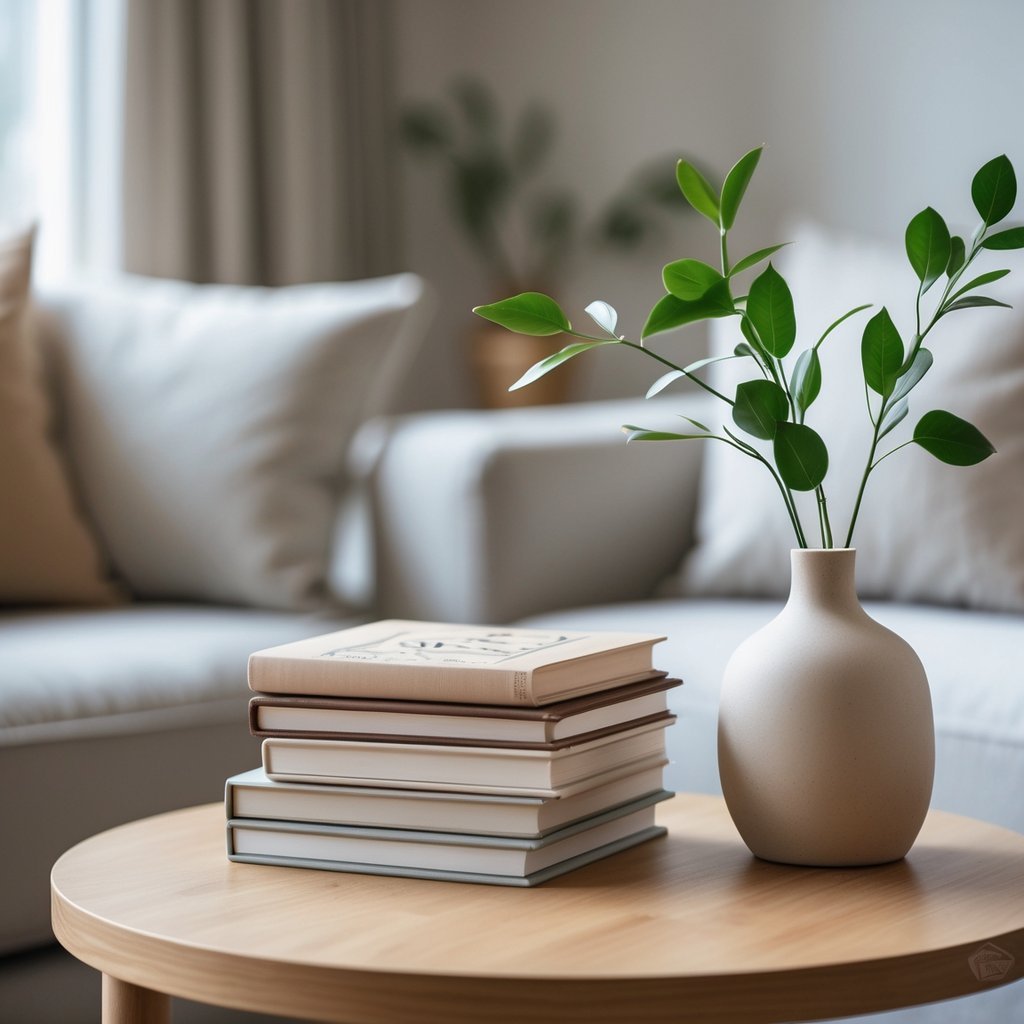
2) Arrange a small stack of coffee table books with a ceramic vase
Pick two or three hardcover books with covers that match your room’s colors. Stack them neatly to add height and a clean base.
Place a simple ceramic vase on top or beside the stack. Choose a muted shape so the books and vase balance each other.
Add one small stem or dried flower for texture. This keeps the look polished without crowding the table.
3) Use a decorative tray to group candles and small plants
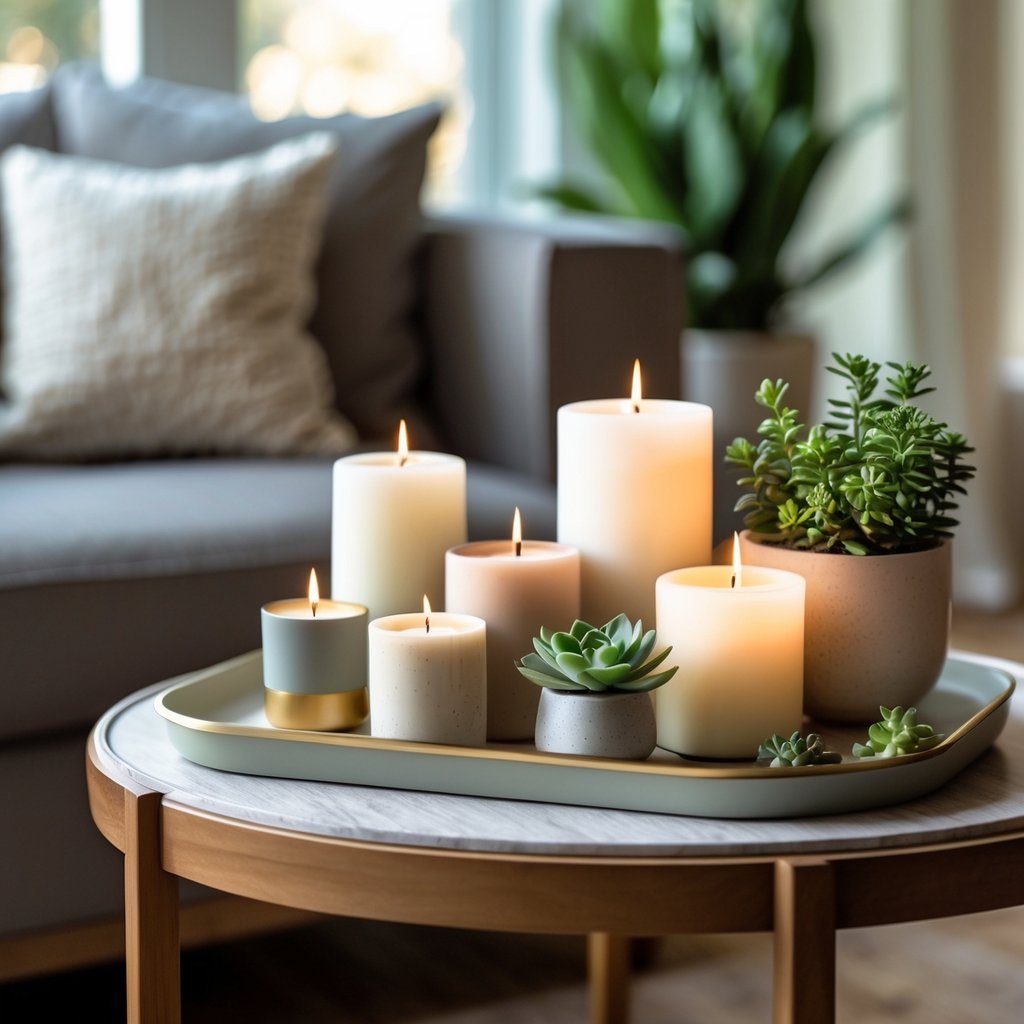
Place a tray on your side table to keep small items neat and intentional. It creates a clear spot for candles, succulents, and a tiny vase so the surface looks styled, not cluttered.
Choose a tray that fits your table and matches your room’s tone. Mix heights—tall candle, low plant—to add balance and visual interest.
Rotate candles and plants for seasonal looks and easier cleaning. You’ll get a polished arrangement that feels easy to change.
4) Incorporate a framed photo or a small piece of artwork
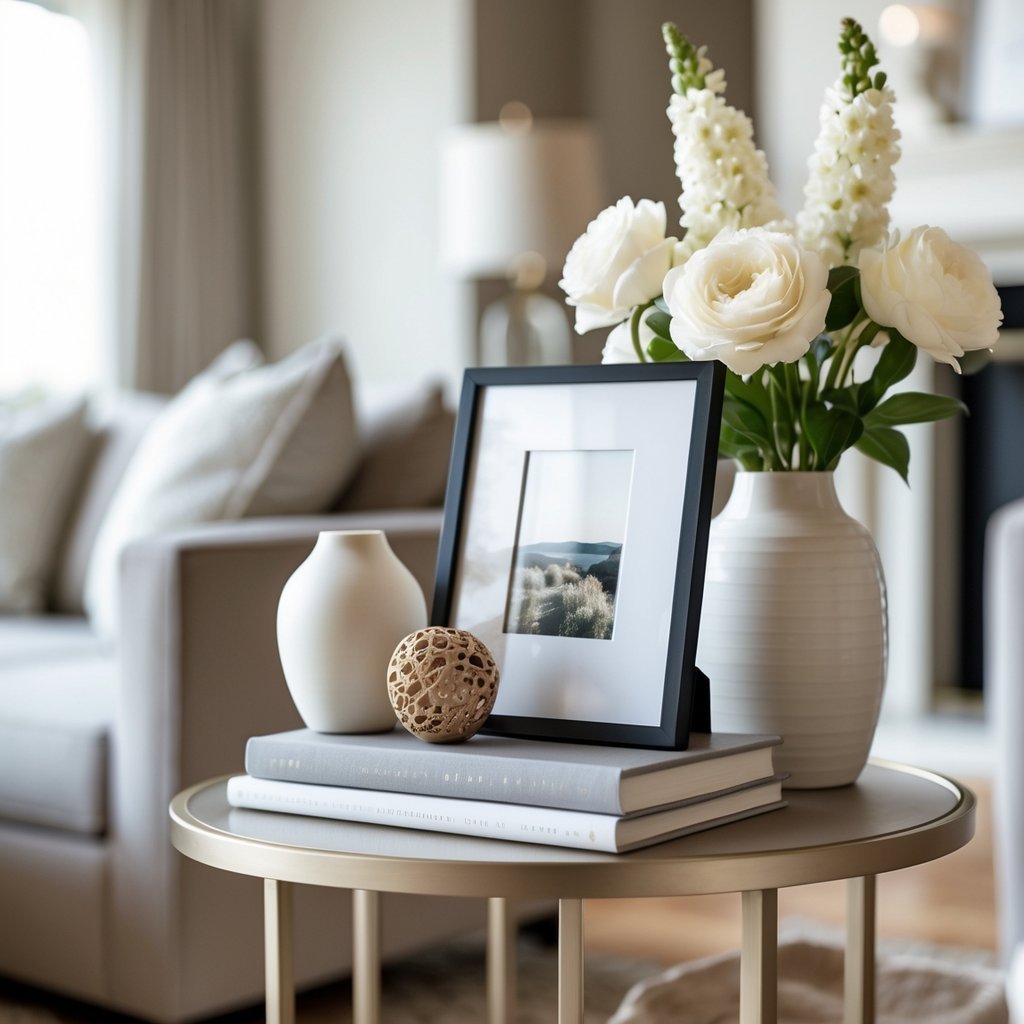
Place a framed photo or small artwork on your side table to add personality and a focal point. Choose a frame size that fits the table without crowding other items.
Lean the frame against the wall or use a small easel to add height and depth. Swap the image seasonally or for special occasions to keep the look fresh.
5) Add a bold-colored sculpture or figurine as a focal point
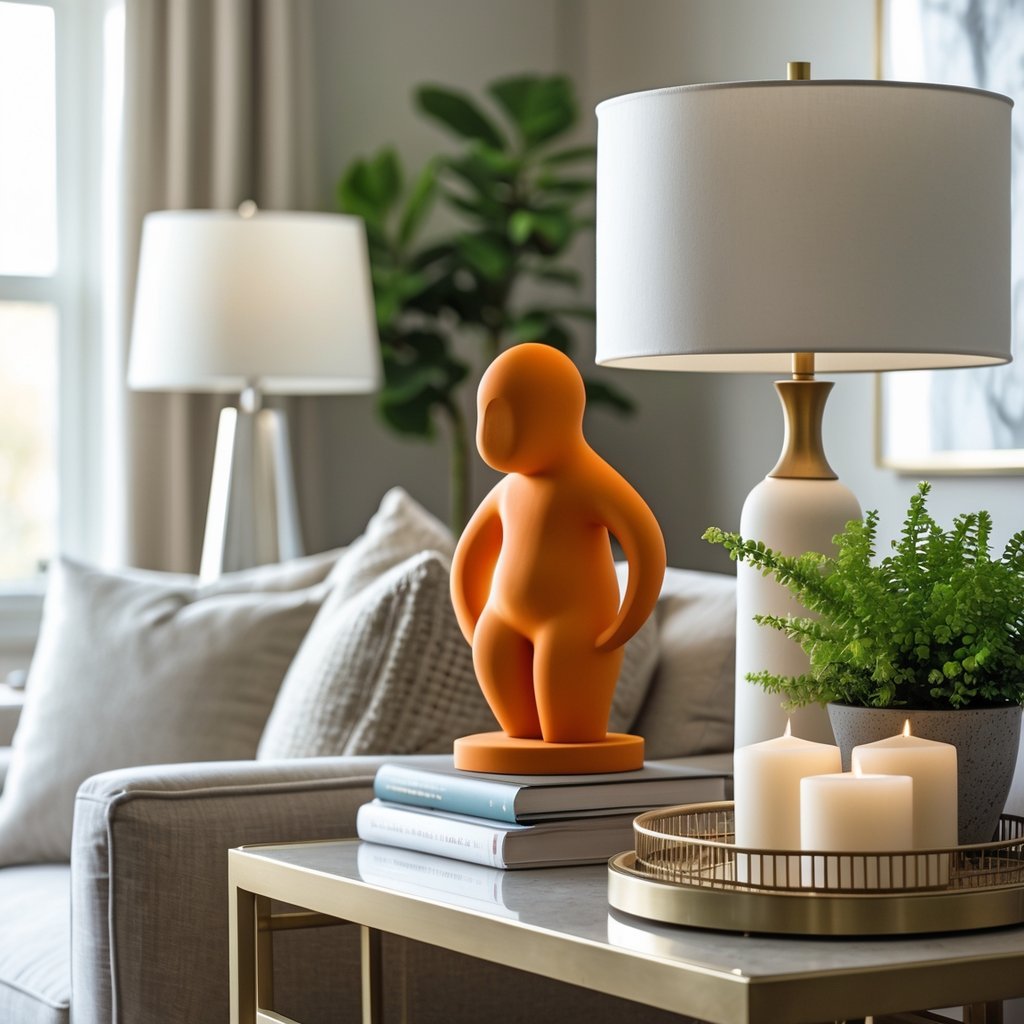
Place a bright sculpture on your side table to grab attention and add personality. Choose a color that contrasts with your wall or sofa so it stands out.
Keep the piece simple in shape if your room already has busy patterns. Let the sculpture sit alone or pair it with a small book or plant for balance.
6) Display a small potted succulent or air plant
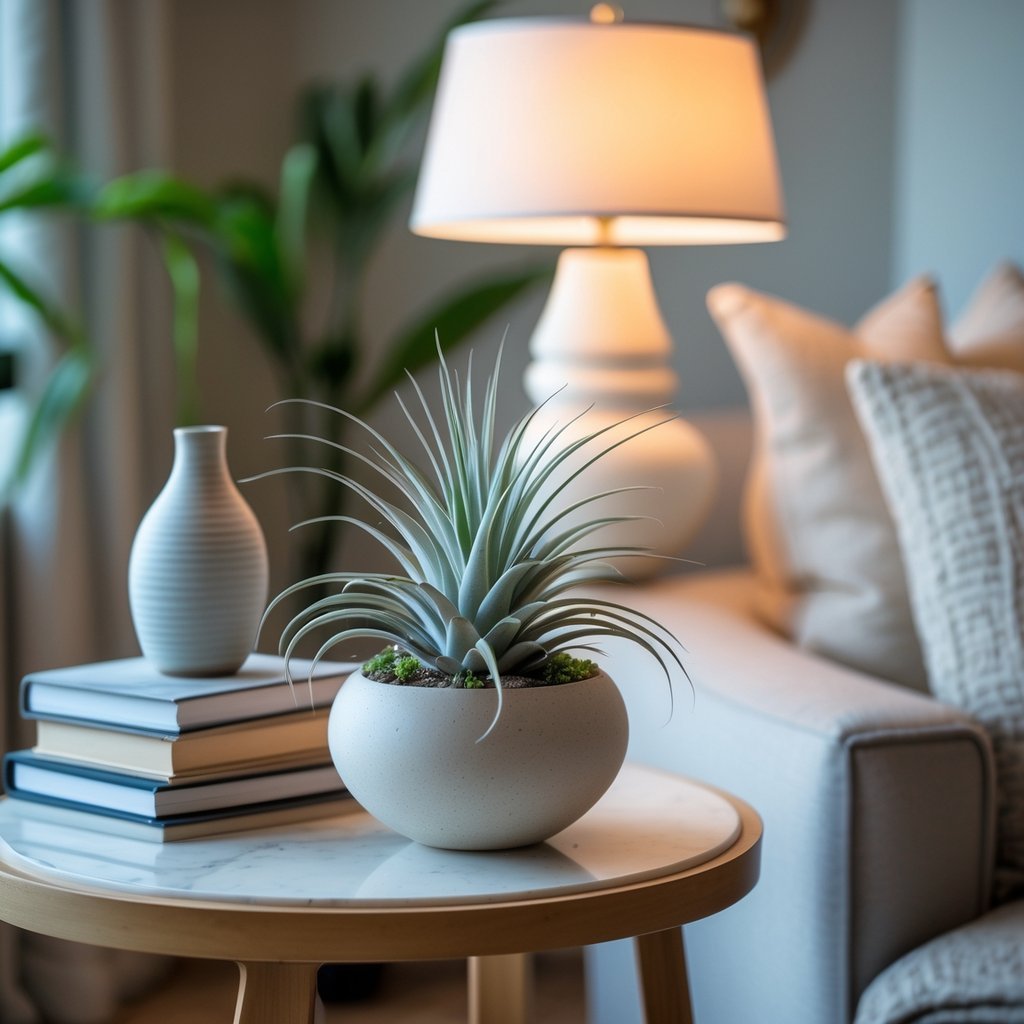
Place a small succulent or air plant on your side table to add life without clutter. These plants need little care and fit well in shallow pots or glass terrariums.
Choose a simple pot or a geometric holder to match your room’s style. Rotate the plant occasionally for even light and mist or soak according to its needs.
7) Use an elegant bowl or dish for keys and loose items
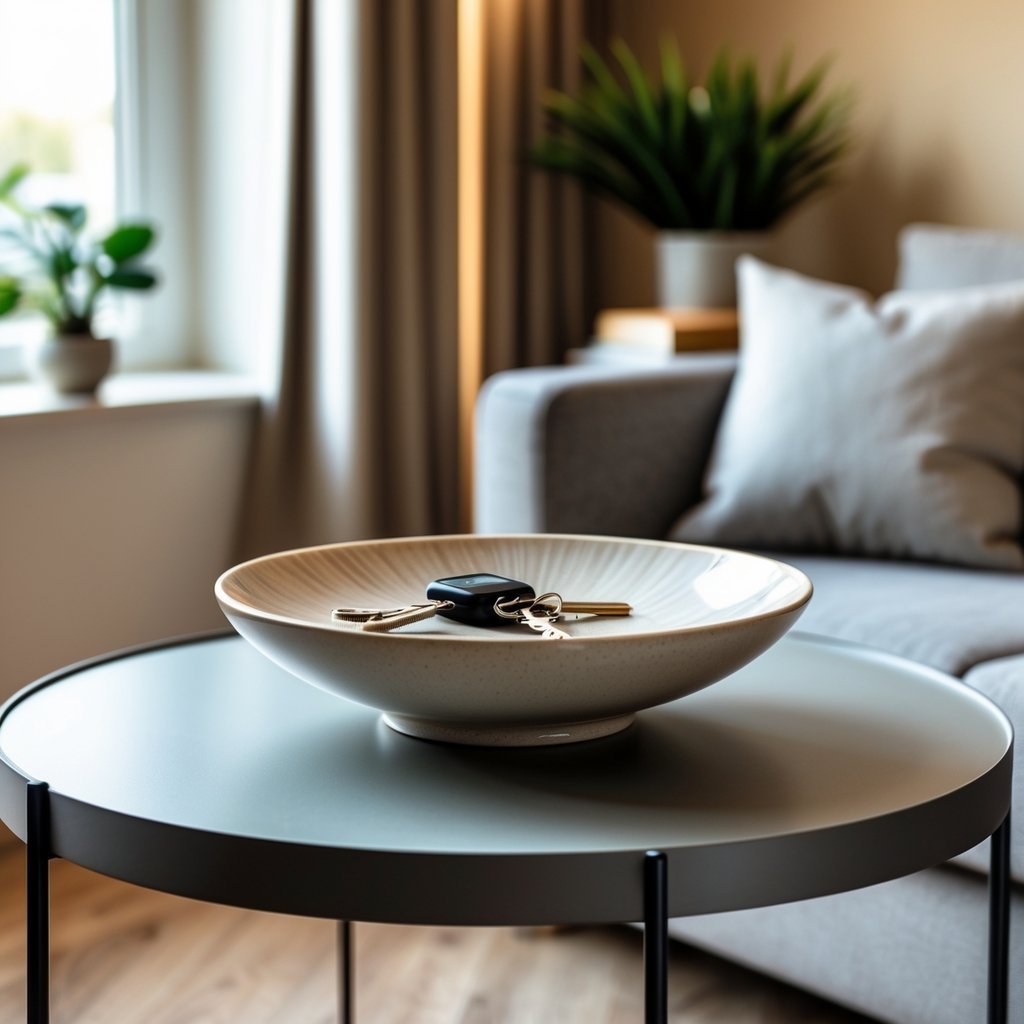
Place a small decorative bowl on your side table to catch keys, coins, and earbuds. It keeps clutter contained and saves time when you leave.
Choose a material that fits your room — wood for warmth, ceramic for color, or metal for a modern touch. Pick a shape and size that balances the table without crowding other decor.
8) Add a vintage clock for both function and charm
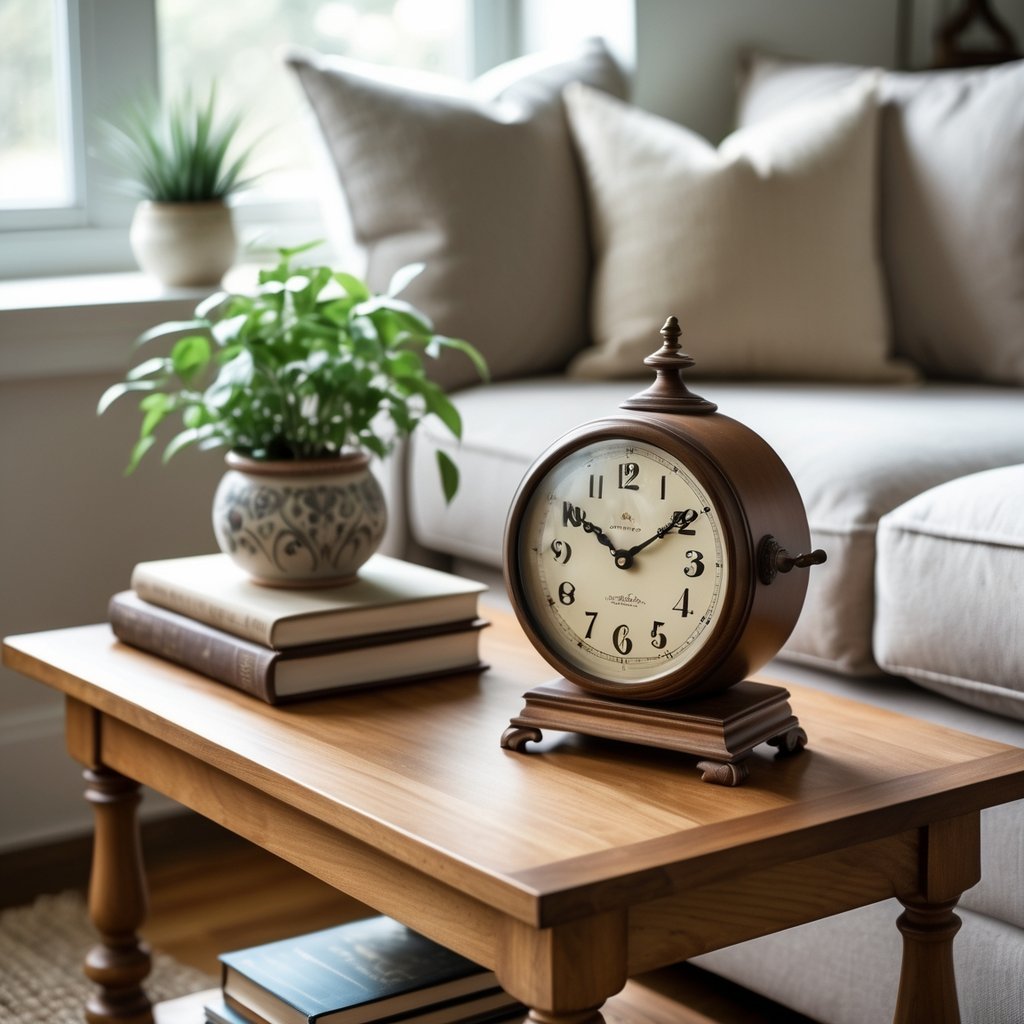
Place a vintage clock on your side table to keep time and add character.
Choose a size that fits the table and doesn’t block other items.
Pick a style that matches your room—brass, wood, or enamel works well.
A working clock gives you utility; a nonworking piece still adds texture and history.
9) Intersperse metallic accents like gold or brass coasters
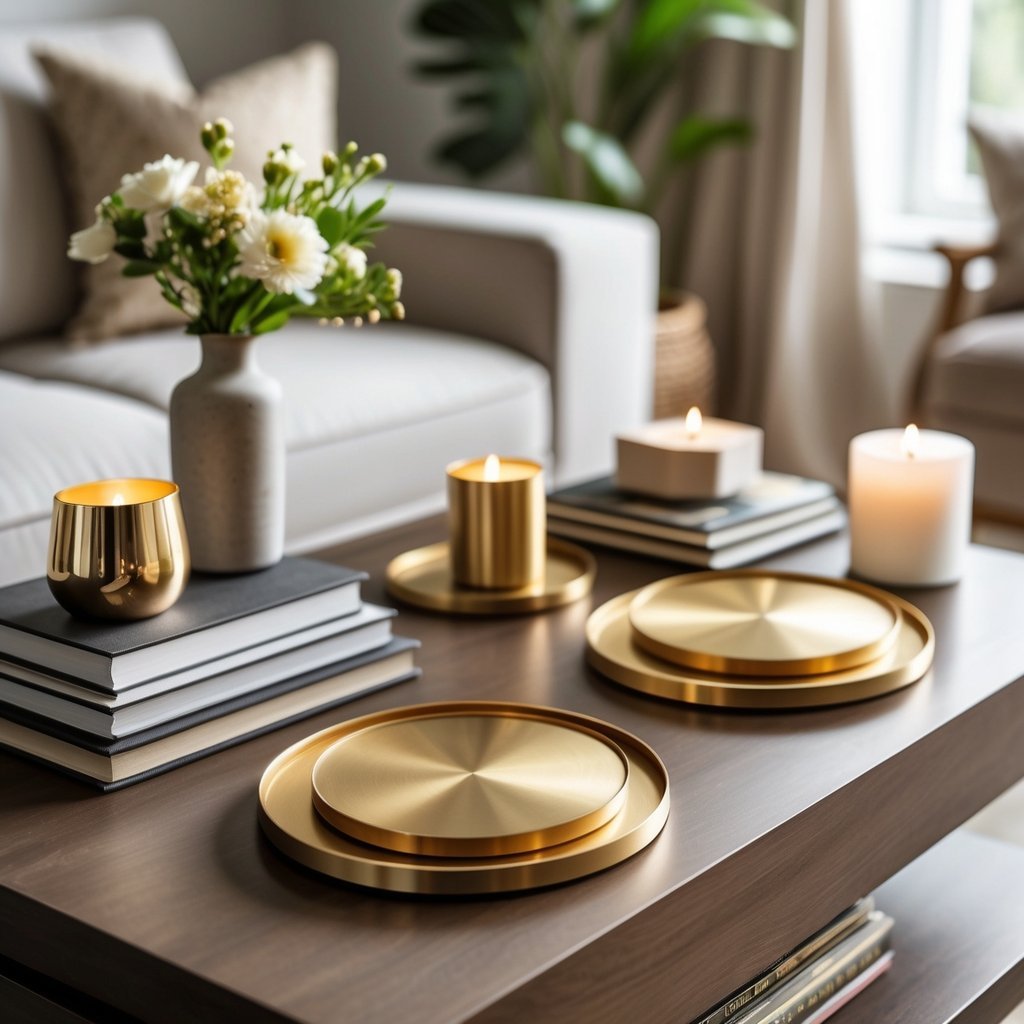
Add gold or brass coasters to your side table to bring small flashes of shine without crowding the surface. They catch light and draw the eye to your table’s best features.
Use coasters with simple shapes to keep the look refined, or pick textured ones for extra interest. Mix metallics with wood, glass, or ceramic pieces to balance warmth and polish.
Keep a set handy for drinks so function and style work together.
10) Layer with a patterned or woven table runner
Choose a runner with a pattern or weave to add instant texture to your side table. It grounds items like lamps, books, and small plants.
Let the runner peek out from under decor to create depth. Pick colors that echo your room’s palette for a cohesive look.
Use natural fibers like jute or cotton for a casual vibe, or a bold print for contrast. Rotate runners seasonally to refresh the space without major changes.
Principles of Side Table Styling
Focus on useful items that look good and match your room. Think about how you use the table, fit it to nearby furniture, and pick colors that link the table to the rest of the space.
Balancing Functionality and Aesthetics
Decide what the table must hold first. If you need a lamp and a drink spot, leave at least 6–8 inches of clear surface around the lamp base so things don’t feel crowded. Keep daily items—remotes, coasters, reading glasses—in a small tray or shallow bowl to limit clutter and make the surface easy to clear.
Mix heights and textures for visual interest while keeping usability. Pair a lamp (tall) with a stack of 1–3 books (medium) and a small plant or decorative object (low). Make sure the lamp light reaches your seating area and that decor won’t topple when you set a cup down.
If you use the table for work or hobbies, reserve one side as a functional zone and style the other side. Use storage under the table—shelf baskets or a drawer—for extra items so the top stays tidy.
Choosing a Cohesive Color Palette
Choose 2–3 main colors that repeat in the room and 1 accent color for the side table. For example, pull a neutral (beige or gray) from the sofa, a wood tone from the floor, and add a single accent like deep blue or mustard for a pillow or vase.
Use scale and contrast: if your room is mostly light, pick one darker piece for the table to ground it. If the room has many patterns, keep table items in solid shades to avoid visual noise.
Try this quick checklist:
- Primary color: matches large furniture
- Secondary color: matches smaller accessories
- Accent color: used in one bold item on the table
Stick to simple repeats of these colors across the lamp, books, textiles, and a decorative object. This creates a unified look that still feels layered and intentional.
Maintaining Visual Harmony
Keep balance by varying height, color, and texture. Aim for a clear focal point, steady negative space, and a repeat of one or two colors or materials to tie the table to the room.
Layering Accessories Effectively
Start with a base item: a lamp, tray, or stack of books to ground the arrangement. Place taller items at the back or to one side and shorter items in front so nothing blocks the view.
Use an odd number of objects—three or five—to create a natural, pleasing group without overcrowding.
Mix materials and textures for interest: matte ceramics, glossy metal, and a soft textile like a small woven coaster or folded linen. Keep one color consistent across pieces, such as brass accents or a green plant, to unify the look.
Leave at least 30–40% of the table surface visible to avoid a cluttered feel. Adjust spacing after you place items until the grouping reads as intentional.
Adjusting Decor With Seasons or Trends
Swap small, easy-to-change items seasonally. Replace a scented candle and a lightweight ceramic with a small bowl of pine cones in winter, then switch to a glass vase with fresh flowers in spring.
Keep larger anchors—lamp, tray, or framed photo—constant so changes feel fresh but not disruptive.
Follow trends selectively. Try one trending item, like a textured pot or sculptural object, rather than redoing the whole table. This prevents rapid turnover and keeps your style coherent.
Store seasonal pieces in labeled boxes so you can rotate items quickly without hunting for them later.
Frequently Asked Questions
These answers give clear, practical steps you can use right away. They focus on lighting, books, trays, plants, art, and a bold sculpture as key styling tools.
How can I style a small side table in my living room?
Keep items scaled to the table. Place one lamp and a small stack of coffee table books, topped with a ceramic vase for height and balance.
Use a decorative tray to group smaller pieces like candles and a tiny plant. This keeps the surface tidy and makes the display look intentional.
What are some modern approaches to decorating a living room side table?
Choose clean lines and mixed materials, such as a metal lamp with a textured shade and a concrete or marble tray. Limit the number of items to two or three to keep a sleek look.
Pick one bold accent, like a colored sculpture or figurine, to create a focal point. Pair it with a framed photo or small artwork to add personality without clutter.
What are the best accessories to display on a living room side table?
Start with a lamp for function and a stack of two to three books for visual interest. Add a ceramic vase or small plant to introduce texture and life.
Use a decorative tray to corral candles, a small bowl for keys, and a framed photo or mini artwork. A single bold sculpture can finish the look as a statement piece.
How can I decorate my side table without using lamps?
Rely on layered objects for shape and contrast. Stack books, place a vase on top, and add a small plant and candles for warmth.
Use a framed photo or small artwork for vertical interest. A decorative tray will keep items grouped and neat.
What creative techniques can I use to enhance the aesthetic of my sofa side table?
Vary heights by using a tall vase, medium stack of books, and low candles. Mix textures—ceramic, metal, and woven materials—to add depth.
Introduce color with one bold item, like a sculpture, while keeping other pieces neutral. Rotate seasonal items to refresh the table without a full redesign.
How can I integrate a side table into the overall decor of my living room?
Match one material or color from the table accessories to larger room elements, such as curtains or a rug. For example, echo a bold accent color from the sculpture in a throw pillow.
Keep scale and style consistent: if your room is modern, choose simple shapes and minimal clutter. Use trays and grouped items so the table reads as a planned part of the room.