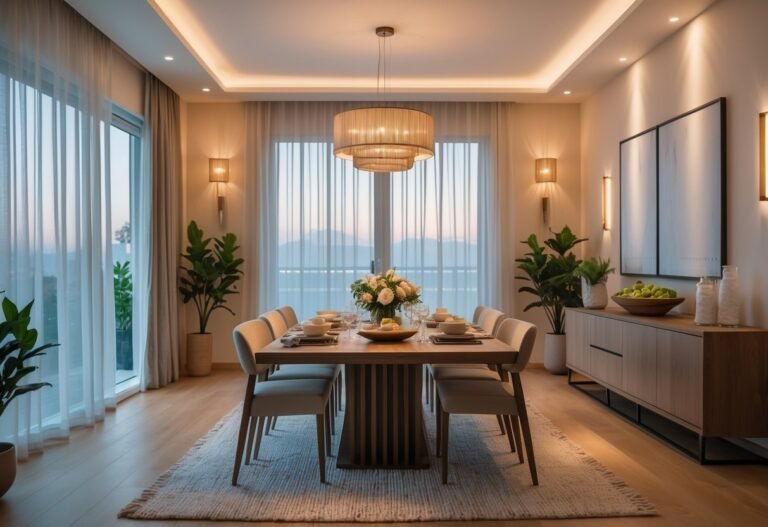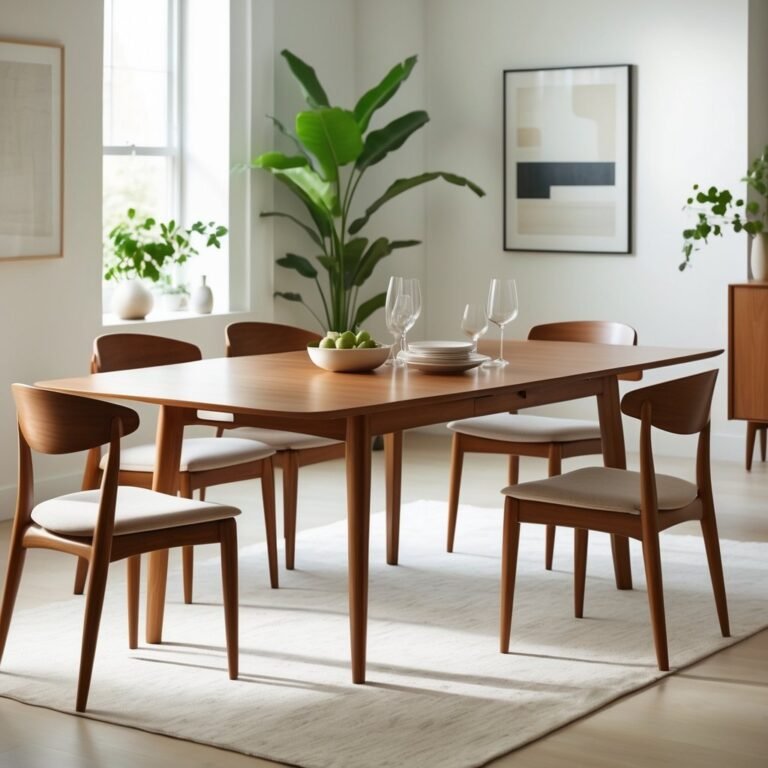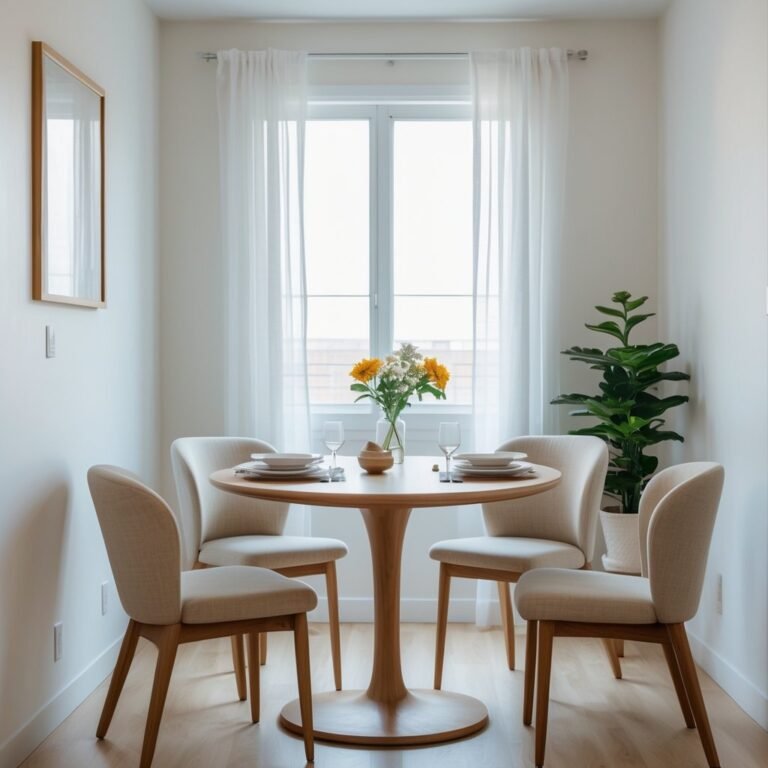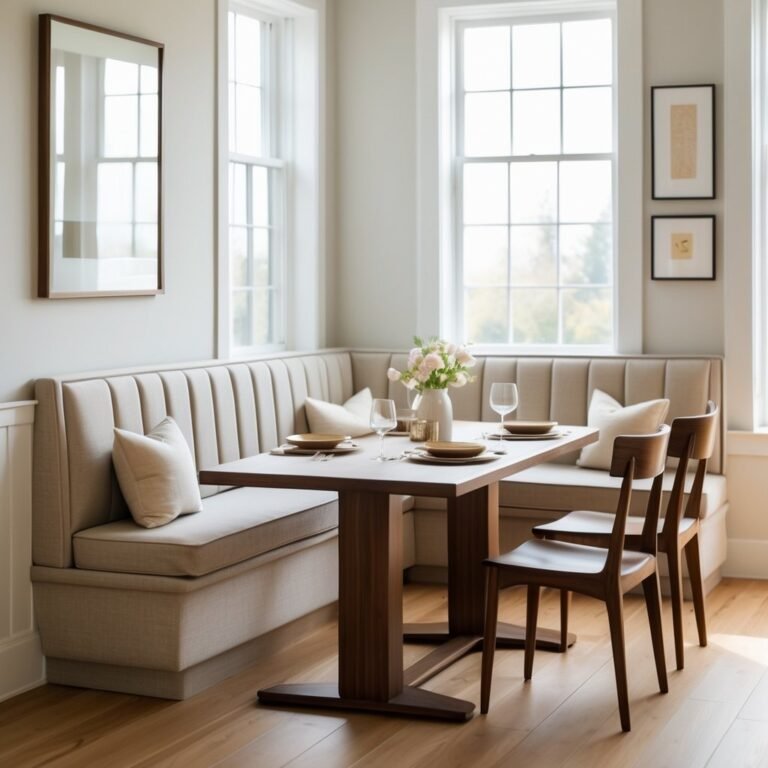
Dining Room Wall Decor Ideas: Stylish, Functional Ways to Transform Your Space
You want a dining room that feels complete and welcoming, not just a place to eat. This post gives easy, practical ideas to transform your walls with art, paint, mirrors, shelving, and small accents that match your style and budget.
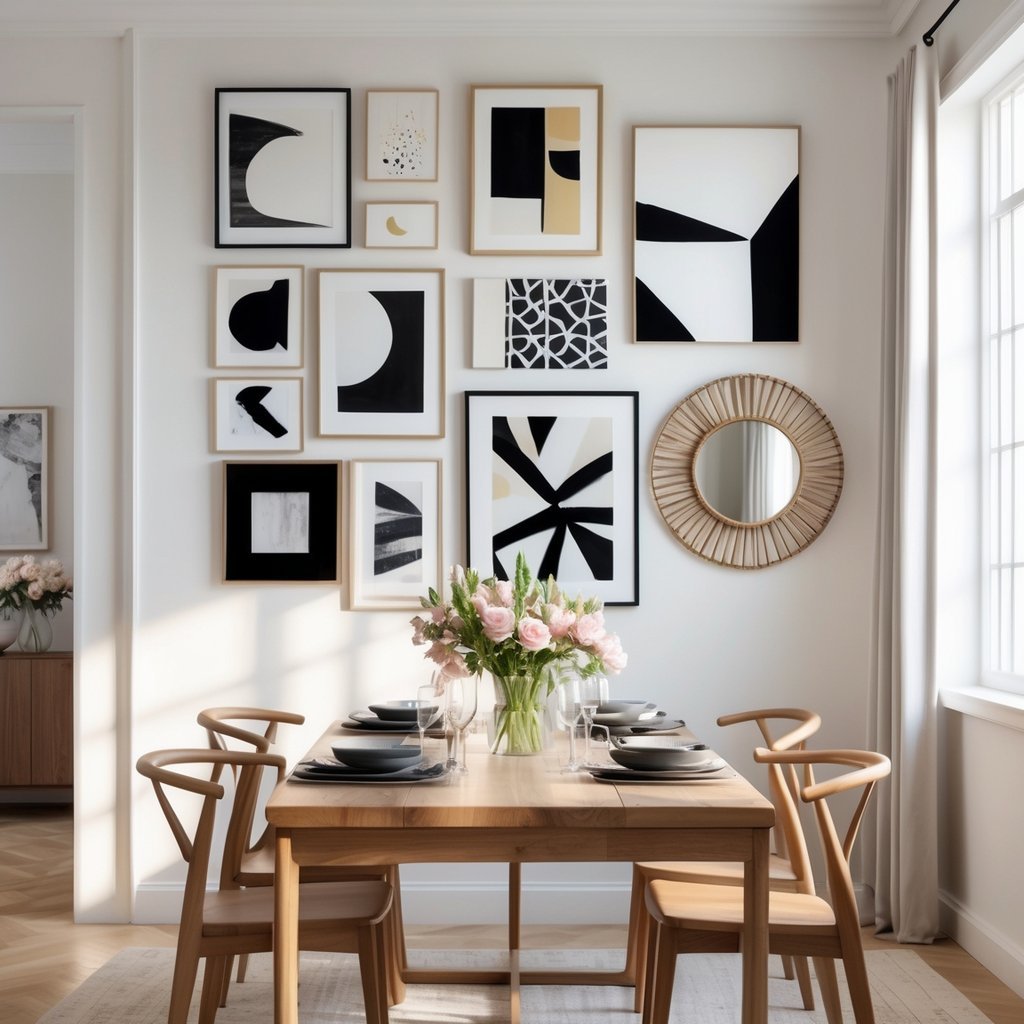
Choose one clear focal idea—like a gallery wall, bold paint, or a statement mirror—and build the rest of the decor around it to make the room feel intentional and balanced. Use simple swaps and a few well-placed pieces to refresh the space quickly without a big budget or major work.
Mix permanent choices with seasonal and personal touches so your dining room stays fresh and feels like yours over time.
Key Takeaways
- Pick a strong focal treatment to anchor the room.
- Combine permanent elements with easy seasonal updates.
- Use small accents to add personality without clutter.
Wall Art Choices for Dining Rooms
Choose pieces that fit the wall size, room mood, and how you use the dining room. Think about scale, color, and how easy it will be to clean or swap pieces when you redecorate.
Gallery Wall Arrangements
A gallery wall groups multiple pieces to create one strong focal point. Pick a consistent element—frame color, mat size, or subject matter—to keep the look organized. Lay out your arrangement on the floor first or use paper templates on the wall to test spacing.
Mix sizes and orientations, but keep a roughly even margin between frames (2–4 inches works well). Include one larger anchor piece or a bold color to guide the eye. For a formal dining room, use matching frames and balanced rows. For a casual or eclectic space, mix vintage frames, small mirrors, and textiles for texture.
Hang the center of the gallery at eye level from where you sit or stand—about 57–60 inches from the floor to the visual center. If the gallery sits above a buffet, leave 6–12 inches between the top of the furniture and the bottom of the frames.
Large Scale Artwork
One large artwork can define the whole room with less visual clutter. Choose a piece that is 60–75% of the wall width if it sits over a table or sideboard. A single canvas, tapestry, or sculptural panel works well.
Use bold but limited color to coordinate with table linens and lighting. If the dining room is small, pick artwork with a light background to prevent the space from feeling closed in. For rooms with high ceilings, consider tall, vertical pieces to emphasize height.
Secure heavy pieces with proper anchors and hang them so the center is around 57–60 inches above the floor or aligned with the top of the furniture beneath. Keep maintenance in mind—canvas and sealed prints are easier to dust than loose textiles.
Framed Prints and Photography
Framed prints and photographs give you control over mood and theme. Use archival mats and UV-protective glass for pieces exposed to sunlight. Select frames that match other room finishes like metal light fixtures or wood chairs.
Create rhythm by repeating one frame style but changing image subject—black-and-white photos, botanical prints, or food-themed art can work well. For long walls, hang a horizontal triptych or a series of equally sized frames evenly spaced.
When choosing sizes, follow a simple rule: total frame width should be about two-thirds the width of the furniture below. Use picture-hanging hardware rated for the frame weight and level each frame carefully to keep the display neat.
Creative Accent Wall Ideas
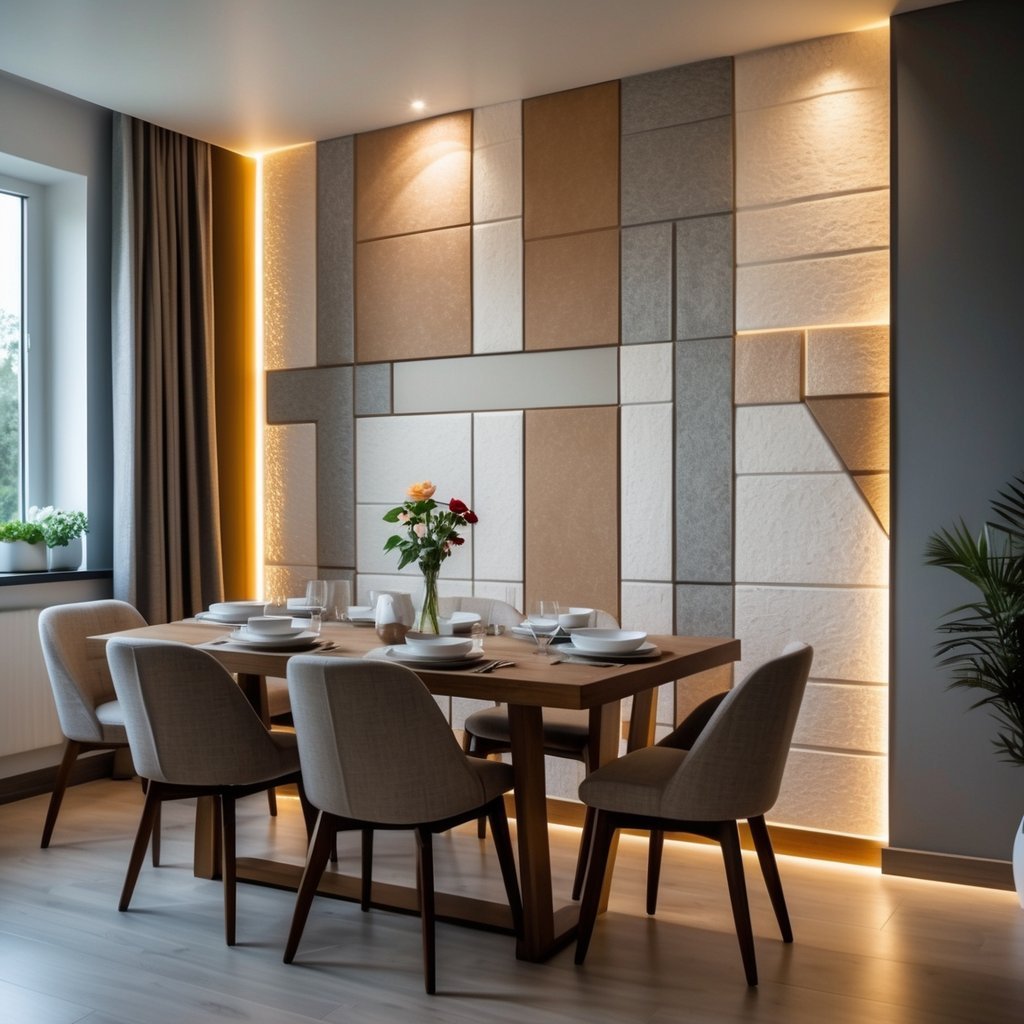
Choose a single strong idea and make it the room’s focal point. Pick a color, pattern, or texture that ties to your dining table, lighting, or rug so the wall feels planned and not random.
Bold Paint Colors
Pick one bold color and paint the entire accent wall to anchor the room. Deep navy, forest green, or charcoal gray work well behind a light wood table or brass chandelier. Use satin or eggshell finish for easy cleaning near chair backs.
If you want drama without dark paint, try a warm terracotta or mustard. Those tones pair nicely with mid-century or farmhouse furniture. For a modern look, paint only the area behind a buffet or built-in shelving and keep trim a crisp white.
Test a 1×1 foot swatch on the wall at different times of day. Lighting changes color dramatically, so live with the sample for a few days before committing.
Wallpaper Designs
Choose wallpaper with scale and repeat that matches your room size. Large botanical prints fit taller ceilings. Small geometric repeats suit compact dining rooms or powder rooms.
Match wallpaper color to existing textiles—pick one accent color in the pattern to echo in curtains or seat cushions. If commitment worries you, install wallpaper on a single panel framed with trim for a removable focal area.
Peel-and-stick papers work well if you rent or change styles often. For higher-traffic areas, buy washable vinyl or prep the wall with a smooth primer to avoid bubbles and peeling.
Textured Wall Treatments
Use wood planks, shiplap, or reclaimed beams for a warm, rustic look. Horizontal planks make the room feel wider; vertical planks add height. Keep plank widths consistent for a cleaner modern feel.
Try plaster, Venetian plaster, or limewash for subtle depth and a soft, tactile finish. These options hide minor wall flaws and reflect light differently than paint, adding quiet interest.
For a bold tactile statement, consider molded panels or 3D tiles behind a sideboard. Stain or paint the texture to match your palette, and ensure edges line up with furniture to avoid a cluttered appearance.
Decorative Elements and Accessories
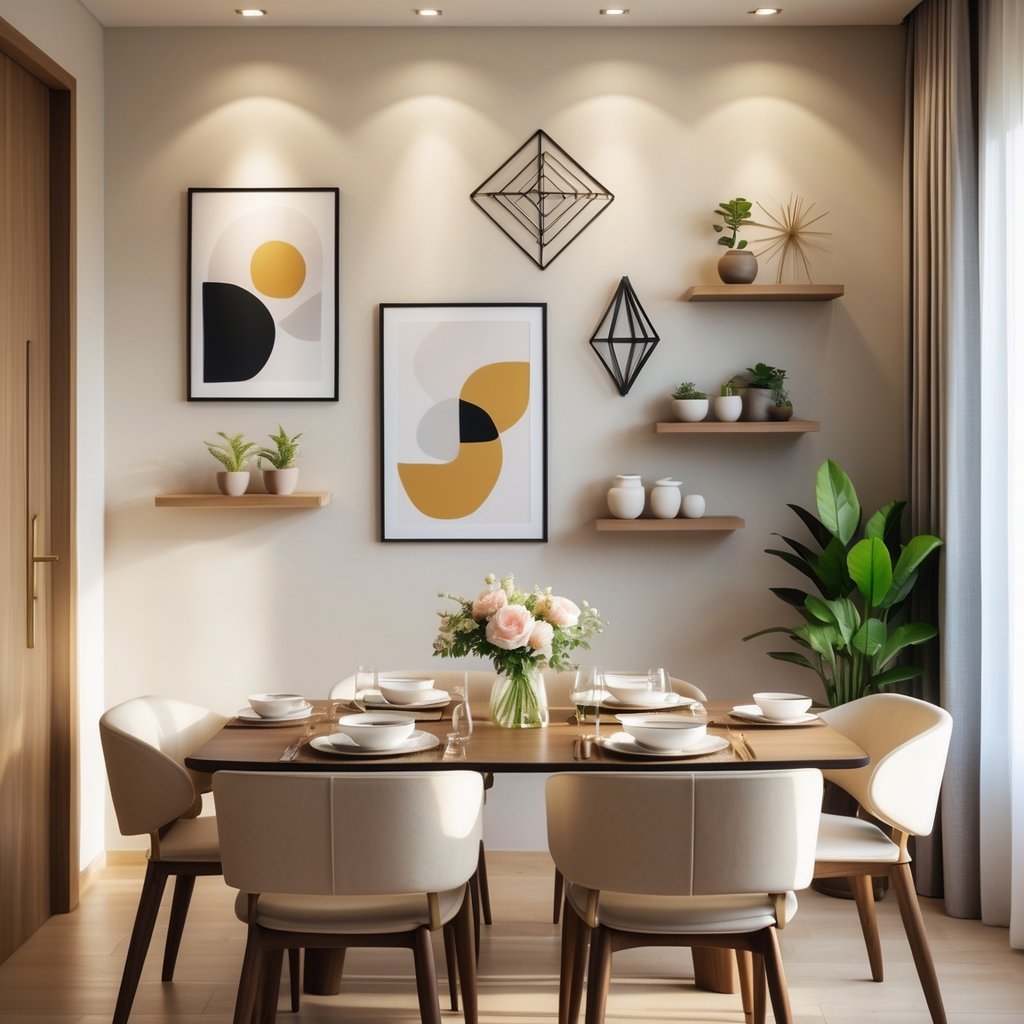
Choose pieces that add light, texture, and storage without crowding the room. Focus on scale, placement, and how each item complements your table and lighting.
Mirrors for Visual Expansion
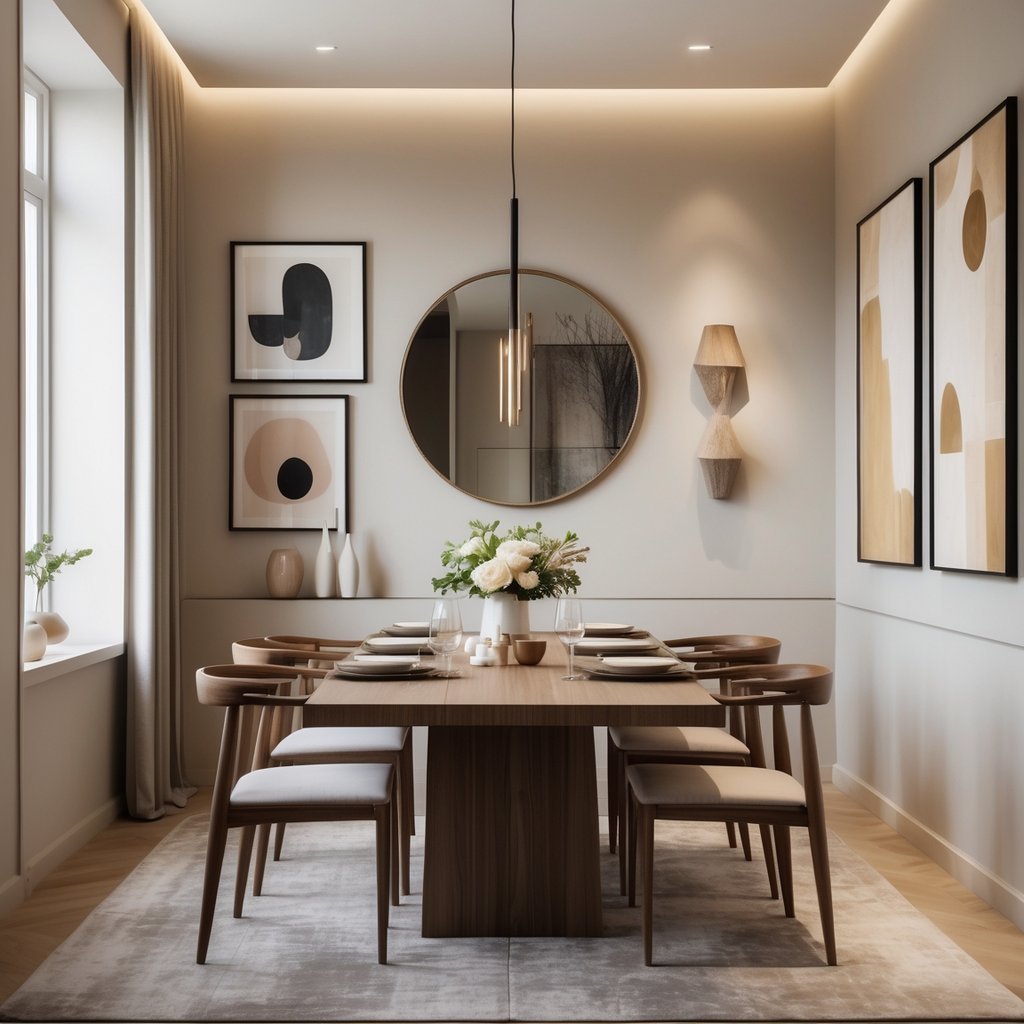
Place a large mirror, at least 2/3 the length of your buffet or console, to reflect light and make the room feel wider. Hang it so the center sits about 60–66 inches from the floor for most rooms; align it with the height of people who use the space most.
Pick a frame that matches your style: thin metal for modern, distressed wood for farmhouse, or a carved frame for traditional spaces. Use a grid of smaller mirrors (three across or two by two) if one big mirror won’t fit your wall. Angle the mirror to bounce natural light from windows or to reflect a pendant light over the table.
Avoid placing mirrors where they show clutter. Keep the area in front tidy and add a small vase or tray on the surface below to create a polished vignette.
Statement Shelving Displays
Install floating shelves 12–18 inches above a buffet or 6–8 inches above a chair rail to keep sightlines clear and furniture functional. Use 2–4 shelves depending on wall height; stagger lengths to add visual interest.
Mix functional items and decor: a stack of dinnerware, a row of stemware, framed prints, and one or two sculptural pieces. Group objects in odd numbers (three or five) and vary heights. Leave breathing room—don’t fill the entire shelf length.
Secure shelves to studs or use heavy-duty anchors for dishes or glassware. Consider a shelf with integrated lighting or add LED tape to highlight pieces and create a warm glow for evening meals.
Mixed Media Decorations
Combine art, textiles, and small three-dimensional pieces to create layered walls. Start with a large anchor piece—one painting, tapestry, or framed map—then add smaller elements around it to build a cohesive grouping.
Use varied textures: a woven wall hanging, a metal sculpture, and framed botanical prints. Keep a consistent color palette (two main colors and one accent) so the mix looks planned. Use picture-hanging templates to map layout before driving nails.
Balance weight across the wall: heavier objects lower and centered, lighter items higher. Include a small shelf or peg to display seasonal pieces you can rotate without rehanging major art.
Personalized and Seasonal Touches
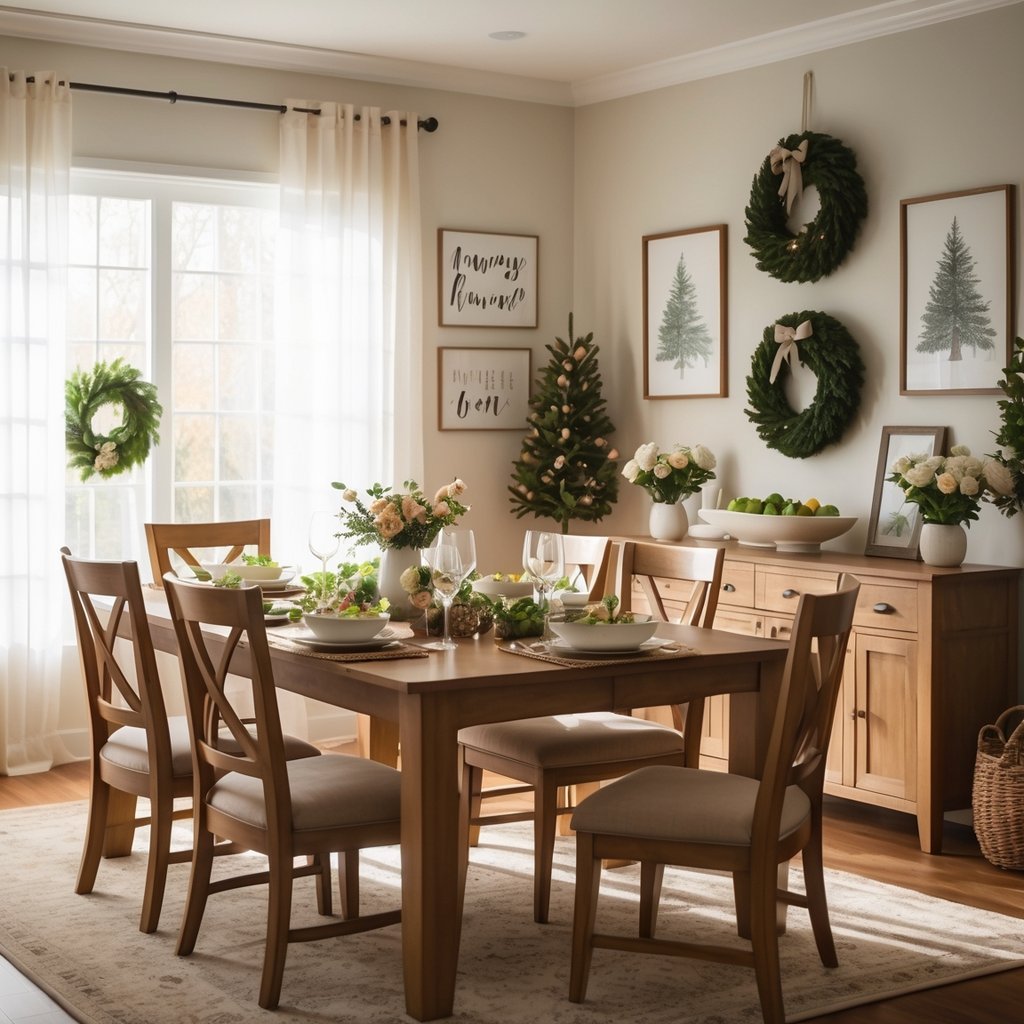
Add items that show who you are and change them with the seasons. Focus on photos, heirlooms, and simple swaps that refresh the room without major effort.
Family Photo Displays
Arrange your photos so they tell a story and match the room scale. Use frames in one or two finishes — for example, black metal and warm wood — to keep the display cohesive. Mix horizontal and vertical images but keep the mat sizes consistent for a cleaner look.
Try these layouts:
- Grid: 3×3 or 4×4 for a formal, balanced wall.
- Salon-style: staggered heights around a central piece for a lived-in feel.
- Shelf display: lean frames on a narrow ledge to swap images easily.
Label a few photos with small captions or date stamps if you want context. Use prints sized 8×10 or 11×14 for dining walls so faces read clearly from across the table. Hang at eye level — center about 57–60 inches from the floor — to keep views comfortable while seated.
Rotating Seasonal Decor
Rotate small items each season to keep the room fresh without redecorating fully. Swap table runners, a centerpiece, and wall accents like wreaths or a single seasonal print. Limit changes to three to five pieces so updates feel intentional and fast.
Ideas by season:
- Spring: botanical prints, pastel textiles, and a simple vase with tulips.
- Summer: coastal artwork, bright placemats, and woven textures.
- Fall: warm-toned art, a rustic centerpiece, and matte frames.
- Winter: deep colors, metallic accents, and a textured throw on a nearby chair.
Store seasonal pieces in labeled bins. Use a checklist for quick swaps: wall art, centerpiece, textiles. This keeps the room cohesive and lets you refresh the mood in 20–30 minutes.
Frequently Asked Questions
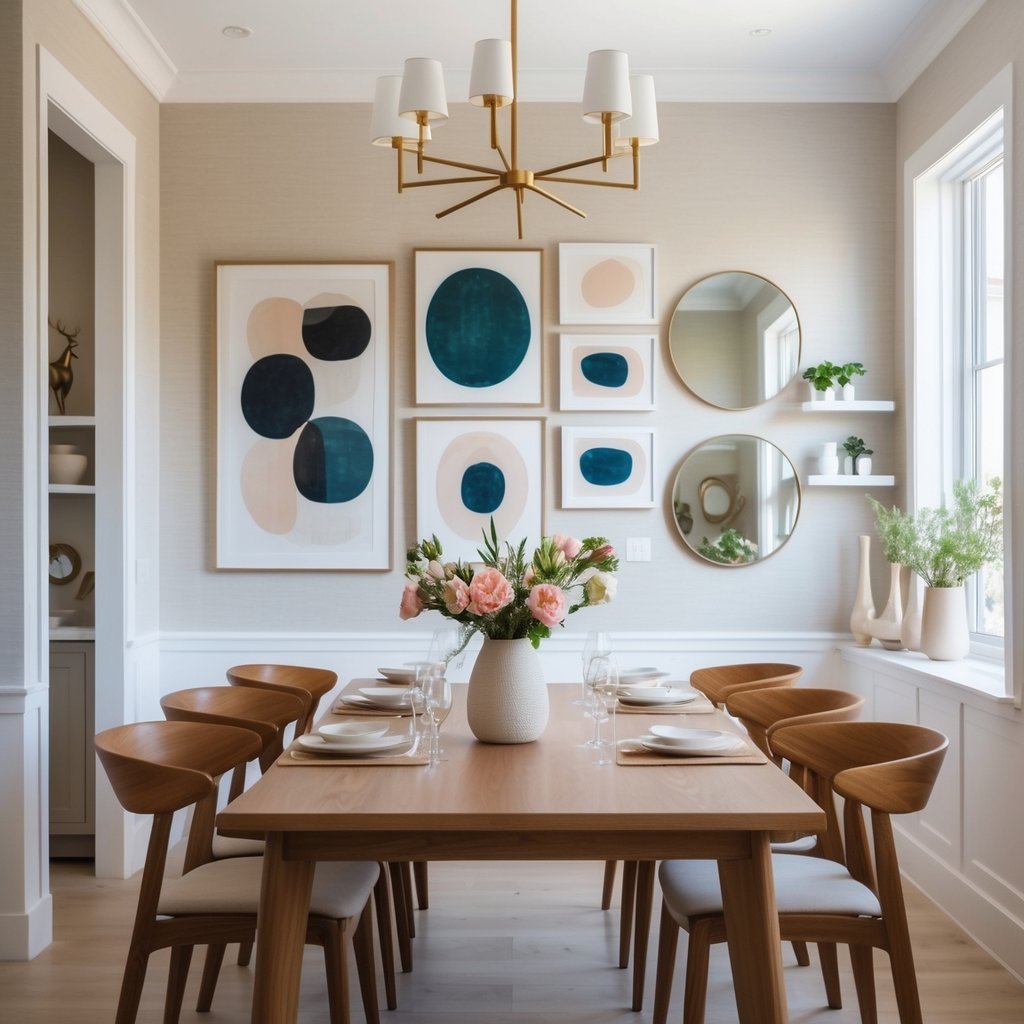
Find practical answers that help you pick size, style, and placement. These tips cover small and large rooms, current trends, budget options, and hanging rules so you can act with confidence.
How can I enhance a small dining room with wall decor?
Use mirrors to reflect light and make the room feel larger. A single large mirror or a pair of slim mirrors works better than many small pieces.
Choose a narrow shelf or a slim ledge to display a few favorite plates or small frames. It keeps the wall tidy and adds personality without clutter.
Pick art scaled to the wall and table. One medium-to-large piece centered over a buffet or table creates focus without overwhelming the space.
What are the latest trends in modern dining room wall decor?
Warm neutrals and natural textures are popular, such as woven wall hangings, wood panels, and linen canvases. These add soft color and tactile interest.
Mixed-material gallery walls—metal frames with wood or woven pieces—give a modern layered look. Keep a coherent color palette to avoid visual chaos.
Large-scale abstract art in muted tones also remains current. It adds drama while keeping the room calm when you match it to textiles and lighting.
Which type of wall art suits an elegant dining room atmosphere?
Choose pieces with refined materials like framed oil prints, metal sculptures, or glass-fronted botanical prints. These read as upscale without needing ornate frames.
Keep colors restrained: deep blues, soft golds, creams, or warm neutrals work well. Use symmetry—twin pieces or a centered large artwork—to create a formal feel.
Add subtle lighting, such as picture lights or wall sconces, to highlight the art and raise the room’s sense of luxury.
What are some budget-friendly dining room wall decoration ideas?
Prints and posters in simple frames give a high-impact look for low cost. Use identical frames to make multiple inexpensive prints feel polished.
DIY options like painted canvases, macramé, or a painted accent stripe save money and let you customize color and scale. Thrift-store frames with fresh paint also look intentional.
Floating shelves with a few curated items let you change displays seasonally without spending much.
How do I choose the right decor for a large, blank dining room wall?
Start with scale: a single large artwork or a grid of pieces sized to fill two-thirds to three-quarters of the wall looks balanced. Measure before you buy.
Create a focal point near the dining table—center art on the table line, not the ceiling line. That keeps the visual weight where people sit.
Consider built-ins or a gallery wall with consistent frames to cover big expanses while maintaining cohesion.
What are the guidelines for hanging artwork in a dining room?
Hang art so the center of the piece sits about 57–60 inches from the floor, or align the center at eye level for your household. For above a table, keep the bottom of the artwork 6–12 inches above the table surface.
If hanging over furniture, let the art edge sit 4–8 inches above the top of the furniture. For groupings, keep space between frames 2–4 inches for a tight, connected look.
Use secure hardware rated for the artwork’s weight and check studs or use anchors. This prevents accidents and protects both the piece and the wall.