Living Room With Fireplace: 10 Stylish Layouts and Design Ideas
A living room with a fireplace can change how you feel in your home. You will learn simple ways to make the fireplace the room’s best feature, boost comfort, and keep safety and efficiency in mind. This article guides you through styles, layouts, and practical tips so you can pick ideas that fit your space and taste.
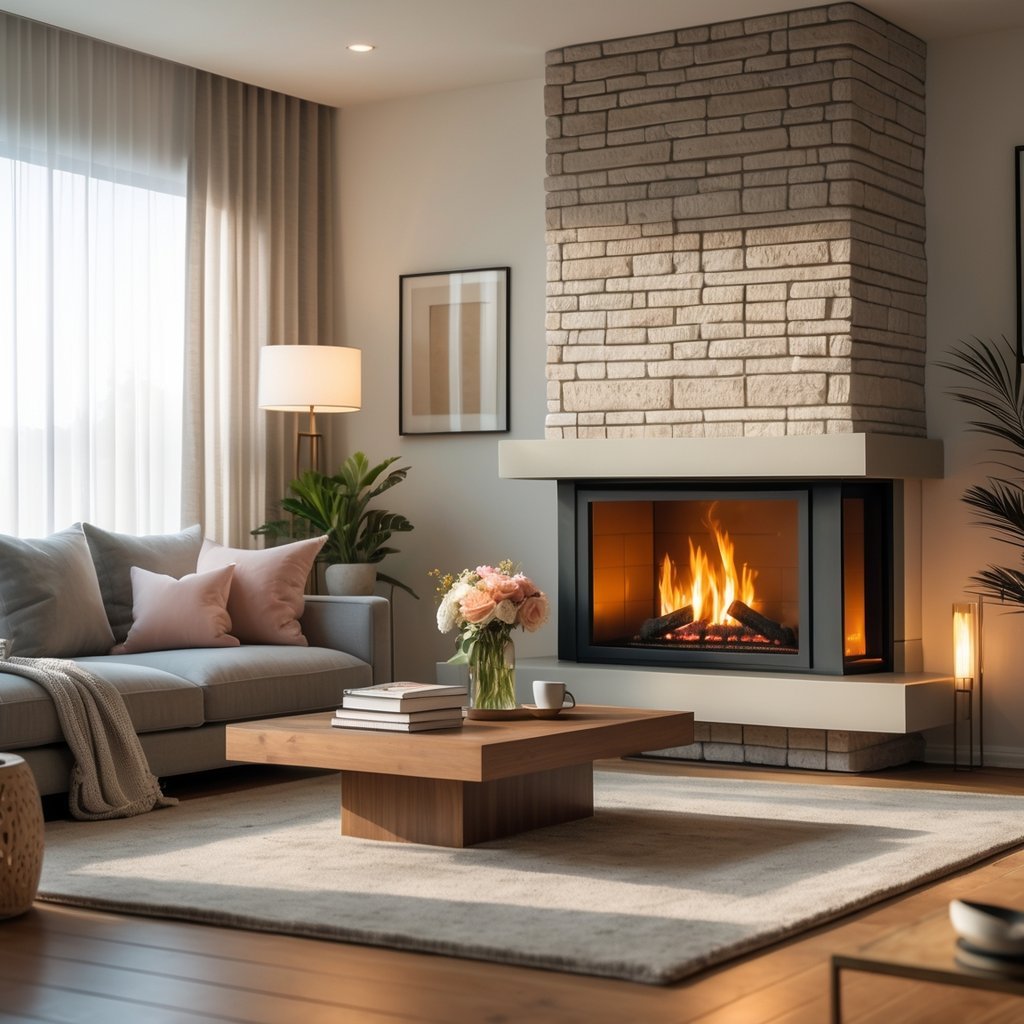
You will see options from cozy corners and rustic farmhouse looks to sleek modern and minimalist designs, plus smart storage and decor ideas that work with a fireplace. Use these suggestions to shape a space that feels warm, functional, and stylish without guesswork.
1) Cozy Corner Fireplace Layout
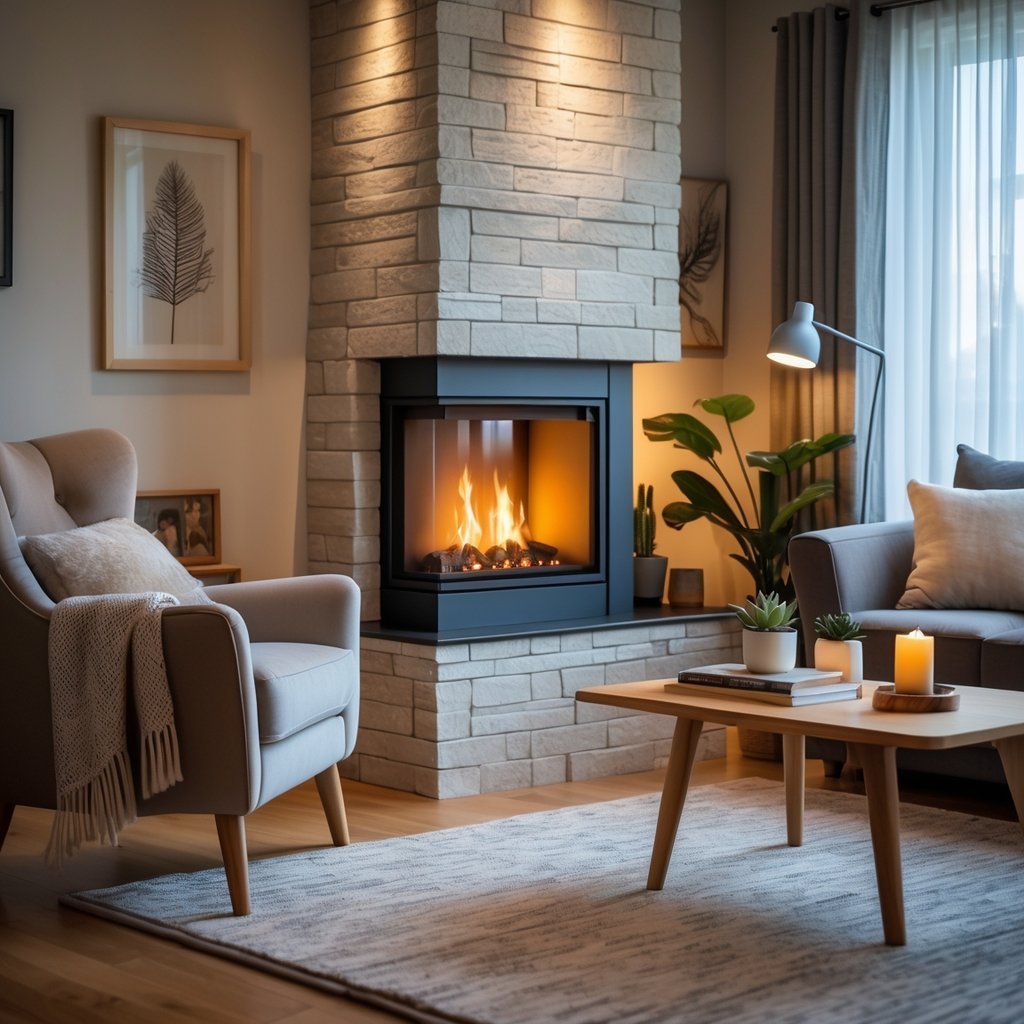
Place seating angled toward the corner fireplace to create a warm conversation zone. A small sofa and a pair of chairs keep the space inviting without crowding the room.
Use a low coffee table and a rug to anchor the area. Add soft lighting and a few textured throws to boost comfort and tie the look together.
2) Green Tiled Modern Fireplace
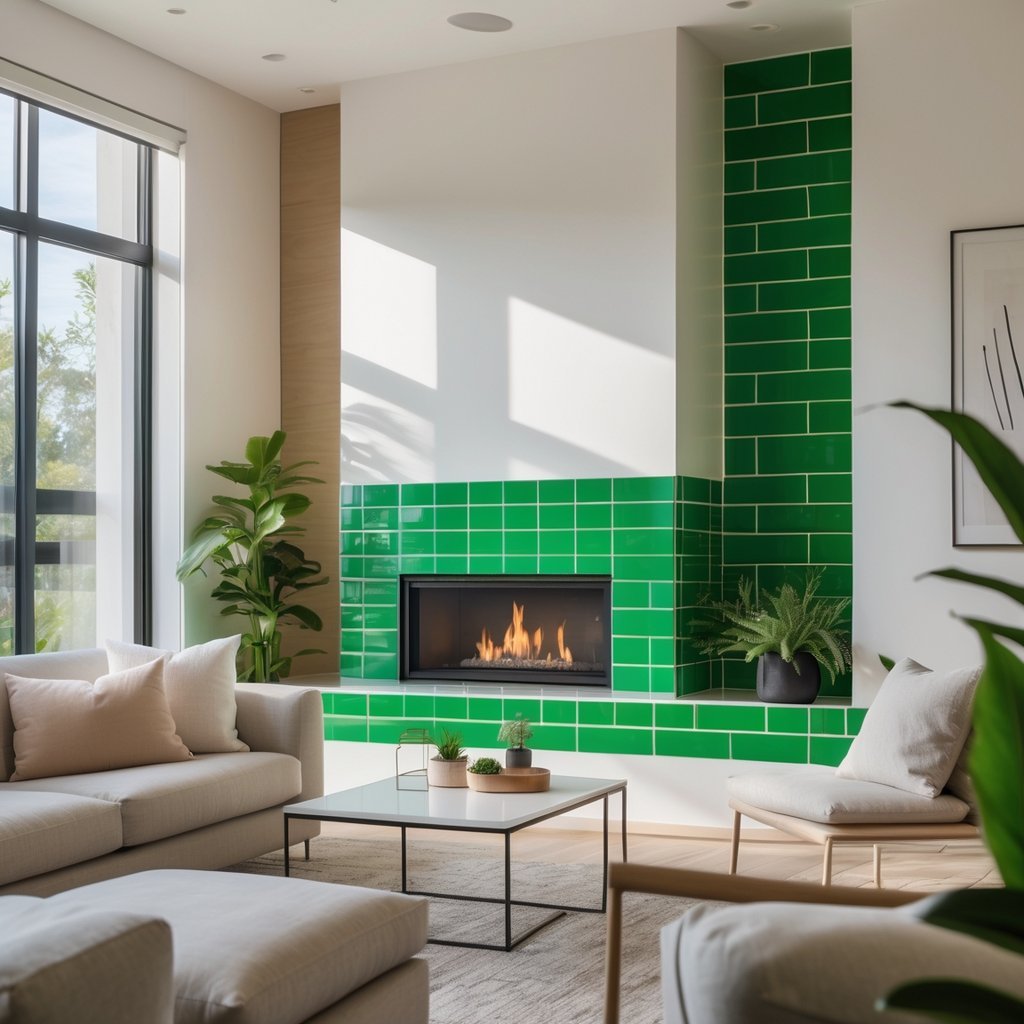
You can make your living room stand out with a green tiled fireplace that blends modern style and warmth. Choose glossy emerald or muted sage tiles to add color without overwhelming the space.
Pair the tile with simple lines and minimal mantel decor to keep the look clean. Add wood or brass accents for contrast and to soften the cool tile finish.
3) Rustic Farmhouse Fireplace Style
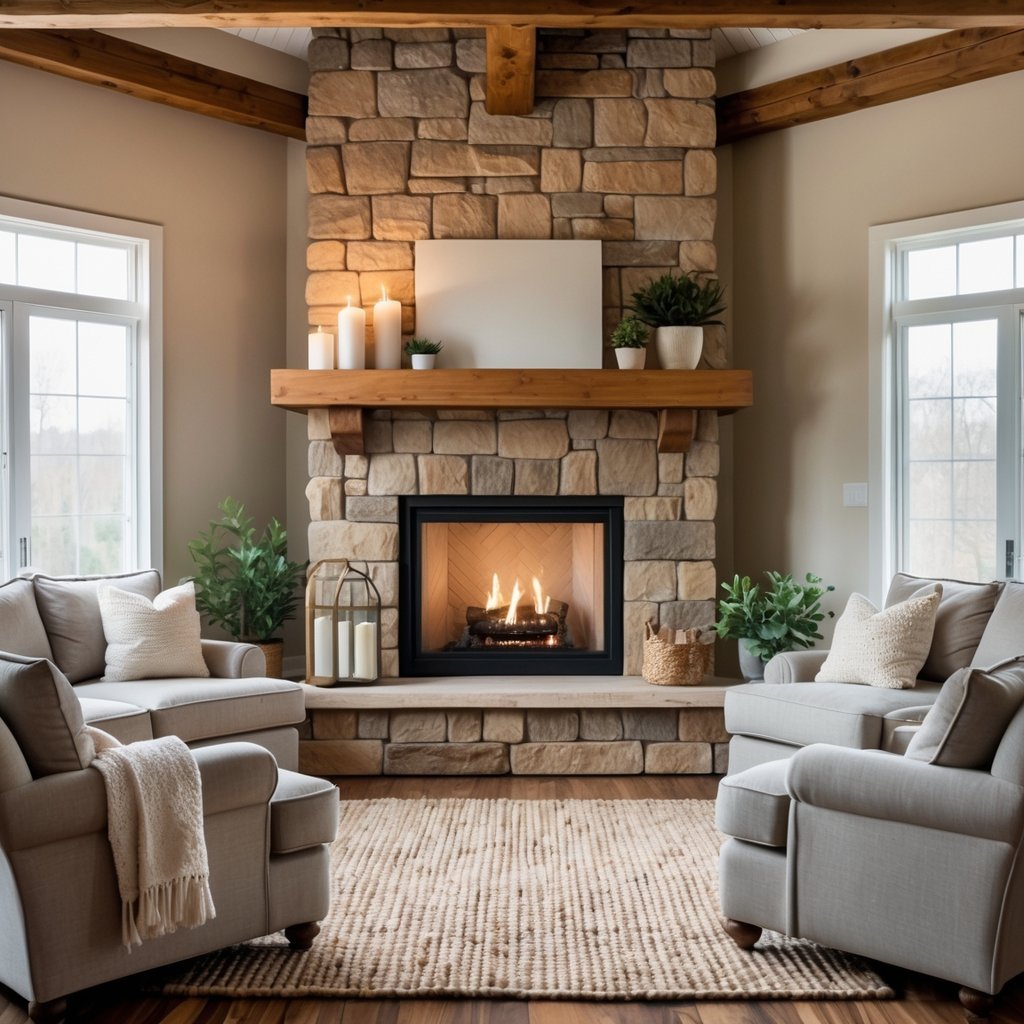
You can create a warm, grounded focal point with a rustic farmhouse fireplace. Use a reclaimed wood mantel, stacked stone or whitewashed brick, and simple iron accents to keep the look authentic.
Place woven baskets or vintage lanterns near the hearth for practical storage and soft lighting. Add a large clock or mirror above the mantel to draw the eye and add height to your living room.
4) Brick Fireplace with Wood-Burning Stove
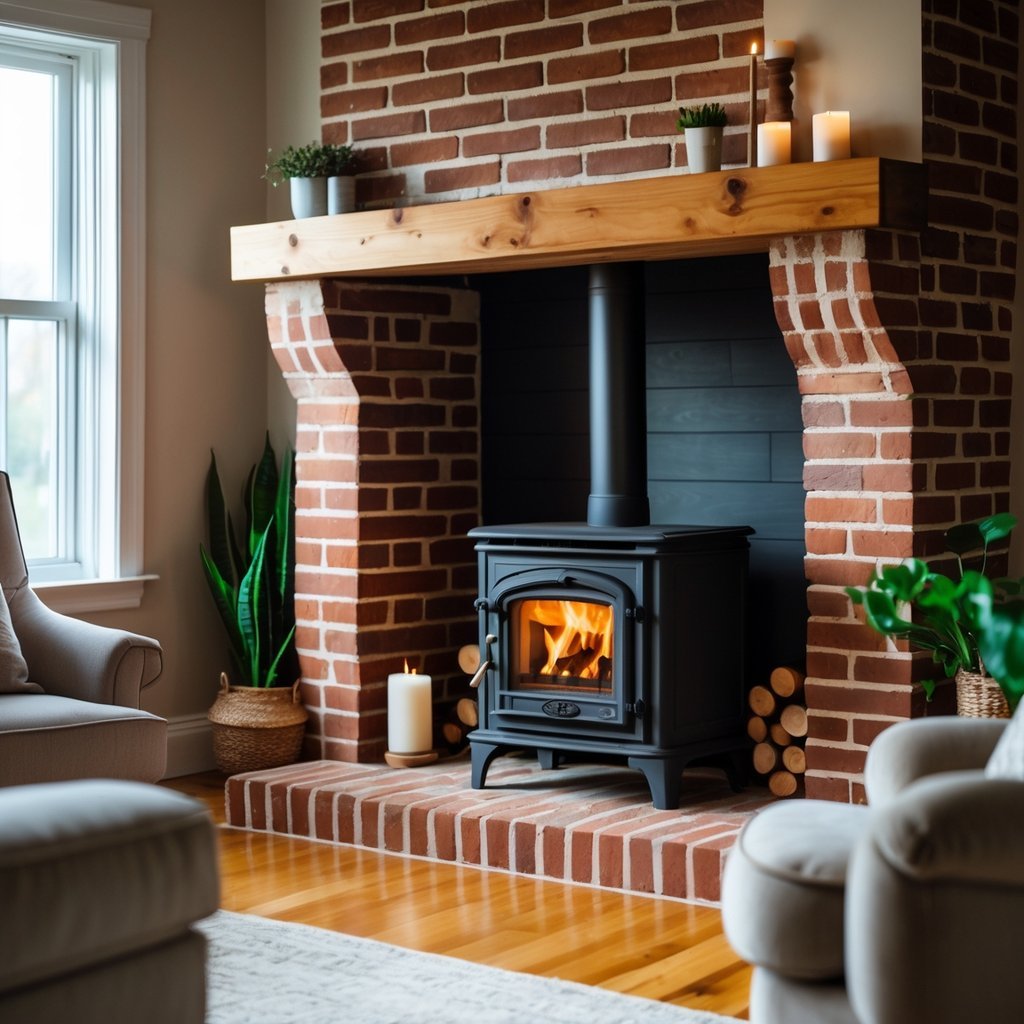
You can pair a brick fireplace with a wood-burning stove to boost heat and keep the hearth’s classic look. The brick surround adds texture and warmth while the stove improves efficiency and reduces drafts.
Keep nearby furnishings simple and heat-safe, and place a sturdy mantel for decor or practical storage. You’ll get a cozy focal point that works for both rustic and modern rooms.
5) Minimalist Floating Fireplace Design
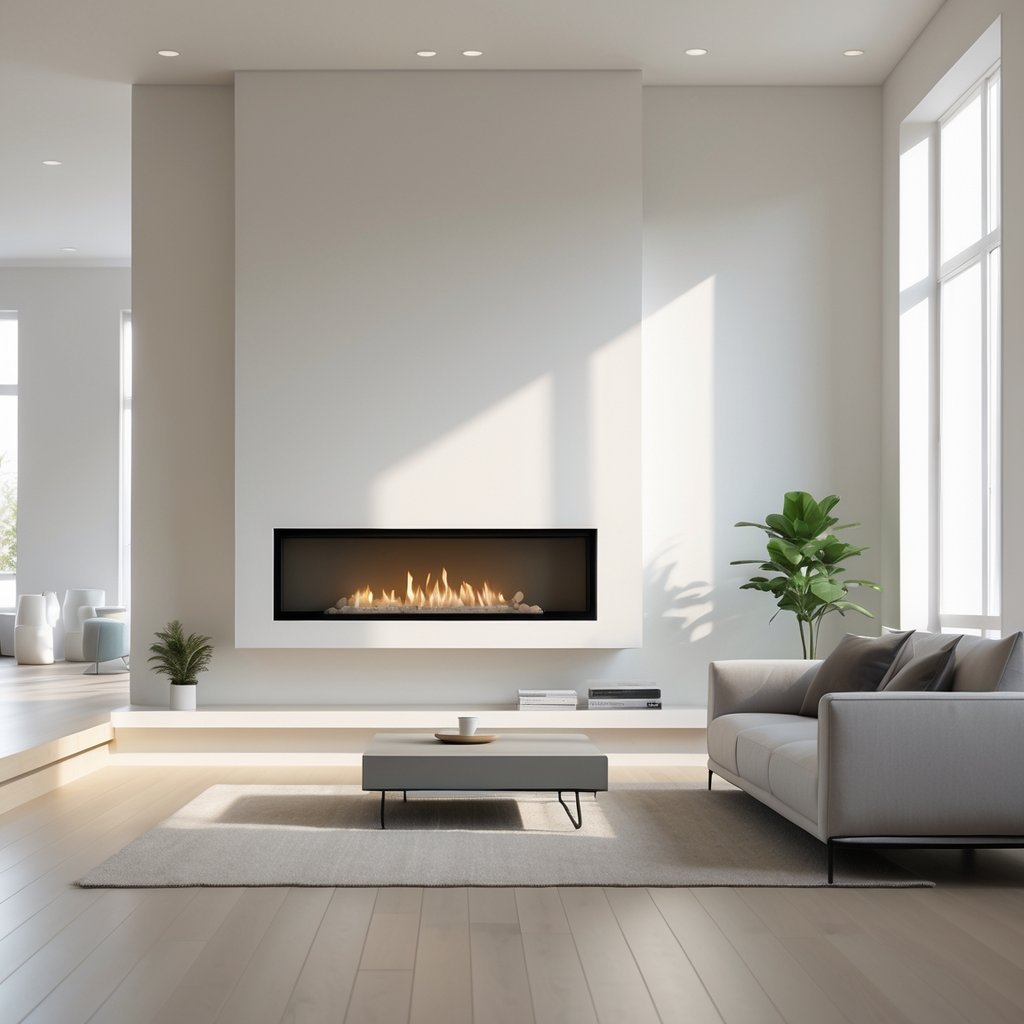
A floating fireplace gives your living room a modern, airy feel. You get a clear focal point without bulky surrounds.
Place it low on a clean wall to keep sightlines open. Pair it with neutral colors and simple furniture to maintain a calm, minimalist look.
Choose a linear gas or electric model for easy control and slim proportions. Keep styling minimal—one or two decor pieces will balance warmth and simplicity.
6) Built-In Shelving Around Fireplace
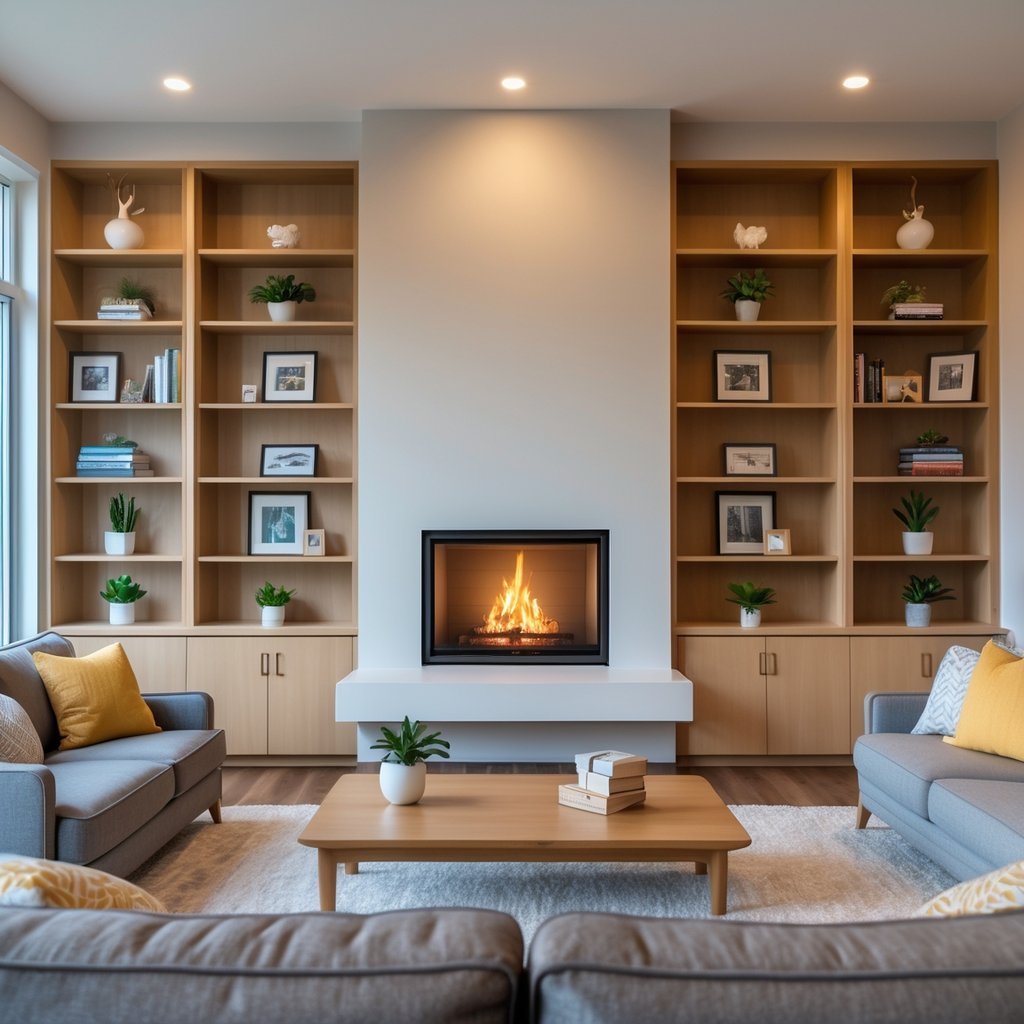
Built-in shelving frames your fireplace and gives your room a polished, intentional look. You can use matching wood or mix materials like metal and paint to suit your style.
Shelves add storage for books, decor, and media while keeping clutter off surfaces. Arrange items in groups and leave some empty space so the display feels balanced.
Consider asymmetrical shelves or backing the shelves in the same material as the mantel for visual cohesion. Built-ins can make the fireplace the clear focal point of your living room.
7) Classic Marble Surround Fireplace
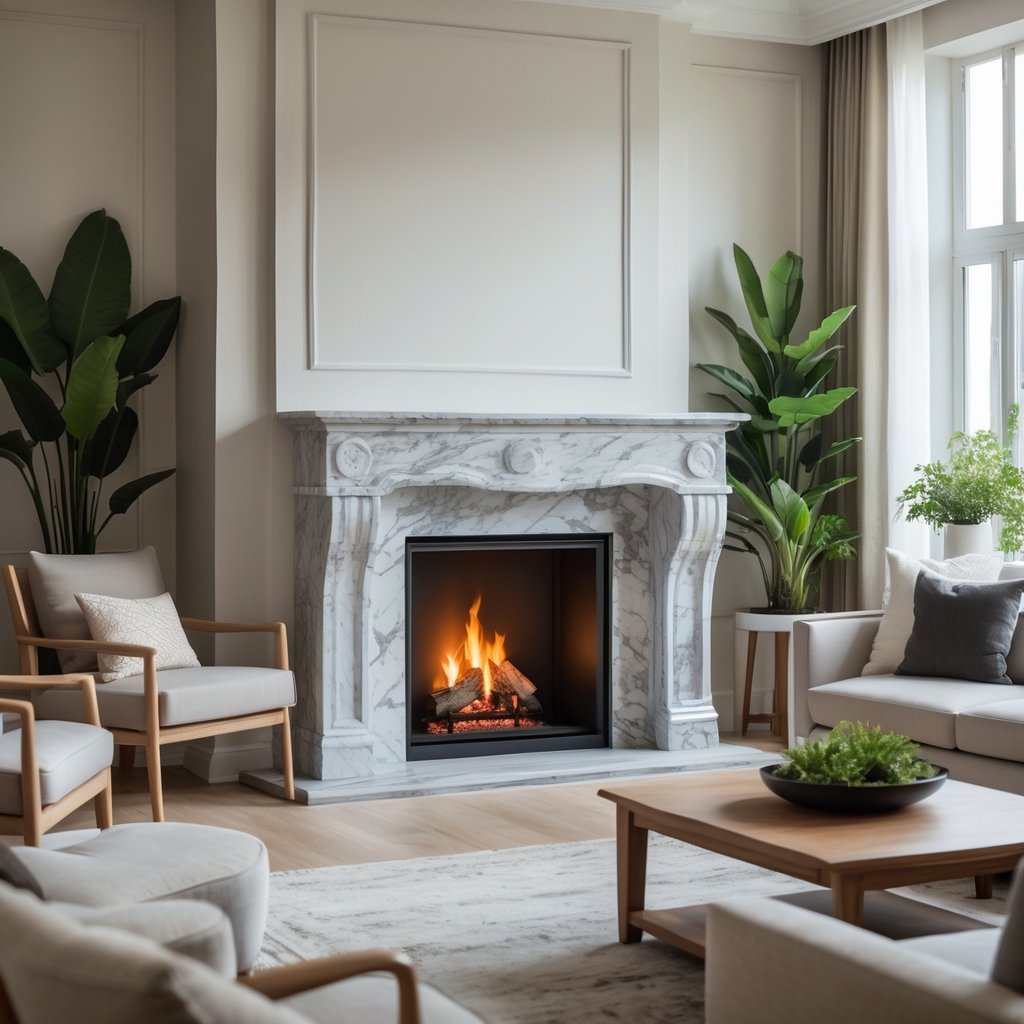
A marble surround gives your living room a timeless, elegant focal point. You get smooth veining and a clean finish that suits both traditional and modern styles.
Keep the mantel simple to let the marble stand out. Pair it with neutral walls and soft textiles to balance the stone’s cool look.
Use bookmatched slabs or subtle tiles for a refined effect. Proper sealing and a skilled installer will keep the marble looking its best.
8) Fireplace with Oak Dresser Accent
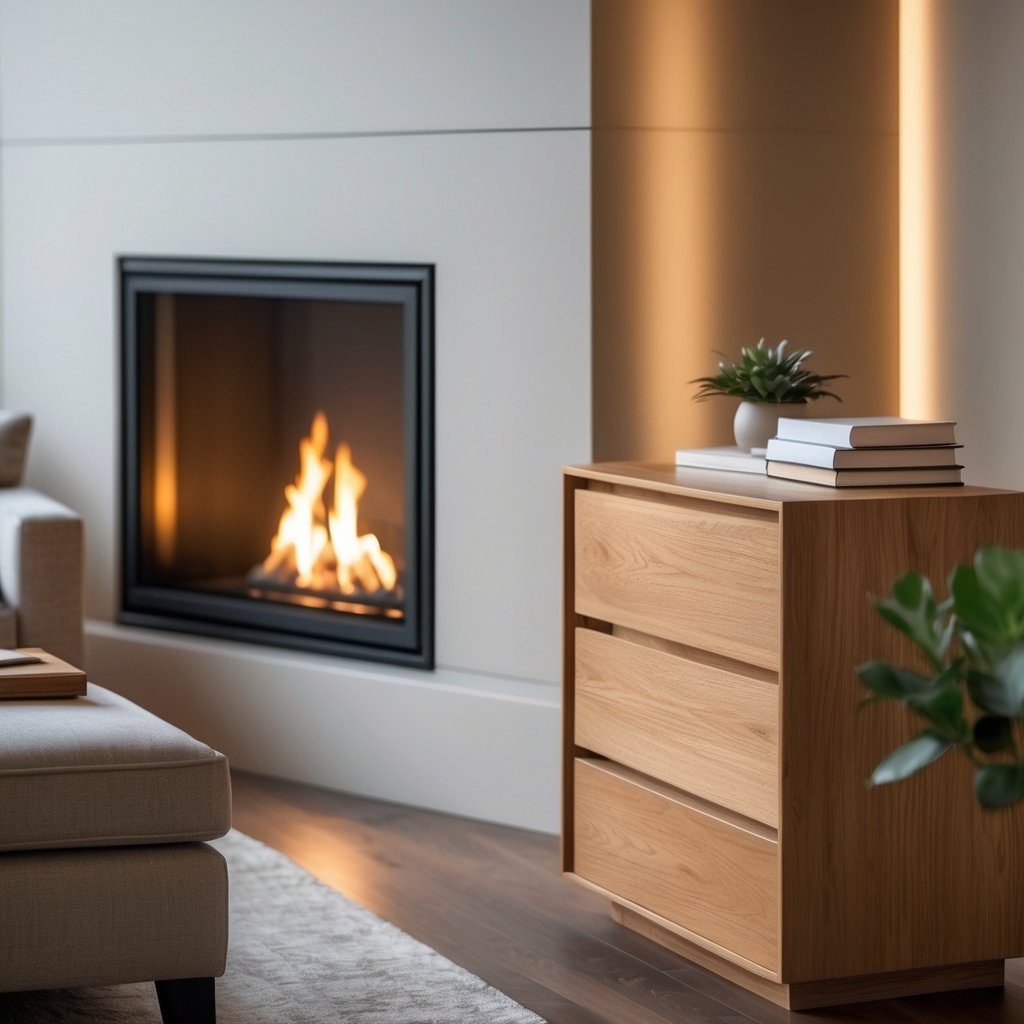
Place an oak dresser near your fireplace to add warmth and useful storage. The wood grain and natural tones pair well with stone or painted surrounds.
Use the dresser top for a lamp, framed photos, or a modest plant to balance the hearth visually. Keep decor simple so the dresser and fireplace read as one cohesive feature.
9) Contemporary Linear Gas Fireplace
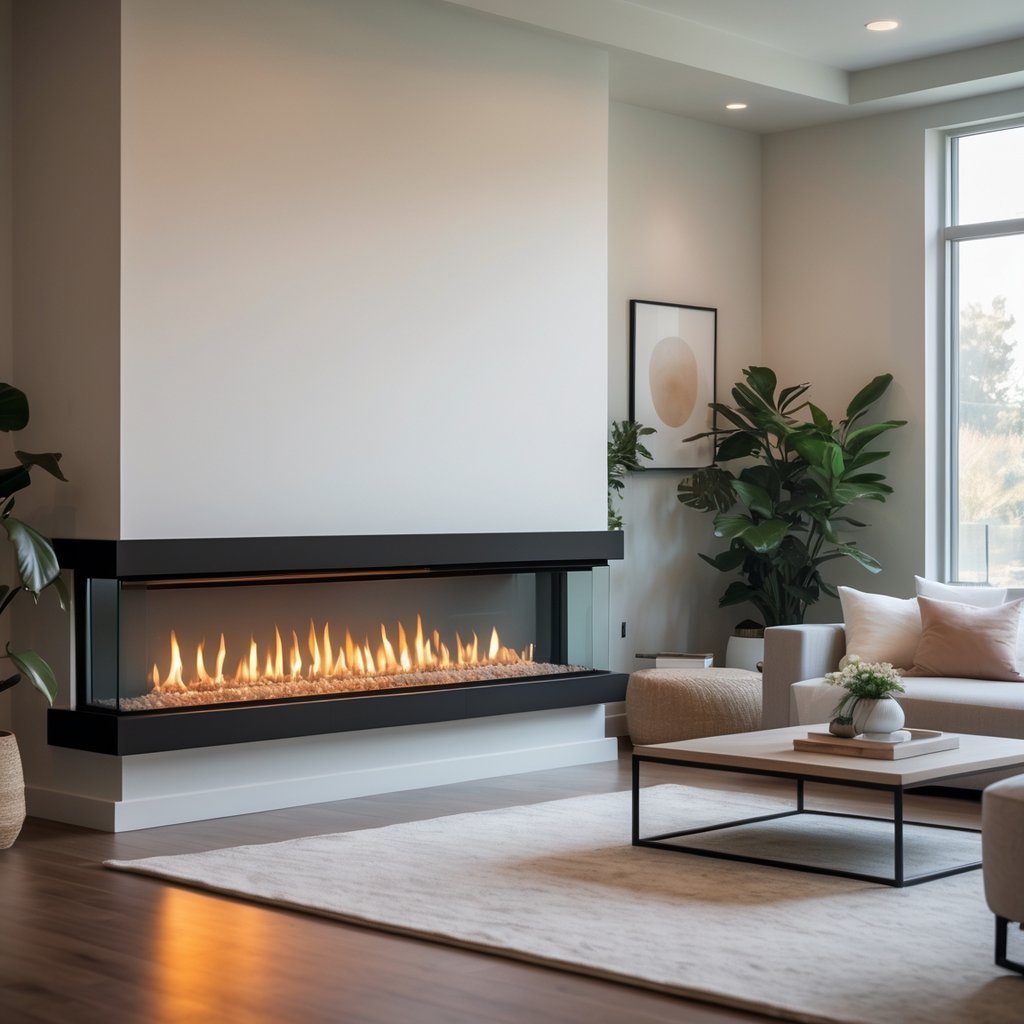
A contemporary linear gas fireplace gives your living room a clean, modern look. You can place it low on a wall or use it as a divider between two spaces.
These fireplaces heat efficiently and need little upkeep compared to wood burning. Choose a size and finish that match your furniture and room layout.
Many models allow direct-vent installation and let you mount a TV above them safely. Controls are simple, so you can adjust flame and heat with ease.
10) Fireplace with Sculptural Ceramic Decor
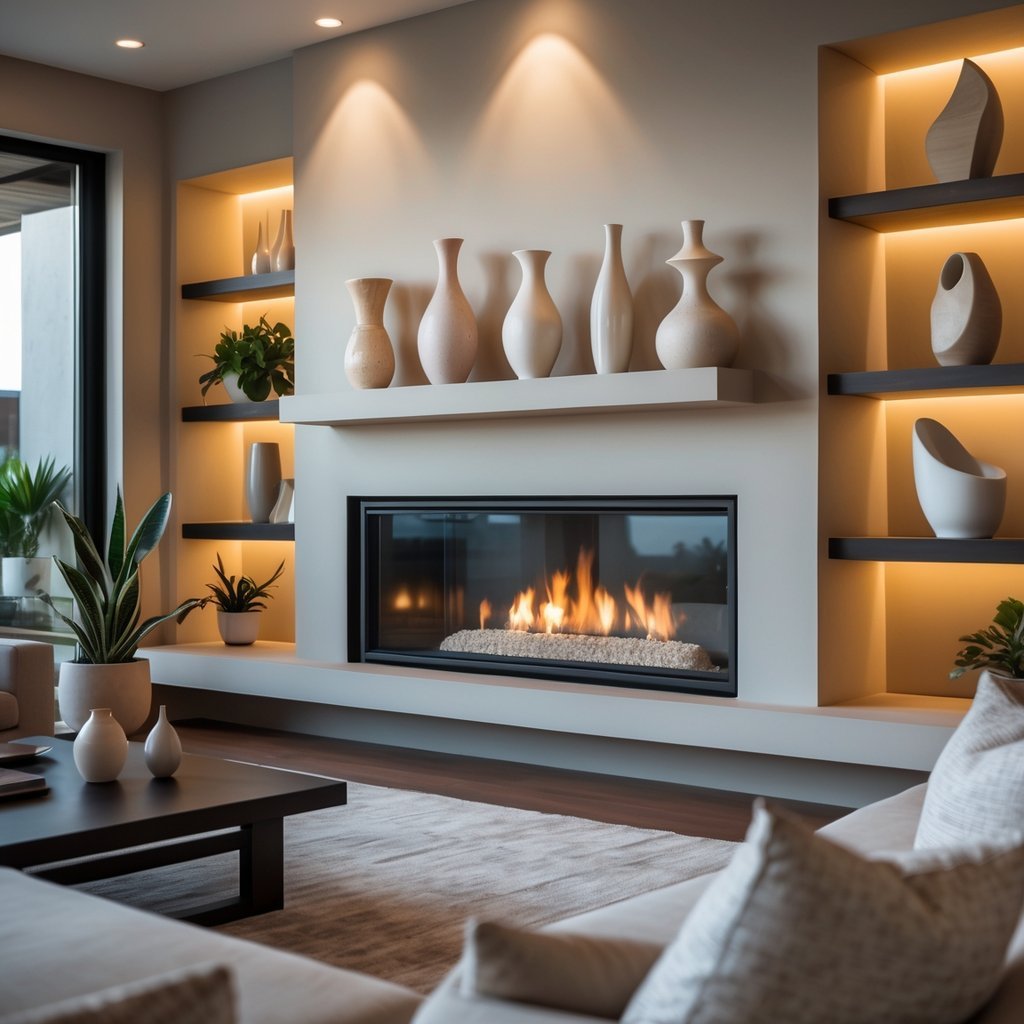
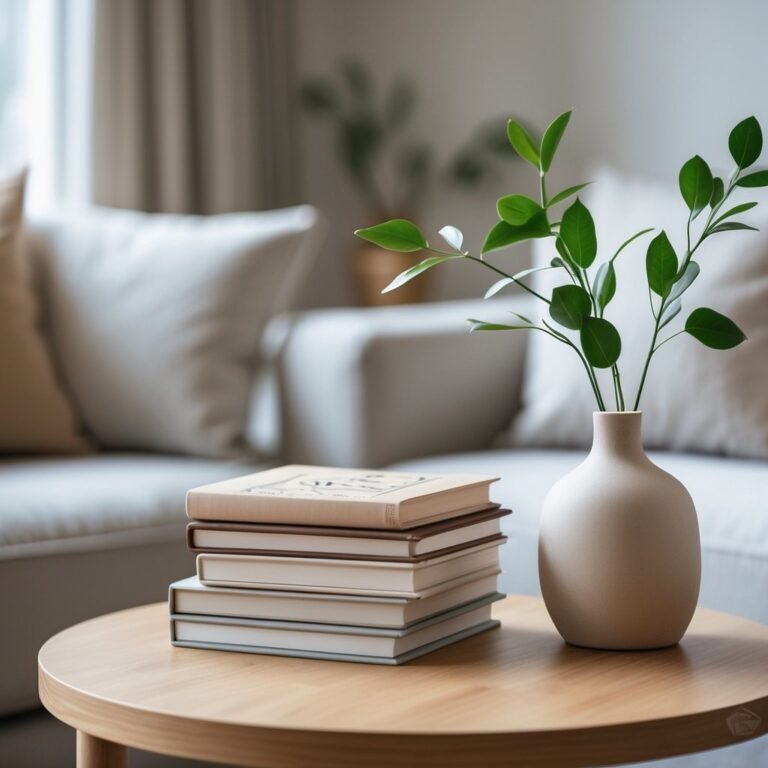
Place a few ceramic pieces on the mantel to add shape and texture without cluttering the space. Choose matte or glazed finishes that echo your room’s tones for a calm, unified look.
Vary heights and forms—vessels, abstract figures, or a single large sculpture—to create rhythm and focus. Keep negative space so the fireplace still reads as the main element.
Design Considerations for a Living Room With Fireplace
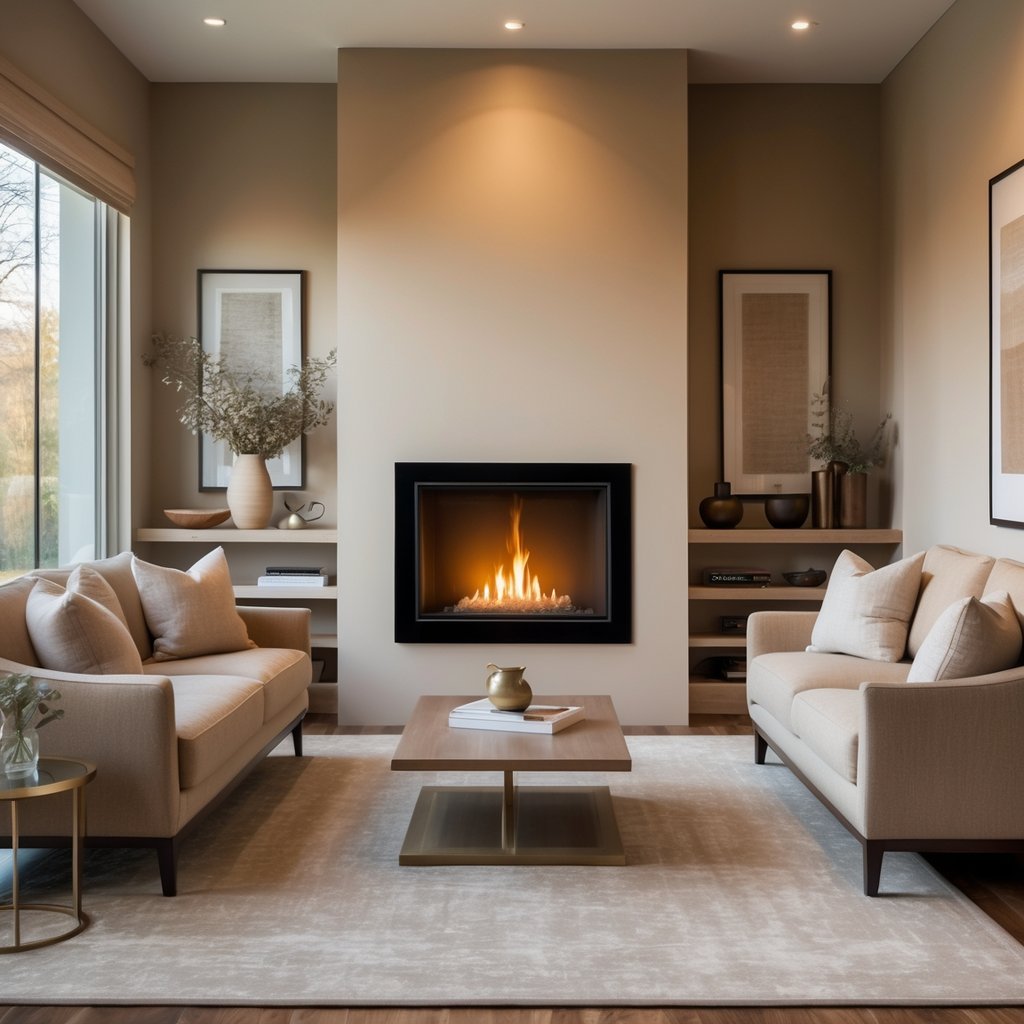
Decide how people will use the room, then pick a focal point, seating plan, and materials that fit that use. Think about sight lines, heat output, and maintenance when choosing layout and surround finishes.
Furniture Placement Strategies
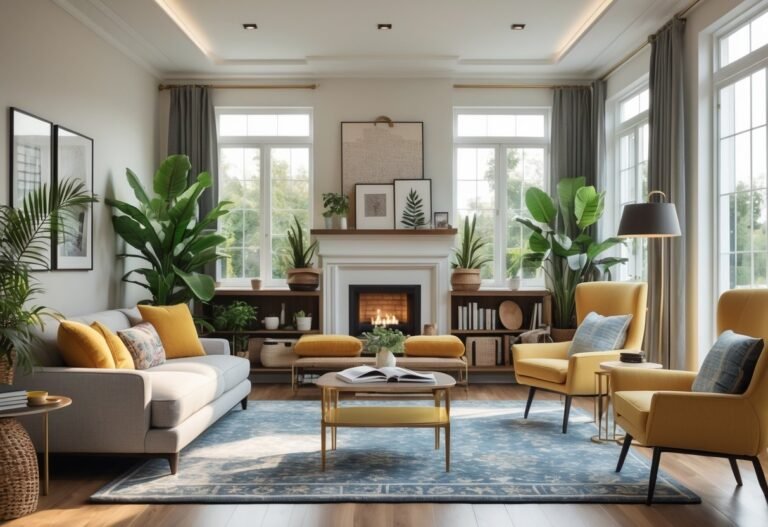
Place your main seating so people face the fireplace or form a clear sightline to it. Arrange a sofa 8–12 feet from the hearth for standard fireplaces; move closer for gas units with lower heat. Use two chairs angled toward the fire to create conversation without blocking traffic.
Anchor the area with a rug that fits all front legs of main furniture to define the hearth zone. Keep a 30–36 inch walkway between furniture and fireplace to allow safe movement. Position side tables and a coffee table within 18–24 inches of seating for comfort.
If your TV sits above the mantel, tilt it downward and raise seating to reduce neck strain. For asymmetrical rooms, float furniture away from walls and use a console behind a sofa to balance the space.
Choosing Fireplace Surround Materials
Pick materials that match your style and handle the fireplace’s heat and soot. Natural stone, brick, or tile resist heat and clean well; soft paints and delicate woods need protective finishes or mantels placed farther from the firebox. For wood-burning fireplaces, choose noncombustible materials within the code-required clearance distance.
Consider durability and maintenance: honed stone hides soot better than glossy tile, while porcelain tile is stain-resistant and low-maintenance. If you want a warm look, pair a durable surround (stone or tile) with a replaceable wooden mantel shelf set beyond required clearances.
Factor in installation and cost. Large-format stone requires stronger backing and professional installation. Prefabricated surrounds or fire-rated boards reduce labor. Match material thickness and color to your room’s scale so the fireplace reads as part of the room rather than overpowering it.
Heating Efficiency and Safety Tips
Keep the fireplace clean, control airflow, and use barriers to stop sparks. Combine regular maintenance with simple habits to get more heat and reduce fire risk.
Maximizing Fireplace Warmth
Use seasoned hardwood that has been split and dried for at least six months; it burns hotter and cleaner than green wood. Stack logs to allow air flow and start with small kindling so the fire drafts correctly.
Install a glass door or a fireplace insert to cut heat loss up the chimney. A tightly fitted insert can move more heat into the room instead of letting it escape. Use a heat-resistant fan or blower on the hearth to push warm air out into the living space.
Close the damper only when the ashes are barely warm to keep heat in. If you don’t use the fireplace, insert a chimney balloon or a flue blocker to stop warm room air from being drawn up the chimney.
Fireplace Safety Precautions
Have a professional inspect and sweep your chimney at least once a year to remove creosote and check for cracks. Replace or repair damaged mortar, flue liners, or chimney caps promptly to prevent sparks and carbon monoxide leaks.
Keep a 3-foot clear zone around the hearth free of flammable items like rugs, curtains, and furniture. Use a sturdy spark screen or glass doors when the fire is burning to catch embers.
Install smoke and carbon monoxide detectors near the living area and test them monthly. Keep a multipurpose fire extinguisher rated for home use within easy reach and practice an escape plan with your household.
Frequently Asked Questions
These answers focus on practical steps you can take: where to place seating, how to balance a TV and fireplace, design touches for modern or rustic styles, and space-saving layouts for small rooms. Each reply gives clear options tied to common fireplace types like a cozy corner, green tiled modern, rustic farmhouse, brick with wood-burning stove, or minimalist floating designs.
How can I arrange furniture in a living room with a fireplace?
Place the main seating so it faces the fireplace when you want the fire to be the focal point. Use a sofa or two chairs across from the hearth, and keep a clear path of at least 30–36 inches for traffic.
If you also need a conversational area, angle two chairs toward the sofa to form a U-shape around the fireplace. For a corner fireplace, float furniture slightly away from the wall to keep sightlines open and allow the hearth to remain visible.
What are some design ideas for a modern living room with a fireplace?
Choose clean-lined mantels, slim tile, or a minimalist floating fireplace to keep the look modern. Pair the fireplace with a neutral palette, simple artwork, and one bold accent like a green tiled surround or a matte black stove.
Keep built-ins minimal and use hidden storage to reduce clutter. Add a few streamlined pieces—an angular sofa, a glass coffee table, or a low media console—to match the fireplace’s modern feel.
How should I place a TV in a living room with a fireplace on a different wall?
Mount the TV on the wall opposite the fireplace if viewing distance and glare allow. That keeps both elements independent and gives you two focal options.
If the TV must share a wall, mount it above the fireplace but lower the mantel or use an inset TV to keep the screen at a comfortable eye level. Alternatively, place the TV on a swivel mount or on a media console so you can angle it toward seating when needed.
What are the best small living room layouts with a fireplace?
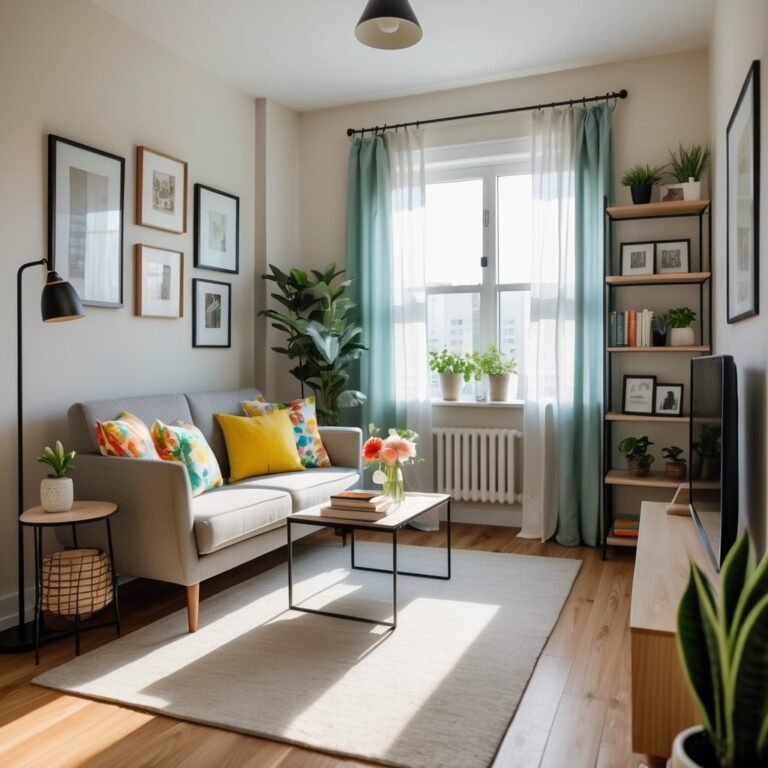
Use a single compact sofa and two small chairs to keep floor space open. Arrange seating in a semi-circle or L-shape facing the fireplace to maximize sightlines without crowding.
Choose narrow furniture and multipurpose pieces, like an ottoman that doubles as a coffee table. For a brick fireplace with a wood-burning stove, leave a safety buffer but use slim seating close to the stove for warmth.
Can a fireplace be the focal point in a small living room space?
Yes. A fireplace often becomes the natural focal point, especially if you highlight it with tile, a bold mantel, or contrasting paint. A green tiled modern fireplace or a rustic mantel can draw attention without overwhelming the room.
Keep surrounding decor simple and scale accessories to the space. One statement piece above the hearth and low-profile seating will keep the eye on the fireplace.
What are effective ways to decorate the corner of a living room with a fireplace?
Use built-in shelving or a narrow console next to the fireplace to add storage without blocking the hearth. Place a tall plant or a sculptural floor lamp in the corner to add height and soften hard lines.
If you have a cozy corner fireplace, add a pair of slim armchairs and a small side table to create a reading nook. For a minimalist floating fireplace, keep decorations sparse—one framed print and a small stack of books—to maintain the clean look.