7 Small Dining Room Ideas to Maximize Space and Style
Small dining rooms can feel tight, but you can shape them into places that work and welcome. This article shows ways to make your space look bigger, add useful storage, and keep traffic flowing so meals and gatherings feel easy.
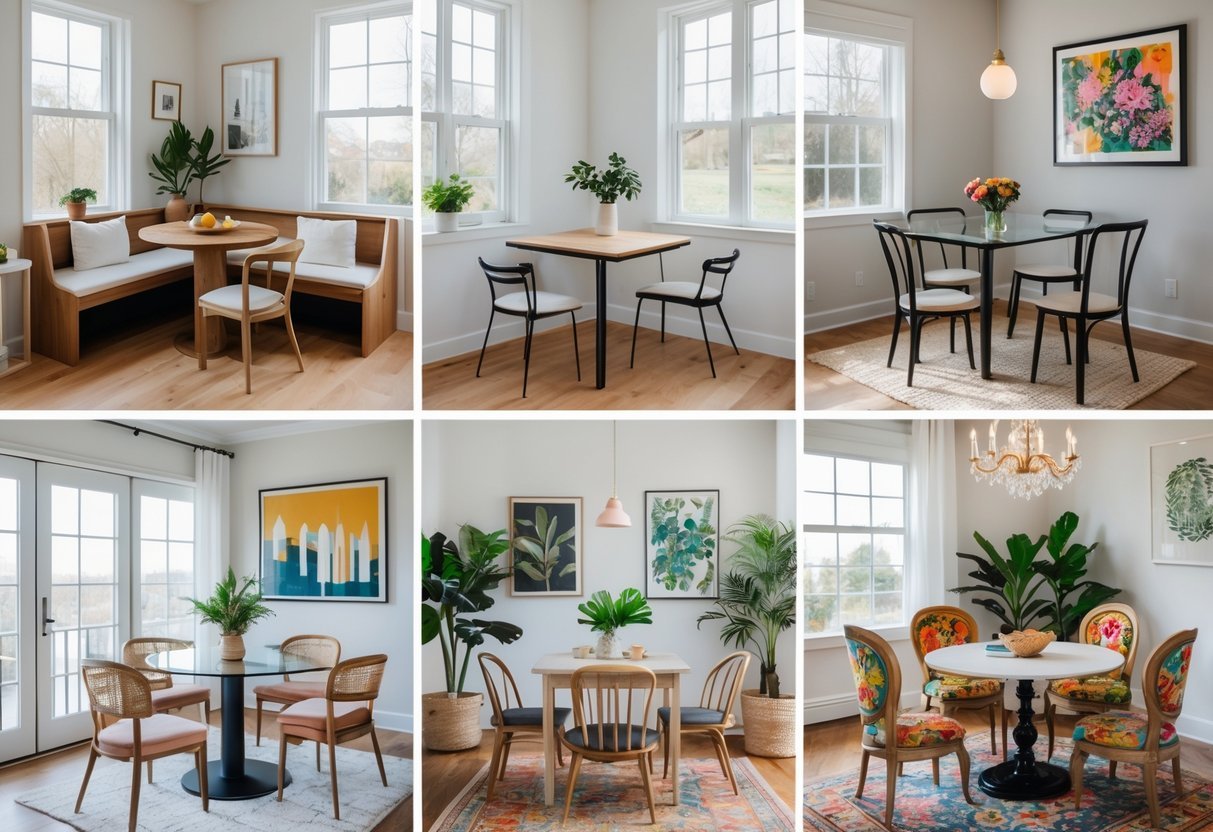
You’ll learn practical ideas for furniture, layout, color, storage, and lighting that fit small spaces and boost function and style. Use these tips to pick smart pieces, arrange them well, and create a dining area that feels roomy and inviting.
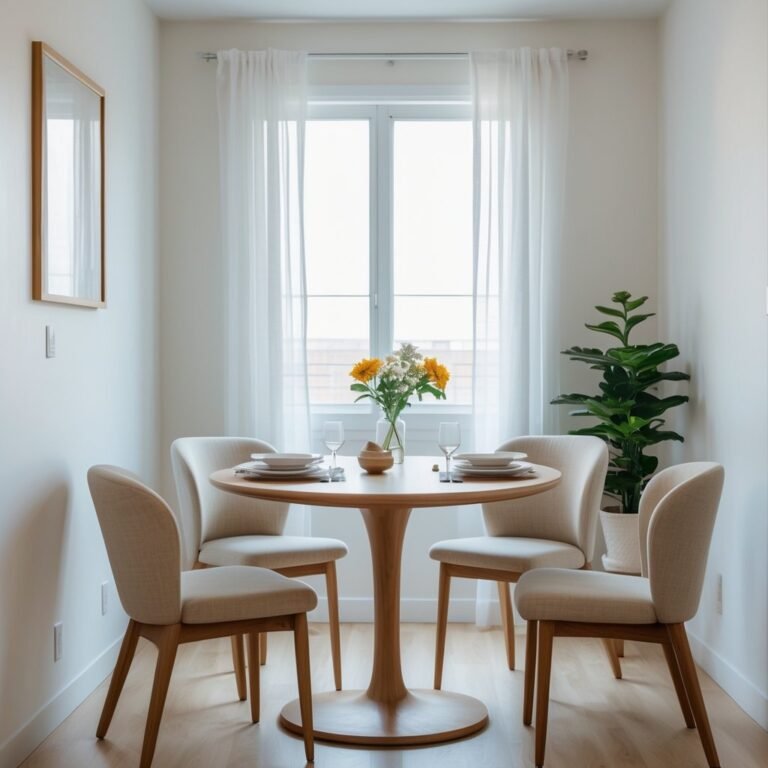
1) Use a round pedestal table to save floor space and improve flow
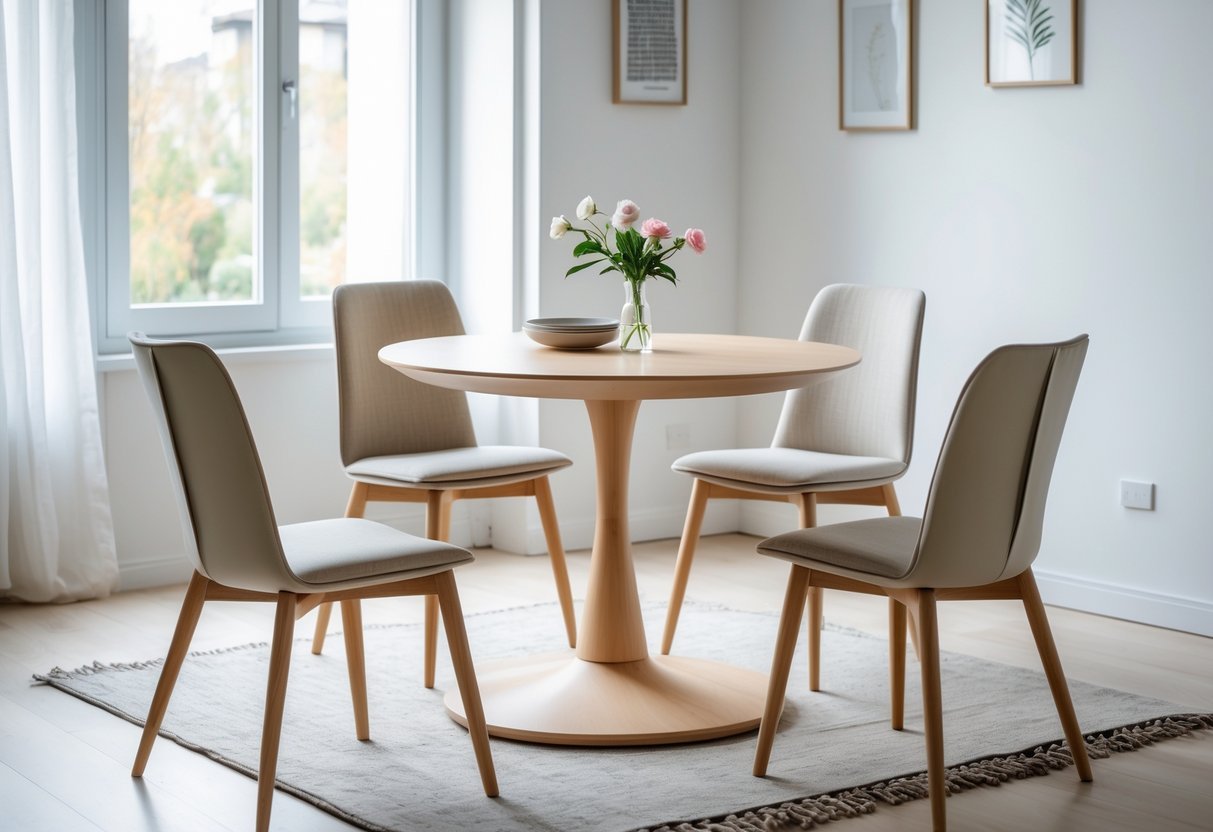
A round pedestal table frees up more walking room than a rectangular table. No corners mean you can place it closer to traffic areas without blocking movement.
Pedestal bases give you more legroom and let more chairs fit around the table. Choose a compact diameter to keep the scale right for your room.
Pick a light finish or glass top to keep the area feeling open. Look for models with drop-leaf or foldable options if you need occasional extra surface.
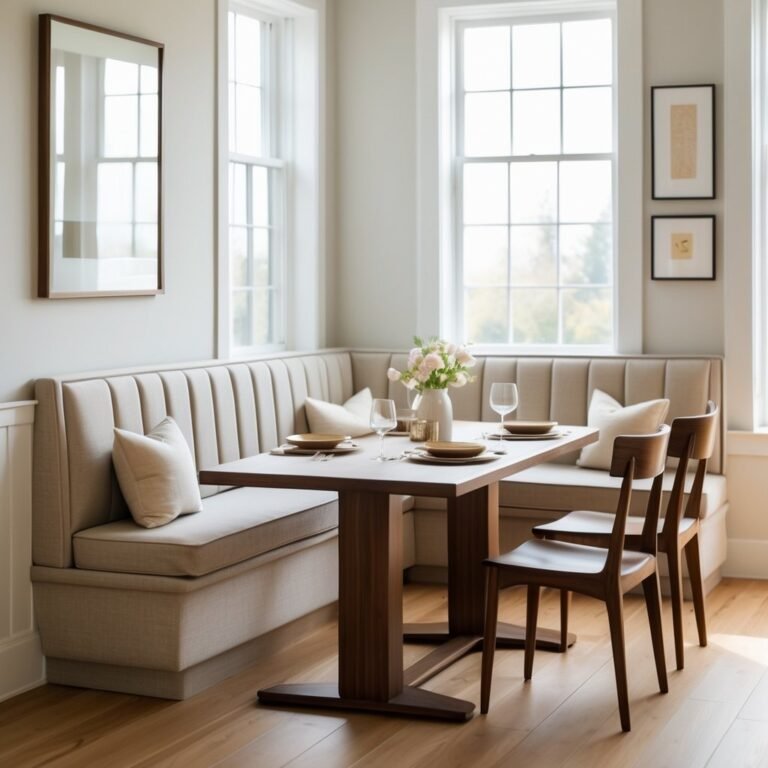
2) Incorporate built-in bench seating with storage underneath
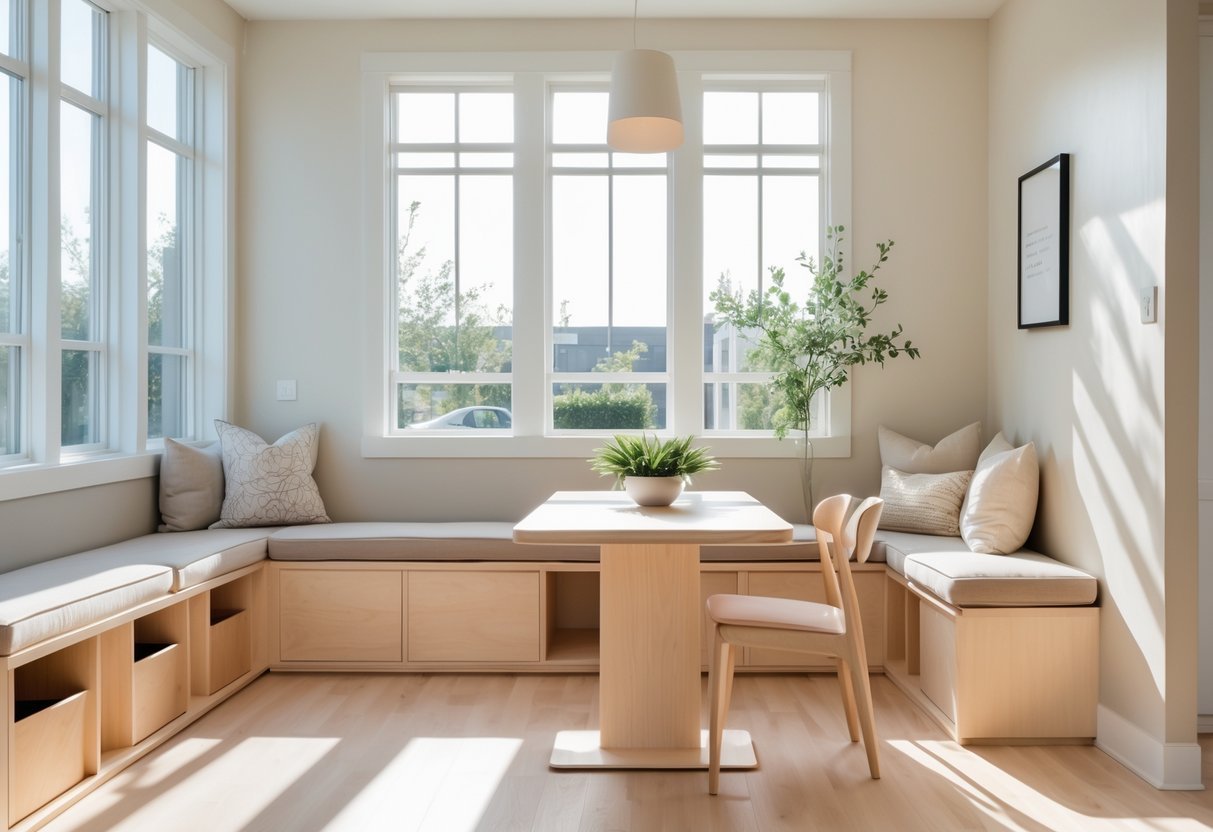
Add a built-in bench to free up floor space and give your dining area a tidy look. You get extra storage under the seat for linens, dishes, or kids’ toys.
Choose a bench height that matches your table so seating feels natural. Use drawers or hinged lids for easy access and keep cushions slim to save room.
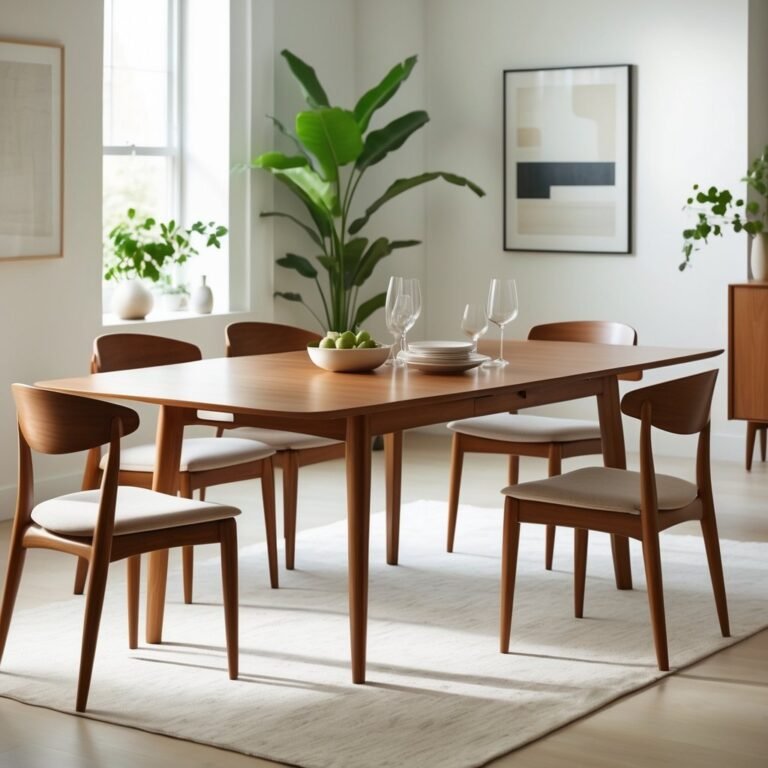
3) Choose a slim, extendable dining table for flexibility
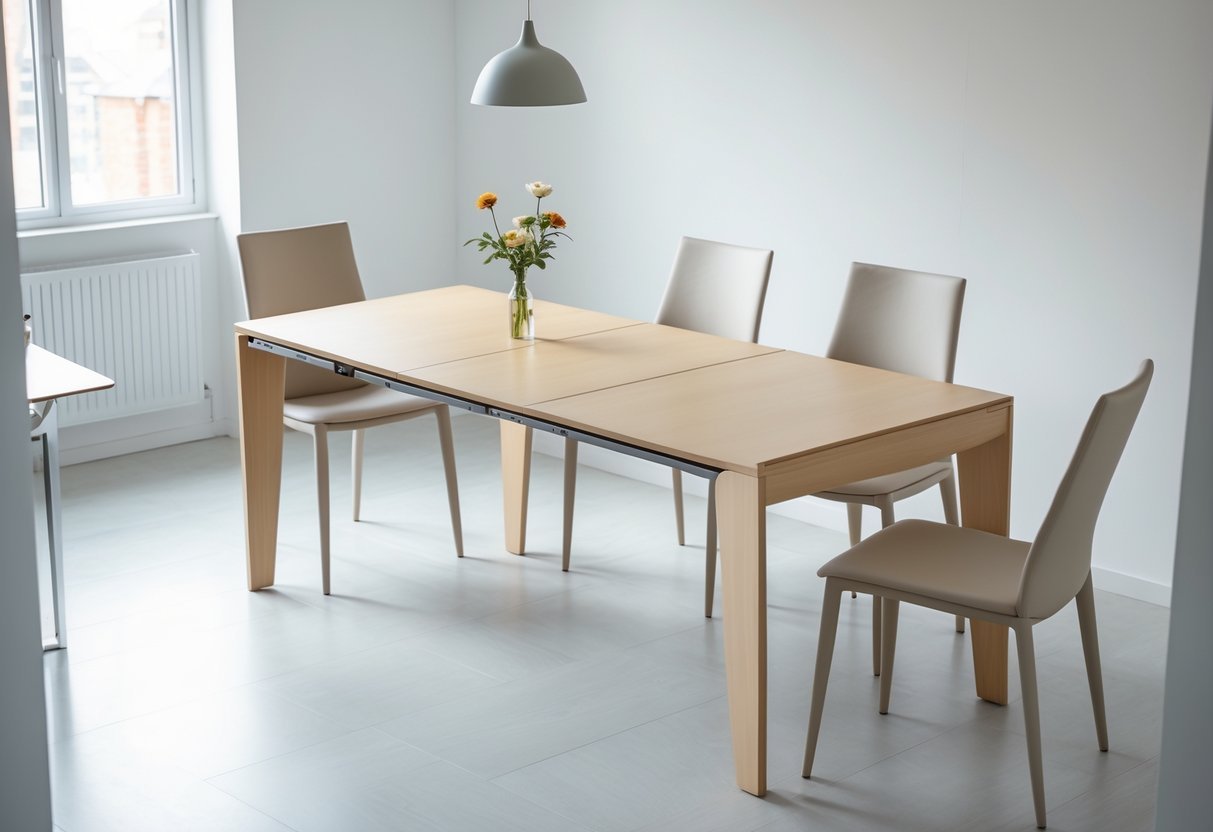
Pick a slim table that fits your daily space and style. It keeps the room open while giving you a usable surface.
Look for models with hidden leaves or self-storing extensions. You can seat more people when guests arrive without a bulky table all the time.
Measure entryways and storage before buying. That ensures the table will fit and work smoothly in your small dining area.
4) Install a large mirror to visually expand the room
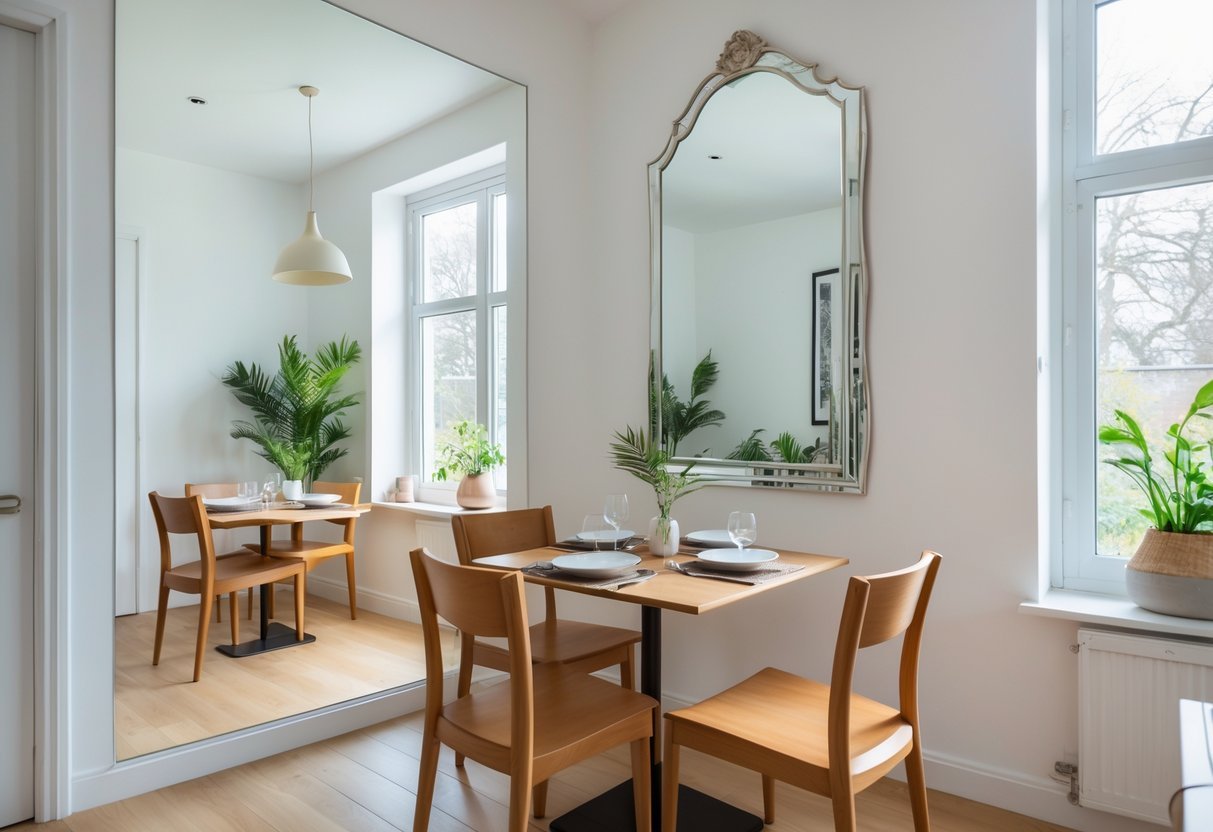
Place a large mirror on one wall to reflect light and make the dining area feel more open. Aim to position it across from a window or light source for the best effect.
Choose a simple frame or go frameless for a cleaner look that won’t clutter the space. A floor-to-ceiling panel works well if you have the wall and budget.
Mount securely and keep the mirror clean to maintain its brightening effect.
5) Opt for light, neutral wall colors to brighten and open the space
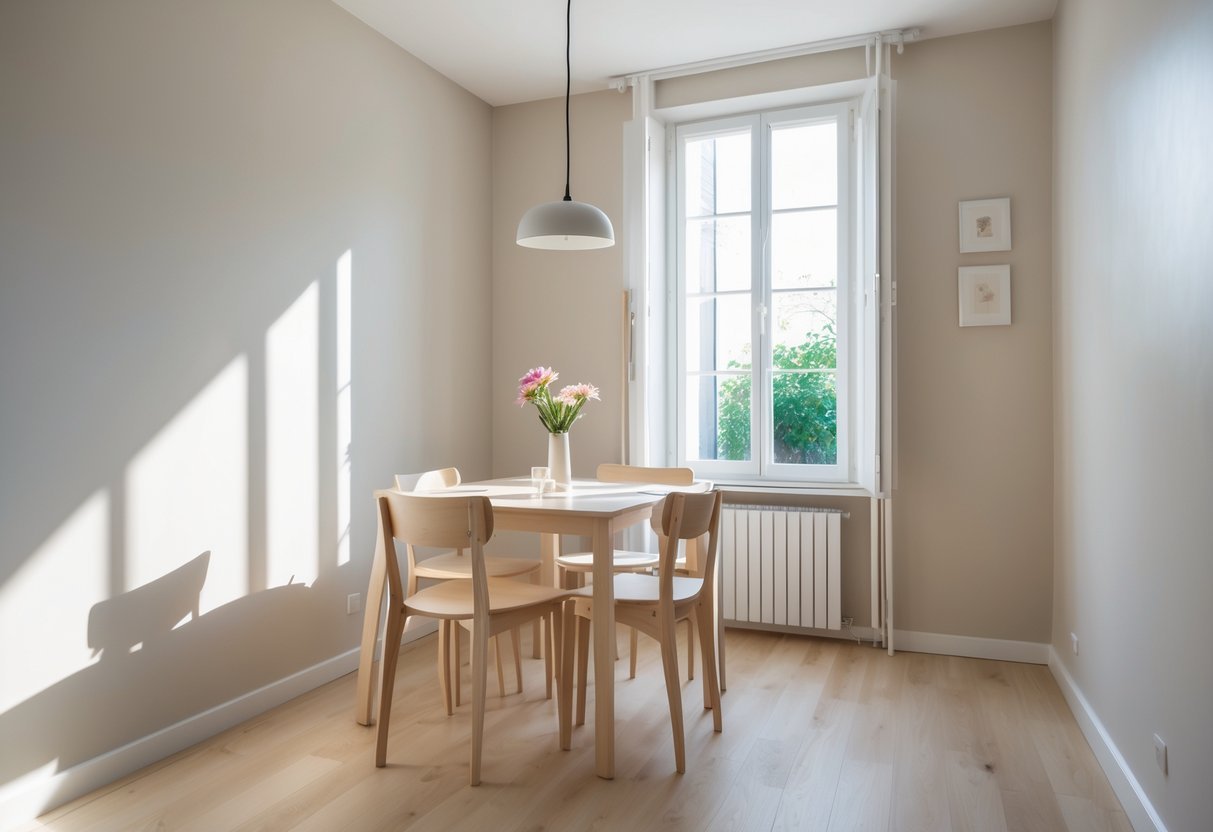
Choose off-whites, soft grays, or warm beiges to reflect light and make your dining room feel larger. These colors reduce visual clutter and let furniture and art stand out.
If your room gets little natural light, pick a warmer neutral to avoid a cold look. Add contrast with a darker table or colorful accents to keep the space from feeling flat.
6) Use vertical storage solutions like wall shelves for extra storage
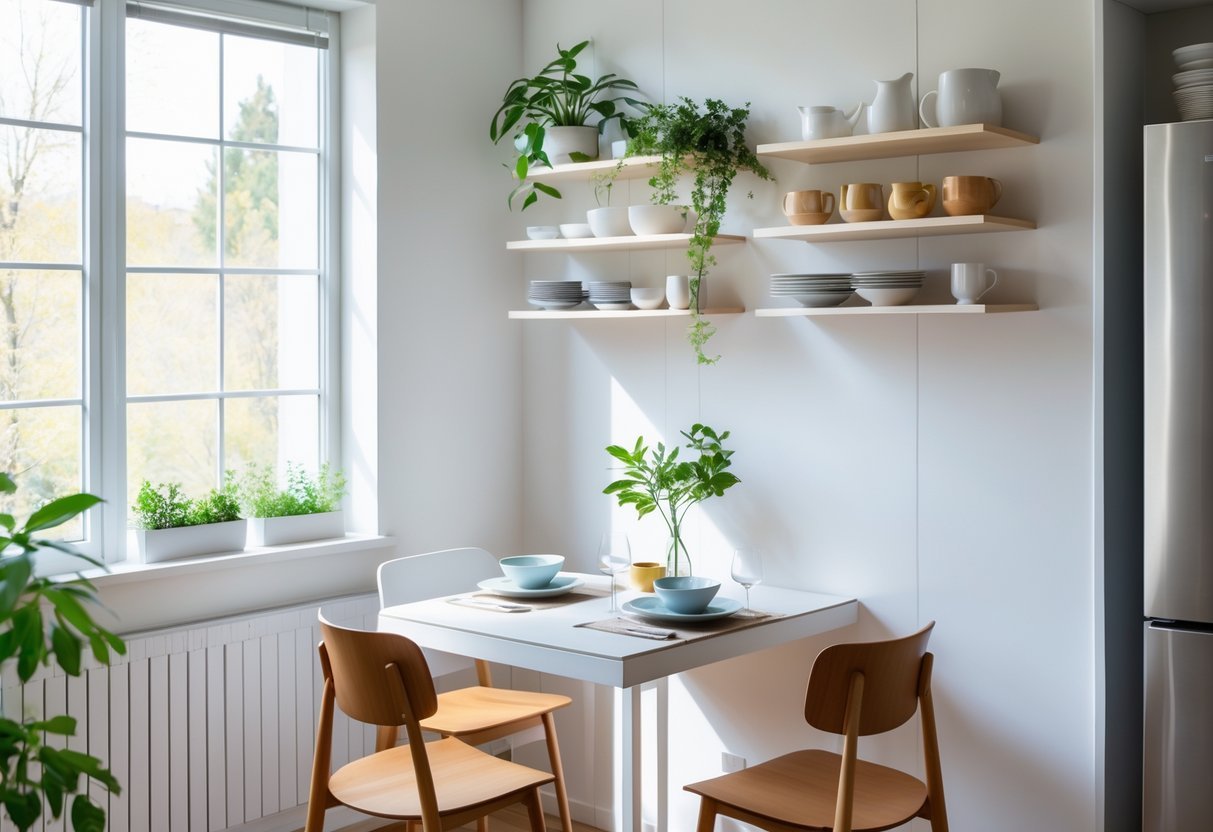
Use wall shelves to free up floor space and keep items within reach. Open shelving shows off dishes or decor while closed cabinets hide clutter.
Install shelves at different heights to fit plates, glasses, and small baskets. Slim, tall cabinets or pegboards add function without crowding the room.
Choose sturdy materials and secure anchors to hold weight safely. Match shelf style to your room for a neat, coordinated look.
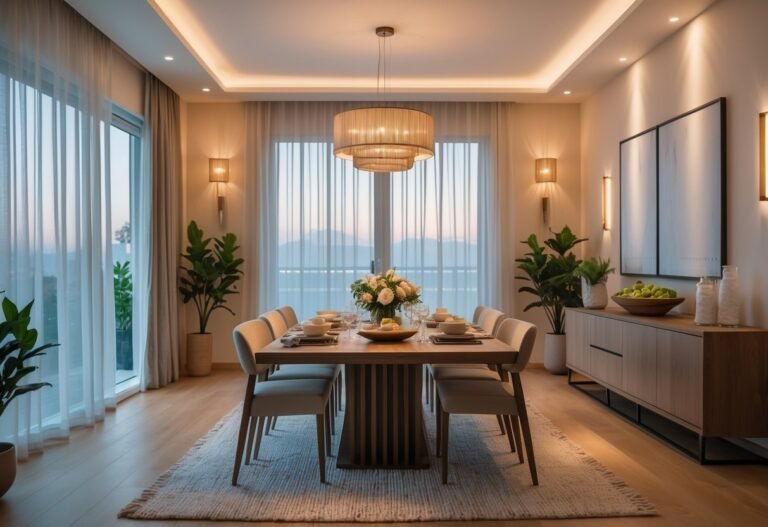
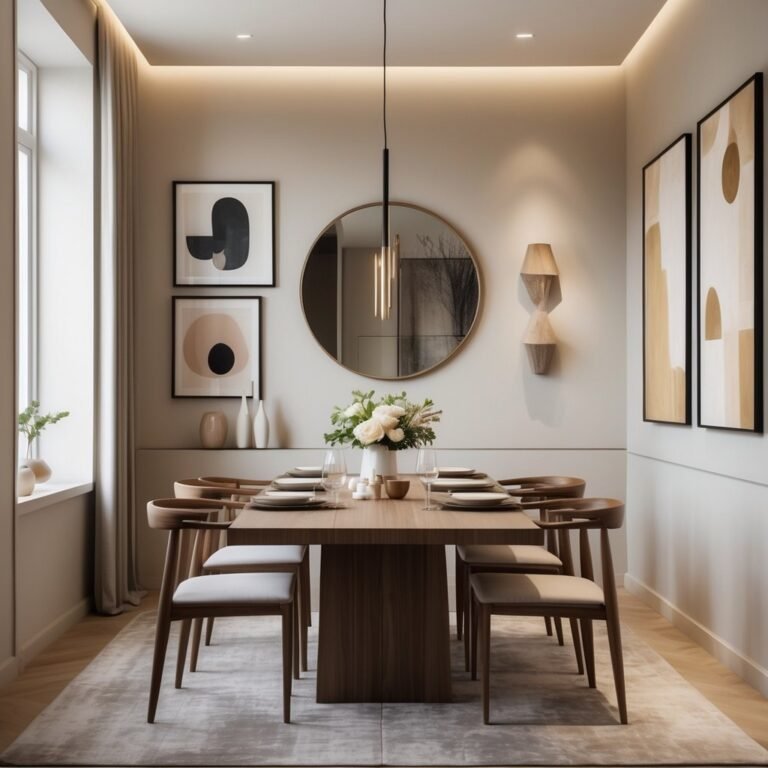
7) Add statement pendant lighting to draw the eye upward
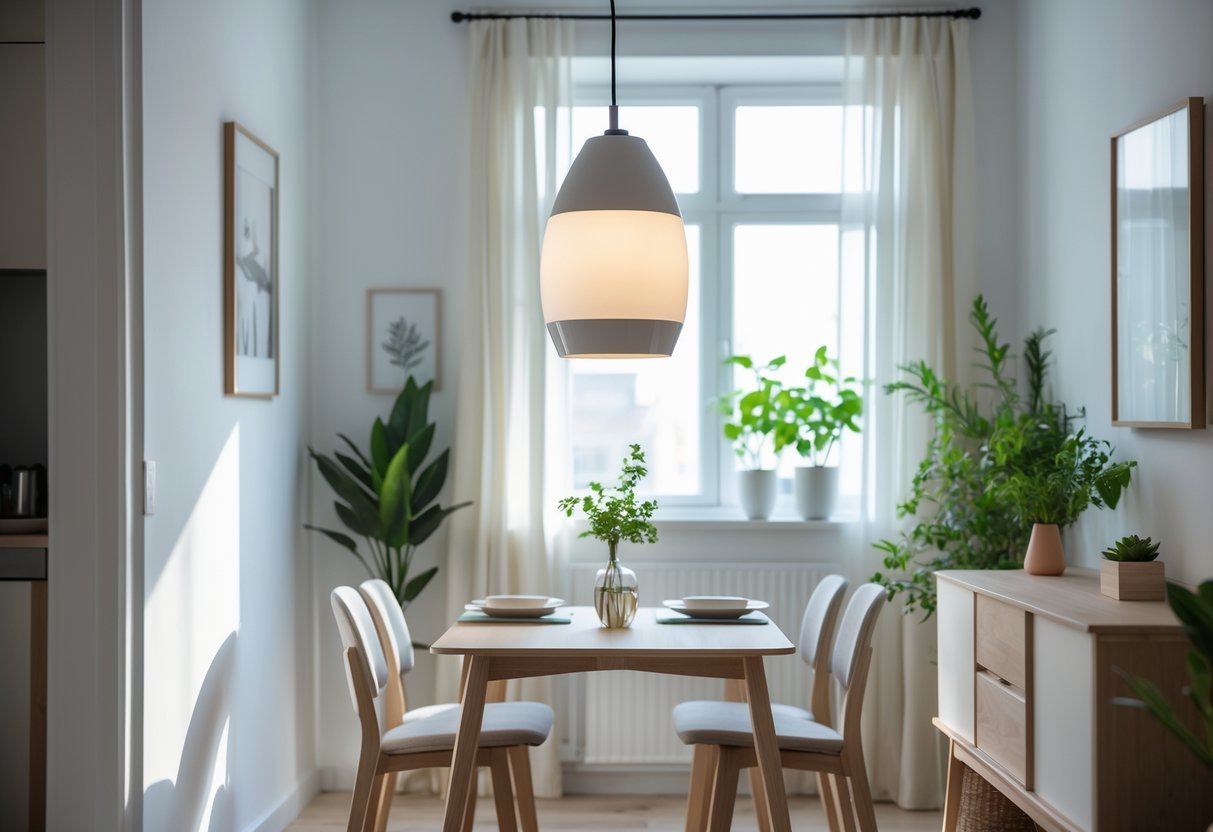
Choose a bold pendant to act as the room’s focal point without crowding the table. A single large fixture or a cluster at different heights gives your small dining room more visual height.
Hang the light about 28–34 inches above the table for clear sightlines and good task lighting. Pick a simple shape or warm finish to keep the look balanced and calm.
Design Principles for Small Dining Spaces
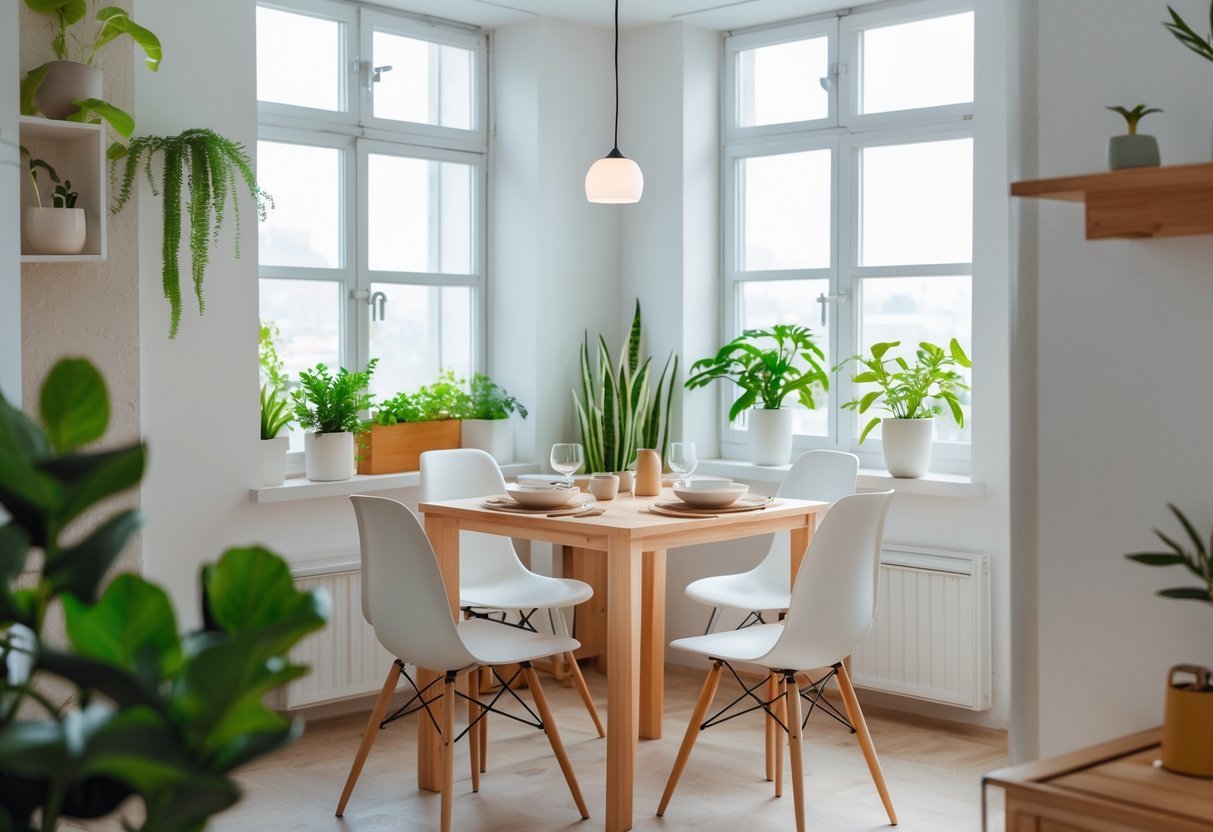
You can make a small dining area feel larger and more useful by focusing on light, layout, and color. Small changes—like swapping a solid table for a round one or adding a mirror—can open sightlines and add storage without crowding the room.
Maximizing Light and Space
Place your table near the brightest wall or window to keep traffic paths clear and let natural light do the heavy lifting. Use narrow, leggy furniture so you can see floor space beneath pieces; this makes the room feel less dense.
Add a full-length mirror or a mirrored buffet on one wall to double perceived depth. Choose slim pendant lighting centered over the table so the fixture gives focused light without lowering the visual ceiling. Keep walkways at least 30–36 inches wide so chairs can pull out and people can pass comfortably.
Use multifunction pieces: a bench with storage, drop-leaf tables, or nesting side tables. These options give you extra seating or surface area when needed, then tuck away to reclaim space.
Choosing the Right Color Palette
Pick a light, warm base color for walls—soft white, pale gray, or warm beige—to reflect light and keep the space feeling open. Paint the ceiling a shade lighter than the walls to visually raise it.
Use one or two accent colors for chairs, artwork, or a rug to add personality without overwhelming the room. Keep high-contrast patterns small and local, such as a patterned runner or seat cushions, so they don’t break up the room’s flow.
If you want bolder color, confine it to a single wall or a piece of furniture. This creates a focal point while maintaining a calm overall look.
Smart Furniture and Layout Tips
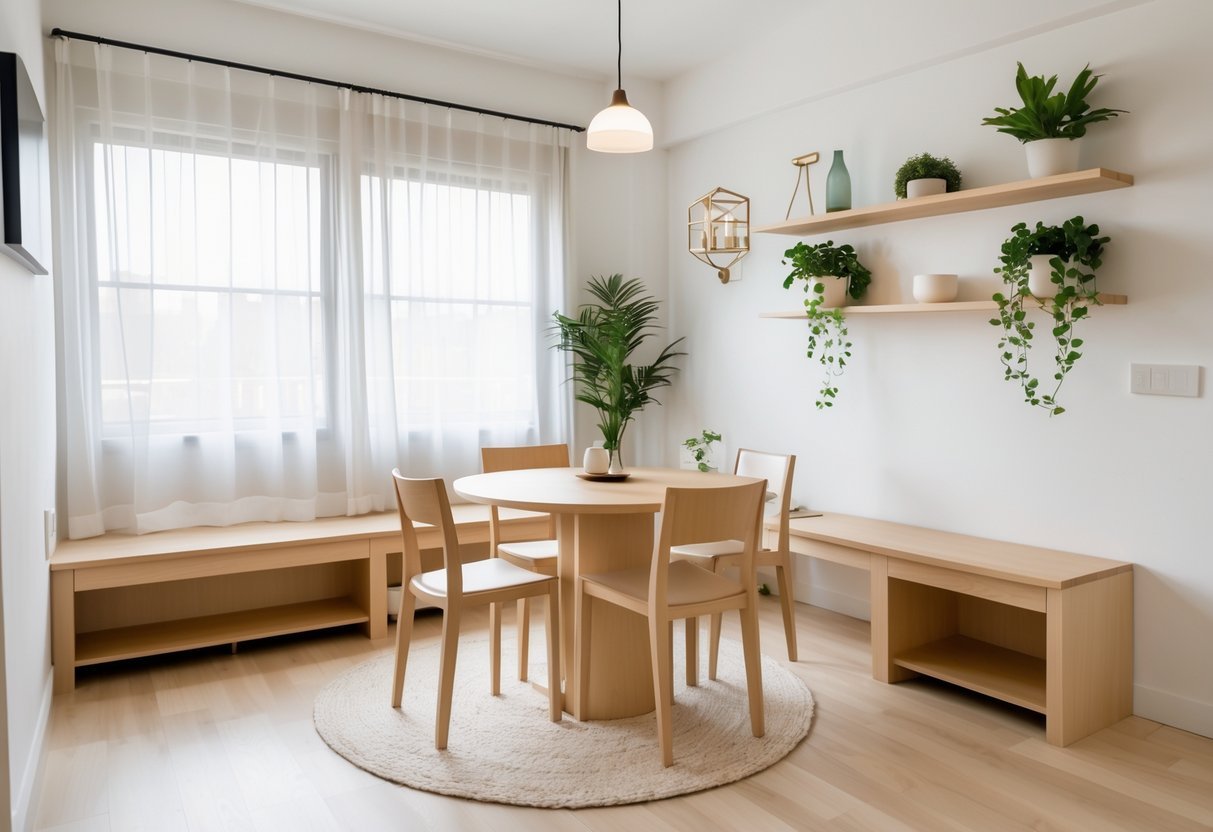
Use pieces that pull double duty and place them to keep traffic flowing. Think storage under seating, slim tables, and layouts that leave at least 30–36 inches for walking paths.
Multi-Functional Furniture Solutions
Choose a table with drop leaves or a folding top so you can seat two daily and expand for guests. A round table with an extendable leaf saves corners and improves flow when you need extra surface area.
Look for benches with built-in storage or ottomans that open. These hide extra napkins, placemats, or games and free wall space from bulky cabinets. A slim sideboard with drawers can act as a buffet and a place to stage food.
Consider a console table that converts to a dining table. When closed it serves as a narrow surface for keys and mail; when opened it becomes extra dining space. Pick light-colored finishes and simple legs to keep the room feeling open.
Effective Seating Arrangements
Place seating so chairs can slide out without blocking a doorway. Keep at least 18 inches from the table edge to the back wall if you use chairs; benches can sit closer to save space.
Mix seating types: one side bench, two chairs opposite, and a small armchair at the head. This gives flexibility and fits varying body sizes without crowding the room.
Use slim-profile chairs or armless chairs to reduce visual weight. If you need more seats occasionally, store folding chairs under a bed or in a closet and swap them in only when guests arrive.
Frequently Asked Questions
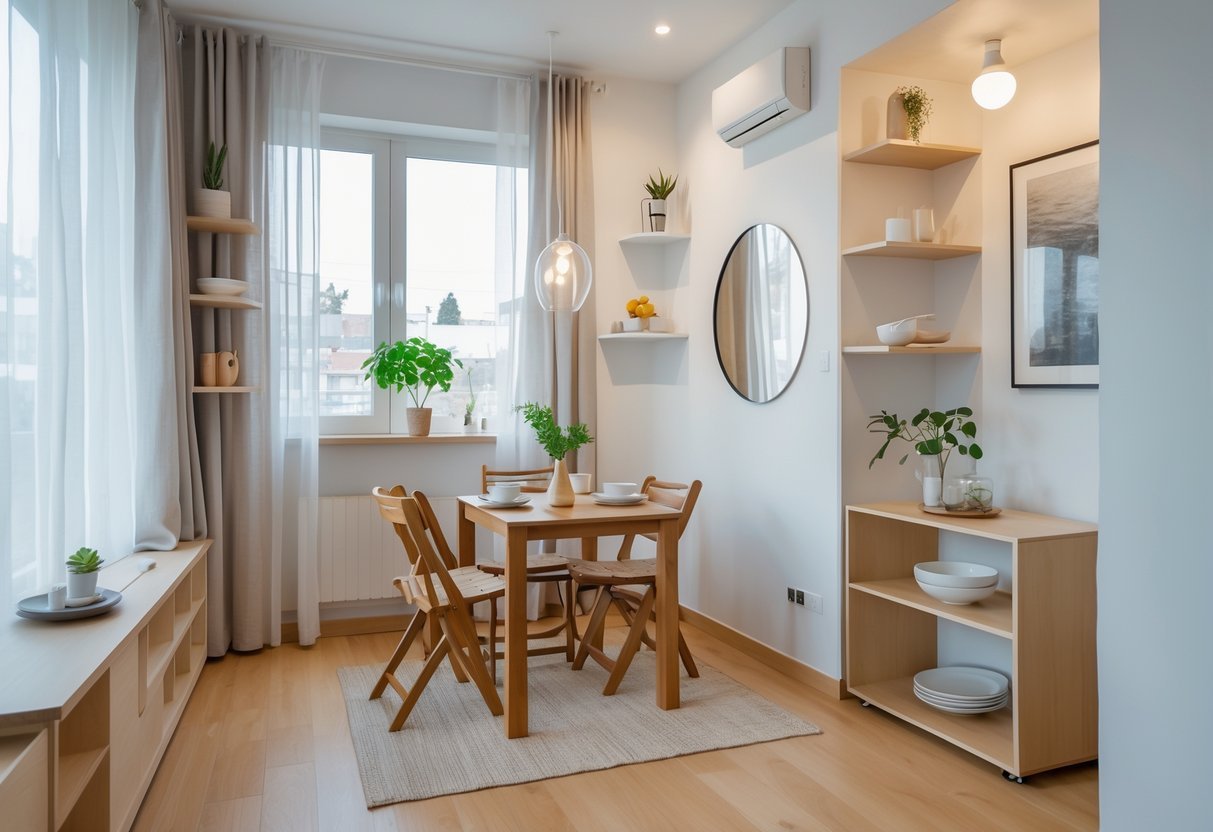
These answers focus on layout choices, color and lighting, budget decor, key furniture, storage tactics, and blending living and dining areas. You’ll get specific, practical steps you can apply right away.
How to maximize space in a small dining room layout?
Place a round pedestal table to free up legroom and improve traffic flow around the table. Use a slim, extendable table so you keep a small footprint most days and expand only when guests arrive.
Push a built-in bench against one wall to open the aisle; benches tuck closer to walls than individual chairs. Keep pathways at least 30 inches wide for comfortable movement.
What color schemes are effective for expanding the visual space of a small dining room?
Choose light, neutral wall colors such as soft white, pale gray, or warm beige to reflect light and make the room feel larger. Paint the ceiling a shade lighter than the walls to add perceived height.
Use a single dominant wall color and add small accents in darker tones to create depth without clutter. Keep trim and moldings in a crisp, slightly brighter tone to define edges and visually expand surfaces.
How can I decorate a small dining area cost-effectively?
Install a large mirror on one wall to double the sense of space at low cost. Swap heavy artwork for one or two modest pieces to avoid visual crowding.
Choose multipurpose items like a bench with storage or a slim console that acts as a buffet and display shelf. Update textiles—seat cushions, a runner, or curtains—for an affordable style refresh.
Which furniture pieces are essential for a small dining room?
A round pedestal table or a slim extendable table should be your first priority for flexibility and flow. Include built-in bench seating with storage underneath to save space and add function.
Select chairs with exposed legs and open backs to keep sightlines clear. Avoid bulky buffets; instead use a narrow console or floating shelves for serving and storage.
What are some creative storage solutions for small dining rooms?
Use the bench under-seat storage to hide linens, boards, and seasonal dishes. Mount floating shelves or a shallow wall cabinet above the table for glassware and decorative items.
Add hooks or a slim wall-mounted rail near the entry for bags and aprons. Choose furniture with hidden compartments, like an extendable table with a storage leaf.
How to create a cohesive look in a combined small living and dining room space?
Anchor each zone with a rug sized to fit the furniture—one rug for the dining set and another for the seating area—to define spaces without walls. Keep a shared color palette: use your light neutral walls as the base and repeat two accent colors across both zones.
Align furniture scale and style so pieces feel related; match the wood tone or metal finish of the dining table to the living room side table or media console. Use lighting—a pendant over the table and layered lamps in the living area—to create distinct yet connected moods.