10 Small Dining Room Ideas to Maximize Space and Style
Small dining rooms can feel limiting, but you can make them work beautifully for everyday meals and gatherings. You’ll learn simple, practical ideas that stretch space, add storage, and keep the room feeling open without losing style.
This article walks you through ways to improve flow, boost function, and create a clear focal point using smart furniture, color, lighting, and storage choices. Expect ideas that fit real life—small layouts, family needs, and flexible seating—so you can pick the tips that match your space and routine.
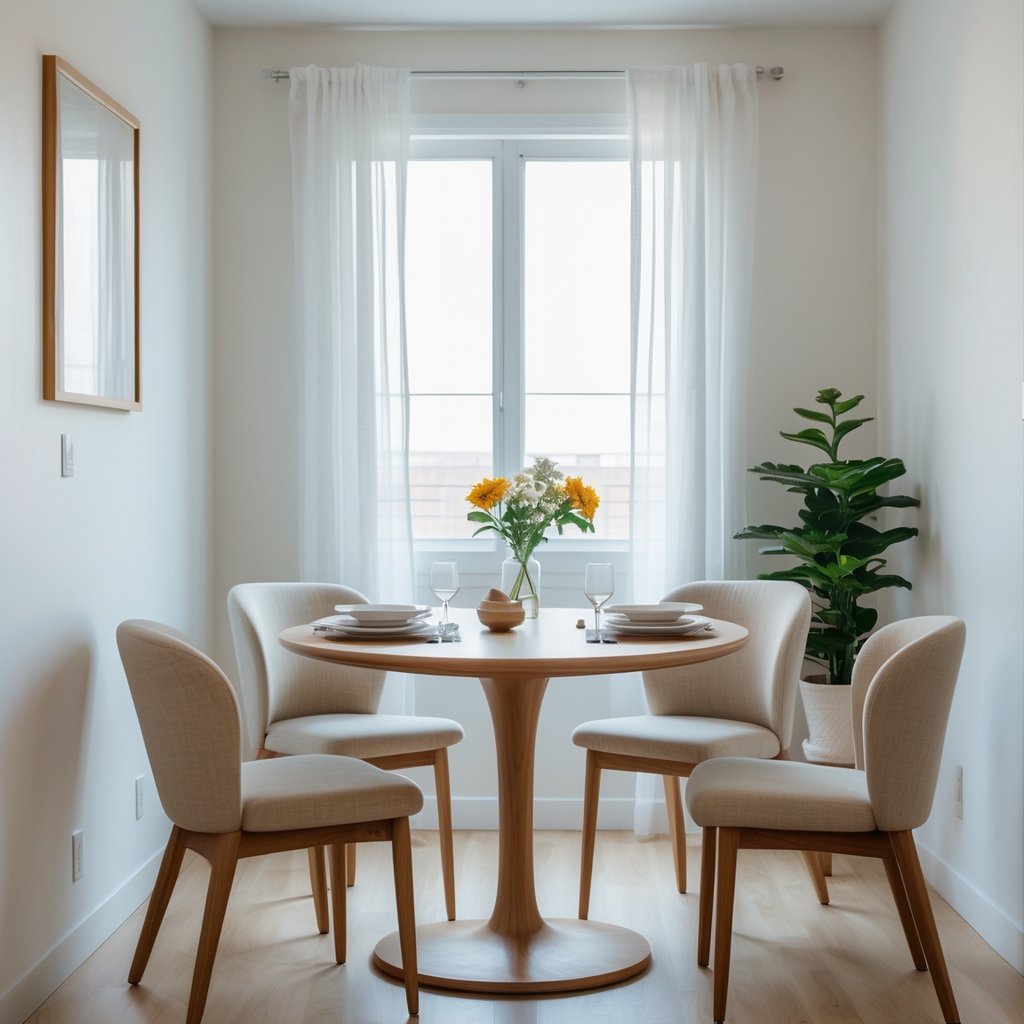
1) Use a round or oval table to improve flow and save space
Choose a round or oval table to keep movement smooth in tight rooms. Curved edges let you fit chairs closer without sharp corners blocking paths.
These shapes often seat more people per square foot than rectangular tables. They also make small rooms feel less crowded and easier to navigate.
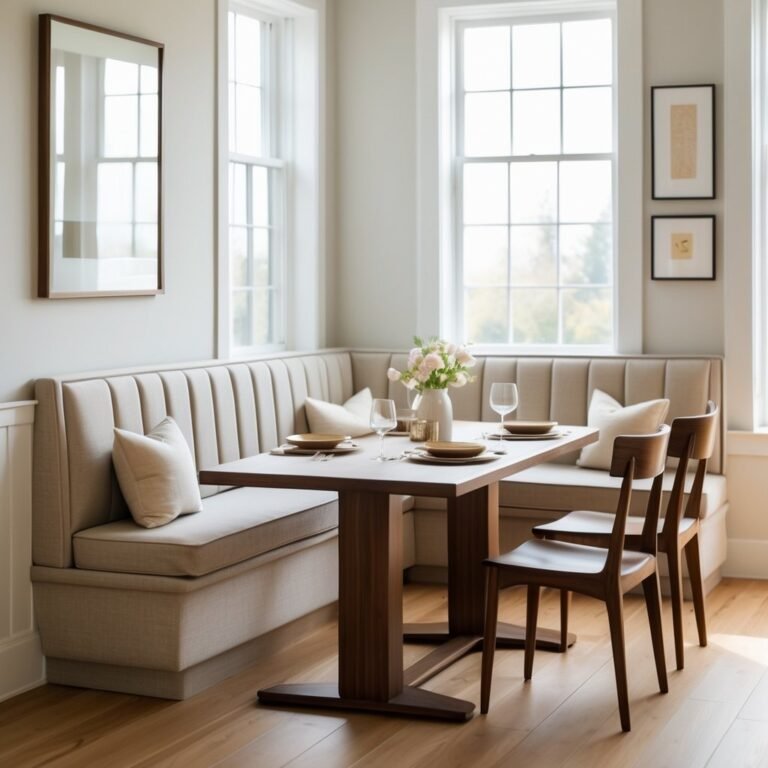
2) Install a built-in bench with storage underneath
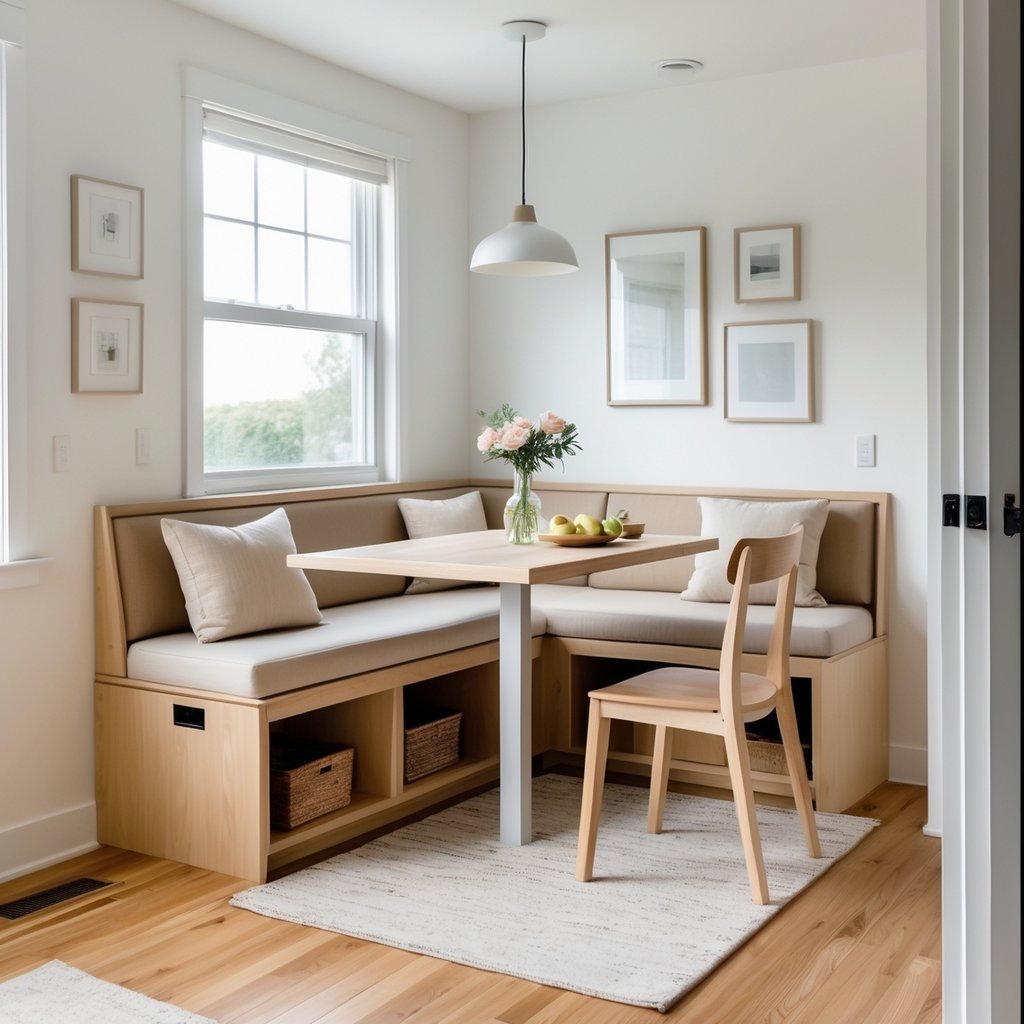
A built-in bench gives you extra seating without bulky chairs taking up floor space. You can tuck storage bins or lift the seat to hide table linens, toys, or kitchen gear.
Pick a bench that fits wall-to-wall or a corner to save room. Use durable materials and a cushioned top so the bench stays comfy and lasts through daily use.
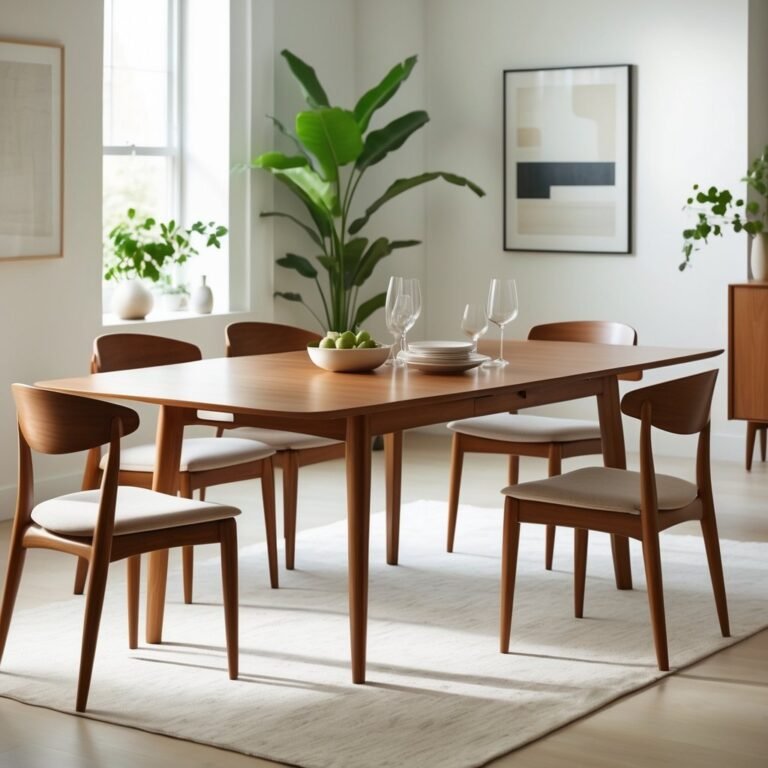
3) Choose a foldable or extendable dining table
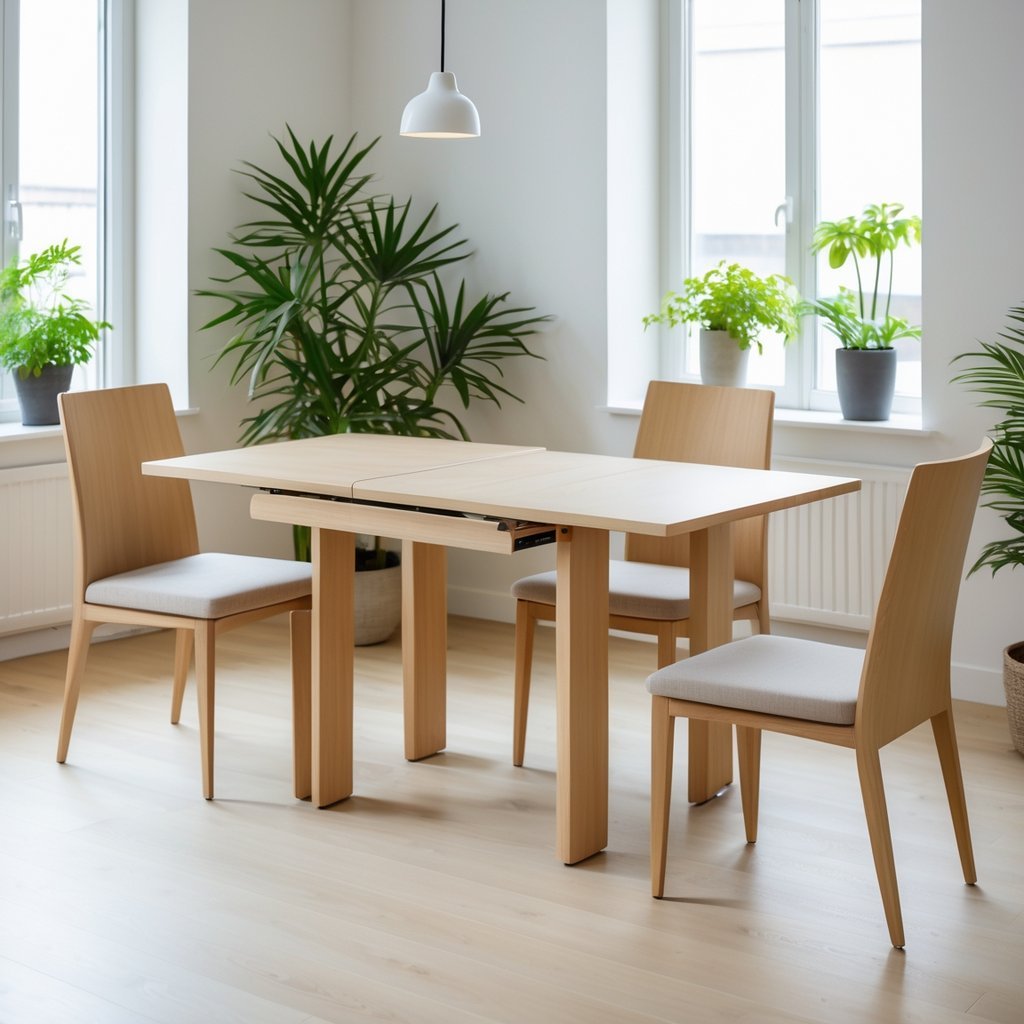
Pick a table that stays compact day-to-day and expands when you need more seats. You get more space for walking and a full dining setup for guests.
Look for drop leaves, butterfly extensions, or sliding tops that are easy to open. Choose sturdy mechanisms and materials that match your room style.
Consider wheels or light frames if you move the table often. Test the size when extended so it fits your space and doorways.
4) Use light, neutral colors to make the room feel larger
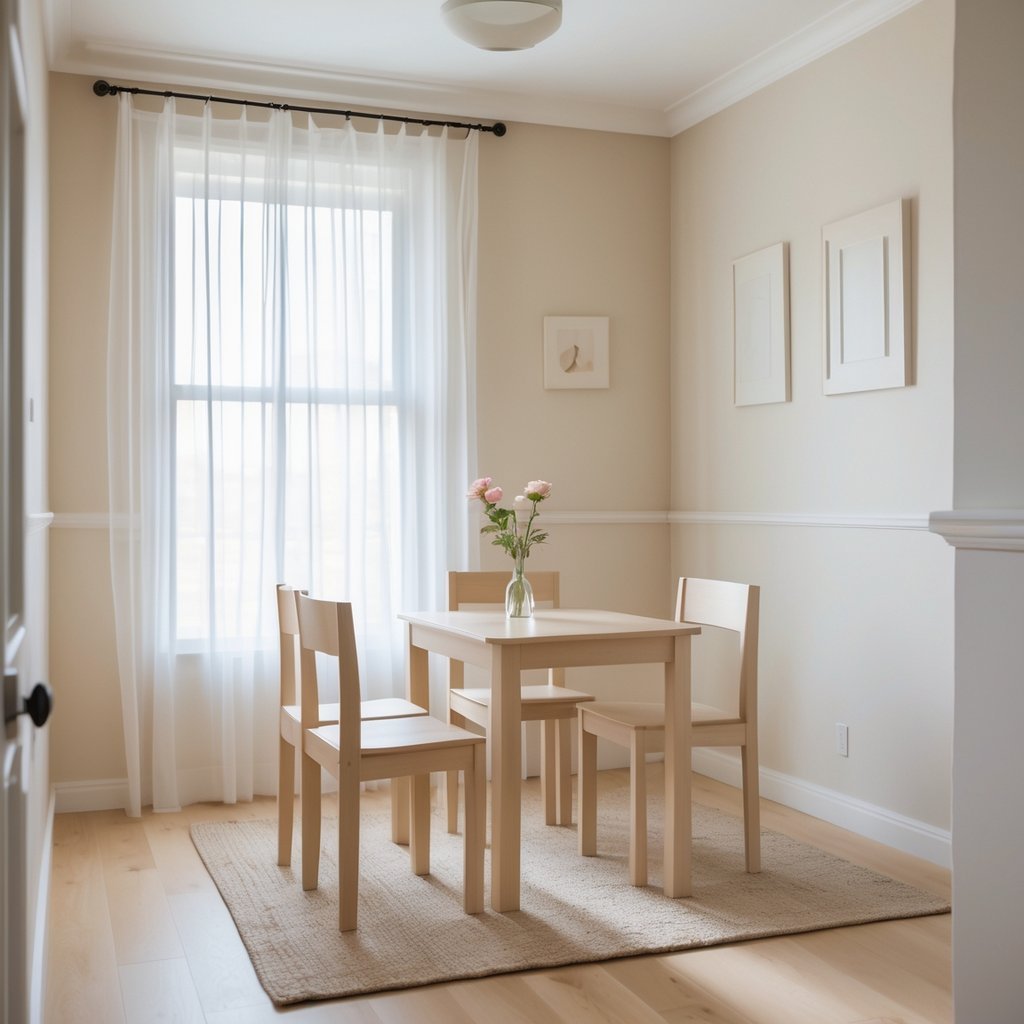
Choose soft whites, creams, pale grays, or muted pastels for walls and ceilings to reflect light and create an open feel. These shades reduce visual clutter and make boundaries between surfaces less obvious.
Keep large pieces like the table or built-in cabinets in similar tones to maintain flow. Add texture with fabrics and rugs so the room still feels warm and layered without shrinking the space.
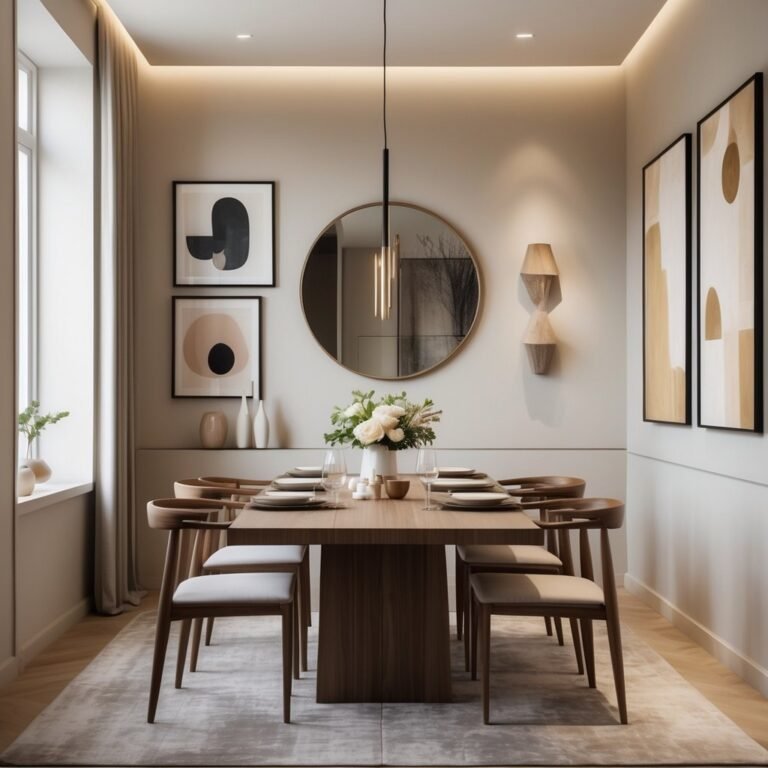
5) Add a large mirror to visually expand space
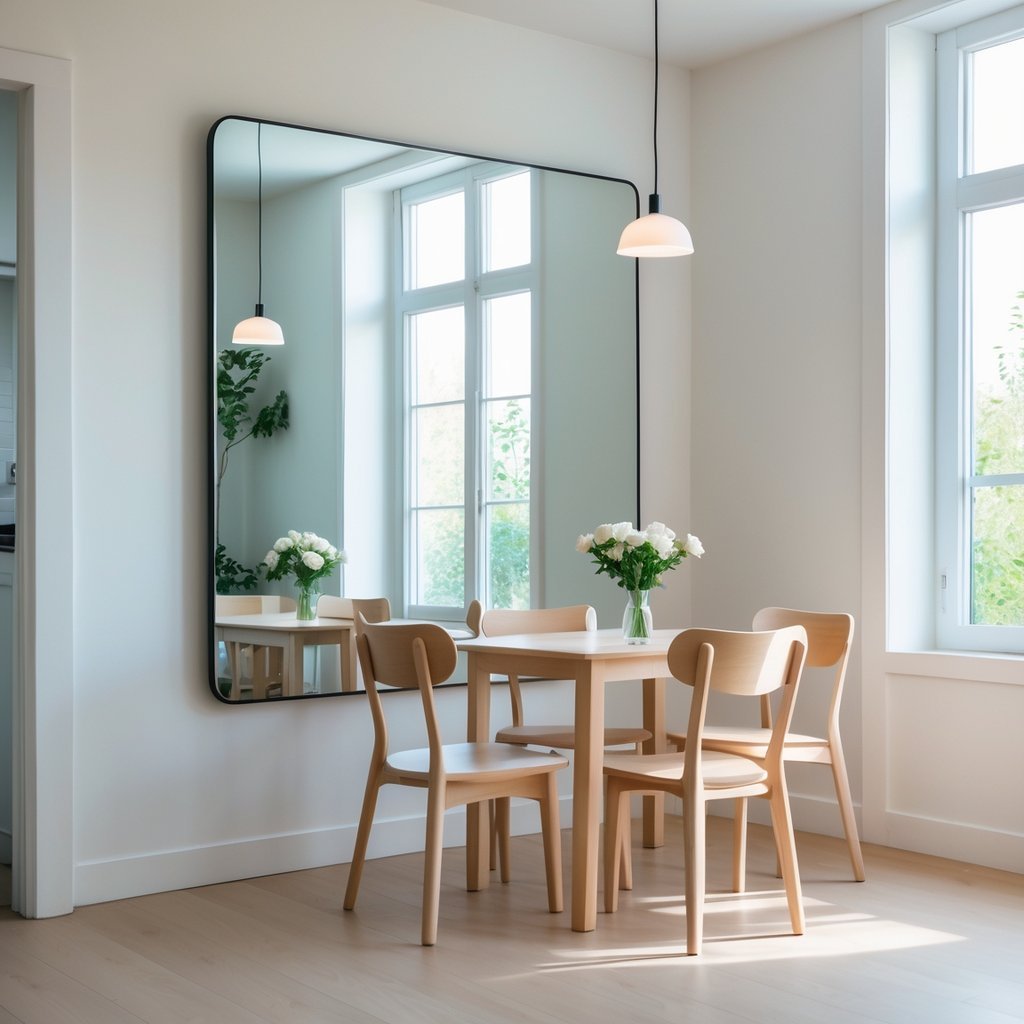
Place a large mirror on one wall to reflect light and make your dining area feel deeper. Position it across from a window when possible to boost natural brightness.
Choose a frame that matches your decor so the mirror looks intentional, not tacked-on. A floor-to-ceiling or oversized wall mirror gives the biggest visual impact without crowding the room.
6) Incorporate slim, armless chairs for better movement
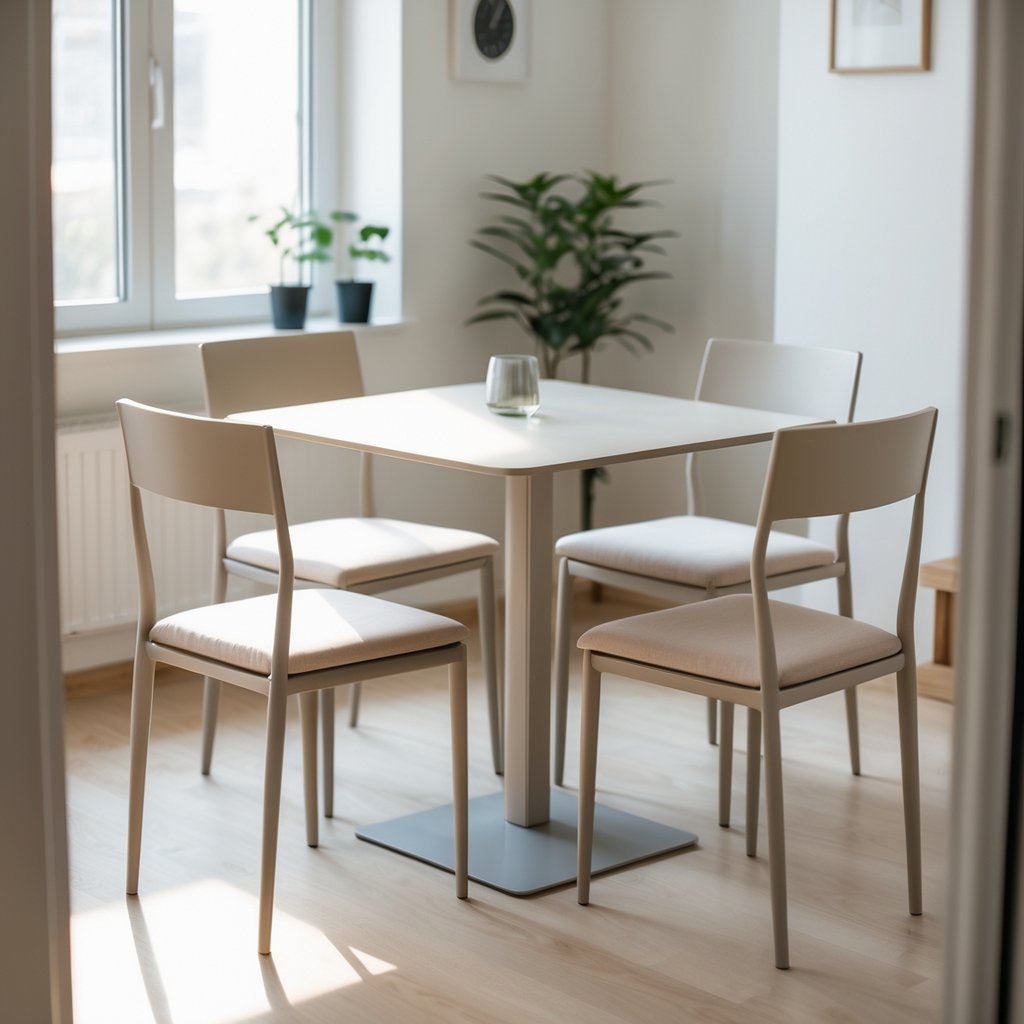
Choose armless chairs to free up floor space and make it easier to slide in and out. They tuck under the table fully, which helps when you need to squeeze past or seat more people.
Pick slim profiles and light materials like metal or acrylic to reduce visual bulk. This keeps your room feeling open while still offering comfortable seating.
7) Use vertical storage like wall-mounted shelves
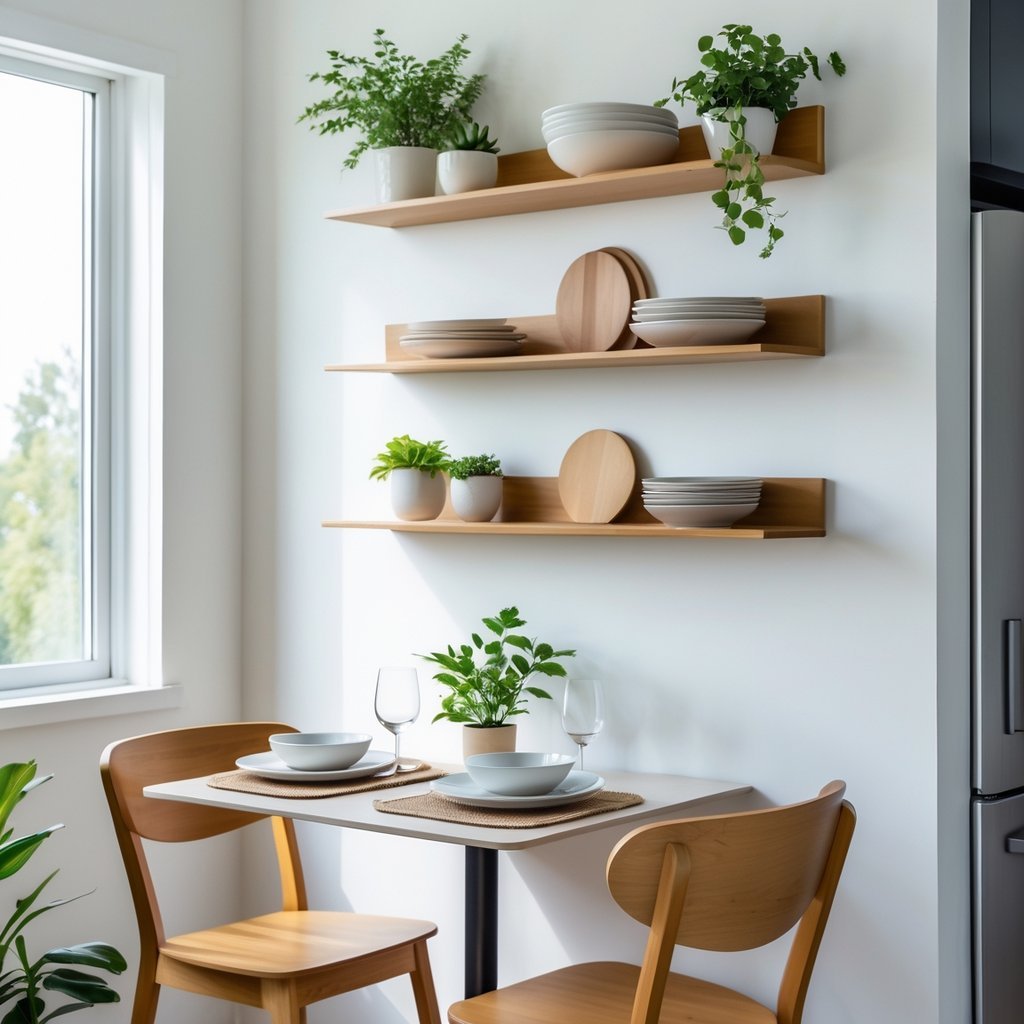
Add wall-mounted shelves to free floor space and keep dishes or cookbooks within reach.
You can mix open shelves for display with enclosed cabinets for hidden storage.
Place shelves higher to draw the eye up and make the room feel taller.
Use simple designs and neutral colors to keep the look clean and organized.
8) Opt for multi-functional furniture pieces
Choose furniture that pulls double duty to save space and add function. A drop-leaf table or extendable dining table lets you fit more people when needed without crowding your room.
Pick benches with hidden storage or ottomans that can act as extra seating. These pieces keep clutter out of sight and make your layout more flexible.
9) Install pendant lighting to define the dining area
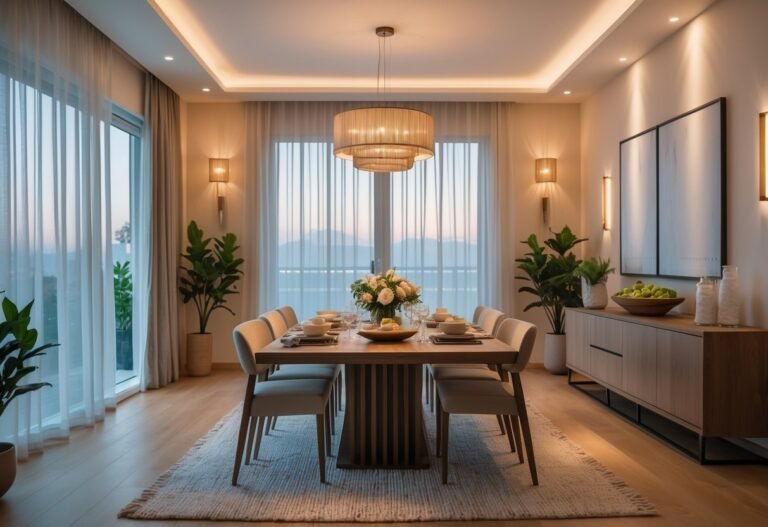
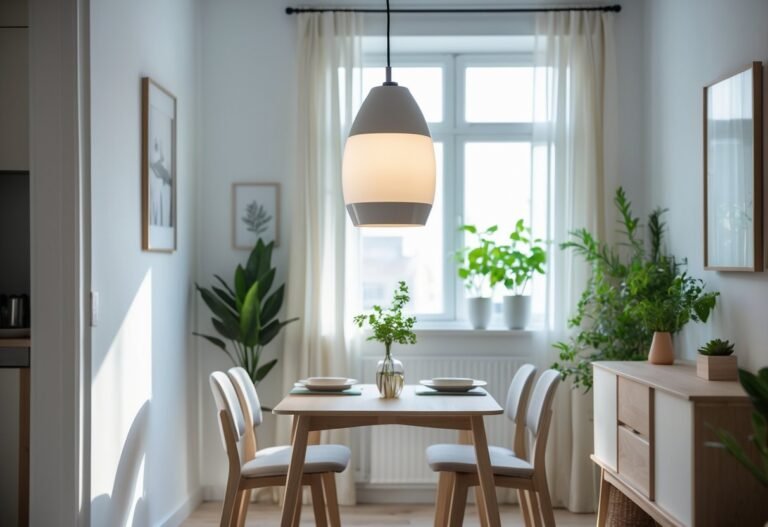
Choose a pendant that fits your table size and ceiling height to anchor the space. A single large pendant or a small cluster will mark the dining zone in an open plan.
Hang the fixture about 30–36 inches above the table for clear sightlines and even light. Use dimmable bulbs so you can shift from task lighting to softer mood light.
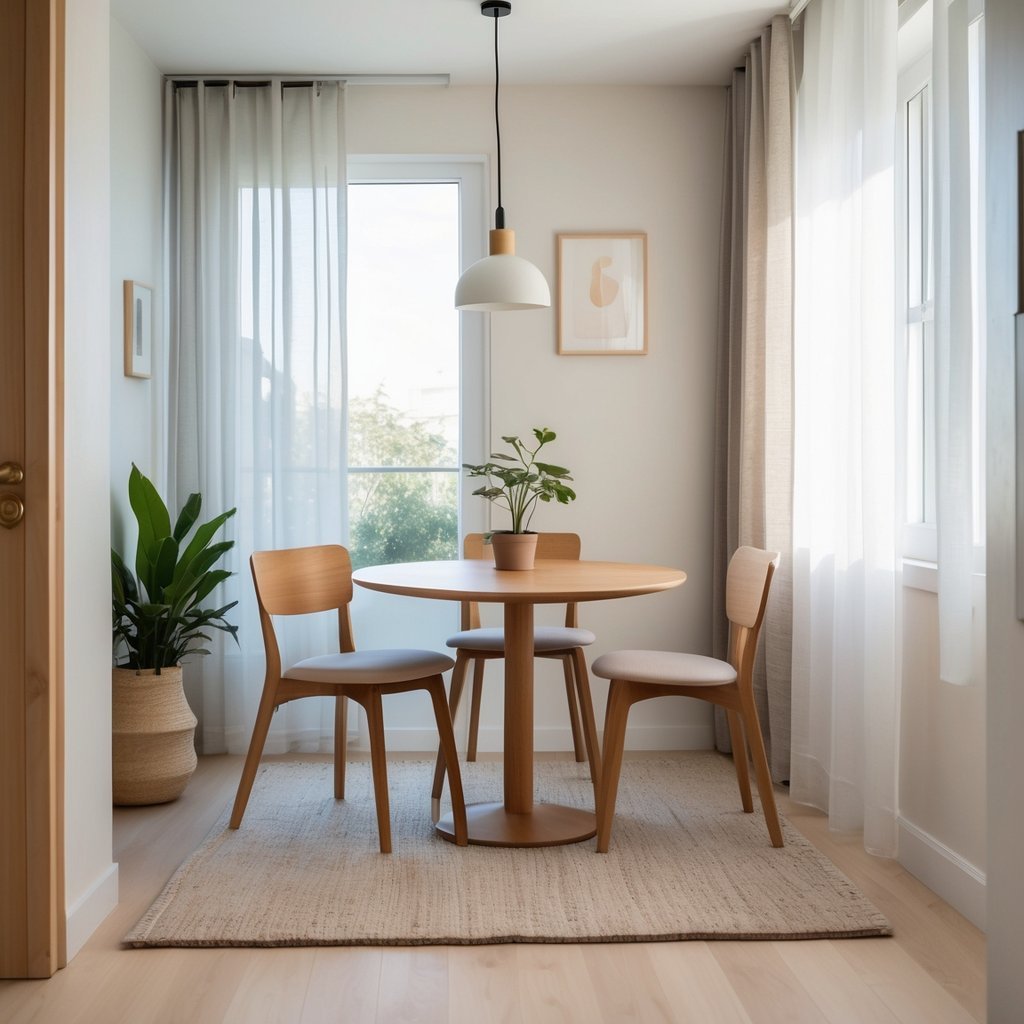
10) Use a bold rug to create a focal point
Choose a bold rug to anchor your small dining room and draw the eye to the table. A strong color or pattern makes the space feel intentional without needing extra furniture.
Pick a rug that complements your wall and chair colors so the room stays balanced. Make sure the rug is large enough for chairs to sit on it when pulled out.
Maximizing Space and Functionality
Make choices that give you room to move and a place for everything. Prioritize seating that tucks away, surfaces that pull double duty, and storage that uses vertical space.
Furniture Layout Strategies
Place a round or pedestal table to free up walking space and avoid sharp corners. If you need seating for three or four, choose a bench on one side; it slides under the table when not in use and saves more floor area than separate chairs.
Push the table against a wall for daily use, then pull it out when guests arrive. Use slim-profile chairs or clear acrylic seats to keep sightlines open. Leave at least 30–36 inches behind chairs where possible so people can stand and pass comfortably.
Consider a drop-leaf or extendable table. You can keep it compact for weekday meals and expand for dinner parties. Anchor the layout with a narrow rug to define the eating zone without crowding the room.
Storage Solutions for Small Dining Areas
Add a slim buffet or console against a wall to hold dishes, placemats, and serving bowls. Choose a piece with drawers and open shelves so you can mix hidden storage with display items.
Install floating shelves above the buffet to keep frequently used items within reach. Use hooks beneath the shelves for hanging mugs or linens. For very tight spaces, a tall, narrow cabinet or pantry takes advantage of vertical space without using much floor area.
Use multi-use furniture like an ottoman that stores table linens or a bench with a hinged seat. Label baskets or bins so you can grab what you need quickly and keep the dining area tidy.
Design and Decor Tips
Use light colors, smart lighting, and focused accents to make the room feel larger and more inviting. Choose paint, fixtures, and small decor that work together to stretch the space visually and improve function.
Color Schemes to Enhance Openness
Pick a primary wall color that is pale and warm or cool depending on your light. Soft whites, very light greys, pale beige, or muted pastels reflect light and make walls recede. Paint the ceiling one to two shades lighter than the walls to raise perceived height.
Use one or two accent colors only. Add them in a narrow band on a single wall, on seat cushions, or in artwork to avoid clutter. Keep trim and large furniture in neutral tones to maintain flow.
Try a consistent floor tone throughout adjacent rooms. Matching or closely related flooring reduces visual breaks and makes the dining area seem larger. If you use patterns, keep them small and sparse.
Lighting Techniques for Small Spaces
Layer three types of lighting: ambient, task, and accent. Use a dimmable central fixture for overall light, pendant or chandelier over the table for task lighting, and wall sconces or LED strips for accent light.
Place the main fixture 28–34 inches above the table for balanced light without glare. Choose clear or lightly frosted glass shades so light spreads evenly.
Use mirrors to double light. Hang a mirror opposite a window or light source to reflect daylight and make the room feel twice as bright. Keep bulbs at 2700K–3000K for warm, natural tones that flatter skin and wood finishes.
Frequently Asked Questions
These answers focus on concrete steps you can take: choose space-saving shapes and furniture, add storage and mirrors, pick light paints, and arrange seating to keep traffic lanes open.
How can I decorate a small dining room to maximize space?
Pick a round or oval table to improve flow and save space and allow chairs to tuck in easily.
Install a built-in bench with storage underneath to combine seating and hidden storage without extra furniture.
Use a large mirror on one wall to reflect light and make the room feel deeper.
Keep decor minimal and vertical—narrow shelving or wall-mounted lighting frees floor space.
What are effective color schemes to make a small dining room appear larger?
Choose light, neutral colors like soft whites, pale grays, or warm beiges to open the room visually.
Paint ceilings a shade lighter than the walls to boost perceived height.
Add a single darker accent color in small doses, such as a chair or artwork, to create depth without crowding the space.
What are some budget-friendly ideas for decorating a small dining room?
Use a large mirror instead of extra lighting fixtures to increase brightness and depth affordably.
Shop for a foldable or extendable dining table so you can host guests without buying a larger permanent table.
Refinish secondhand chairs or buy simple wall shelves for storage instead of large cabinets.
Swap heavy curtains for light blinds or sheer panels to let in more light.
How can I arrange a small living and dining room combination?
Place the table near the kitchen or against a wall to preserve the main traffic route.
Use a sofa as a visual divider: position its back toward the dining area to define zones.
Use rugs to anchor each zone and keep scale consistent—choose a small round table if the living area is tight.
Keep pathways at least 30–36 inches wide for comfortable movement.
What furniture arrangements help to increase seating in a small dining room?
Add a built-in bench or banquette along one wall to squeeze in more seats than chairs alone.
Mix bench seating with a couple of slim-profile chairs for flexibility.
Choose stackable or folding chairs you can store when not in use.
Use an extendable table for occasional extra guests while keeping the daily footprint small.
Which modern design trends are suitable for small dining room spaces?
Minimalist furniture with exposed legs keeps the floor visible and the room feeling airy.
Multifunctional pieces—like a bench with storage or an extendable table—fit modern needs and save space.
Matte neutrals and simple geometric shapes maintain a clean look without visual clutter.