Small Kids Room Design Ideas for Clever Storage, Play Zones, and Growth-Friendly Decor
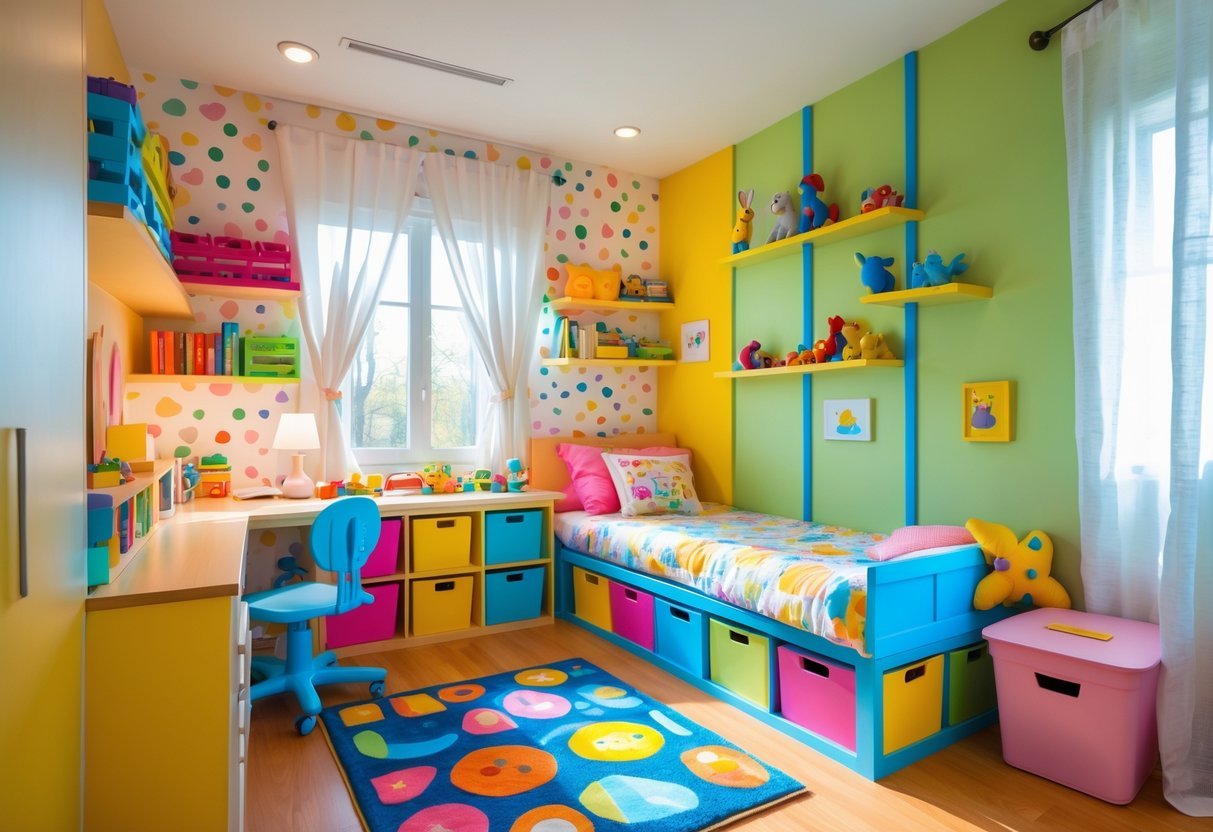
You can make a small kids’ room feel spacious, playful, and highly functional with a few smart choices in layout, storage, and lighting. Use built-in or multiuse furniture, vertical storage, and clear zones for sleep, play, and study to get the most from every square foot.
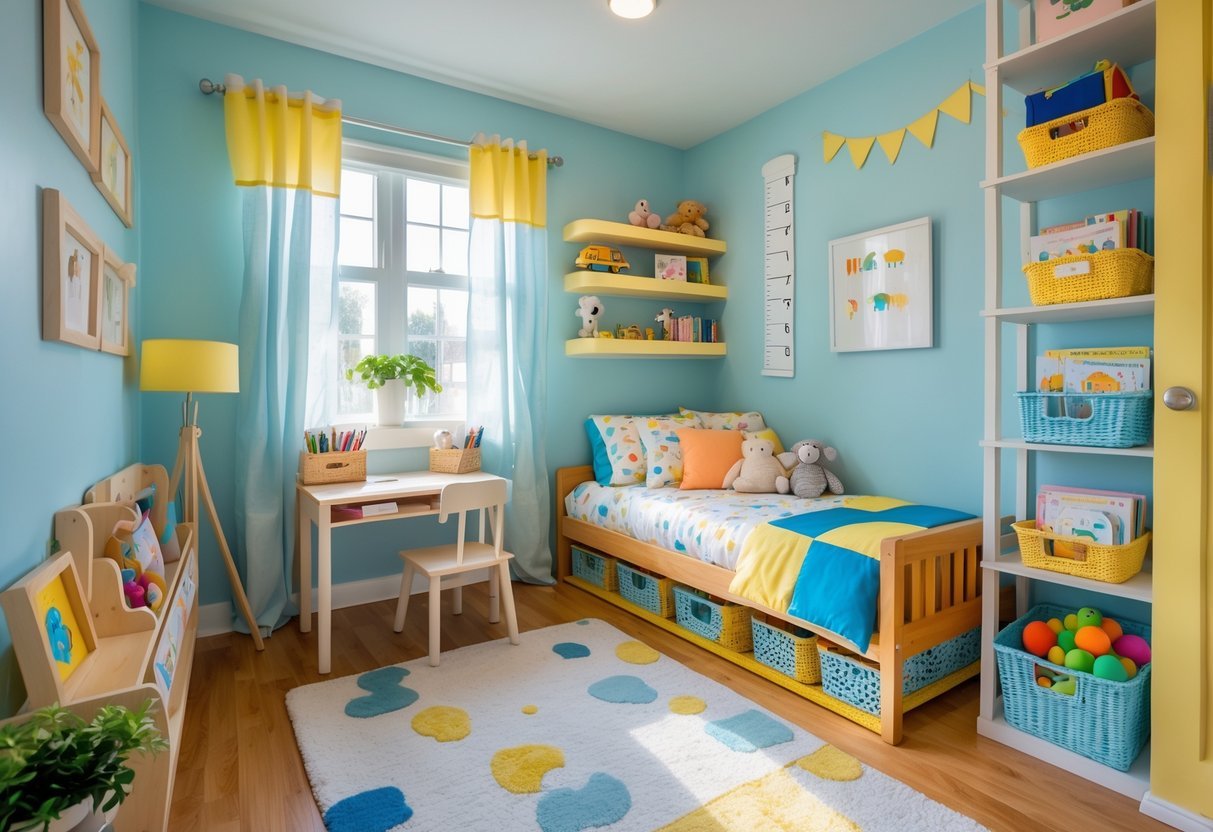
This post shows practical space-maximizing moves, creative decor ideas, and simple organizing strategies that adapt as your child grows. Expect actionable tips on furniture, lighting, themes, and quick fixes for shared or oddly shaped rooms so you can start transforming the space today.
Maximizing Space in Small Kids Rooms
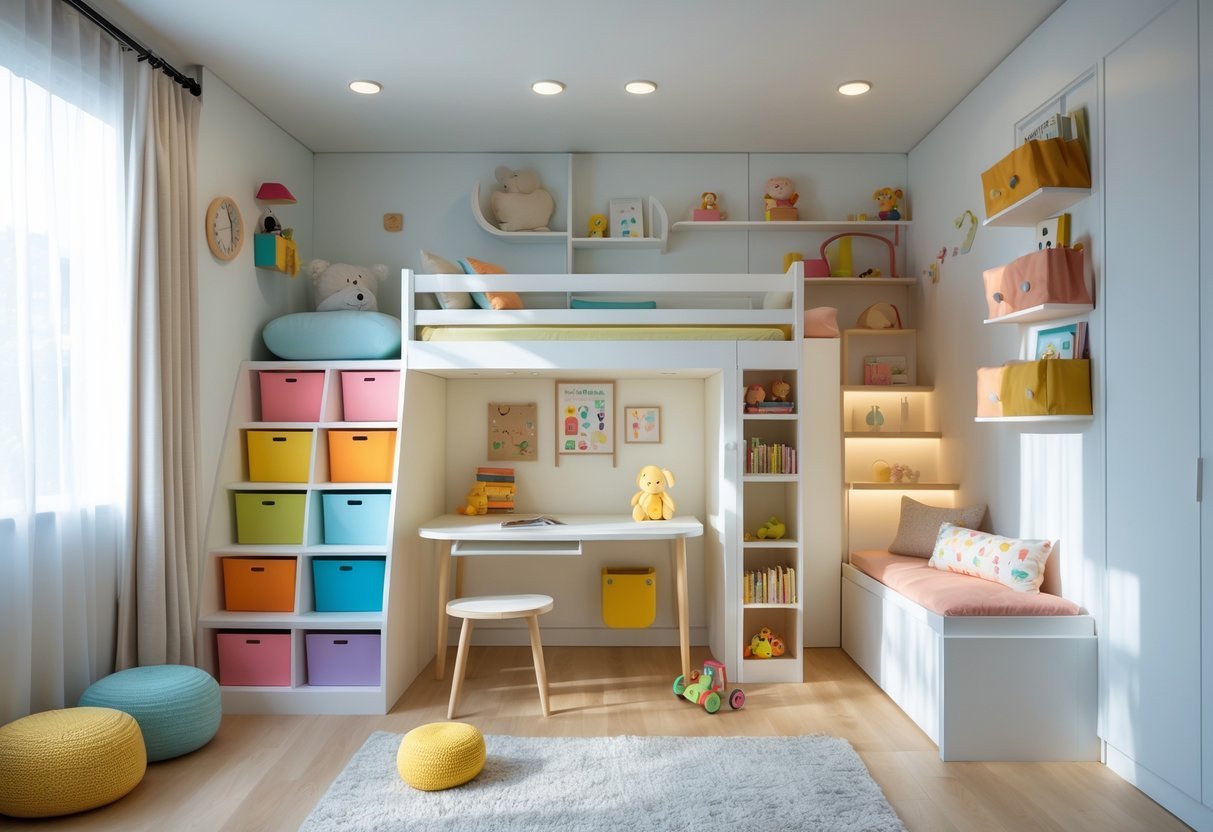
Focus on freeing floor area, using vertical surfaces, and choosing furniture that serves more than one purpose. Practical storage, adaptable furniture, and elevated beds create clear zones for sleep, play, and study.
Clever Storage Solutions
Use wall-mounted systems to keep the floor clear. Install floating shelves at child height for books and display; add closed cabinets higher up for seasonal items.
Place clear, labeled bins under beds and in closets so you can see contents quickly and rotate toys without clutter. Use a pegboard above a desk for craft supplies—baskets and hooks make small items easy to reach and tidy.
Think vertical: tall, narrow dressers occupy less floor space than wide ones and offer more stackable storage. Add a slim shoe cubby by the door for shoes and backpacks to reduce entryway mess. Choose furniture with built-in compartments—bench seating with lift-up storage or ottomans that double as toy chests.
Multipurpose Furniture Ideas
Select pieces that combine functions to cut the number of items in the room. A desk with integrated drawers and a pull-out shelf serves as homework space plus supply storage. Choose a dresser that doubles as a changing table for infants, then remove the top attachment later.
Fold-down wall desks free floor space when not in use and can host homework or craft projects. Convert a low bookshelf into a media stand by adding cable openings and storage baskets below.
Prioritize durable finishes and adjustable components. Choose modular units so you can reconfigure storage as your child grows. Use furniture with removable inserts to change functions—swap toy bins for school-supply organizers as needs shift.
Bunk Beds and Loft Beds
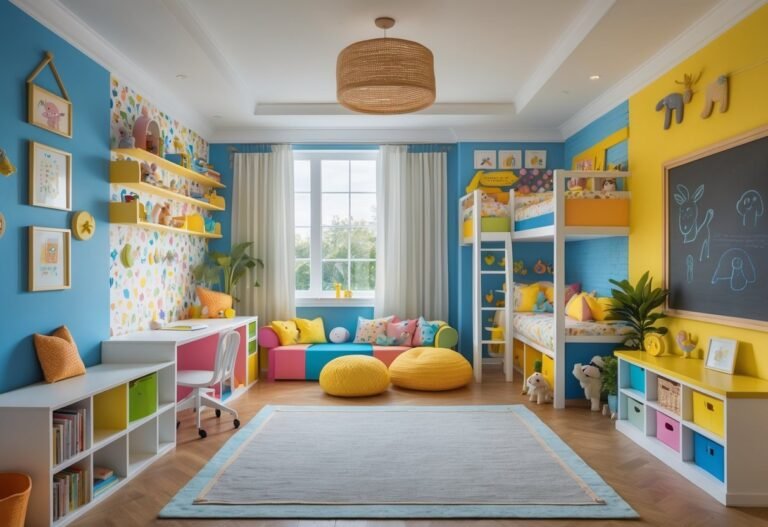
Elevated beds create usable space beneath for play, storage, or a desk. Choose a loft bed with a built-in desk if your child needs a dedicated study area; secure guardrails and a sturdy ladder are essential. For siblings, opt for a bunk with independent lighting and storage for each bed to maintain personal zones.
If you need flexibility, buy a convertible bunk that separates into two beds later. Place bookcases or a dresser beneath a loft for organized storage without extra footprint. Add pull-out drawers or rolling bins under the lower bunk to use dead space efficiently.
Prioritize safety: confirm weight ratings, anchor tall units to the wall, and keep the top bunk for children over the manufacturer’s recommended age. Ensure there’s at least 30 inches of clearance between the mattress and ceiling to avoid head bumps.
Creative Decor and Themes
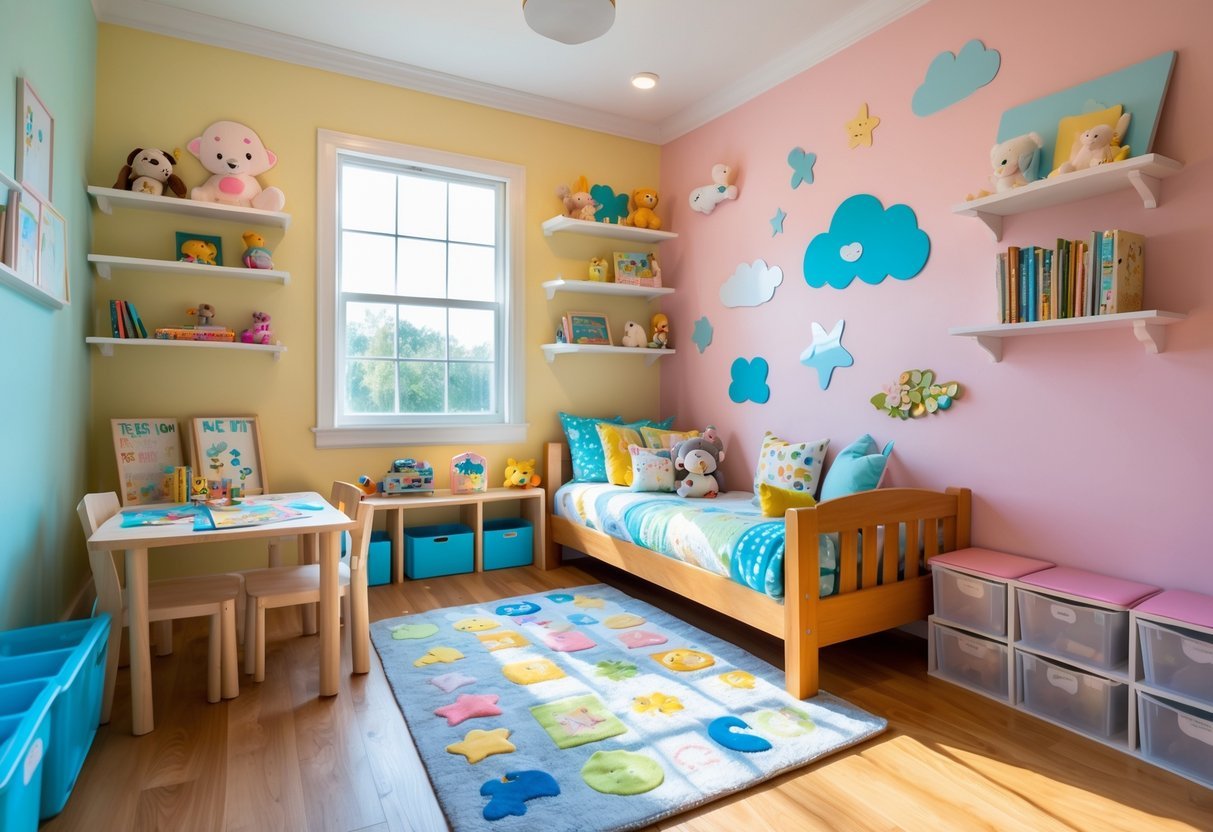
Choose a few strong visual anchors and keep the rest restrained. Focus on paint, key textiles, and one focal feature to make the room feel intentional without crowding the space.
Color Choices for Small Spaces
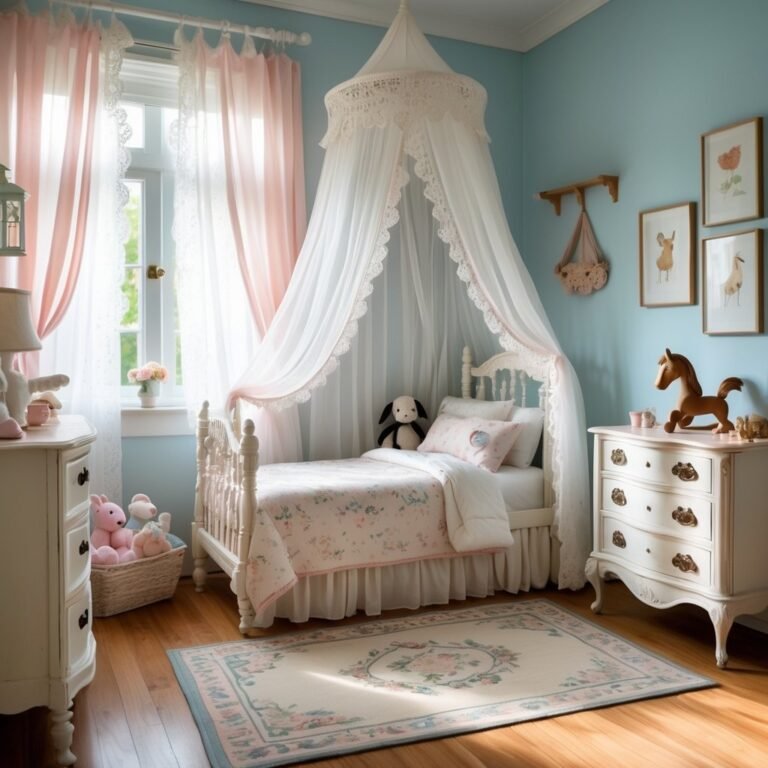
Pick a primary wall color that reflects light—soft white, warm cream, or a pale pastel—to make the room feel larger. Use a deeper accent on one short wall or inside a nook to add depth without enclosing the space.
Limit your palette to three coordinated colors: a neutral base, one mid-tone for furniture or rugs, and a bright accent for accessories. This prevents visual clutter and helps you rotate elements as your child grows.
Apply color strategically: paint shelves or the back of a bookcase in the accent color, add a striped rug that runs the room’s length, or use color-blocking on lower wall panels to hide scuffs. These moves create interest while preserving openness.
Fun Wall Art and Murals
Use wall art to introduce personality without taking up floor space. Choose framed prints or a gallery of lightweight canvases that you can rearrange as interests change.
Murals work well when confined to one wall or a corner; simple geometric shapes, a horizon stripe, or an illustrated tree provide impact without overwhelming. Consider removable wallpaper murals for easy updates and renter-friendly changes.
For tactile interest, combine art types: a mural or large print plus floating shelves for small toys, and a cork or felt board for rotating artwork and crafts. This adds texture and function while keeping walls organized.
Themed Room Inspiration
Anchor a theme with two practical elements: a bed or storage piece and a statement wall. For example, a forest theme pairs a green lower wall, leaf-print curtains, and a wooden loft bed with built-in drawers.
Keep themes flexible by using interchangeable textiles and decals. A space-themed room can use star bedding and planet decals that peel off when tastes change, while neutral furniture stays useful longer.
Make sure themed elements serve storage or play: a race-car bed with drawers, a play tent that doubles as a reading nook, or wall-mounted pegrails for costumes. That way the theme feels fun and functional, not just decorative.
Organizing and Zoning for Functionality
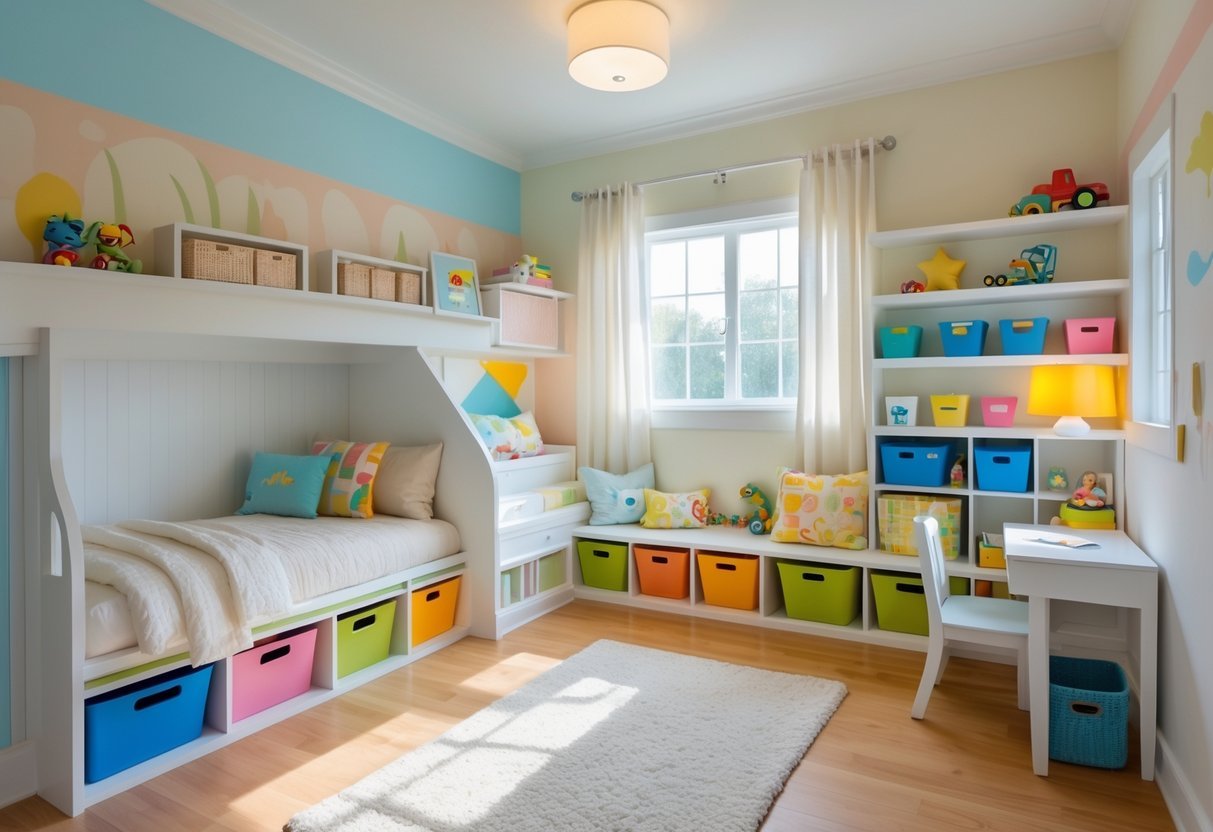
Focus on clear activity zones and storage that your child can use independently. Use low shelving, labeled bins, and furniture placement to separate play from sleep and study without losing floor space.
Designated Play Areas
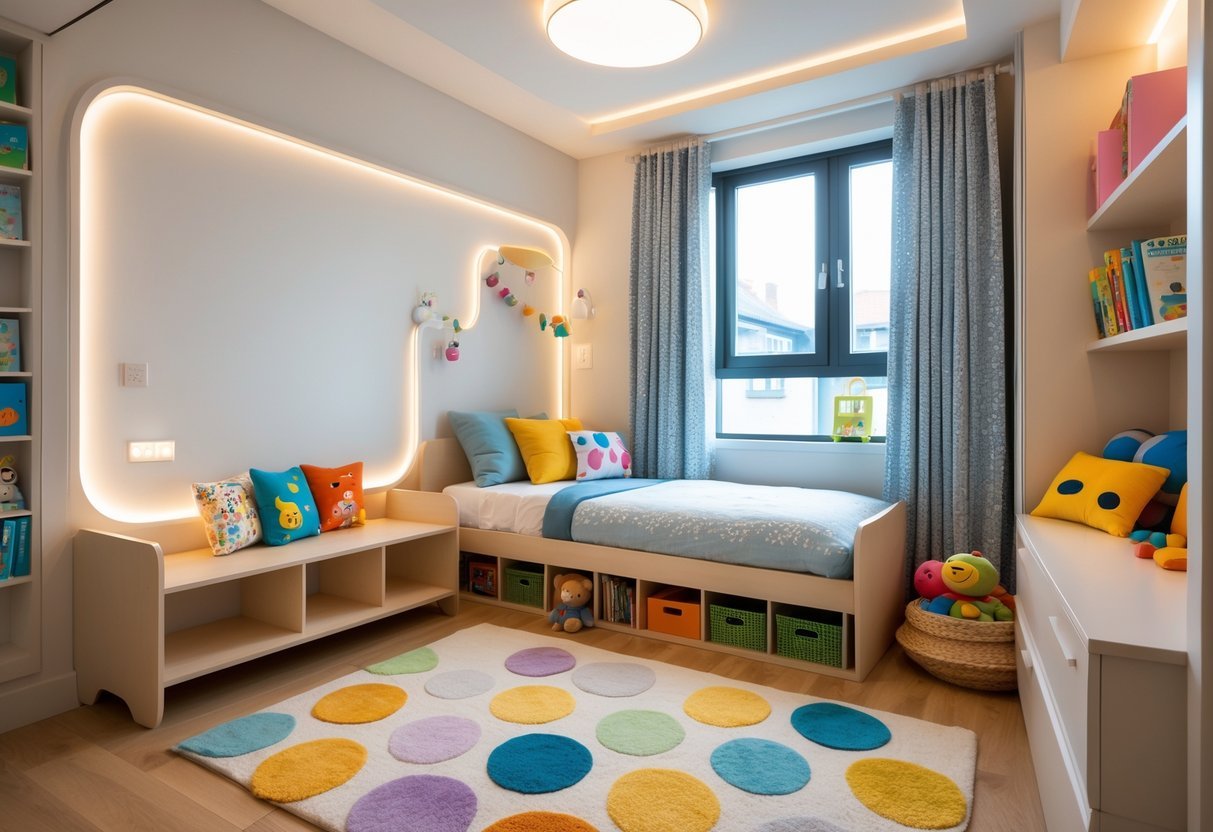
Create a defined play zone using a washable rug or foam tiles to mark the boundary. Place low, open shelving against a wall so toys stay visible and reachable; arrange bins by category (blocks, dolls, art) and label them with words and pictures to encourage cleanup.
Keep larger play items—ride-ons, tents, bulky toys—in a corner or under a lofted bed to free central floor space. Consider a foldable table or wall-mounted drop-leaf for crafts that you can stow when not in use.
Add a small basket for everyday favorites near the rug for quick access. Use vertical space: pegboards or magnetic strips store small toys and craft tools without crowding the floor.
Study and Reading Nooks
Place a study surface near a natural light source to reduce eye strain; a slim desk or wall-mounted shelf works well in tight corners. Choose an adjustable chair and keep essential supplies in a nearby caddy or drawer to maintain focus.
Design a cozy reading nook with a low bookshelf, a soft cushion or beanbag, and a wall-mounted book display so covers face forward. Rotate a small selection of books weekly to prevent overwhelm and keep interest high.
Install task lighting—an adjustable clip lamp or LED strip—so your child has focused light for homework and reading. Anchor the nook with a small rug and a clipboard or corkboard for schedules and reminders.
Smart Lighting and Finishing Touches
You’ll prioritize light that supports play, rest, and storage visibility while keeping fixtures scaled to the room. Choose treatments and accents that add task light, soft nightlight, and easy-control features without crowding surfaces.
Optimizing Natural Light
Maximize window area by using low-profile furniture near the sill—think a narrow desk or toy chest that doubles as seating. Mount curtains high and wide so fabric clears the window when open; that increases the apparent window size and admits more daylight.
Use light-filtering roller shades or sheer curtains to reduce glare while preserving brightness for activities like drawing or reading.
Position mirrors opposite or adjacent to the window to bounce daylight into darker corners and behind wardrobes. Keep window trim and nearby walls in a warm white or pale pastel to reflect more light.
If privacy is a concern, layer a translucent shade under a blackout option to let morning light through while still allowing sleep-friendly darkness at night.
Layered Lighting Ideas
Start with a compact overhead fixture that sits flush or semi-flush to the ceiling to preserve headroom. Choose diffused light with a CRI above 80 for natural-looking colors during play.
Add a switchable floor lamp or wall sconce by the reading nook to provide focused task light without using floor space.
Integrate LED strip lights under shelves or along the back of a cubby unit to illuminate toys and reduce harsh shadows. Use dimmable bulbs and a simple smart bulb or plug so you can set brighter levels for play and a warm low level for bedtime.
Include a soft nightlight—preferably one with adjustable color temperature—to support middle-of-night checks without fully waking the child. Label switches or use voice/phone control to make adjustments quick and intuitive.
Frequently Asked Questions
These answers focus on practical, room-ready tactics you can implement: space-saving furniture, targeted storage, dual-purpose zones, neutral theme ideas, bunking and zoning for shared rooms, and low-cost decor swaps that change the room’s look.
How can I maximize space in a small children’s bedroom?
Choose furniture with built-in storage like a loft bed with drawers underneath or a bed frame with pull-out drawers.
Mount shelves and a pegboard on walls to free floor space and keep toys and books accessible.
Use light paint or removable wallpaper to make the room feel larger.
Add a full-length mirror or mirrored closet doors to increase perceived depth.
What are some creative storage solutions for a small kid’s room?
Install high shelves for seldom-used items and keep daily toys in labeled bins at child height.
Use under-bed boxes, hanging shoe organizers on closet doors, and stackable clear bins for easy visibility.
Convert a bench into toy storage and use wall-mounted cubbies for books.
Magnetic strips or rails can hold craft supplies and small metal toys without taking shelf space.
How can a small children’s room be styled for both play and sleep?
Create distinct zones: a low-shelf toy area or mat for play, and a quiet corner with blackout curtains and a cozy bed for sleep.
Use a foldable or roll-up play mat that you can stow when it’s time to sleep.
Choose calming bedding colors and brighter, removable play accents like rugs or cushions.
Keep night-time lighting separate with a dimmable lamp or plug-in night light.
What are some gender-neutral themes for designing a kid’s room?
Try nature-inspired themes: forest greens with wood tones, or sky motifs with soft blues and cloud shapes.
Go modern minimalist with monochrome accents and textured fabrics like knit throws or woven baskets.
Use primary-color pops on small items—pillows, lamps, or art—so you can change the palette as the child grows.
Choose furniture in neutral finishes (white, birch, or light oak) for long-term flexibility.
How do you design a shared room for two kids in a small space?
Use bunks, trundle beds, or staggered loft beds to maximize floor area and give each child their own sleeping spot.
Create personal zones with different colored bins, name labels, or small corkboard panels for each child.
Incorporate shared storage like a double wardrobe and central toy organizers.
Place a shared study surface against a wall with two stools to save space while allowing simultaneous use.
What are some budget-friendly decorating tips for a kid’s bedroom?
Paint an accent wall or apply peel-and-stick wallpaper to update the room without full redecoration.
Shop for multiuse pieces at secondhand stores—dressers can become toy chests and bookshelves can be repainted.
Swap textiles like duvet covers, curtains, and rugs for an instant refresh.
Use DIY wall art, printed posters in affordable frames, and inexpensive wall decals to personalize the space.