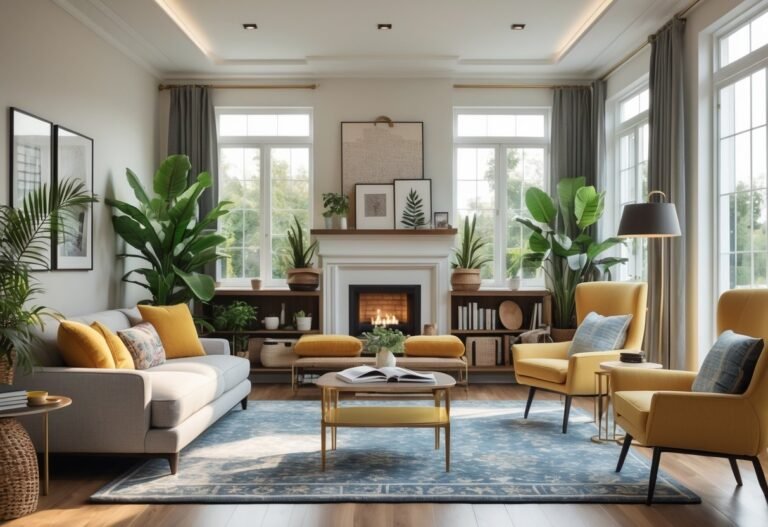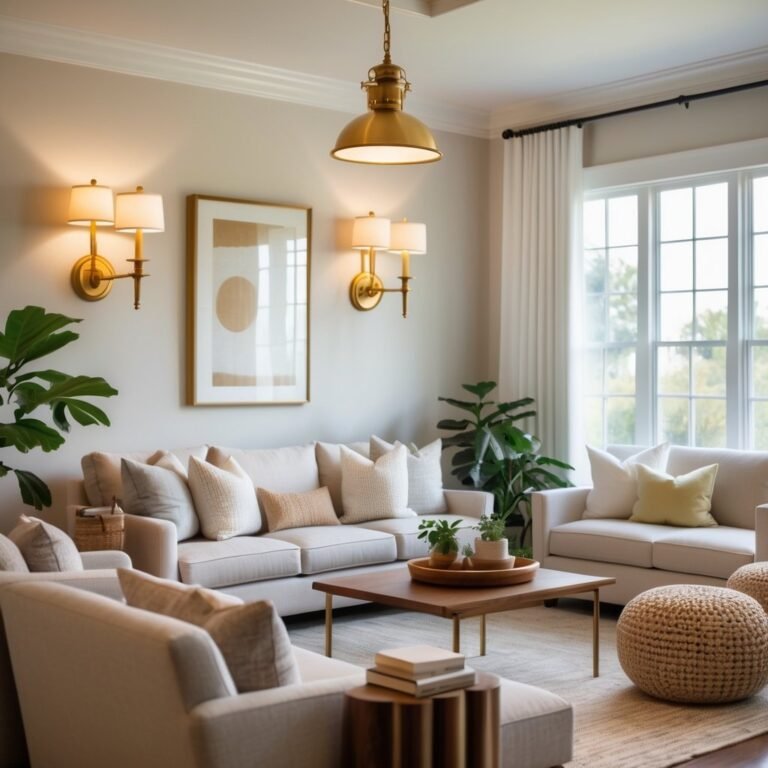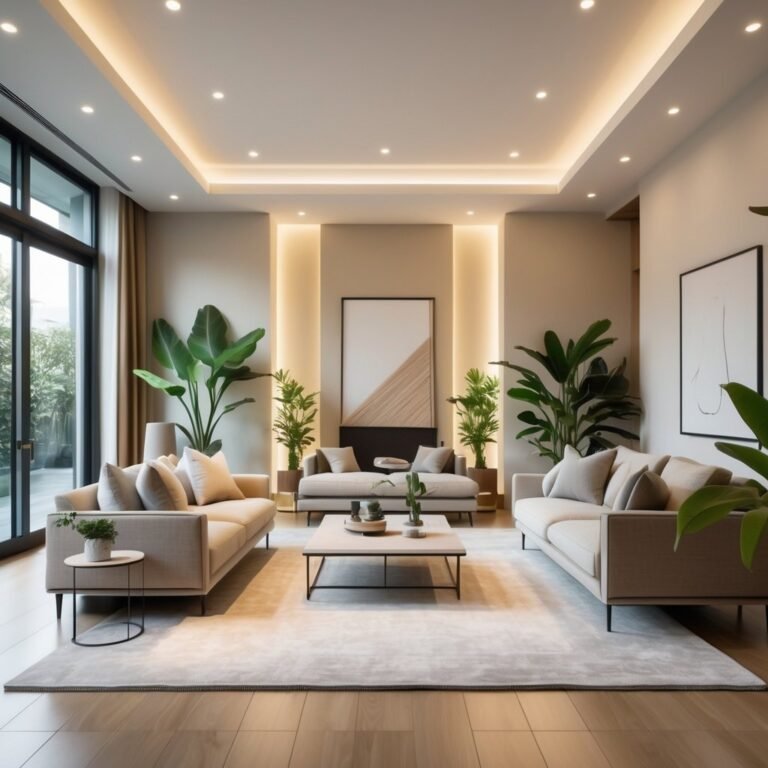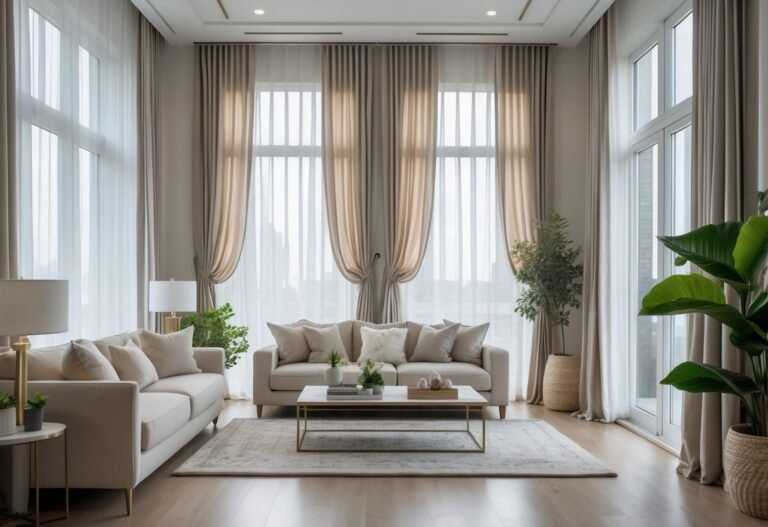
Small Living Room Ideas Apartment: Clever Space-Saving Designs for Cozy Urban Homes
Living in a small apartment doesn’t mean your living room has to feel cramped or dull. You can make the space work for relaxing, entertaining, and storage by choosing the right furniture, layout, and lighting.
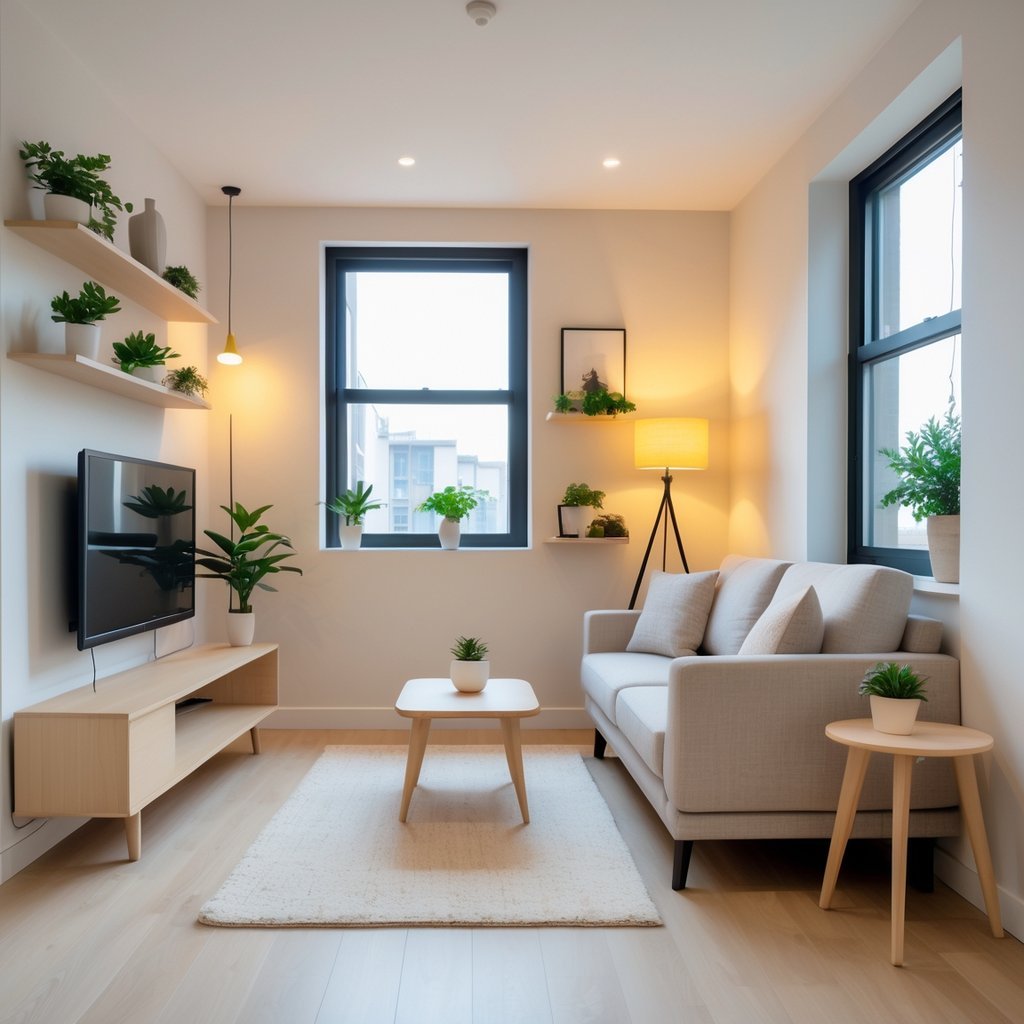
Use multipurpose furniture, keep the layout simple, and boost natural light to make your small living room feel larger and more functional. Small changes like a slim sofa, floating shelves, and bright paint will give you big results without a big budget.
Key Takeaways
- Pick furniture that serves more than one purpose to save space.
- Bright light and reflective surfaces make the room feel bigger.
- Plan flow and add personal touches to keep the space practical and inviting.
Space-Saving Furniture Solutions
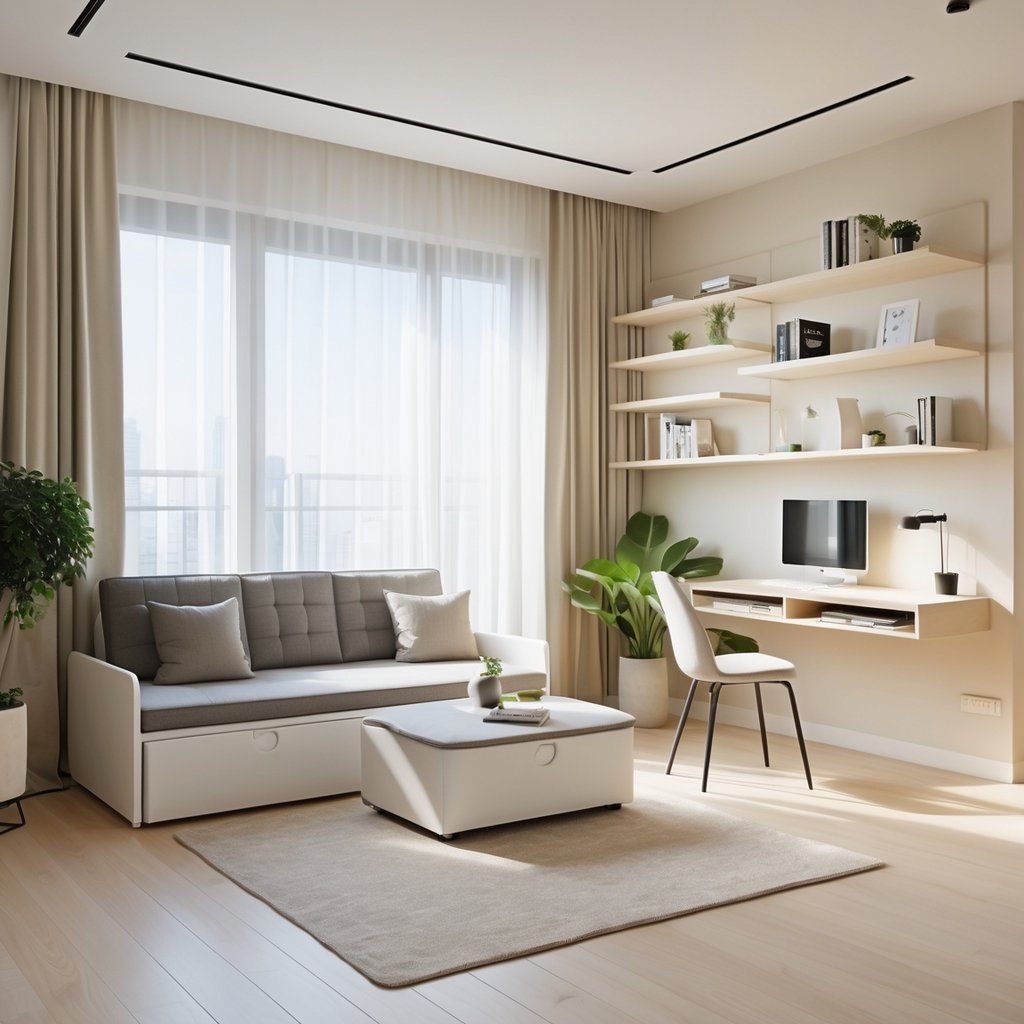
Choose pieces that do double duty, fit the scale of your room, and give you hidden storage. Focus on seating that converts, tables that tuck away, and built-ins that use vertical space.
Multipurpose Sofas and Seating
Pick a sofa that becomes more than a place to sit. A sofa bed or a pull-out couch gives you sleeping space for guests without a separate room. Look for models with under-seat drawers or lift-up cushions to store bedding, seasonal clothes, or board games.
Consider modular sectionals with pieces you can rearrange. You can turn a chaise into an extra seat or pull a module into a reading nook. If you have a narrow room, choose armless designs to save a few inches without losing comfort.
Add a slimdaybed or bench with storage beneath for entryways that feed into the living room. Use firm cushions and washable covers so the piece stays tidy and useful for daily seating and overnight visitors.
Compact Tables and Ottomans
Choose nesting tables, folding trays, or stackable stools to free floor space when you don’t need a surface. Nesting tables give you one footprint but more tabletop when guests arrive. Folding tables with slim legs tuck behind a sofa or in a closet.
Use an ottoman with a hollow interior as a coffee table, footrest, and storage chest. Pick one with a firm top so it can double as extra seating. Round ottomans work well in tight traffic areas because they avoid sharp corners.
Keep at least one lightweight surface you can move easily—small trays or lap tables let you eat or work without pulling a big table into the middle of the room. Match height to your sofa so the piece feels natural and stable.
Built-In Storage Ideas
Install floating shelves and shallow cabinets to use wall space without crowding the floor. Place shelves above the TV and sofa for books, baskets, and display items. Keep shelf depths under 10–12 inches to avoid a cluttered look in a narrow room.
Consider a built-in media unit with closed cupboards below and open shelving above. You gain hidden storage for cables and devices while keeping frequently used items visible and reachable. Use doors or drawers with soft-close hardware to avoid noisy, fussy movements.
If you can, add a window seat with drawers or lift-up storage beneath. It creates a cozy spot and tucks away linens, toys, or seasonal gear. For renters, use tall, slim bookcases anchored to studs and topped with decorative bins to mimic built-in function without permanent changes.
Maximizing Light and Visual Space
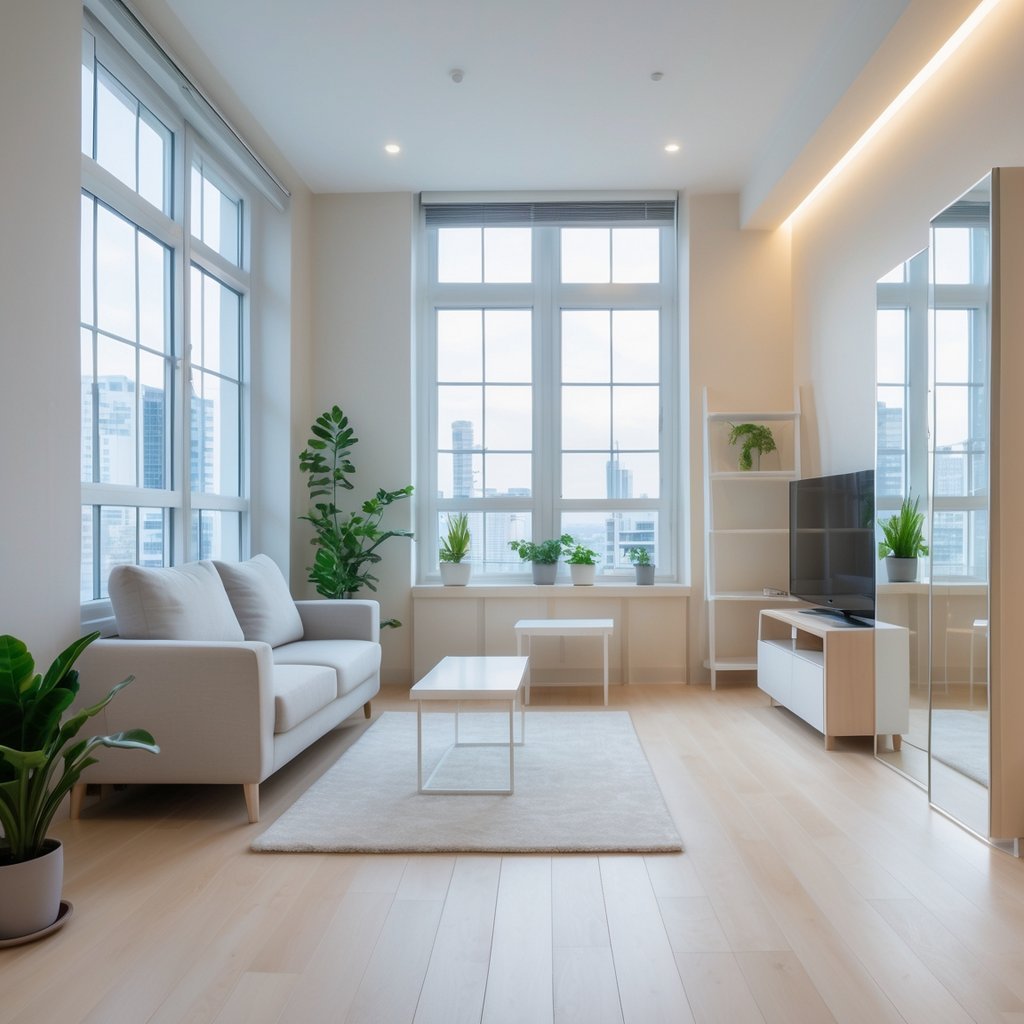
Light colors, reflective surfaces, and clear window treatments make a small living room feel larger and brighter. Use paint, flooring, and fabrics that bounce light, place mirrors to extend sightlines, and choose sheer curtains that let sunlight in while keeping privacy.
Choosing Light Colors and Finishes
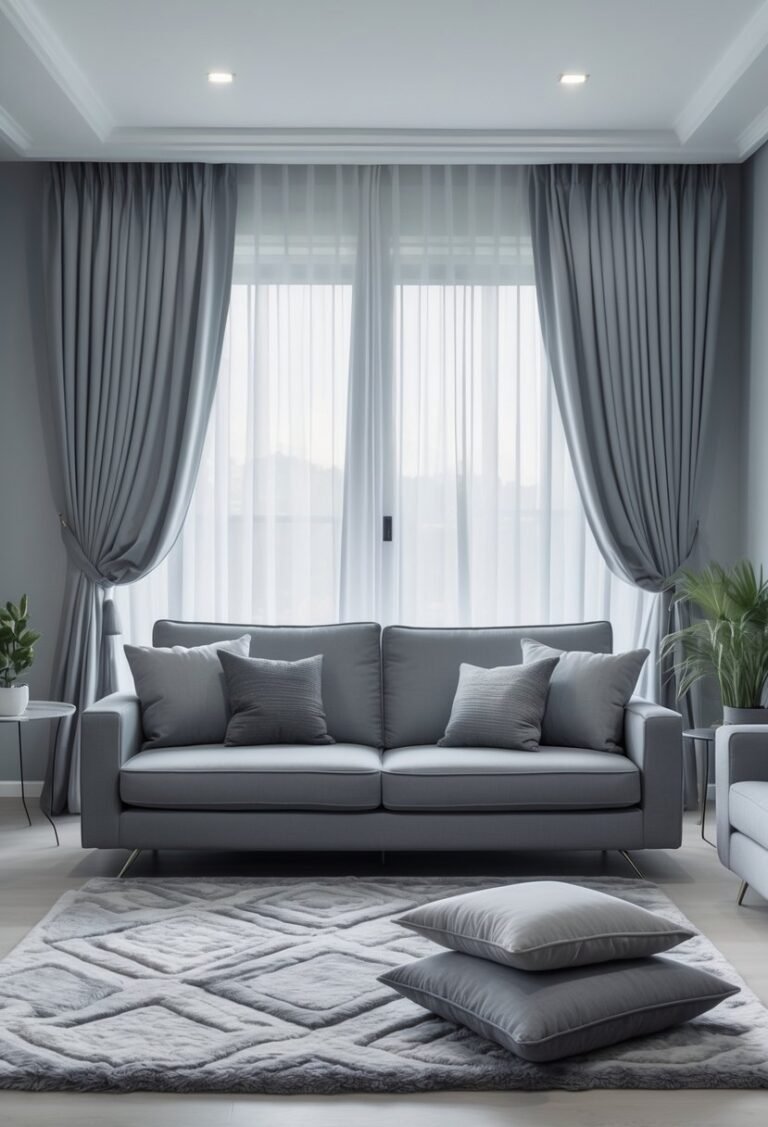
Pick a light, neutral paint like warm white, pale gray, or soft beige for walls and ceilings. These colors reflect more daylight than saturated tones and reduce harsh shadows. Paint the ceiling one shade lighter than the walls to lift the room visually.
Use satin or eggshell finishes on walls for a soft sheen that helps light spread without showing flaws. For trim, go a touch brighter in semi-gloss to frame windows and doors. Choose flooring in light wood, pale laminate, or low-contrast tile to create a continuous plane that appears larger.
Limit bold patterns to small accents—pillows, a rug, or artwork—so the eye moves smoothly across the room. Keep major pieces like sofas and media units in lighter shades, and use one darker accent color to ground the space without shrinking it.
Strategic Mirror Placement
Place mirrors to catch and reflect the strongest light source in the room. Position a large mirror opposite or adjacent to a window to double incoming daylight and brighten corners that stay dim.
Use full-length or oversized wall mirrors rather than small decorative pieces; larger mirrors enlarge sightlines and make walls feel farther apart. If possible, lean a framed mirror against a wall for a casual look and subtle depth.
Create a mirror cluster only when you need visual interest without weight. Match the mirror frames to nearby finishes—metal for modern, wood for warm—to keep the effect cohesive. Avoid placing mirrors where they reflect clutter; they’ll amplify mess instead of light.
Sheer Curtains and Window Treatments
Choose sheer curtains in white or light neutral fabrics to let light filter through while keeping privacy. Hang the rod 4–6 inches above the window frame or closer to the ceiling to make windows read taller.
Use lightweight panels that extend wider than the window—about 1.5 to 2 times the glass width—so they stack neatly to the sides when open. That exposes the maximum glass and lets more daylight in.
For blackout needs at night, layer a slim roller shade behind the sheers. This gives daytime brightness and evening privacy without heavy drapery that blocks light and visually narrows the room.
Design Strategies for Layout and Flow
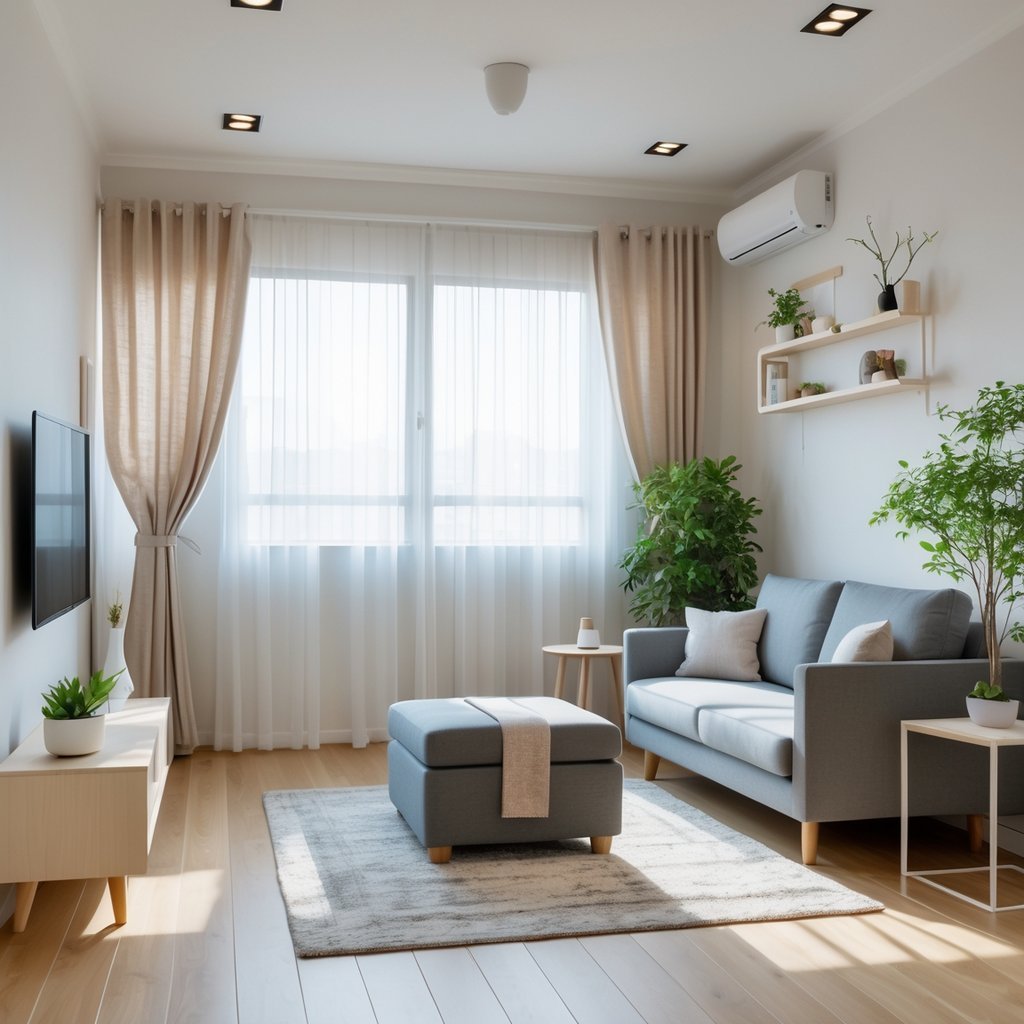
Focus on arranging furniture to make the room feel larger, keep walking paths open, and let light travel through. Choose placements that support how you live — seating for conversation, clear routes to doors, and surfaces at reachable heights.
Open Floor Plan Concepts
Use walls and furniture to define areas without closing the room off. Place a lowback sofa or bench to separate the living zone from the kitchen while keeping sightlines open. Keep counters and shelving open or glass-fronted to avoid visual heaviness.
Keep large pieces against walls when possible to free up central space. Use a rug to anchor a seating group and set scale — a rug that’s too small will make the area feel disjointed. Choose narrow-profile furniture (e.g., slim arms, exposed legs) to increase visible floor area.
Use consistent flooring and a limited color palette to help spaces read as one continuous area. Add a pendant or track lights over specific zones to create function without adding bulky room dividers.
Floating Furniture Arrangements
Float a sofa or loveseat away from the wall to create a conversational zone and allow flow behind it. Leave at least 30–36 inches for a main traffic lane and 18–24 inches behind seating for casual passage.
Anchor the arrangement with a central rug and a compact coffee table. Use narrow console tables behind sofas to provide surface space without blocking movement. Opt for modular or armless chairs that slide in tight places.
Balance floating groups with vertical storage like tall bookshelves or wall-mounted cabinets. This keeps the floor visually clear while offering storage. If you need separation, use an open shelving unit or a slim screen instead of a solid wall.
Clear Pathways and Traffic Flow
Map primary routes first: entry to seating, seating to balcony/bedroom, and kitchen access. Keep these paths free of furniture and rugs that curl up or shift.
Aim for 30–36 inches on main walkways and 24–30 inches on secondary routes. Use furniture placement to guide movement — align sofas parallel to the longest path, and angle a chair to direct traffic around it. Consider furniture with casters or lightweight pieces you can move during gatherings.
Use lighting and contrast to highlight routes. Flush mounts and wall sconces keep ceilings open, while low-profile entry tables provide function without narrowing a passage.
Decor and Personal Touches
Keep the room feeling light and purposeful. Choose decor that adds personality without crowding floor space.
Vertical Wall Decor Ideas
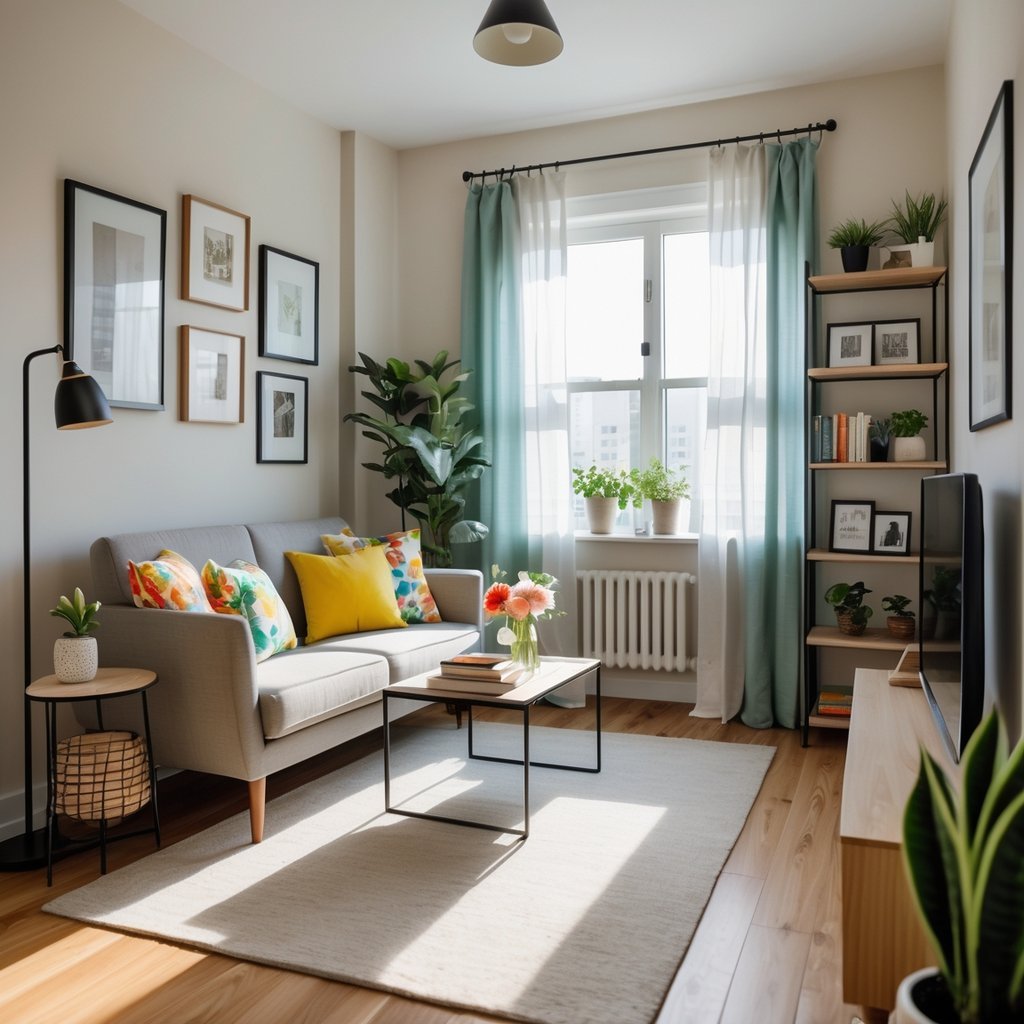
Use walls to show style and free up floors. Install floating shelves in staggered heights to display plants, framed photos, and a few books. Pick narrow shelves (8–10 inches deep) so they don’t stick into walkways.
Hang a tall gallery wall to draw the eye upward. Mix frames of one or two colors and include a mirror to boost light. For a cleaner look, mount a slim, vertical bookshelf or ladder shelf next to a couch.
Try wall-mounted planters or a textile wall hanging to add texture without bulk. Use picture ledges for rotating art and small objects. Anchor a focal point—like a large print or clock—above seating to make the layout feel intentional.
Accent Rugs and Textiles
Choose one medium rug to define the seating area and make the room feel organized. Measure first: the rug should fit most furniture legs or at least the front legs of the sofa and chairs. Opt for low-pile rugs for easier movement in tight spaces.
Layer smaller rugs or runners to add color and pattern without overwhelming the floor. Use textiles—throw pillows, a lightweight throw, and curtains—to add contrast and tie colors together. Pick curtains that hang high and wide to make windows read larger.
Select fabrics that are easy to clean and wear well. Natural tones with one bold accent color keep the space calm but personal.
Frequently Asked Questions
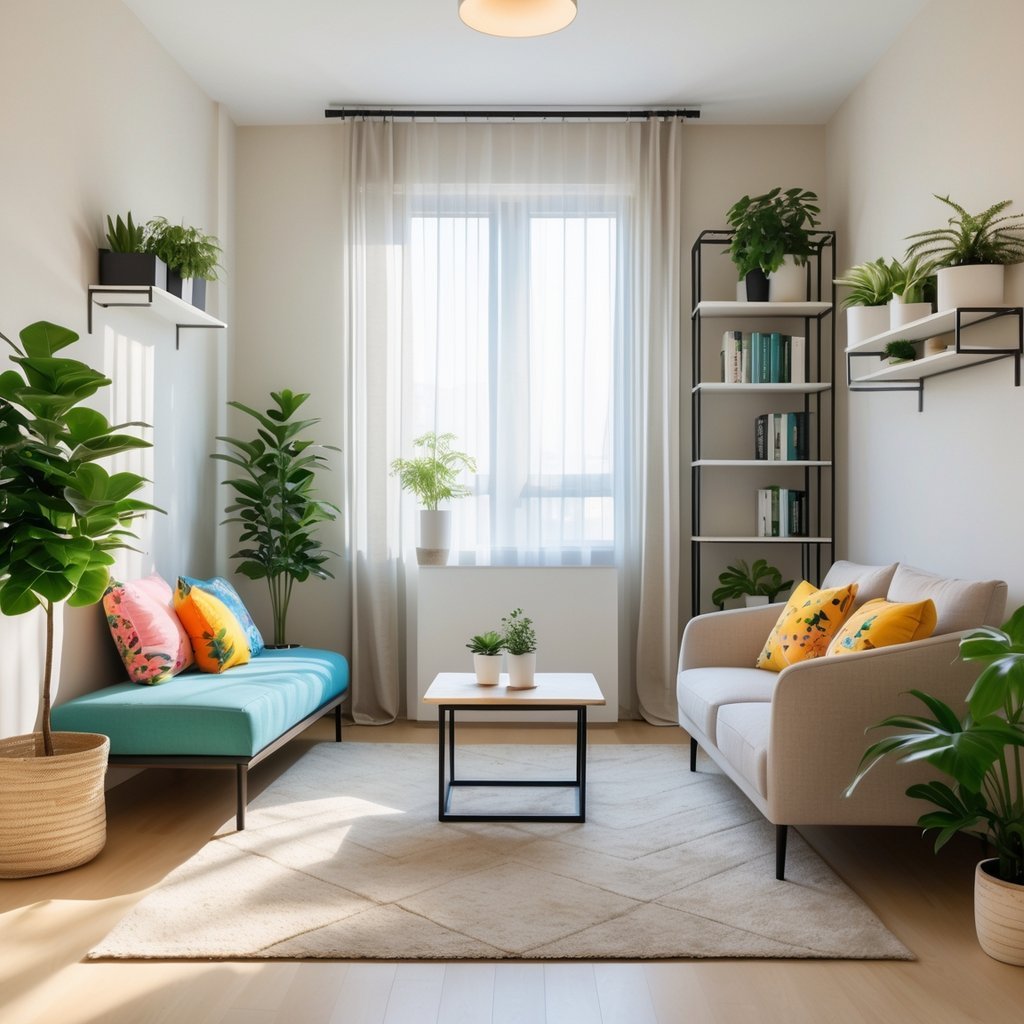
These answers focus on practical steps you can use right away: pick the right furniture size, use vertical space, and choose light colors and simple layouts to increase comfort and function.
How can I maximize seating in a small living room?
Choose slim-profile seating like armless chairs and a narrow loveseat to fit more people without crowding the room. Use a bench or storage ottoman that seats two to three people and can tuck under a table when not in use.
Add stackable or folding chairs you can store in a closet. Place seating along walls and in corners to keep the center clear for traffic.
What are some space-saving furniture ideas for a small living room?
Select multiuse pieces: a sofa bed, a coffee table with drawers, or a console table that doubles as a desk. Pick furniture with legs so light passes under it and the room feels bigger.
Use modular sofas that you can reconfigure for guests or daily use. Choose floating shelves and wall-mounted cabinets to free floor space.
Which color schemes make a small living room appear larger?
Use light, neutral paint like soft white, pale gray, or warm beige to reflect light and open the room. Keep major furniture in similar light tones and add one or two muted accent colors for contrast.
Paint trim a shade lighter than walls to blur hard edges. Use consistent colors across connected areas to create visual flow.
How can I arrange a living room with a TV in a small apartment?
Mount the TV on the wall to save floor space and place seating at a comfortable viewing distance (measure for 1.5–2.5 times the screen diagonal for HD). Angle seating slightly to create a conversational layout while keeping sight lines to the screen.
Use a narrow media console or floating shelf under the TV for components and decor. Hide cables with cord channels or inside the wall for a cleaner look.
What are effective storage solutions for small living spaces?
Install tall bookcases and use vertical wall space for baskets and bins to store items without taking floor area. Choose furniture with built-in storage: ottomans, sofas with under-seat drawers, and coffee tables with lift tops.
Use clear or labeled bins in closets to keep items accessible. Keep everyday items in the living room and seasonal or rarely used items in higher or less accessible storage.
How can I create a minimalist look in a small apartment living room?
Limit furniture to essentials and choose pieces with simple shapes and thin profiles. Keep surfaces clear and use one or two decorative items instead of many small pieces.
Opt for hidden storage to reduce visual clutter. Stick to a restrained color palette and repeat it across textiles and decor for a calm, cohesive feel.