Tiny Bedroom Setup Ideas: Smart Space-Saving Solutions for Comfort and Style
You can make a tiny bedroom feel spacious, useful, and stylish without a big budget or a major renovation. Focus on smart furniture, clever storage, and a simple layout that lets you move freely and keeps daily items within reach. Use multi-purpose pieces, vertical storage, and clear zones to get the most function out of every square foot.
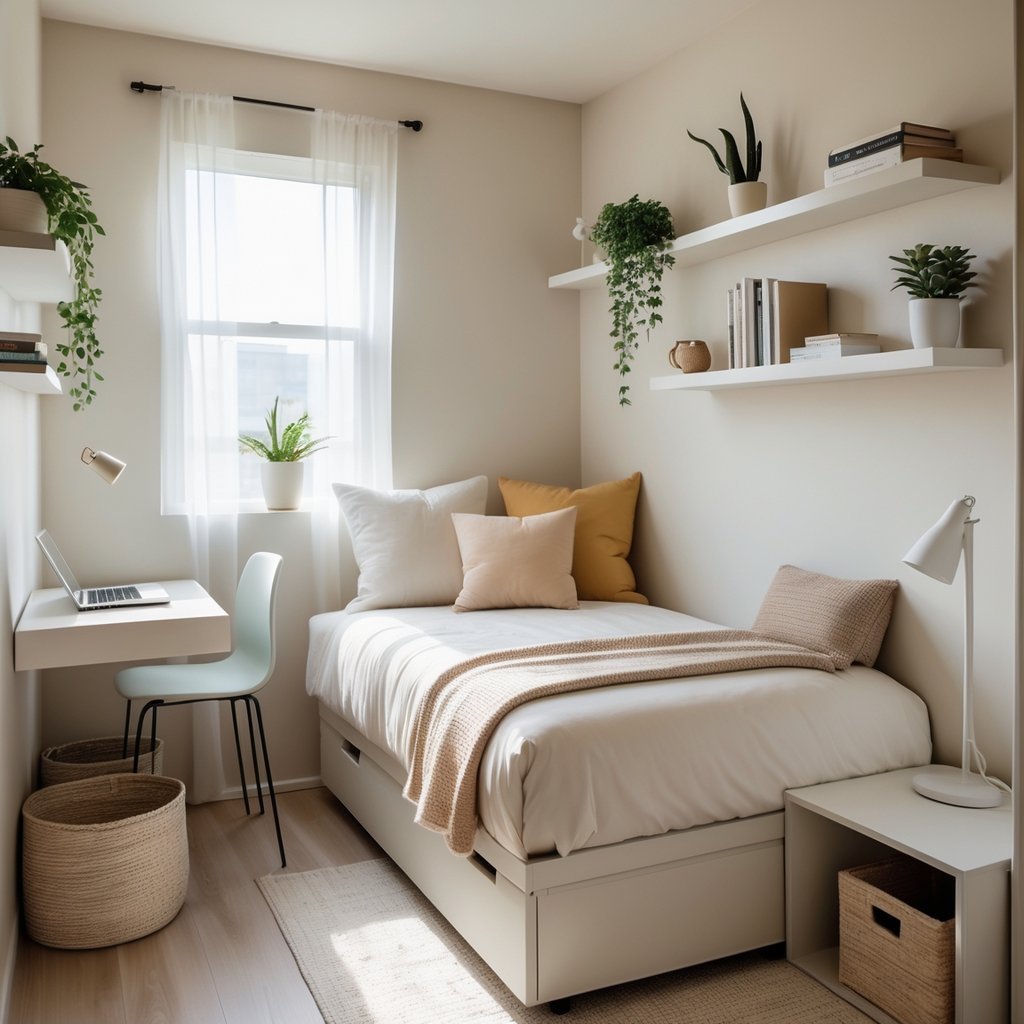
Think about what you actually need in the room and remove what you don’t. Swap bulky pieces for slim, multi-use furniture, use walls for storage, and place the bed to free up walking and work space so the room works for sleep, storage, and any other tasks you do there.
Key Takeaways
- Choose flexible, space-saving furniture that serves more than one purpose.
- Arrange zones and furniture to open up floor space and improve flow.
- Use vertical storage and simple decor to keep the room organized and calm.
Space-Saving Furniture Solutions
Use furniture that does more than one job, folds away, or goes up the wall to free floor space and keep your room tidy. Pick pieces that match your daily routines and fit the exact dimensions you have.
Multi-Functional Bed Designs
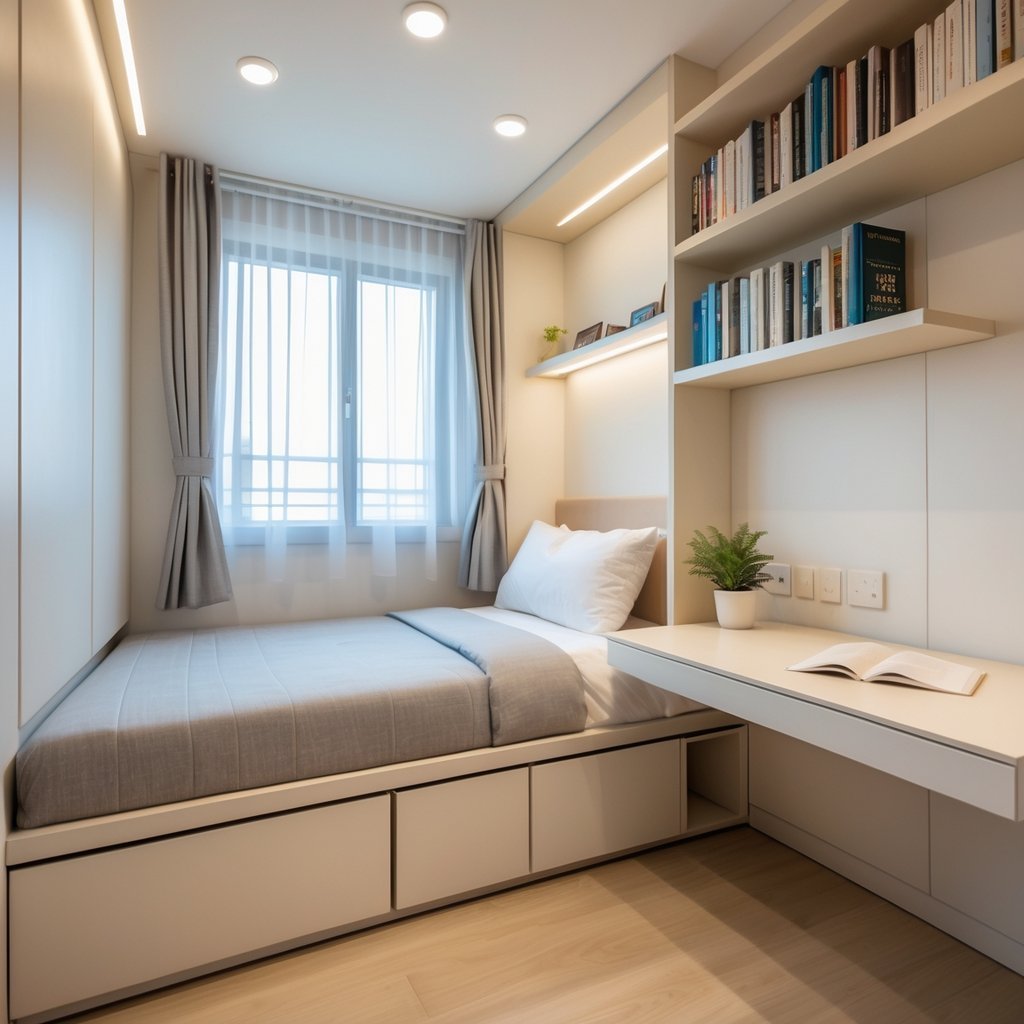
Choose a bed that stores items or changes function. Options include platform beds with deep drawers, models with a hydraulic lift that reveals a full storage cavity, and beds with built-in shelves at the headboard for books and a lamp. If you need a workspace, look for beds with integrated desks that slide out or fold down.
Measure your mattress and ceiling height before buying. A platform with drawers gives easy access to clothes and linens. A lift bed offers more uninterrupted storage but needs clearance and stronger hardware.
Focus on quality hardware and easy access. Soft-close drawers and gas pistons reduce noise and wear. Match the bed’s finish to your room to keep the space feeling cohesive.
Foldable and Convertible Furniture
Foldable pieces let you switch the room’s purpose quickly. Consider wall-mounted Murphy beds that fold up to reveal a sofa or desk, fold-out tables that attach to the wall, and chairs that collapse flat for storage. Convertibles like sofa beds and daybeds provide seating by day and sleeping space at night.
Check the mechanism weight limits and locking features to ensure safety. Test the ease of folding and unfolding in the store or watch reliable demo videos. Lightweight pieces work if you move them often; heavier pieces tend to be more stable.
Use modular units that combine functions: a bench that opens for storage, or nesting tables you can stack when not in use. These reduce clutter without sacrificing comfort.
Vertical Storage Systems
Go vertical to reclaim floor area. Install tall, narrow wardrobes, floor-to-ceiling shelving, and wall-mounted cabinets to store clothes, shoes, and boxes. Use adjustable shelves to fit items of different heights and clear bins or labeled baskets for quick access.
Add hooks and pegboards behind doors or on walls for bags, scarves, and jewelry. Over-the-door shoe organizers and hanging closet systems increase capacity without new furniture. Place heavier items lower and lighter items higher for stability and safety.
Combine open shelves with closed cabinets to balance display and concealed storage. Paint or finish the vertical units the same color as your wall to visually stretch the room.
Creative Layout and Arrangement Tips
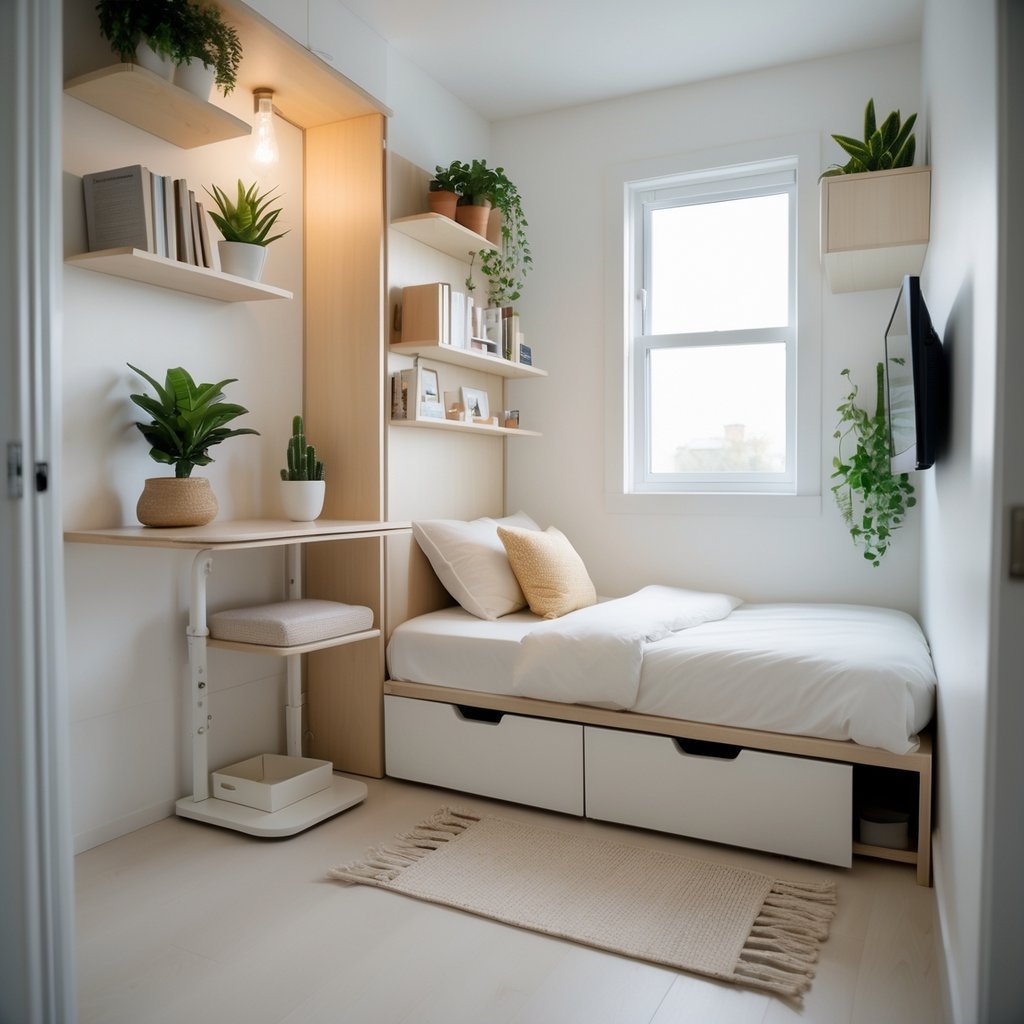
Plan furniture so you can move freely, use daylight, and make the room look larger. Focus on bed placement, clear walkways, and light control to get the most function and comfort from a tiny bedroom.
Optimizing Furniture Placement
Place the bed against the longest uninterrupted wall to free floor space and make the room feel balanced. If a full wall isn’t available, push the bed into a corner and use a narrow nightstand or wall shelf to save room.
Use multifunctional pieces: a storage bed or ottoman adds hidden space, while a slim desk can double as a vanity. Keep a 24–30 inch clear path from the door to the bed so you don’t feel cramped.
Consider vertical storage: tall dressers or wall-mounted shelves free floor area. Anchor larger pieces against walls and leave the center open to improve flow. Use a narrow bench at the foot of the bed instead of bulky chairs.
Maximizing Natural Light
Position the bed and mirror to reflect daylight deeper into the room. Place mirrors opposite or adjacent to windows to bounce light and reduce shadows. Choose lightweight curtains you can fully open to keep window areas bright.
Use window treatments with sheer layers plus a blackout layer for sleep control. Keep window sills clear of clutter so light isn’t blocked. If privacy is a concern, frosted film lets light through while blocking views.
Select light-colored, low-sheen paint on walls and ceilings to enhance light reflection. Even small windows benefit from a pale ceiling; it visually raises the room and makes daylight spread more evenly.
Creating Illusions of Space
Use consistent, light colors on walls, bedding, and large furniture to create a unified look that appears bigger. Limit bold patterns to one accent area so the eye doesn’t stop and break up space.
Place rugs to define zones: a narrow runner beside the bed or a small rug under the lower two-thirds of the mattress elongates the room. Keep furniture legs exposed where possible; visible legs let the floor show and make items feel lighter.
Mount shelves and lighting to the wall instead of using floor lamps and bulky tables. Vertical stripes or a tall headboard draw the eye up and add perceived height without reducing floor area.
Smart Storage and Organization
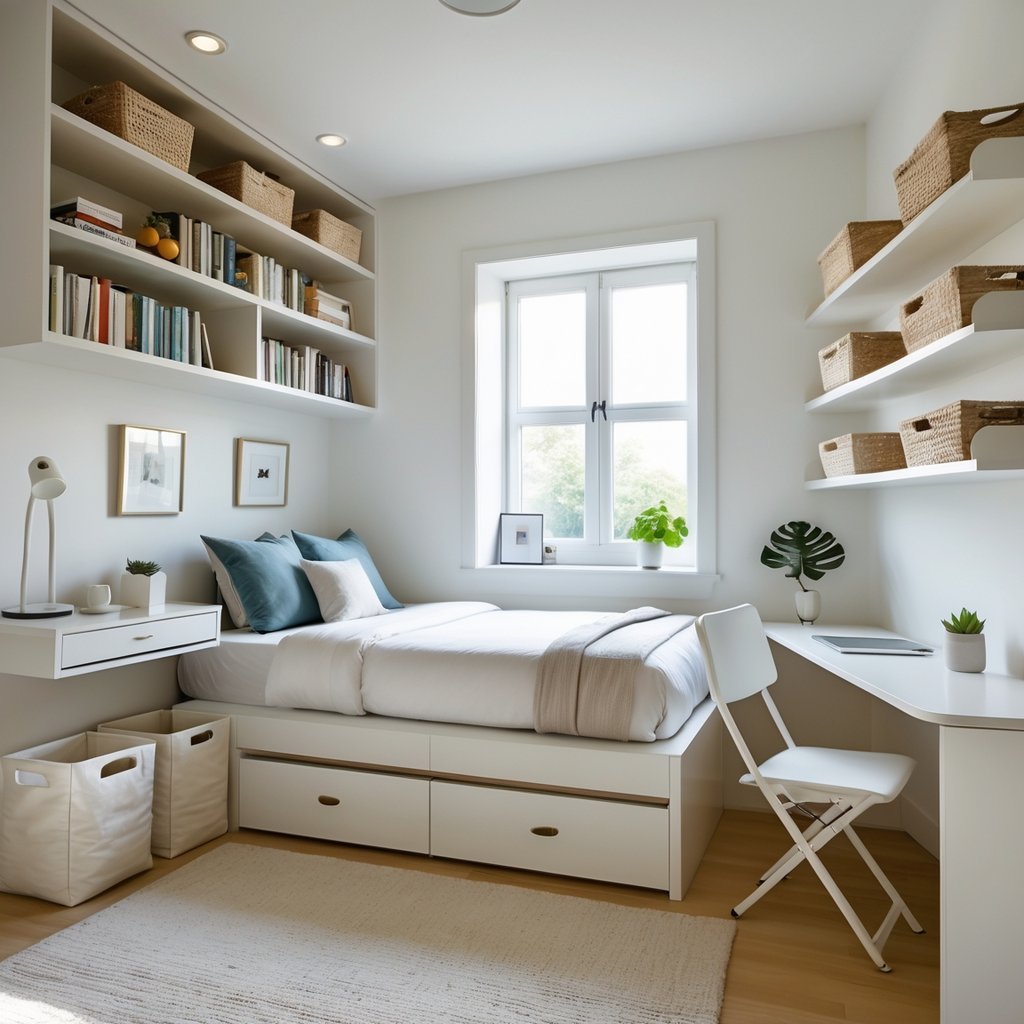
You’ll find ways to fit clothes, shoes, and small items without crowding the room. Focus on using empty floor space, vertical walls, and custom-fit wardrobes to keep things visible and easy to reach.
Under-Bed Storage Ideas
Use low, rolling drawers or flat bins to store out-of-season clothes, shoes, and extra bedding. Measure the clearance under your bed first so you buy containers that slide easily. Clear plastic bins let you see contents at a glance; fabric drawers keep dust out and look neater.
Create sections under the bed: one bin for shoes, one for sweaters, one for linens. Label each bin on the long side so you can read it when pulled out. If your bed frame is low, add lift legs or a riser to gain storage height without changing the bed.
For quick access, use a shallow tray or basket for daily items like a laptop or charging cables. Keep heavier items toward the center to avoid warping the bed slats. Use vacuum bags for bulky items like comforters to save space.
Wall-Mounted Shelving
Install floating shelves above the bed or desk to store books, decorative boxes, and small baskets. Choose shelves that match your wall studs or use heavy-duty anchors for safety. Keep frequently used items on lower shelves and decorative pieces higher up.
Use a mix of open shelves and closed boxes to hide clutter but show the items you use daily. Add small hooks under a shelf for necklaces, hats, or a light jacket. Consider a shelf depth of 8–12 inches for balance between storage and roominess.
Create a visual system: assign one shelf for daily essentials, one for work items, and one for personal items. Paint the back wall of the shelving unit a contrasting color or add LED strip lighting to make items easier to find.
Built-In Wardrobes
Plan built-ins around your room’s exact dimensions to eliminate wasted space. Use a mix of hanging rods, adjustable shelves, and deep drawers to store shirts, folded pants, and underwear. Include a full-height section for dresses or coats and shorter sections with double rods for shirts.
Add pull-out trays or small cubbies for shoes and accessories. Use clear drawer dividers for socks and jewelry so you can find items fast. If possible, place a full-length mirror on the inside of a wardrobe door to save wall space.
Choose light-colored finishes and slim handles to keep the room feeling open. If you can, build the wardrobe to the ceiling to use that vertical space and reduce dust collection on top.
Personal Style and Finishing Touches
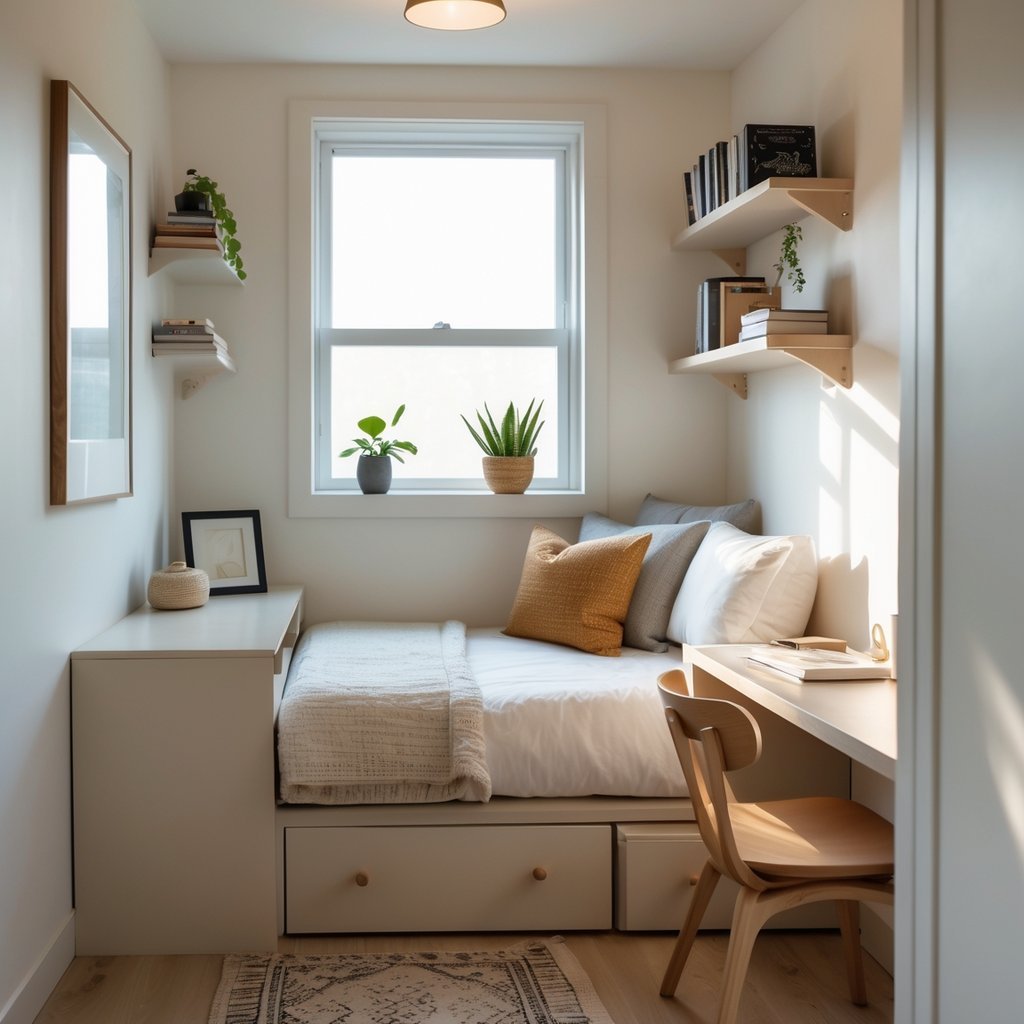
Pick a few key elements that match how you live and sleep. Focus on items that add comfort, reflect your taste, and don’t crowd the room.
Minimalist Decor Choices
Keep furniture pieces to the essentials: bed, one nightstand, and a narrow dresser or wall shelf. Choose slim, multiuse items like a bed frame with under-bed drawers or a floating desk that doubles as a vanity.
Limit decor to 3–5 items that bring function or meaning, such as a reading lamp, a single piece of wall art, and a small plant. This reduces visual clutter and makes the room feel larger.
Use clean lines and simple shapes. Pick furniture with exposed legs to show floor space and light-colored finishes to keep the room airy. Textiles should be few but intentional—one throw, one rug, and bedding in coordinated tones.
Color Schemes for Small Spaces
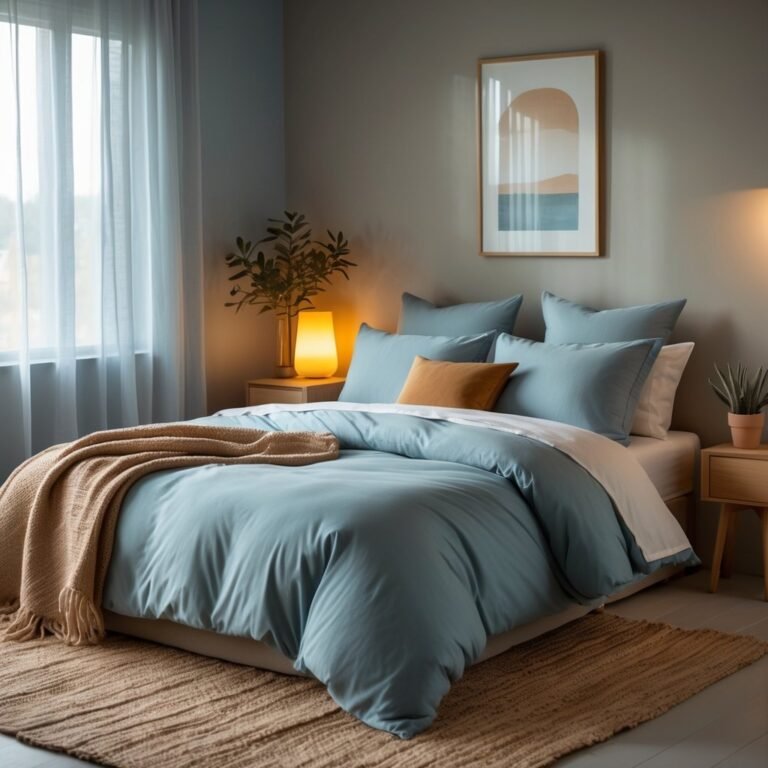
Stick to a main neutral, one accent, and one darker contrast to keep the palette tight and cohesive. For example: soft gray walls (main), muted blue bedding (accent), and charcoal pillows (contrast). This creates depth without chaos.
Paint the ceiling a shade lighter than the walls to visually raise it. Use the contrast color in small doses—pillows, a lamp, or a framed print—so it pops without shrinking the room. If you want bold color, place it on one small wall or a headboard rather than all four walls.
Use consistent metal finishes (brass, black, or chrome) for handles and lamps to make details feel intentional. Keep window treatments light and solid-colored to maximize daylight and avoid busy patterns that make the room feel cramped.
Personalizing with Accessories
Choose accessories that tell your story but stay proportional to the space. Swap a large gallery wall for a single medium frame or a small curated shelf of 3–5 objects. Rotate items seasonally to change the look without adding clutter.
Opt for practical decor: a stylish basket for laundry, a decorative tray on the nightstand for keys and glasses, or a slim valet stand for clothes. Textiles like a textured throw or patterned pillow add warmth and are easy to change.
Add one living element, like a low-maintenance plant or a vase with fresh cut stems, to bring life and better air quality. Keep cords and electronics organized with clips or a small charging tray so accessories feel tidy and intentional.
Frequently Asked Questions
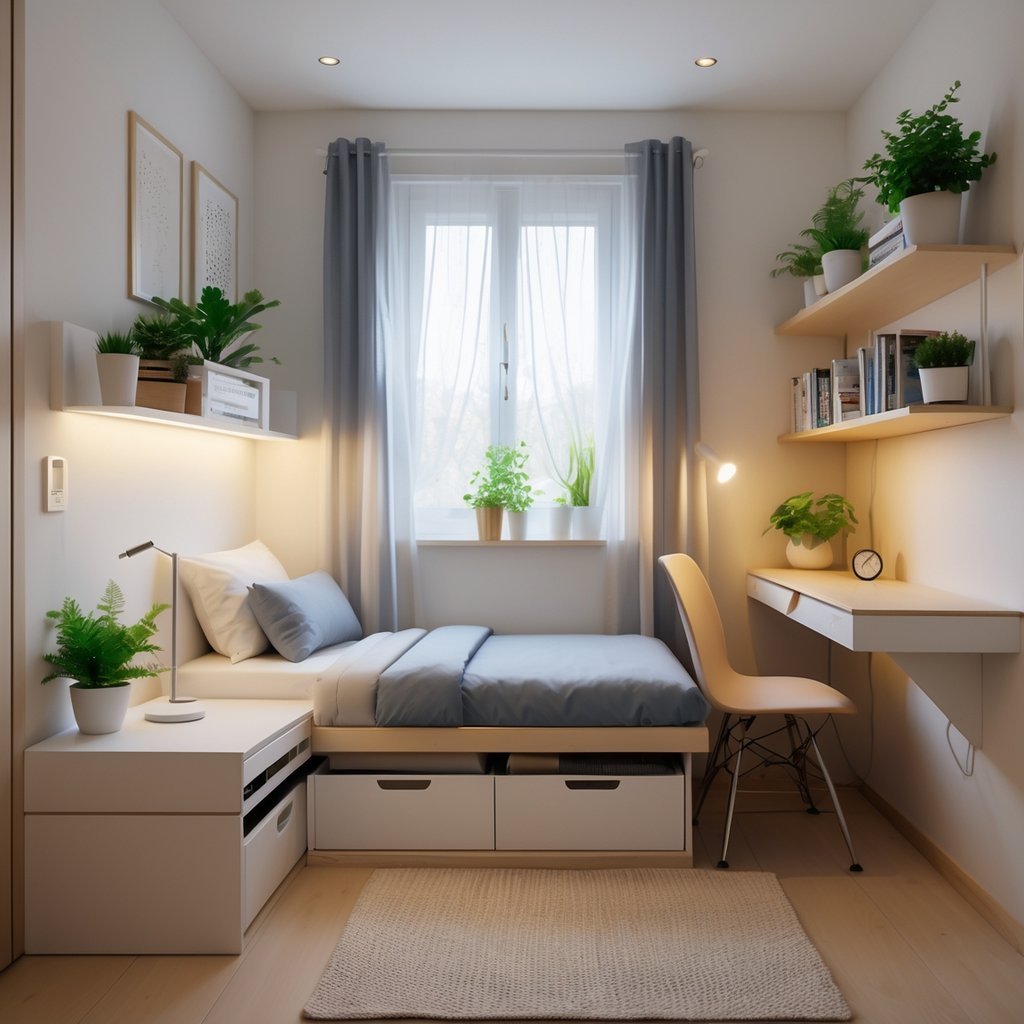
These answers focus on layout choices, space-saving furniture, built-in and freestanding wardrobe options, storage hacks, shared-bedroom setups, and lighting and color choices that make a room feel larger. Each response gives clear, actionable steps you can use in a small bedroom.
What are the most efficient furniture arrangements for a tiny bedroom?
Place the bed against the longest uninterrupted wall to free up floor space and create a clear traffic path. Orient the bed so you can open drawers and doors without obstruction.
Use narrow or low-profile furniture to keep sight lines open. A slim dresser or a floating nightstand keeps the room feeling less crowded.
Consider a corner desk or wall-mounted desk if you need a workspace. Multi-use pieces reduce the number of items in the room.
How can I incorporate a wardrobe into a tiny bedroom layout?
Choose a built-in wardrobe when possible to use full-height storage without wasting floor area. Floor-to-ceiling wardrobes make the most of vertical space.
Opt for sliding doors to avoid door swing in tight rooms. Mirror-front doors add storage and reflect light.
If built-ins aren’t possible, pick a slim freestanding wardrobe and place it along the least-trafficked wall. Combine with under-bed storage for seasonal items.
What are the creative storage solutions for small bedroom spaces?
Use under-bed drawers, rolling bins, or a bed with built-in drawers for clothes and linens. This keeps bulk items hidden and off the floor.
Add floating shelves and wall cubbies to store books, decor, and daily items without taking floor space. Hooks and pegboards work well for bags and accessories.
Use multi-functional furniture like ottomans with storage or a bench with lift-top storage at the foot of the bed. Keep frequently used items at eye level and seasonal items higher up.
How can two people comfortably furnish a compact bedroom?
Start with a narrow double or small queen that fits the room with at least 24 inches of walk space on one side. If space forces tight fits, consider two twin XLs pushed together with a bed bridge.
Use two slim nightstands or one shared wall-mounted shelf to save space. Match storage needs by assigning drawers or bins to each person.
Maximize vertical storage with separate closet organizers or a double-rail system so both people have accessible hanging space. Store shared items in labeled bins.
What are some modern design tips for decorating a small bedroom?
Keep furniture lines simple and pick pieces with exposed legs to create visual air beneath items. This reduces the visual weight of furniture.
Limit large patterns and choose small-scale prints for textiles. Use a few well-placed statement items instead of many small decorations.
Balance function and style by picking storage-forward furniture with clean finishes. Use consistent materials to keep the space cohesive.
How can I select colors and lighting to make a small bedroom appear larger?
Choose a light, neutral wall color to reflect light and make walls recede. Paint the ceiling a shade lighter than the walls for a taller feel.
Use layered lighting: a bright overhead light, task lights at the bed, and accent lighting on shelves. Warm but bright LEDs work well for clarity without harsh glare.
Place a mirror opposite a window or light source to bounce daylight around the room. Keep window treatments minimal to let in maximum natural light.